
 Save 15% on your 1st Autoship learn more

 Email us
 Live Chat
 FAQs
FAQs





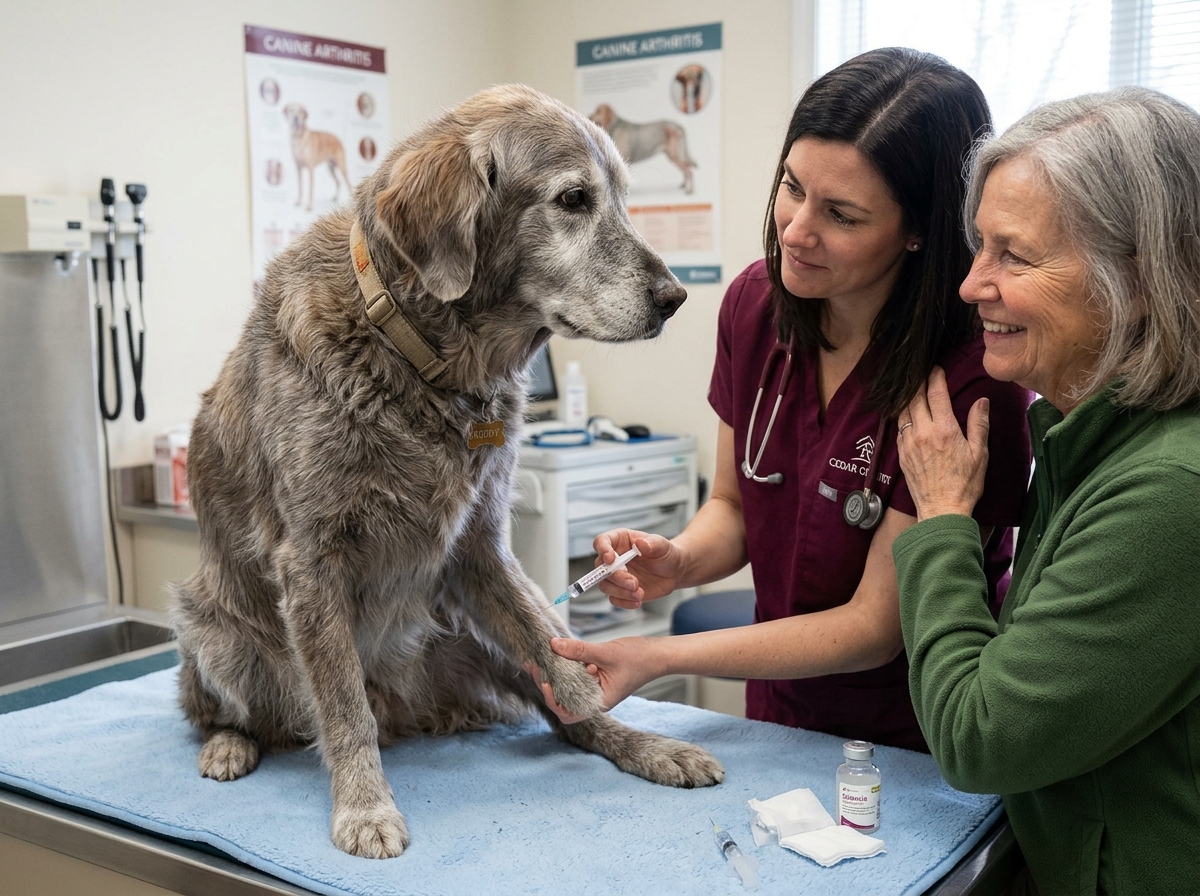
When Your Dog Hurts: What You Need to Know About Arthritis Meds for Dogs
Arthritis meds for dogs fall into several main categories, each working differently to reduce pain and protect joints:
| Type | Examples | How It Helps |
|---|---|---|
| Prescription NSAIDs | Carprofen, Meloxicam, Galliprant | Reduces inflammation and pain |
| Adjunct pain relievers | Gabapentin, Amantadine | Targets nerve pain and wind-up pain |
| Injectable DMOADs | Adequan Canine | Protects cartilage, lubricates joints |
| Monoclonal antibodies | Librela | Blocks nerve growth factor monthly |
| OTC joint supplements | Glucosamine, Chondroitin, MSM | Supports cartilage and joint health |
Arthritis is one of the most common sources of chronic pain in dogs. It affects most dogs as they age — and it can start much earlier than most owners expect, sometimes within a dog's first year of life.
The disease is progressive. That means joint damage quietly builds over time, often before a dog shows obvious signs of pain. By the time you notice your dog limping or struggling to get up, the condition may already be well advanced.
The good news? There are more treatment options today than ever before — from targeted prescription medications to smart home adjustments that can make a real difference in your dog's comfort and mobility.
This guide walks you through everything: how arthritis develops, which medications work best, which supplements are worth your money, and what you can do at home to help your dog feel better every day.
Recognizing the Signs and Causes of Canine Osteoarthritis
At BaxterBoo, we often hear from pet parents who think their dog is simply "slowing down" because of old age. In reality, that reluctance to jump into the car or the slow rise from a nap is often the first sign of osteoarthritis (OA). OA is a degenerative condition where the protective cartilage that cushions the joints wears away, leading to bone-on-bone friction, inflammation, and chronic pain.
Common signs to watch for include:
- Limping or lameness: This may be more pronounced after exercise or when first waking up.
- Stiffness: A "mechanical" way of walking or difficulty navigating stairs.
- Behavioral changes: Irritability, anxiety, or withdrawing from social interaction because movement hurts.
- Licking joints: Dogs may obsessively lick a specific area to soothe the ache.
While age is a factor, genetics play a massive role. Breeds like Labrador Retrievers, Golden Retrievers, and German Shepherds are biologically predisposed to joint issues. Previous injuries, such as a torn ACL, can also trigger early-onset arthritis.
Perhaps the most significant controllable factor is weight. Obesity puts immense mechanical stress on inflamed joints and actually creates a pro-inflammatory environment in the body. A professional veterinary diagnosis is essential, often involving a physical exam and X-rays to see the extent of joint remodeling. Once diagnosed, Physical therapy in dogs can be a game-changer, helping to restore muscle strength and range of motion.
Prescription Arthritis Meds for Dogs: From NSAIDs to Injections
When lifestyle changes aren't enough, we turn to prescription arthritis meds for dogs. These are regulated medications that target the physiological processes of pain and inflammation.

The landscape of veterinary medicine has shifted recently. While traditional Non-Steroidal Anti-Inflammatory Drugs (NSAIDs) remain a cornerstone of treatment, new "biological" therapies like monoclonal antibodies offer targeted relief with fewer systemic side effects.
Comparing Traditional NSAIDs vs. Monoclonal Antibody Therapy
| Feature | Traditional NSAIDs (e.g., Carprofen) | Monoclonal Antibodies (e.g., Librela) |
|---|---|---|
| Mechanism | Inhibits COX enzymes to reduce prostaglandins | Targets and neutralizes Nerve Growth Factor (NGF) |
| Administration | Daily oral pill or liquid | Monthly veterinary injection |
| Organ Impact | Processed by liver/kidneys; monitoring required | Broken down like naturally occurring proteins |
| Primary Goal | Reduce inflammation and acute pain | Block chronic pain signals |
Targeted Pain Relief: Gabapentin and Amantadine
Sometimes, standard anti-inflammatories aren't enough. This is where "adjunctive" therapies come in.
- Gabapentin: Originally an anti-seizure medication, it is now widely used for neuropathic (nerve) pain. It helps dampen the overactive pain signals sent to the brain.
- Amantadine: This antiviral medication has a unique side effect: it blocks NMDA receptors. This is crucial for treating "wind-up pain," a phenomenon where the central nervous system becomes hypersensitive to pain signals due to chronic stimulation.
Using these together creates a "multimodal synergy," allowing us to attack pain from multiple biological angles simultaneously.
Disease-Modifying Injections: Adequan and Librela
If we want to go beyond just masking pain, we look at injections that actually change the environment of the joint.
- Adequan Canine is a Polysulfated Glycosaminoglycan (PSGAG). It is the only FDA-approved DMOAD (Disease-Modifying Osteoarthritis Drug) that proactively treats the disease by lubricating joints, reducing inflammation, and helping to renew the building blocks of cartilage.
- Librela is the newest "star" in the lineup. As a monoclonal antibody, it targets Nerve Growth Factor (NGF), a key player in the transmission of OA pain. Because it isn't an NSAID, it's often a safer choice for senior dogs with sensitive kidneys or livers.
The Role of NSAIDs in Chronic Care
NSAIDs are the most commonly prescribed arthritis meds for dogs. They work by blocking the enzymes that produce prostaglandins—the chemicals responsible for pain and swelling.
- Galliprant (Grapiprant): This is a first-of-its-kind NSAID that specifically targets the EP4 receptor. By being so selective, it provides relief while having a significantly reduced impact on the kidneys and liver compared to older NSAIDs.
- Carprofen (Rimadyl): A reliable, cost-effective standard for reducing post-surgical and arthritic pain.
- Meloxicam (Metacam): Often available as an oral suspension, making it easy to dose for dogs of all sizes.
- Firocoxib (Previcox): A highly selective COX-2 inhibitor designed specifically for canine use.
Over-the-Counter Joint Supplements and Key Ingredients
While prescription meds handle the heavy lifting of pain, over-the-counter (OTC) supplements provide the nutritional support joints need to stay resilient. Look for these "Big Five" ingredients:
- Glucosamine: An amino sugar that helps repair cartilage.
- Chondroitin Sulfate: Helps cartilage retain water and elasticity.
- MSM (Methylsulfonylmethane): A natural sulfur source that reduces joint inflammation.
- Omega-3 Fatty Acids: Found in high concentrations in products like Nutramax Welactin and Bayer’s Free Form, these essential fats naturally dampen the body's inflammatory response.
- Green-Lipped Mussel: A potent source of unique Omega-3s and amino acids that support joint lubrication.
Choosing the Right OTC Arthritis Meds for Dogs
Not all supplements are created equal. Because the FDA does not regulate supplements as strictly as drugs, you must look for the NASC (National Animal Supplement Council) seal. This ensures the manufacturer follows strict quality control and labeling standards.
Products like Nutramax Dasuquin are highly regarded by veterinarians because they combine high-quality glucosamine and chondroitin with ASU (Avocado/Soybean Unsaponifiables), which has been shown in studies to protect cartilage better than glucosamine alone.
Safety and Side Effects of Arthritis Meds for Dogs
Every medication has risks. The most common side effects of NSAIDs include gastrointestinal upset (vomiting, diarrhea, or loss of appetite). In rare cases, they can affect liver enzymes or kidney function.
Crucial Safety Tip: Never combine NSAIDs with corticosteroids (like Prednisone). This combination significantly increases the risk of life-threatening stomach ulcers.
Before starting any long-term regimen, your vet will likely perform "baseline" blood work to ensure your dog's organs are healthy enough to process the medication. You can find more detailed NSAIDs safety info to help you monitor your pet at home.
Lifestyle Modifications and Home Care Strategies
Medication is only one piece of the puzzle. At BaxterBoo, we believe in a holistic approach. Weight management is the single most effective "non-drug" treatment. Even a 5-10% weight loss can drastically reduce a dog's pain levels.
Dietary changes can help, too. Prescription diets like Royal Canin Mobility Support, Hill's Prescription Diet j/d, or Purina Pro Plan JM are formulated with high levels of EPA and DHA (Omega-3s) to support joint health from the inside out.
Environmental Adjustments for Aging Pets
Small changes in your home can lead to huge improvements in your dog's confidence:
- Non-slip grips: Use area rugs or rubberized mats on hardwood floors to prevent painful "Bambi legs" slips.
- Dog gate: Block off steep stairs that might be too difficult for an arthritic dog to navigate safely.
- Dog-lift harness: For dogs with severe mobility issues, a harness with a handle allows you to assist them when standing or walking.
- Orthopedic bedding: Memory foam beds help distribute weight evenly and take pressure off sore joints.
- Raised feeders: These reduce the strain on the neck and front legs during mealtime.
Frequently Asked Questions about Dog Arthritis
Can I give my dog human aspirin for joint pain?
While aspirin is an NSAID, it is generally not recommended for dogs. It has a high rate of gastric ulceration in canines, and because it stays in the system a long time, it can prevent your vet from starting safer, more effective prescription arthritis meds for dogs right away. Always consult your vet before giving any human medication.
How long does it take for arthritis meds for dogs to show results?
It depends on the medication. Fast-acting NSAIDs like Meloxicam can show results in as little as 24 to 48 hours. However, supplements like Glucosamine or disease-modifying injections like Adequan can take 4 to 6 weeks to reach their full therapeutic effect.
What is a multimodal approach to treating dog arthritis?
A multimodal approach means using different types of treatments that work in different ways. For example, a dog might take a daily NSAID for inflammation, a monthly Librela injection for nerve pain, a daily joint chew for cartilage support, and go for short, controlled walks to maintain muscle. This "cocktail" approach is often much more effective than any single treatment alone.
Conclusion
Managing canine arthritis is a marathon, not a sprint. By partnering with your veterinarian and utilizing a combination of prescription arthritis meds for dogs, high-quality supplements, and smart home modifications, you can significantly extend your dog's "golden years."
At BaxterBoo, we are committed to providing the tools you need for this journey. Whether you're looking for an orthopedic bed or a high-quality supplement like the NutriSource Ampli-Life Mobility Soft Chew, our curated selection is designed with your pet's wellness in mind. Your dog might not be able to tell you they're hurting, but through your proactive care, they’ll certainly be able to show you they feel better.






