
 Save 15% on your 1st Autoship learn more

 Email us
 Live Chat
 FAQs
FAQs





Introduction
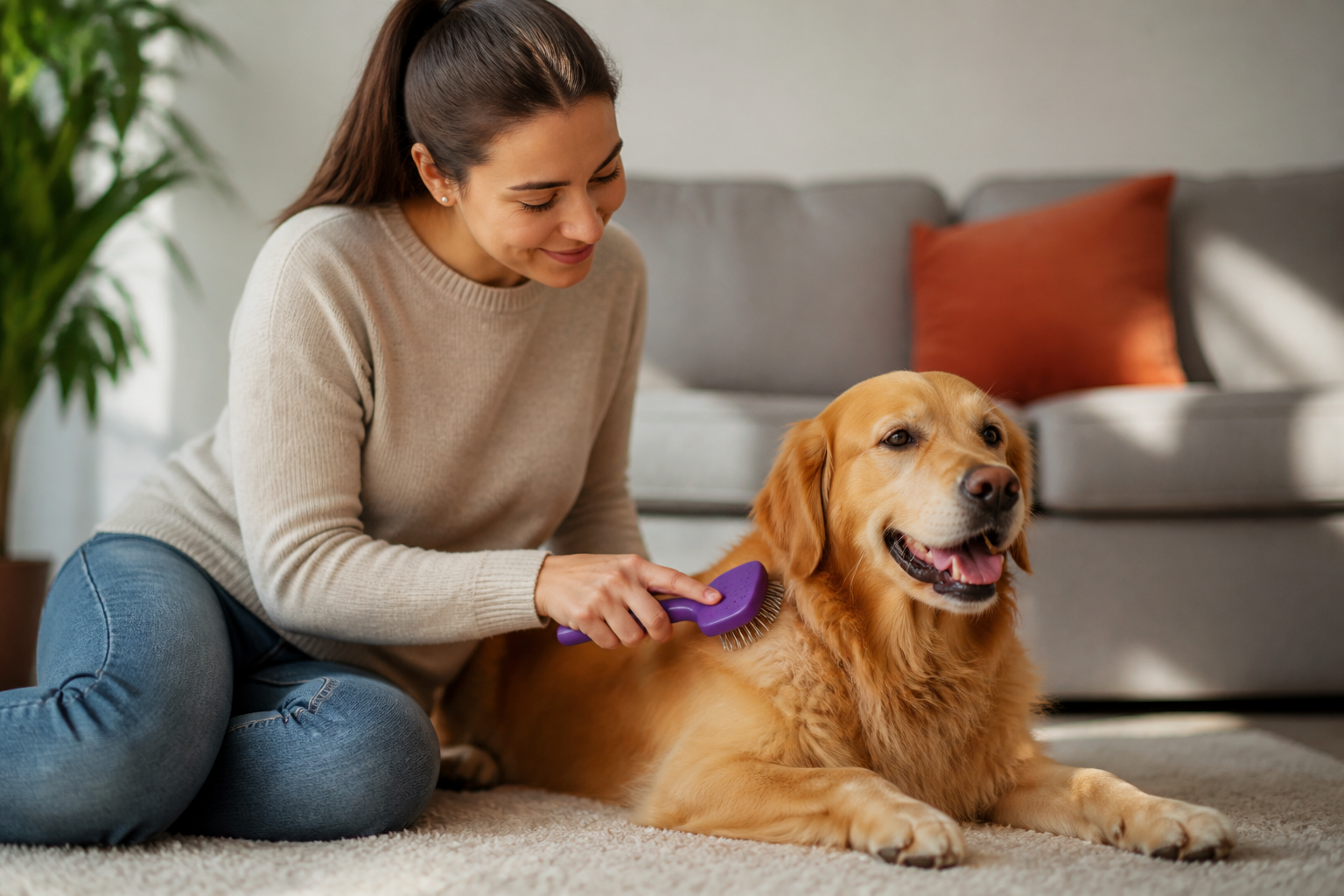
You are sitting on the living room floor with your dog and notice a few tufts of loose fur sticking out from their coat. You reach into the grooming bin, but the only thing you find is the small, fine-toothed brush you usually use for the cat. Many pet owners find themselves in this exact spot. Maybe you just brought home a new puppy and haven't bought their gear yet. Or perhaps you are trying to save space and want to know if one tool can serve everyone in the house.
At BaxterBoo, we hear these kinds of practical questions every day from neighbors visiting our Vernon Hills warehouse and customers shopping online. This article explores whether cat brushes are effective for dogs and which coat types benefit most from the swap. We will also look at the physical differences between these tools and when it is time to invest in a dedicated dog brush. Using the right tool helps keep your dog comfortable while maintaining a healthy, shiny coat.
Quick Answer: You can use a cat brush on a dog if the dog is small or has a very fine, thin coat. However, cat brushes are usually too small and delicate for larger dogs or those with thick double coats. Using a brush that is too small for a big dog will take much longer and may not reach the deep undercoat where mats form.
Understanding the Physical Differences Between Brushes
When you hold a cat brush next to a dog brush, the most obvious difference is the size. Cat brushes are designed for smaller bodies and tighter spaces like the chin, the back of the neck, and the armpits. Dog brushes come in a huge range of sizes to accommodate everything from a five-pound Chihuahua to a hundred-pound Great Pyrenees.
The construction of the bristles or pins also varies. Cat skin is generally thinner and more sensitive than dog skin. Because of this, cat slicker brushes often have finer, more flexible wire pins. These pins are designed to pull through soft cat fur without scratching the delicate skin underneath. Dog brushes often feature sturdier pins or stiffer bristles. This is necessary because many dog breeds have much coarser hair that would simply bend or snap the delicate pins of a cat brush.
Handle ergonomics are another factor we consider at the warehouse. A brush designed for a cat is meant for short, quick grooming sessions. If you try to use that tiny handle to brush out a Golden Retriever, your hand will likely cramp before you are halfway finished. Dog brushes typically have larger, contoured grips designed for the longer sessions required to maintain a larger animal.
Evaluating Skin Sensitivity and Safety
While it might seem like a brush is just a brush, the safety of your pet’s skin is the top priority. Dogs have a different skin pH and thickness than cats. While a dog's skin is generally tougher, some breeds are prone to "brush burn" if the tool is too aggressive or if you have to pass over the same area too many times.
If you use a cat brush on a dog with a very thick coat, you might find yourself pressing harder to reach the skin. This is where the danger lies. Pushing a small, fine-toothed brush too deep can cause the sharp wire tips to scrape the skin. This leads to redness, irritation, and eventually hot spots.
Conversely, if you have a dog with very short hair and sensitive skin, a cat brush might actually be the better choice. The softer pins are less likely to cause irritation on a dog with a thin coat. Always test the brush on your own forearm first. If it feels scratchy or uncomfortable to you, it will likely feel the same way to your dog.
Key Takeaway: The best grooming tool is one that reaches the skin without scratching it. If a cat brush is too small to reach through your dog's fur, it will not effectively remove the undercoat and could cause skin irritation from over-brushing.
Matching the Brush to the Dog's Coat Type
The success of using a cat brush depends almost entirely on what kind of hair your dog has. We carry over 500 brands of pet supplies, and the variety of grooming tools is vast because dog coats are incredibly diverse.
Short and Smooth Coats
Dogs like Boxers, Labradors, or Beagles have short, flat coats. For these dogs, a cat brush can work surprisingly well. A rubber grooming mitt designed for cats is excellent for lifting loose hair from a short-haired dog. A soft bristle brush used for kittens can also add a nice shine to a smooth-coated dog. Since there are no long hairs to tangle, the small size of the cat brush is a minor inconvenience rather than a functional failure.
Long and Silky Coats
Breeds like the Maltese or Yorkie have hair that is very similar to the fine fur of a long-haired cat. In these cases, a cat-sized pin brush or slicker brush is often a perfect fit. These dogs are small, so the size of the brush matches their body. The fine pins are gentle enough for their skin but effective enough to prevent tangles in their silky locks.
Double Coats
This is where cat brushes usually fail. If you have a Siberian Husky, an Alaskan Malamute, or a Pomeranian, a cat brush will not do the job. Double-coated dogs have a soft, dense undercoat and a tougher outer layer of guard hairs. A cat brush will only skim the surface. It will look like you are getting hair off, but the thick undercoat near the skin will remain untouched. This leads to massive "blowouts" of fur later and increases the risk of painful matting.
For more guidance on managing dense undercoats and seasonal shedding, read our tips for Australian Shepherd shedding.
Wire and Curly Coats
Wire-haired Terriers and curly-coated breeds like Poodles have unique grooming needs. Their hair is often stiff or prone to tight coils. A delicate cat brush will likely snag in these curls. The pins on a cat brush are often too close together for curly hair, which can cause painful pulling. These breeds usually require specialized slicker brushes with longer, stiffer pins that can penetrate the curls without getting stuck.
The Role of the Slicker Brush
The slicker brush is the most common tool found in cat grooming kits. It features a flat or slightly curved head with rows of thin wire pins. These pins are angled to hook onto loose hair and pull it away from the body.
If you use a cat slicker brush on a dog, pay close attention to the pin density. Cat slickers have very dense pins. On a dog with thick or coarse hair, these dense pins can act like a wall, preventing the brush from actually entering the coat. Instead of pulling out dead hair, the brush just slides over the top.
If your dog is a toy breed with fine hair, a cat slicker is often the preferred tool of professional groomers. It allows for precision around the face and ears where a large dog brush would be too clunky.
For a broader selection of tools, explore our dog brushes and combs.
When to Switch to Dog-Specific Tools
There are clear signs that your cat brush isn't cutting it anymore. If you find that you are brushing for thirty minutes and the dog is still shedding all over the furniture, the tool is the problem.
You should consider a dedicated dog brush if:
- Your dog weighs more than 20 pounds.
- The brush pins are bending or losing their shape during use.
- You find mats close to the skin that the brush didn't catch.
- Your dog seems frustrated or annoyed by how long the session is taking.
Our warehouse stock includes specialized tools like undercoat rakes and de-shedding blades. These are designed to handle the volume of fur that dogs produce. While a cat might shed a handful of fur, a large dog can shed enough to fill a grocery bag. A cat brush simply isn't built to process that much material.
Grooming as a Health Check
Grooming is more than just a way to keep your house clean. It is a vital part of your dog's health routine. Every time you brush your dog, you should be looking for more than just loose fur. This is your chance to check for lumps, bumps, and skin issues.
Vet Tip: Use grooming sessions to check for external parasites like fleas and ticks. If you spot unwanted guests or notice your dog has red, inflamed skin, consult your veterinarian for a diagnosis. Our flea and tick collection offers a selection of products for ongoing pet care.
Running a brush over your dog's body also helps distribute natural oils. This keeps the skin hydrated and the coat resilient. If you use a brush that is too small, you are likely skipping large areas of the dog's body, which means those areas aren't getting the benefit of that oil distribution.
For additional prevention guidance, see our guide to flea and tick prevention products.
How to Properly Use a Cat Brush on a Dog
If you decide to use a cat brush on your dog, follow a specific method to ensure it is effective. Don't just scrub the dog's back randomly.
Step 1: Start at the rear.
Working from the back toward the head allows you to manage small sections of fur at a time. This is especially helpful if the brush is small.
Step 2: Brush with the grain.
Always move the brush in the direction the hair grows. Brushing against the grain with a fine-toothed cat brush can cause "pin prick" sensations that make the dog dislike grooming.
Step 3: Use the "part and brush" method.
If the dog has any length to their fur, use one hand to part the hair until you see skin. Use the other hand to brush that specific section. This ensures the cat brush is actually reaching the base of the hair.
Step 4: Clean the brush frequently.
Because cat brushes are small, they fill up with hair quickly. A full brush won't pick up any more fur and will just slide over the coat. Clear the pins after every few strokes.
Essential Grooming Supplies for Every Dog
While a cat brush might work in a pinch, a well-rounded dog grooming kit is a better long-term investment. Most dog owners should have at least two tools.
- A primary brush: This matches the dog's main coat type (slicker for long hair, bristle for short hair).
- A finishing comb: A metal greyhound comb is great for checking for missed tangles.
- A rubber tool: These are perfect for bath time to help work shampoo into the coat.
For a brand-specific option, browse our selection of BASS Brushes.
We suggest checking your dog's grooming gear every few months. Look for rusted pins, cracked handles, or worn-down bristles. Keeping your tools in good shape makes the process faster for you and more pleasant for your dog.
Making Grooming a Positive Experience
Whether you use a cat brush or a dog brush, the goal is to make your pet enjoy the process. Many dogs are fearful of brushes because of past experiences with pulling or scratching.
If your dog is hesitant, start slow. Let them sniff the brush before you begin. Give them a high-value treat during the session. We find that many owners have success using lick mats or special treats to keep their dogs distracted while they work out tangles.
If you are a member of our MVP Rewards program, you can earn points on every grooming tool and treat you purchase. This makes it easier to try different brushes to find the one your dog likes best. Consistency is the most important factor in grooming. A five-minute session every day is much better than a one-hour struggle once a month.
Bottom line: A cat brush is a functional temporary substitute for small dogs or those with very thin coats, but it lacks the size and durability needed for most medium to large dog breeds.
FAQ
Is it safe to use a cat slicker brush on a puppy?
Yes, cat slicker brushes are often excellent for puppies because they are small and have softer pins. This allows you to introduce the puppy to grooming without overwhelming them with a large, heavy tool. Just ensure you are very gentle, as puppy skin is quite thin and easily irritated.
Will a cat brush help with my dog's shedding?
It depends on the dog's coat. A cat brush will help remove loose surface hair on a short-haired dog, but it won't be effective at all for a double-coated dog like a Shepherd or a Husky. For heavy shedders, you need a tool specifically designed to reach and pull out the dense undercoat.
Can I use a cat flea comb on my dog?
Yes, flea combs are generally universal. A cat flea comb has very fine, closely spaced teeth designed to trap tiny pests. This works just as well on dog hair as it does on cat fur. However, if your dog has very thick or curly hair, the comb may get stuck or pull, so use it carefully in small sections.
You can compare options in our flea combs and brushes collection.
What should I do if the cat brush gets stuck in a mat?
Never pull or yank the brush if it gets stuck. This can tear the skin or cause your dog significant pain. Instead, hold the base of the hair near the skin with your fingers to prevent pulling, and gently wiggle the brush free. If the mat is too tight, you may need to use a dematting tool or a pair of blunt-nosed safety scissors to carefully remove it.






