
 Save 15% on your 1st Autoship learn more

 Email us
 Live Chat
 FAQs
FAQs





Introduction
You lift your dog’s lip to check a tooth and notice a thick layer of yellow tartar or a sudden whiff of bad breath. Many owners worry about the risks and costs of putting a pet under sedation for a professional cleaning. You might wonder if you can handle the job yourself or find a service that skips the "going under" part entirely. At BaxterBoo, we hear these concerns daily from pet parents who want to keep their dogs healthy without unnecessary stress. While you can certainly clean the surface of a dog's teeth at home or through specific professional services without anesthesia, these methods serve different purposes than a veterinary dental procedure. This guide explores how to maintain your dog’s oral hygiene safely and when a vet visit is the only real solution.
Understanding the Two Types of Dental Cleaning
The term dental cleaning often gets used for two very different things. It is helpful to distinguish between cosmetic surface cleaning and medical dental care. If you want to keep teeth white and breath fresh, at-home care and non-anesthetic services can help. If you need to treat gum disease or hidden infections, those methods will not be enough.
At-Home Maintenance
This includes anything you do yourself, such as brushing, using wipes, or giving dental treats. These methods are designed to remove plaque before it hardens into tartar. Plaque is a soft film of bacteria that forms on the teeth every day. If you remove it regularly, you prevent the buildup that leads to more serious issues.
Non-Anesthetic Dental Scaling (NAD)
This is a professional service where a technician scrapes tartar off the teeth while the dog is awake. They use many of the same tools a vet uses, but they do not use any sedation. While it makes the teeth look much better, it is largely a cosmetic procedure. It focuses on the parts of the tooth you can see.
Quick Answer: Yes, you can clean the visible surfaces of a dog's teeth through regular brushing and professional non-anesthetic scaling. However, these methods cannot clean under the gumline or diagnose hidden infections, which require a veterinary exam under anesthesia.
The Power of Daily Brushing at Home
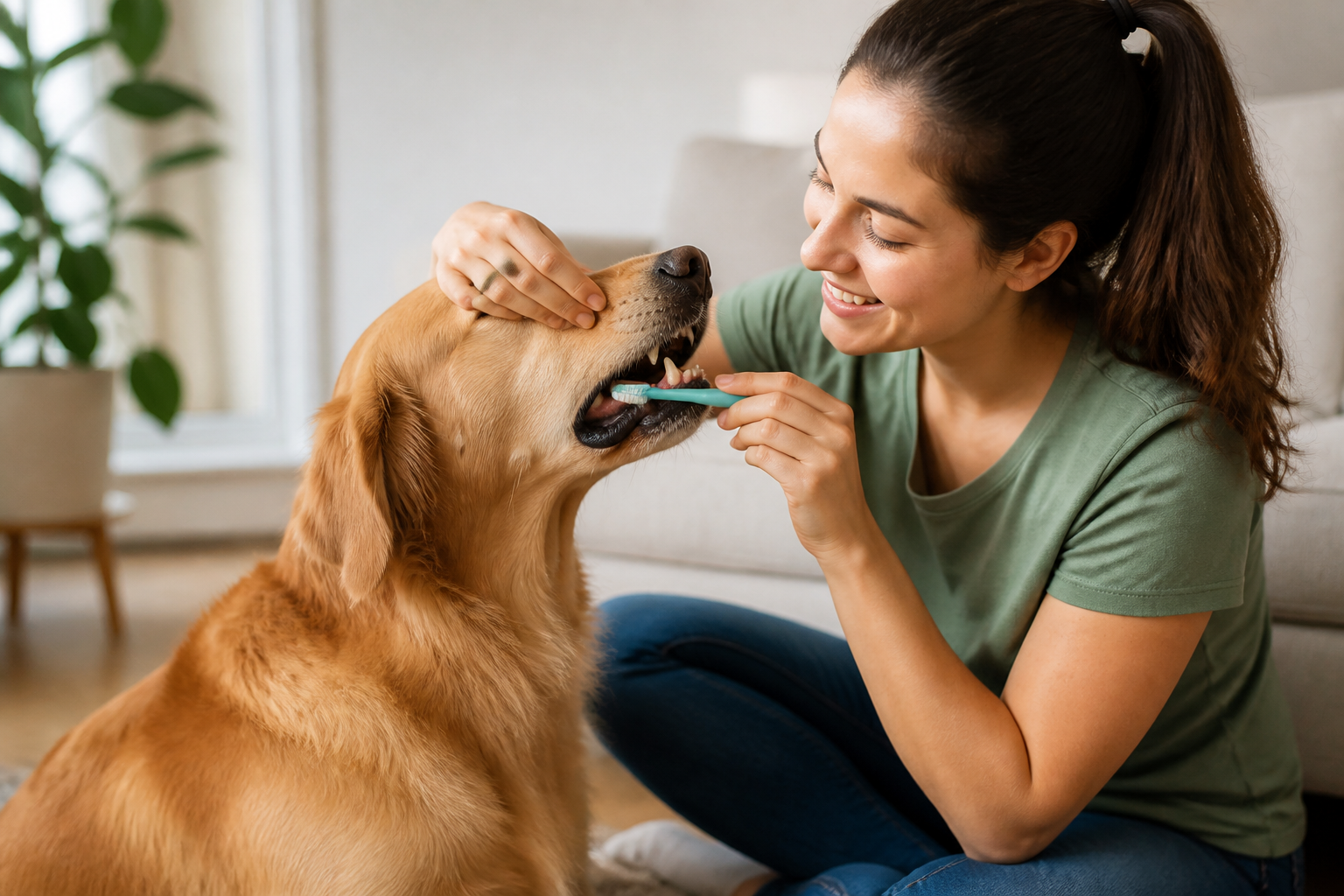
Brushing is the most effective way to clean a dog's teeth without anesthesia. It is the gold standard for preventative care. If you brush your dog's teeth daily, you may significantly reduce the frequency of professional cleanings.
It is important to use the right tools. Never use human toothpaste on a dog. Human paste often contains xylitol or fluoride, both of which are toxic to pets. Enzymatic pet toothpastes are designed to be swallowed and use proteins to break down plaque even after you stop brushing.
Step-by-Step Guide to Brushing
Step 1: Pick a quiet time. / Choose a moment when your dog is relaxed, like after a long walk or a meal.
Step 2: Introduce the flavor. / Let your dog lick a small amount of pet-safe toothpaste off your finger to build a positive association.
Step 3: Try a finger rub. / Before using a brush, gently rub your finger along their gums and teeth to get them used to the sensation.
Step 4: Use a pet-specific brush. / Use a soft-bristled brush or a silicone finger brush to gently scrub the outside of the teeth in a circular motion.
Step 5: Focus on the molars. / The large teeth in the back of the mouth usually have the most buildup, so spend extra time there.
Key Takeaway: Consistency matters more than perfection. Brushing for 30 seconds every day is more effective than a deep scrub once a month.
Using Dental Chews and Toys
Not every dog sits still for a toothbrush. If your dog resists brushing, dental chews and toys are helpful tools. These products work through mechanical abrasion. As your dog chews, the texture of the treat or toy scrapes against the tooth surface to rub away plaque.
We carry brands like Greenies and KONG that are specifically designed for this purpose. Look for products that have the Veterinary Oral Health Council (VOHC) seal of approval. This seal means the product has been tested and proven to reduce plaque or tartar.
- Dental Chews: These are often firm treats that require significant chewing time.
- Rubber Toys: Toys with ridges or nubs help massage the gums and clean the teeth during play.
- Rope Toys: As the fibers of the rope floss between the teeth, they can help dislodge food particles.
Vet Tip: Dental treats add calories to your dog's diet. If you give a daily dental chew, remember to slightly reduce their regular meal portion to prevent weight gain.
Water Additives and Dental Wipes
If your dog is particularly fussy, you might consider water additives or dental wipes. These are low-effort options that still provide some benefits.
Water additives are liquids you pour into your dog's drinking bowl. they contain ingredients that help kill oral bacteria and freshen breath. They do not replace the physical scrubbing of a brush, but they can slow down the rate at which plaque forms.
Dental wipes are textured pads that you wrap around your finger. You swipe them across the teeth and gums to lift away surface debris. This is often easier for dogs that find the long handle of a toothbrush threatening. Our dental care collection includes various wipes and rinses that can be used daily to support oral health between professional visits.
Bottom line: Wipes and additives are great supplements, but they work best when used alongside mechanical cleaning like brushing or chewing.
Professional Non-Anesthetic Cleanings
Many pet owners choose non-anesthetic dental (NAD) services as a middle ground. During these sessions, a trained technician holds the dog still and uses a scaler to remove hard tartar.
This can be a good option for dogs with mild buildup who are very calm. It is also sometimes used for senior dogs who cannot safely undergo anesthesia due to heart or kidney issues. However, there are significant limitations to this approach.
Technicians cannot safely use sharp tools under the gumline while a dog is awake. If the dog flinches, the gums could be sliced. Because of this, the area where most dental disease hides remains untouched. It is like washing a car but never cleaning the engine. The car looks great, but the internal problems remain.
Key Takeaway: Non-anesthetic professional cleaning is a maintenance tool for healthy mouths, not a treatment for existing dental disease.
Why Veterinary Anesthesia is Sometimes Necessary
While we all want to avoid anesthesia when possible, it is sometimes the only way to provide real medical care. A dog cannot tell you if a tooth is throbbing, and they will not sit still for X-rays.
Cleaning Below the Gumline
The space between the tooth and the gum is where bacteria thrive. This bacteria causes periodontal disease, which can lead to bone loss and systemic infections. Only a vet under anesthesia can deep-clean these pockets.
Dental X-Rays
Up to 60 percent of a dog's tooth is hidden under the gumline. A tooth can look perfectly white on the outside while the root is rotting away. X-rays are the only way to find abscesses, broken roots, or oral tumors.
Safety and Comfort
Scraping at sensitive gums is painful. Anesthesia ensures the dog feels no pain and stays perfectly still. This allows the vet to work quickly and accurately without the risk of the dog biting or being injured by the equipment.
Vet Tip: If your dog has red, swollen gums, loose teeth, or a decreased appetite, they likely need a veterinary dental exam. These are signs of pain and infection that surface cleanings cannot fix.
The Link Between Dental Health and Overall Wellness
Oral health is not just about a pretty smile. It is a critical part of your dog's overall longevity. When bacteria sit on the gums, they can enter the bloodstream. This bacteria has been linked to damage in the heart, liver, and kidneys.
By keeping your dog's teeth clean without anesthesia on a daily basis, you are protecting their internal organs. This is why we focus so much on preventative gear and supplies. Taking care of their mouth today can prevent a major medical crisis years down the road.
If your vet does find an infection during a checkup, our pet pharmacy can help. The pharmacy carries prescription medications and prescription diets with a valid prescription. If your dog needs antibiotics for a dental abscess or a special dental kibble like Royal Canin Dental, we can ship those directly to your door with a valid prescription.
How to Create a Dental Care Routine
The best way to manage your dog's teeth is to create a multi-layered routine. Do not rely on just one method. Combine different tools to cover all the bases.
- Daily: Brush the teeth for at least 30 seconds.
- Daily: Provide one VOHC-approved dental chew.
- Ongoing: Use a water additive in every bowl of fresh water.
- Annually: Have a veterinarian perform a full oral exam.
Transitioning Your Dog to a Routine
Step 1: Start young. / If you have a puppy, start touching their mouth and brushing early so it becomes a normal part of life.
Step 2: Be patient with seniors. / For older dogs, go slowly and use plenty of rewards to show them that dental care is not scary.
Step 3: Watch for signs of pain. / If your dog pawing at their mouth or dropping food, they may have a painful tooth that needs professional attention.
Bottom line: A proactive routine is the best way to keep your dog's mouth healthy and avoid frequent, expensive veterinary procedures.
Managing Costs and Quality
Professional dental care is expensive, but preventative care is quite affordable. A tube of pet toothpaste and a bag of dental treats cost a fraction of a surgical extraction. We designed our MVP Rewards programme to help you save on these recurring essentials. Every time you buy your favorite dental brands, you earn points toward future purchases.
For items you use every day, like Greenies or dental wipes, our Autoship programme is a great choice. You get a discount on your first order and ensure you never run out of the supplies your dog needs. Keeping a steady supply of dental gear makes it much easier to stick to a routine.
Conclusion
Keeping your dog’s teeth clean without anesthesia is a powerful way to support their health. Regular brushing, high-quality dental chews, and the right toys can keep plaque at bay and keep their breath fresh. While these methods are excellent for maintenance, they do not replace the deep medical care provided by a veterinarian. If your dog shows signs of gum disease or pain, always consult your vet for a professional assessment. We are here to support your journey with the best products, from specialized toothbrushes to prescription diets in our pet pharmacy. Start a daily routine today to give your dog a lifetime of healthy smiles.
FAQ
Is anesthesia-free dental cleaning as good as a vet cleaning?
No, it is not a direct replacement for a veterinary dental procedure. Anesthesia-free cleaning only removes surface tartar for cosmetic purposes, while a vet cleaning treats the area under the gumline and uses X-rays to find hidden problems. It is a great maintenance tool for healthy mouths but cannot treat dental disease.
Can I use a human toothbrush on my dog?
You can use a very soft human toothbrush for a large dog, but it is usually better to use one designed for pets. Pet toothbrushes are angled to reach the back molars more easily, and finger brushes are often less intimidating for small dogs. Most importantly, never use human toothpaste, as it contains ingredients that are toxic to dogs.
How often do I really need to brush my dog's teeth?
Ideally, you should brush your dog's teeth every single day to remove plaque before it mineralizes into hard tartar. If daily brushing is not possible, aim for at least three times a week. Supplementing with dental chews and water additives can help on the days you skip brushing.
What are the signs that my dog needs a professional vet cleaning?
Signs of serious dental issues include persistent bad breath, red or bleeding gums, and yellow-brown crust on the teeth. You might also notice your dog dropping food while eating, pawing at their face, or becoming suddenly shy about having their head touched. If you see these signs, a surface cleaning will not be enough, and a vet visit is necessary.






