
 Save 15% on your 1st Autoship learn more

 Email us
 Live Chat
 FAQs
FAQs





Introduction
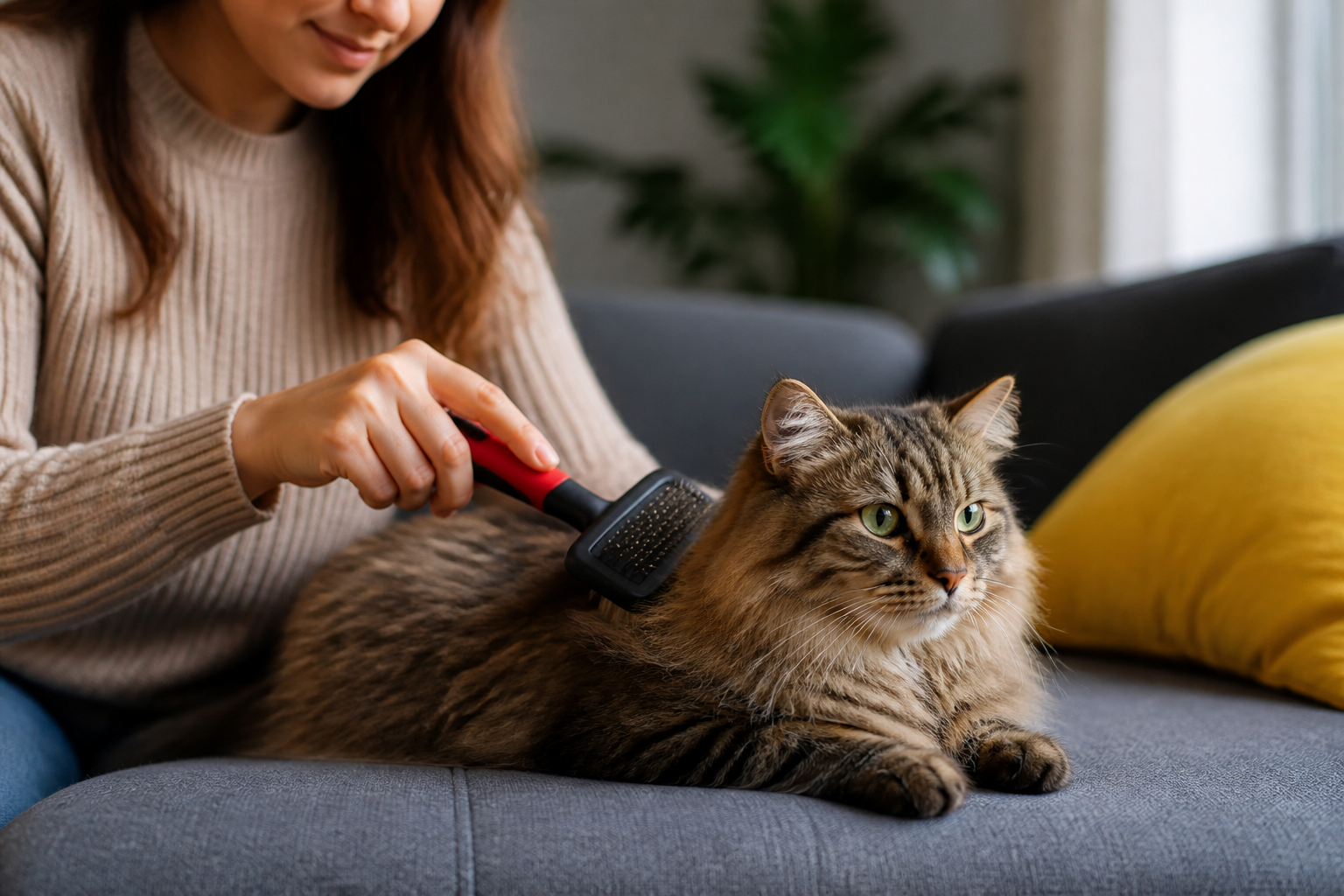
You might be sitting on the living room floor with your dog’s grooming kit open when your cat wanders by. Maybe your feline friend is looking a little shaggy or starting to shed, and you wonder if that slicker brush or deshedding tool would work just as well on them. It is a common question we hear at BaxterBoo, especially from households with both species. While it is tempting to use one set of tools for every pet in the house, the answer is not a simple yes or no.
Cats have unique skin and coat needs that differ significantly from their canine counterparts. While some dog brushes are safe for feline use, others can cause discomfort or even physical injury. This post covers the risks of cross-using tools, which dog brushes are cat-safe, and why feline-specific gear is often the better choice. You will learn how to assess your current tools to ensure your cat stays comfortable and healthy.
The Major Differences Between Cat and Dog Skin
Before you reach for a dog brush, you must understand that a cat’s skin is much more delicate than a dog’s skin. Even though cats are predators, their skin is remarkably thin. Dogs often have thicker, tougher hides designed to withstand rougher environments and different types of physical contact. A brush that feels like a gentle massage to a Labrador might feel like a series of sharp scratches to a Siamese.
Feline skin is also highly sensitive to tactile stimulation. This is why some cats experience overstimulation or "grooming aggression" if they are brushed too long or too firmly. The nerve endings in their skin react quickly to pressure and heat. If you use a heavy-duty dog rake or a firm slicker brush, you risk causing pain. This pain can lead to a negative association with grooming that lasts a lifetime.
The coat structure also varies. Many dog breeds have a double coat with a very stiff outer layer. Cat fur is generally softer and finer, even in long-haired breeds. The fine texture of cat hair means it tangles differently. It is prone to tight mats that sit close to the skin. Dog brushes are often designed to pull through coarse hair, which can result in tugging on the cat’s skin rather than gently teasing out a knot.
Quick Answer: You can use some dog brushes on cats, such as soft bristle brushes or small, soft-tipped slickers. However, many dog tools are too large or abrasive for a cat's thin skin and fine fur. Always test the brush on your own skin first to ensure it is not too sharp.
Assessing Your Dog Brushes for Cat Safety
Not all dog brushes are created equal. If you are determined to use what you already have, you must evaluate each tool individually. Start by looking at the material and the tips of the bristles or pins.
Bristle Brushes
Soft bristle brushes are generally the safest tool to share between species. These brushes use natural or synthetic fibers to smooth the coat and distribute oils. If the bristles feel soft to your touch, they are likely safe for your cat. These are excellent for short-haired cats who just need a bit of shine and loose hair removal.
Slicker Brushes
Slicker brushes have fine, short wires closely spaced together. They are wonderful for removing loose undercoat in dogs. However, they can be dangerous for cats if the wires are sharp. Many dog slicker brushes lack protective "nubs" on the end of the wires. On a cat, these raw wire ends can act like tiny needles. If you have a slicker brush, check if it has rubber or plastic tips. If it is bare metal, it is likely too harsh for a cat.
Pin Brushes
Pin brushes look like standard human hairbrushes with longer metal or plastic pins. These are often used on long-haired dogs to prevent tangles. On a cat, a large dog-sized pin brush is often too bulky. It is hard to navigate around a cat's smaller frame, such as the armpits or the base of the tail. If the pins are flexible and have rounded ends, you can use them cautiously on a long-haired cat.
Deshedding Tools and Rakes
Tools designed to reach deep into a dog's thick undercoat are often the most problematic. These tools frequently feature metal blades or stiff, unyielding teeth. Because a cat's skin is so thin, it is very easy to accidentally "brush burn" them with these tools. We generally recommend avoiding heavy-duty dog rakes for feline grooming.
Key Takeaway: The size and sharpness of the tool are the biggest factors in safety. If a brush is designed for a large breed dog, it will likely be too cumbersome and aggressive for a cat's delicate frame.
The Risks of Using the Wrong Brush
Using an improper tool can lead to several issues beyond just a grumpy cat. The most immediate risk is skin irritation. If the brush is too abrasive, it can leave red streaks or micro-scratches on the skin. These scratches can become infected or lead to hot spots if the cat begins to over-groom the irritated area.
Static electricity is another common problem. Many dog brushes are made from materials that generate a lot of static when pulled through fine feline fur. This creates small shocks that startle the cat. If a cat gets shocked every time you brush them, they will quickly learn to run away when they see the grooming kit.
There is also the risk of "pelted" mats. If a dog brush only reaches the top layer of the fur, it might make the cat look groomed while the undercoat continues to tangle. Over time, these tangles can turn into a solid pelt of fur that is painful and restricts movement. Proper cat combs are designed to reach the skin safely to prevent this.
Vet Tip: If you notice redness, scabbing, or thinning hair after grooming, stop using that tool immediately. Persistent skin irritation should be checked by a veterinarian to rule out infections or allergies. Our pet pharmacy carries helpful topical treatments and prescription medications if your vet finds a skin condition that needs professional care.
Step-by-Step: How to Test a Dog Brush on Your Cat
If you have a dog brush that seems soft and appropriately sized, follow these steps to ensure it is safe for your cat.
Step 1: The Skin Test
Run the brush firmly against the inside of your own forearm. If it feels scratchy, leaves red marks, or hurts, it is far too sharp for a cat. Feline skin is thinner than the skin on your arm.
Step 2: The Scent Check
Cats are highly scent-oriented. If the brush smells strongly of the dog, the cat may reject it or feel stressed. Clean the brush thoroughly with mild soap and water to remove any canine dander and oils before introducing it to the cat.
Step 3: The Slow Introduction
Do not start by brushing the cat's whole body. Let them sniff the tool first. Rub their cheeks on the handle to deposit their own scent.
Step 4: The Pressure Test
Start with very light strokes on the top of the head or along the back. Use much less pressure than you would on a dog. Watch the cat's body language for any signs of twitching or discomfort.
Step 5: Inspect the Skin
After a few strokes, part the fur and look at the skin underneath. If you see any pinkness or irritation, the brush is too harsh.
Why Cat-Specific Tools are Worth the Investment
While you might save a few dollars using a dog brush, cat-specific tools are designed for the feline anatomy. At BaxterBoo, we emphasize that the right tool makes the job faster and more pleasant for everyone involved. Our cat grooming collection includes brushes, combs, wipes, shampoos, and other feline grooming essentials.
Feline combs, often called Greyhound combs, are a staple for cat owners. These combs have rounded tines that cannot scratch the skin. They usually have two different tooth spacings. One side helps loosen the hair, while the finer side removes the shed undercoat. These are much more effective than most dog brushes at preventing mats in long-haired breeds like Maine Coons or Persians.
Grooming mitts are another excellent option for cats. These are rubber gloves with small nubs. They mimic the feeling of a cat being licked or petted. For cats who are terrified of traditional brushes, these mitts can be a total shift in the grooming experience. They are also very safe because there are no sharp edges or pins to worry about.
Essential Tools for a Feline Grooming Kit
- Metal Greyhound Comb: For deep grooming and mat prevention.
- Soft Bristle Brush: For daily smoothing and shine.
- Rubber Grooming Mitt: For sensitive cats and massaging.
- Flea Comb: Essential for checking for pests and cleaning the face.
- Blunt-Nosed Scissors: Only for very careful mat removal if a comb cannot work.
Key Takeaway: A dedicated cat comb is often more effective than any dog brush. It reaches the skin without scratching and handles fine fur without generating excessive static.
Managing Mats and Tangles Safely
Mats are more than just a cosmetic issue. They can pull on the skin, causing constant pain. If you find a mat while using a dog brush, do not try to "rip" through it. Dog brushes are often too wide to target a single mat effectively.
If the mat is loose, try to use your fingers to pull it apart gently. If that does not work, a fine-toothed cat comb is your best friend. Work from the end of the hair toward the skin. This prevents the "tug" that cats hate. If the mat is tight against the skin, it may be safer to have a professional groomer or a vet remove it with clippers.
Vet Tip: Never use sharp pointed scissors to cut out a mat. Because cat skin is so thin and loose, it is incredibly easy to accidentally cut the skin along with the fur. If a mat requires cutting, use electric clippers or see a professional.
If your cat's skin becomes irritated from mats or grooming, we can help. Through our partnership with Pet's Choice, the pharmacy at BaxterBoo offers a variety of FDA-approved treatments for skin health. Whether it is a medicated shampoo or a prescription ointment for an infected area, having access to a real pharmacy ensures your cat gets the exact care they need.
The Connection Between Grooming and Health
Brushing your cat is not just about keeping them pretty. It is a vital part of their health routine. Regular sessions allow you to check for lumps, bumps, or skin changes that might otherwise go unnoticed. This is especially important as cats age. Senior cats may develop arthritis, making it harder for them to reach their back or hindquarters to groom themselves.
Grooming also reduces the amount of hair the cat ingests. This directly impacts the frequency of hairballs. While an occasional hairball is normal, frequent vomiting can lead to dehydration or indicate an underlying digestive issue. If your cat is struggling with excessive hairballs, this guide to cat hairballs offers additional information.
If you find fleas or ticks during a grooming session, do not panic. This is a common discovery during routine brushing. You can find a wide range of flea and tick preventives in our cat flea and tick collection. We carry trusted brands like Frontline and NexGard. Using these preventives year-round is the best way to keep your cat comfortable and prevent infestations in your home.
Bottom line: Grooming is your best opportunity to perform a mini-health check on your cat while strengthening your bond.
Making Grooming a Positive Experience
If your cat hates being brushed, it might be the tool you are using. If you have been using a heavy dog brush, switching to a soft cat-specific tool might change their mind. Use positive reinforcement to build a new habit.
Keep your sessions short. Two minutes of happy brushing is better than ten minutes of struggling. Offer a high-value treat during or immediately after the session. Many cat owners find that lickable treats work well because they keep the cat occupied and stationary while you work.
Always brush in the direction of the hair growth. Brushing against the grain is uncomfortable for most cats and can cause them to become defensive. Focus on the areas they enjoy most first, like the chin and the top of the head, before moving to more sensitive spots like the belly or legs.
Conclusion
While you can technically use certain dog brushes on a cat, it is rarely the best choice. Feline skin is far more fragile, and their fur is finer than most dog coats. If you choose to use a dog tool, stick to soft bristle brushes or small, tipped slickers, and always perform a safety test on yourself first. Investing in a high-quality metal comb or a rubber grooming mitt is a better long-term strategy for your cat's comfort and coat health.
Regular grooming helps prevent painful mats, reduces hairballs, and allows you to catch health issues early. We are here to support your pet care journey with the right gear and expert advice. You can find all the grooming supplies you need in our grooming tools collection and don't forget to check out our pet pharmacy for any skin or pest concerns you discover while brushing. Signing up for our Autoship programme is a great way to ensure you never run out of your favorite grooming wipes or supplements while earning MVP Rewards.
Key Takeaway: Treat your cat's grooming routine with the same specialized care you give their diet. The right tools prevent injury and make the process an enjoyable bonding time rather than a chore.
FAQ
Is a dog slicker brush too sharp for a cat?
It often is. Many dog slicker brushes have bare metal pins designed for thick canine hides. These can easily scratch or tear a cat’s much thinner skin. If you want to use a slicker brush on your cat, ensure it is specifically designed for felines or has soft protective tips on every pin.
Can I use a Furminator for dogs on my cat?
We generally advise against this unless the tool is the small, cat-specific version. Our FURminator selection includes grooming products made for both dogs and cats. Dog deshedding tools are often wider and have different blade depths meant for tougher skin. Using a large dog rake on a small cat makes it difficult to navigate safely around their joints and can lead to accidental nicks or significant skin irritation.
Why does my cat get static shocks when I use a dog brush?
Many dog brushes are made of plastic or nylon that generates high levels of static electricity in fine feline fur. Cats are very sensitive to these small shocks, which can make them fearful of grooming. Using a high-quality metal Greyhound comb or a natural bristle brush can help minimize static.
What should I do if I find a lump while brushing my cat?
If you feel an unusual lump, bump, or skin lesion, do not try to investigate it with the brush. Note the location and size, and schedule an appointment with your veterinarian. Grooming is an excellent time for early detection, but a vet must diagnose whether a lump is a harmless cyst or something that requires medical treatment.






