
Cat spraying is a natural behavior of felines that involves using urine to mark territory. This might not be a problem if you have an outdoor cat, especially if there are other cats in the neighborhood. If your pet is causing a mess indoors, though, it is important to know how to stop cat spray from happening.
Why Do Cats Spray?
Cats spray either because they feel the need to mark their territory or to communicate with other cats. In a multi-pet home, one cat may feel threatened by the other pets. Out of concern that the other animals will encroach on their territory, the cat might spray to mark which areas and resources belong to them.
Other cats can discern a lot of information from the spray. The scent can reveal the age, sex, health, and mating readiness of the one who left the mark. This makes it effective for scaring off a competitor or inviting a partner into the territory.
If your cat is spraying in your home, it can be a clear sign that they feel stressed or anxious. Spraying is not something cats will typically do if they feel calm and comfortable. Something is likely causing significant agitation for your furry friend.
You can differentiate spraying from normal urination based on the amount and location. Spraying tends to occur in lower volumes and often involves spreading the mark on vertical surfaces like walls or scratching posts.
When Do Male Cats Start Spraying?
Male cats typically start spraying when they reach sexual maturity, usually around six to seven months of age but sometimes as early as four months. At this point in life, the cat is mature enough to use the instinctive response of spraying to deter threats or attract mates.
It is important to neuter your male pets while they are between three and six months old before they reach full sexual maturity. Not only will this help avoid unwanted litters of kittens and improve your cat’s health and behavior but it will also drastically reduce the likelihood of spraying within your home.
Do Female Cats Spray?
Female cats can spray as a stress response or to mark territory, but this behavior is much more common in male cats. As with male cats, though, female cats might start spraying when they reach sexual maturity at around six months of age.
A more common reason for female cats to spray is to indicate when they are in heat. This is why, as with male cats, it is important to sterilize the pet before they reach the age of sexual maturity. It is best to spay a female cat while they are between five and six months old, though your veterinarian may recommend the operation sooner in some cases.
How To Get a Cat To Stop Spraying
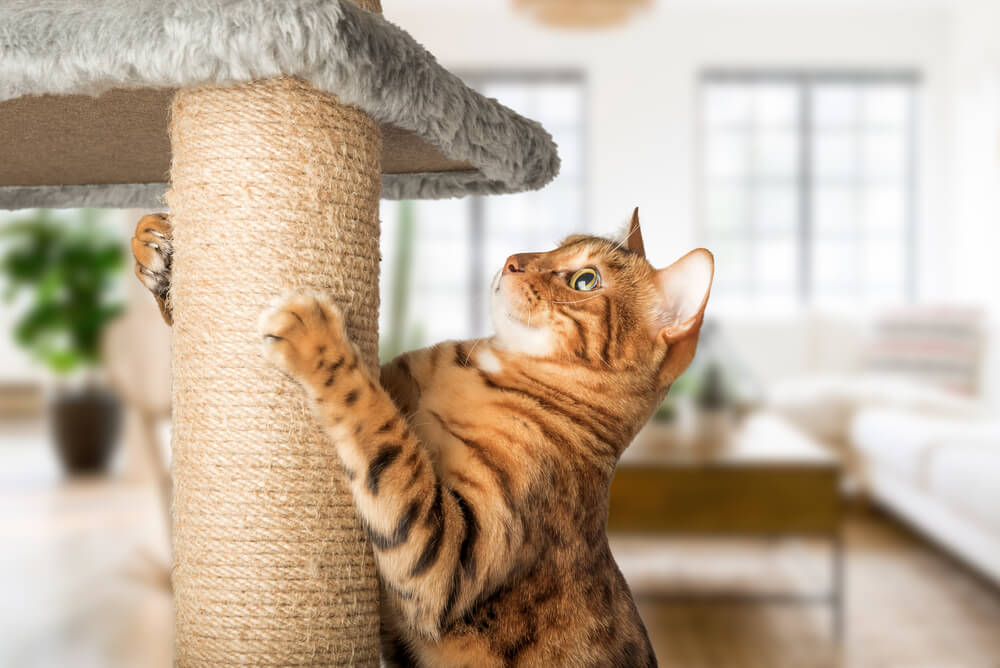
The most reliable way to get a cat to stop spraying is to reduce stress. If your pet is already spayed or neutered, then stress or anxiety is the most likely factor causing them to spray. Avoid punishing your pet for spraying, as this may only cause them to feel more uncomfortable in their own home.
Start by making sure your cat has their own “territory” within the house. This includes a resting space, a litter box, and food bowls away from other pets. A multi-tiered cat tree can provide plenty of hiding places where a cat can feel safe and secluded.
You can also ease your cat’s anxiety with thoughtful stress-reducing products, such as:
- Calming pheromone sprays
- Oil diffusers and diffuser refills for cats
- Anxiety-reducing supplements
- A calming cat harness for outdoor anxiety
Keep in mind that cat spraying can also be the result of serious medical conditions. It is worth visiting your veterinarian to check for urinary tract infections, kidney disease, or other conditions that could affect urination habits. These conditions can lead to spraying behavior if they make it painful or uncomfortable for the cat to urinate in the usual manner.
How To Remove Cat Spray Smell
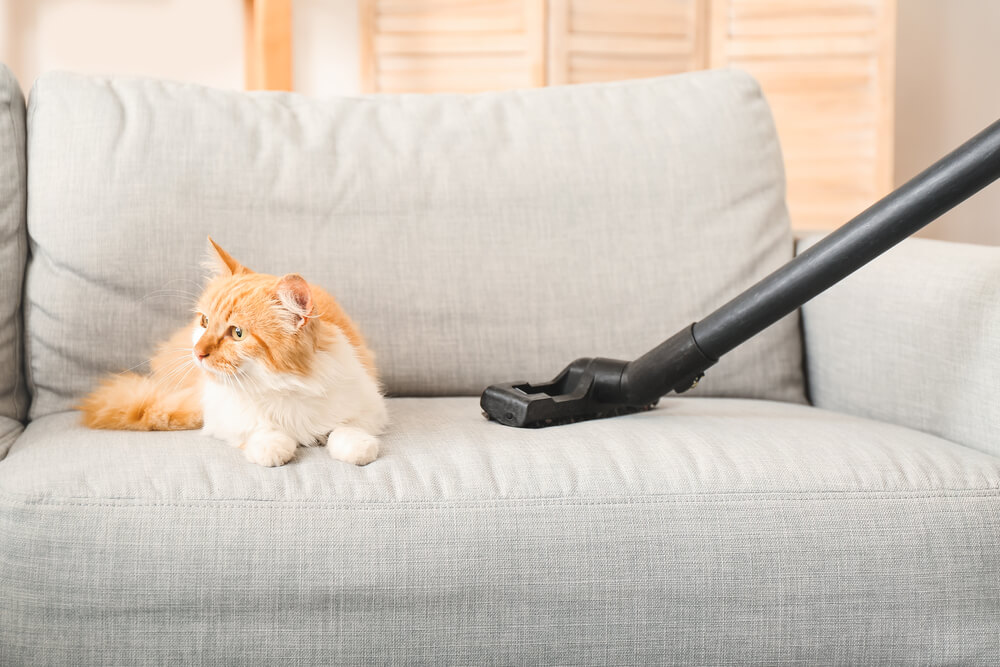
You can remove the cat spray smell from the carpet and other surfaces by using enzyme-based cleaners or a combination of baking soda and vinegar. Cat urine and cat spray have a pungent ammonia-like smell that can be very musky or fishy – it is important to put the right cleaning solutions to work as soon as you detect these foul odors.
Consider using specialized cleaning products like the Jackson Galaxy Pet Stain & Odor Remover Spray available from BaxterBoo. Our cleaning formulas are non-toxic and completely safe for your pets.
Follow these steps to remove the cat spray smell from most surfaces or materials:
- Before applying the cleaning agent, use a fresh cloth to dab away as much urine as possible from the affected area.
- Rinse with clean water and then dry the area. If the area consists of carpet, vacuum up the excess moisture without applying any heat, as this can cause the stain to set.
- Apply the cleaning agent, following the instructions provided by the manufacturer. If the cat spray is already dry or if it causes a stain, it may be necessary to apply the cleaner multiple times.
- Cover the area and keep pets away until completely dry.
While many types of cleaners may be effective at removing the cat spray smell, do not use ammonia-based solutions. Ammonia is a component of cat urine, so applying more of it to the area may reinforce the cat’s mindset that it is an appropriate spot to spray.
We Can Help You Overcome Your Cat Spraying Challenge
At BaxterBoo, we know that every aspect of raising a pet is a labor of love. It can be frustrating when your feline friend causes a mess or spreads unpleasant odors, but it is just one of the many challenges we want to help you overcome in the process of creating a healthy home for your pet. Browse our catalog of cat products today and start building your personalized shopping experience.


