Save 15% on your 1st Autoship learn more

 Email us
 Live Chat
 FAQs
FAQs





Heat is the weather condition that can be the most life-threatening, and this applies to dogs as well as human beings. If you are thinking about adding a dog to your family, it is a good idea to consider the climate where you live and try to choose a pet that is well suited to it. Dogs that were bred in warmer environments tend to do better in the heat than dogs that were bred for colder climates.
What Characteristics Make a Dog Tolerant of the Heat?
If you are looking for a dog that can tolerate hot temperatures, there are some specific physical characteristics that you should look for. For example, dogs with long snouts tend to tolerate heat better than brachycephalic, or short-faced, dogs. When a long-snouted dog inhales, the air cools inside its nose as it travels through the nasal passages. This works a bit like an air conditioner to cool your dog's body. Brachycephalic dogs do not have this benefit, so breathing hot air can be tough on them.
Generally speaking, small dogs tend to do better in the heat than large dogs because they have a higher ratio of skin to body weight. Of course, there are exceptions to this rule and other factors, such as the length of the snout, come into play. Ultimately, there are both large and small dogs that tolerate heat well, but small dogs may have an advantage.
Long, floppy ears can hold heat close to the body. Dogs with ears that stick up allow air to circulate around them, and because the blood vessels in the ear are close to the surface, this can help cool the dog's body.
The coat is probably the factor that most people think of first when determining whether a dog can tolerate hot weather. It helps if the coat is short with a single layer. Dogs bred for colder regions tend to have a double-layer coat: a coarse outer coat for waterproofing and a soft undercoat for insulation. The coat color also makes a difference as dark colors absorb heat while light colors reflect it.
Which Dog Breeds Do Best in the Summer Heat?
Every dog is an individual, and its breed gives you a set of reasonable expectations, not foregone conclusions. There is no predicting with absolute certainty whether a dog of a particular breed will tolerate the heat, but here are some breeds that tend to withstand it well.
1. Greyhound: A greyhound is a canine professional athlete, bred with a lean, lanky frame that carries very little body fat. Therefore, it tends to be tolerant of hot temperatures. Greyhounds are primarily bred for dog racing. A greyhound's racing career represents approximately a third of its expected lifespan, and there are programs that promote the adoption of retired racing dogs once their professional careers are over. Greyhounds are among the gentlest and sweetest-tempered dog breeds. By welcoming a retired racer into your home, you are saving the life of a beautiful, loving animal that might otherwise be destroyed merely for having outlived its usefulness.
2. Chinese Crested: If a short coat is good for heat tolerance, no coat at all may be even better. This seems to be the case with the Chinese crested, a small breed of dog that has long tufts of hair on its head, legs, and tail but none on the rest of its body. However, while the Chinese crested is tolerant of heat, its exposed skin is vulnerable to sunburn. Protective clothing can prevent exposure to ultraviolet radiation.
3. Afghan Hound: The Afghan hound originates from a place where extremes of both heat and cold are common. Thus, it is well adapted to tolerate both. The luxuriant silky locks of an Afghan hound consist of a single layer that keeps it warm in the cold without making heat exceptionally uncomfortable. However, the long coat does require regular grooming to prevent tangling and mats.
4. Chihuahua: The smallest of dog breeds, the chihuahua originated in Mexican desert regions. Its small body size, short coat, and long ears make it well adapted for hot environments.
5. Great Dane: From the smallest dog breed to the largest, the Great Dane has several characteristics that help it tolerate the heat despite its enormous size. Its long, lanky body gives it a higher skin-to-body-weight ratio that helps it cool itself more efficiently. Additionally, Great Danes are low-activity dogs, which helps them conserve energy in the heat. However, a Great Dane with a darker coat may not be as tolerant as one with a lighter coat.
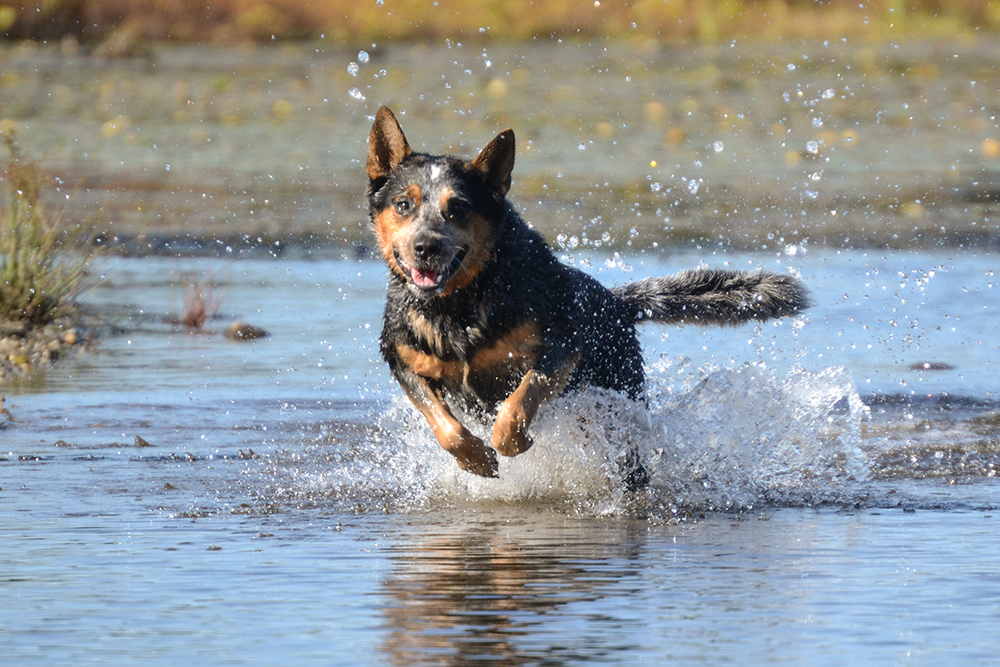
6. Australian Cattle Dog: Also known as a heeler, this is a medium-sized dog bred Down Under to help herd cattle. It tends to have good heat tolerance due to its short coat and erect ears.
How Can You Keep Dogs Safe in the Heat?
Just because a dog breed tends to be heat tolerant doesn't mean that individuals of that breed are immune to the effects of the sun. All dogs are susceptible to heat illness under the right conditions. Here are certain heat safety measures you should observe at all times:
- When out in the yard, make sure your dog has access to shade so he can retreat out of the direct rays of the sun.
- Your dog should always have access to fresh water to drink. Splashing around in a pool occasionally may also help her to keep cool.
- Avoid leaving your dog outside unsupervised for extended periods when it is hot, and know the signs of heat illness.
Above all, regardless of breed, never leave your dog alone in a car when the outside temperature is over 65 degrees Fahrenheit.