
 Save 15% on your 1st Autoship learn more

 Email us
 Live Chat
 FAQs
FAQs





Introduction
You lean in for a happy morning nuzzle only to be met with a cloud of breath that smells like old socks and fish. Many owners assume that "dog breath" is just a natural part of being a canine. However, that lingering odor is often the first sign of a much larger health problem. At BaxterBoo, we talk to pet parents every day who wonder if they really need to scrub those pearly whites or if a few chew toys are enough.
The truth is that oral hygiene is a cornerstone of your dog's overall wellness and longevity. This post covers why dental care is mandatory, the signs of dental disease to watch for, and how to build a routine that works for your lifestyle. You will learn about home care techniques and when it is time to seek professional help. Proper dental care can add years to your dog's life.
Quick Answer: Yes, cleaning your dog's teeth is vital for their long-term health. Regular brushing and professional cleanings prevent painful infections and systemic diseases like heart or kidney failure.
Why Dental Care Is Not Optional
Many people believe that because wild wolves do not brush their teeth, our domestic dogs do not need to either. This is a dangerous misconception. Modern dogs live much longer than their ancestors. They also eat diets that often contribute to plaque buildup. When plaque sits on the tooth, it combines with saliva and minerals to form tartar. This process happens in as little as 36 to 48 hours.
Tartar is a hard substance that cannot be removed with a toothbrush. It provides a perfect home for bacteria to thrive. Once bacteria take hold, they cause inflammation of the gums. This is known as gingivitis. If left alone, it progresses to periodontal disease. This condition destroys the bone and tissues that hold the teeth in place.
The danger does not stay in the mouth. The mouth is highly vascular. This means bacteria from infected gums can easily enter the bloodstream. From there, the bacteria travel to the heart, liver, and kidneys. These organs are the body’s filters. When they are bombarded with bacteria from the mouth, they can begin to fail. Routine cleaning is about much more than a fresh-smelling mouth. It is about protecting your dog's internal organs.
Key Takeaway: Oral bacteria do not stay in the mouth. They can travel through the blood to damage the heart and kidneys, making dental hygiene a full-body health priority.
Recognizing the Signs of Dental Problems
Dogs are experts at hiding pain. This is an evolutionary trait that kept their ancestors safe from predators. Because of this, a dog might have a significant toothache and still act like everything is fine. You cannot wait for them to stop eating to decide there is a problem. By the time a dog stops eating, the pain is usually unbearable.
You should perform a "flip the lip" test once a week. Lift your dog's upper lip and look at the back molars. These are the teeth that usually accumulate the most tartar. Look for these specific warning signs:
- Red or bleeding gums: Healthy gums should be a soft pink color. Bright red or bleeding edges are a sign of inflammation.
- Yellow or brown buildup: This is tartar. It usually starts near the gum line and spreads downward.
- Persistent bad breath: A mild "doggy" smell is normal, but a foul or rotting odor indicates infection.
- Pawing at the face: This can be a sign of oral discomfort or a stuck piece of debris.
- Loose or missing teeth: Adult dogs should not lose teeth naturally.
- Excessive drooling: This is often a response to oral pain or irritation.
- Chewing on one side: If your dog tilts their head to chew, they may have a painful tooth on the other side.
Vet Tip: If you notice blood on your dog's chew toys or in their water bowl, schedule a veterinary exam immediately. Bleeding gums are a clear indicator of active infection that requires professional attention.
How to Brush Your Dog's Teeth at Home
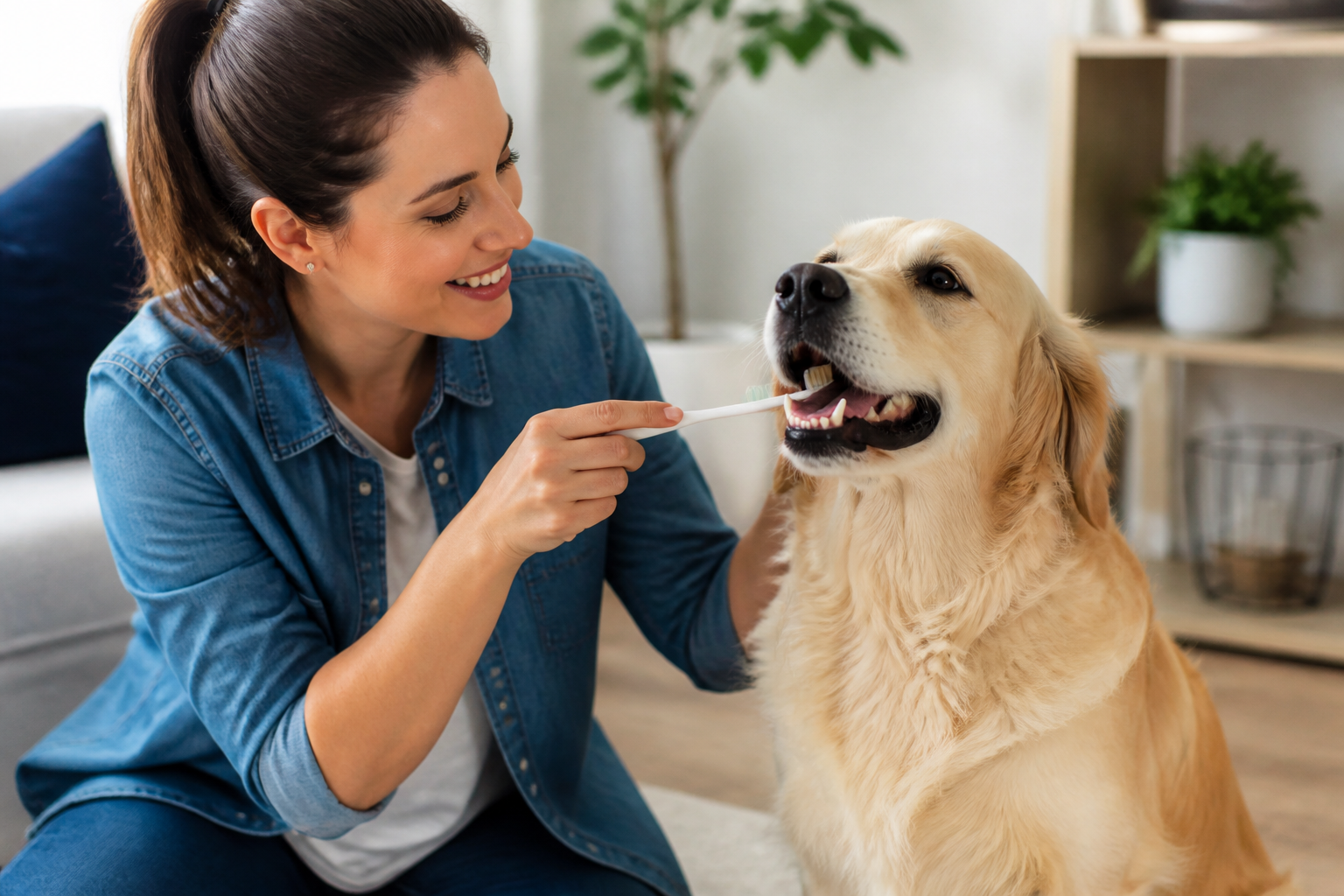
Brushing is the gold standard for home dental care. It is the only way to physically break up the film of plaque before it hardens into tartar. While it might seem daunting, most dogs can learn to tolerate or even enjoy the process. The key is to start slowly and use positive reinforcement.
You must never use human toothpaste. Our toothpaste contains fluoride and often includes xylitol. Both of these ingredients are toxic to dogs. Use pet toothpaste made specifically for dogs. These come in flavors like poultry, beef, or peanut butter to make the experience more pleasant.
A Step-By-Step Brushing Guide
Step 1: Introduce the paste. / Let your dog lick a small amount of pet toothpaste off your finger. Do this for a few days without trying to brush.
Step 2: Get them used to mouth handling. / Gently lift the lip and rub your finger along the gums. Reward them with a treat afterward.
Step 3: Introduce the brush. / Use a soft-bristled dog toothbrush or a silicone finger brush. Put a bit of paste on it and let them lick it off the bristles.
Step 4: The first brush. / Aim for the outside surfaces of the upper teeth. Use a circular motion. You do not need to worry about the inside surfaces yet, as the tongue handles much of that cleaning.
Step 5: Increase the duration. / Slowly work your way toward the back molars. Aim for 30 to 60 seconds total. Always end with praise and a high-value reward.
Bottom line: Consistent daily brushing is more effective than a long scrubbing session once a month.
Alternatives to the Toothbrush
We know that not every dog is a willing participant in brushing. Some dogs have a history of mouth trauma or extreme anxiety. While brushing is best, there are other tools that can help reduce plaque buildup between professional cleanings.
Dental chews are a popular option. These are designed to be abrasive. As the dog chews, the texture scrapes against the tooth surface. Brands like Greenies are specifically designed for this purpose. However, chews only work if the dog actually chews them. If your dog gulps treats whole, a chew will not provide any dental benefit.
Specialized chew toys can also help. Rubber toys with ridges or nubs, like those from KONG, can help massage the gums. These toys often stimulate saliva production. Saliva contains natural enzymes that help fight bacteria. You can even find toys designed to be "stuffed" with pet toothpaste to encourage self-cleaning.
Water additives and dental wipes are another layer of defense. Wipes are great for dogs who hate the sensation of a brush. You simply wrap the wipe around your finger and rub the teeth. Water additives are tasteless liquids you add to the bowl. They contain ingredients that help break down the biofilm of bacteria.
- Dental Chews: Look for the VOHC (Veterinary Oral Health Council) seal of approval.
- Rubber Toys: Choose toys with textures that can get between teeth.
- Dental Wipes: Good for quick daily maintenance when time is short.
- Water Additives: An easy way to fight bacteria every time your dog takes a drink.
The Role of Diet in Dental Health
What your dog eats has a direct impact on their mouth. There is a long-standing debate about wet food versus dry food. Many people think dry kibble cleans teeth simply because it is crunchy. This is mostly a myth. Most kibble is small and brittle. It shatters as soon as a tooth touches it, providing almost no abrasive action.
However, specific "dental diets" are different. These formulas are made with larger kibble sizes. They have a fibrous texture that does not shatter. Instead, the tooth sinks into the kibble, allowing the fibers to scrub the tooth. These diets often include minerals that bind to calcium in the saliva. This prevents the calcium from hardening into tartar.
Our pharmacy carries a variety of prescription dental diets through our partnership with Pet's Choice. These foods are specifically formulated for dogs with chronic dental issues. If your dog has a history of rapid tartar buildup, a prescription diet like Royal Canin Dental might be a helpful tool. You will need a prescription from your veterinarian to order these specialized foods.
Key Takeaway: Standard kibble is not a substitute for brushing, but specialized dental diets can provide meaningful abrasive cleaning for dogs prone to tartar.
Understanding Professional Cleanings
Even with perfect home care, most dogs will eventually need a professional cleaning. This is just like humans going to the dentist. A professional cleaning at the vet's office goes far beyond what you can do at home.
A major point of concern for owners is anesthesia. A proper dental cleaning must be done under general anesthesia. Anesthesia-free cleanings are purely cosmetic. They only remove the tartar you can see on the surface. They cannot reach the area under the gum line, which is where the real disease lives. Anesthesia allows the vet to perform a full exam without stressing the dog.
What Happens During a Vet Cleaning?
- Blood Work: The vet checks organ function to ensure anesthesia is safe.
- Scaling: The vet uses an ultrasonic scaler to remove tartar above and below the gum line.
- Polishing: Scaling leaves tiny scratches on the enamel. Polishing smoothes these out so bacteria cannot easily reattach.
- X-rays: Many dental problems are hidden inside the jawbone. X-rays show abscesses or root decay.
- Probing: The vet checks for "pockets" in the gums that indicate bone loss.
If the vet finds a tooth that is rotting or has a broken root, they will perform an extraction. Removing a painful, infected tooth is always better for the dog than leaving it in. Dogs feel much better once the source of infection is gone. They can eat perfectly fine with missing teeth.
Vet Tip: Do not be afraid of anesthesia. Modern monitoring equipment makes it very safe. The risk of untreated dental infection is usually much higher than the risk of the procedure.
Breed and Age Considerations
Not all dogs are created equal when it comes to their mouths. Some breeds are genetically predisposed to dental disasters. Small and toy breeds are the biggest concern. Breeds like Yorkies, Chihuahuas, and Pugs have the same number of teeth as a Great Dane but a much smaller jaw. This leads to overcrowding.
Overcrowded teeth create thousands of tiny nooks and crannies where food and bacteria get trapped. These small dogs often need their first professional cleaning as early as two years old. Brachycephalic (flat-faced) breeds also have misaligned jaws. This prevents the natural self-cleaning that happens when teeth meet properly.
Age also plays a role. As dogs get older, their immune systems change. Senior dogs may have more difficulty fighting off oral bacteria. If your dog is over seven years old, dental health becomes even more critical. We often see senior dogs with "grumpy" behavior that disappears once a painful tooth is removed.
- Small Breeds: Need daily brushing and frequent vet checks.
- Brachycephalic Breeds: Watch for "hidden" teeth that may be trapped in the gums.
- Working Breeds: Larger dogs are more prone to fractured teeth from chewing stones or hard bones.
- Seniors: Regular oral exams can prevent systemic infections that strain the heart.
The Cost of Neglect
It is tempting to skip the dental checkup to save money. However, preventive care is always cheaper than emergency treatment. A routine cleaning is a fraction of the cost of a multi-tooth extraction surgery. Beyond the money, the cost to your dog's quality of life is significant.
Chronic oral pain can lead to irritability and lethargy. You might think your dog is just "slowing down" because they are getting older. In reality, they may be dealing with a constant, throbbing toothache. Once the infection is treated, many owners report that their dog acts like a puppy again.
We want to help you stay ahead of these issues. Our MVP Rewards program allows you to earn points on dental supplies and food. This makes it easier to afford the tools you need for a daily routine. Staying consistent with home care is the best way to keep your dog off the surgery table.
Bottom line: Investing in a $10 toothbrush and daily effort saves you thousands of dollars in veterinary surgery fees later.
Creating a Successful Routine
The best dental plan is one you can actually stick to. You do not have to do everything at once. If you are just starting, focus on one habit. Maybe that is adding a dental chew after dinner or using a wipe once a day.
Consistency is more important than perfection. If you miss a day of brushing, do not give up. Just start again the next day. Set a reminder on your phone or pair the task with something you already do, like feeding them or taking them for their last walk.
At BaxterBoo, we recommend a "layered" approach to dental health:
- Daily: Brush the teeth or use a dental wipe.
- Daily: Provide one VOHC-approved dental chew or treat.
- Weekly: Check the mouth for redness, odor, or new tartar.
- Annually: Visit the vet for a professional oral exam.
If your vet recommends a specific medication for gum health or a prescription diet, our pet pharmacy is here to help. Through our pharmacy, we can fulfill prescriptions for dental-related health needs quickly and reliably. We carry over 500 trusted brands to ensure you have the best selection for your dog's specific needs.
Summary of Canine Dental Care
Cleaning your dog's teeth is a non-negotiable part of responsible pet ownership. It prevents pain, keeps the breath fresh, and protects vital organs like the heart and kidneys. While professional cleanings are necessary for deep care, your daily efforts at home make the biggest difference.
- Brush daily with dog-safe toothpaste to remove plaque.
- Use dental chews and toys as a secondary defense.
- Watch for signs like bleeding gums or foul odor.
- Schedule annual vet exams to catch problems early.
- Consider a prescription dental diet for high-risk breeds.
Caring for your dog’s mouth is one of the easiest ways to ensure they stay by your side for a long, healthy life. If you need supplies to get started, explore our dog dental care collection for everything from finger brushes to enzyme-powered treats.
Key Takeaway: A healthy mouth is the gateway to a healthy body. Start a dental routine today to protect your dog's heart and kidneys for years to come.
FAQ
Can I use human toothpaste for my dog? No, you should never use human toothpaste for a dog. Human toothpaste often contains fluoride and xylitol, which are toxic to dogs if swallowed. Dogs cannot spit out the foam, so they ingest everything you put on the brush. Always use a specially formulated pet toothpaste that is safe to swallow and comes in flavors dogs enjoy.
How often does my dog really need a professional cleaning? Most dogs benefit from a professional cleaning every 12 to 18 months. However, small breeds or dogs with a history of dental disease may need a cleaning every six months. Your veterinarian can give you a specific recommendation based on the rate of tartar buildup they see during a wellness exam.
Do dental chews actually work to clean teeth? Dental chews can be effective at reducing plaque and tartar, but they are not a replacement for brushing. They work through mechanical abrasion as the dog chews. For the best results, look for products with the VOHC seal of approval and ensure your dog spends time chewing the treat rather than swallowing it in large chunks.
Is it safe to put my senior dog under anesthesia for a cleaning? Modern anesthesia is very safe for senior dogs, provided they have a thorough pre-operative screening. Vets perform blood work to ensure the liver and kidneys can process the anesthesia. For many senior dogs, the risk of heart disease caused by a mouth full of bacteria is much higher than the risk of a controlled anesthetic procedure.






