
 Save 15% on your 1st Autoship learn more

 Email us
 Live Chat
 FAQs





Introduction
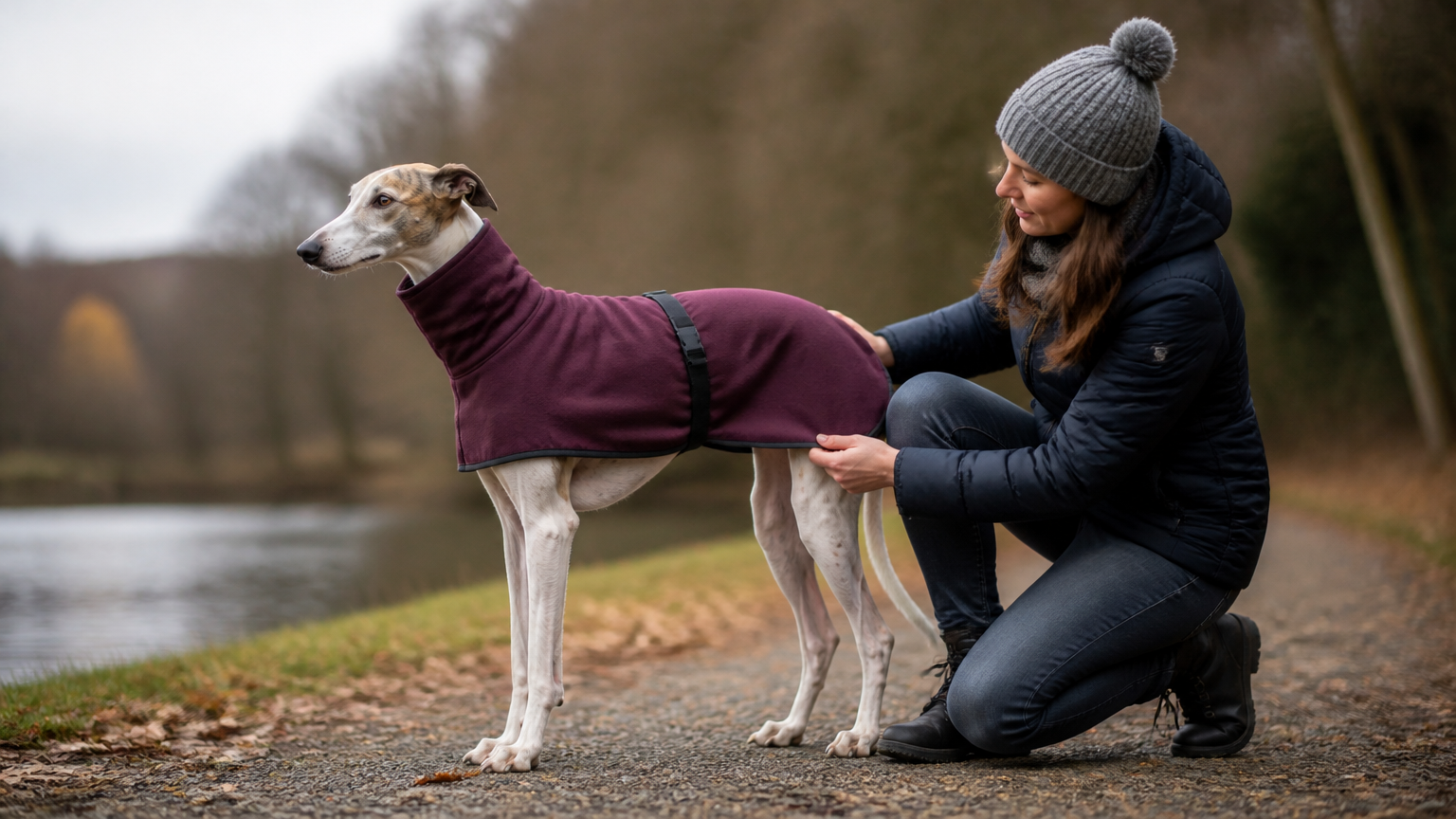
A coat that fits your sighthound’s chest can hang loose at the waist. One that stays snug around the middle may leave too much of the back uncovered. Greyhounds, Whippets, and Italian Greyhounds can all present that fitting challenge, especially when you’re shopping for winter weather.
At BaxterBoo, we know a useful coat has to work for your dog’s shape and your usual walks. We’ll help you compare coverage, materials, and measurements so you can narrow down the options. Start with a coat that fits the chest and back, then choose the warmth and weather protection your dog needs.
Why Sighthound Coats Need a Different Cut
Many sighthounds have a deep chest, a narrow waist, a long neck, and a short coat. That shape can make an ordinary boxy dog jacket difficult to fit. A coat may fasten around the ribs but gape behind them, or it may fit the waist while pulling across the shoulders.
A sighthound-shaped coat follows the body more closely. Look for a long back panel and an adjustable underside that reaches around the chest without bunching at the waist. A shaped chest panel can add coverage while leaving the front legs free to move.
A breed-specific label is a helpful starting point, not a guarantee. A general dog coat can also work if its measurements and shape suit your dog. Check the fit rather than choosing by breed name or weight alone.
Features Worth Checking
- Back coverage: The coat should cover most of the back without pressing into the tail or interfering with movement.
- Chest and belly coverage: Look for a panel that covers the chest and part of the underside without squeezing or rubbing.
- Adjustable fastenings: Straps or closures should let you fit the chest without leaving loose ends that drag.
- Neck coverage: A higher collar can cover more of a long neck, but it should not restrict breathing or movement.
- Leash access: Check that you can attach your leash to your usual collar or harness without pulling the coat out of place.
Dog Coats


How to Measure Your Sighthound for a Coat
Use a flexible measuring tape and measure your dog while they stand naturally. Keep the tape close to the body without pulling it tight. Because sizing methods differ, follow the directions on the specific coat’s size chart.
Step 1: Measure the Back
Measure from the base of the neck to the base of the tail, unless the manufacturer’s chart uses different landmarks. Don’t include the tail. This measurement helps you judge how much of the back the coat will cover.
Step 2: Measure the Chest
Wrap the tape around the deepest part of the chest, usually just behind the front legs. Keep it level and give your dog room to breathe normally. A coat must fit this measurement even if the waist is much narrower.
Step 3: Measure the Neck
Measure around the neck where the coat’s opening will sit. For a high-neck coat, check whether the maker requests a measurement at the base of the neck or higher up. The opening should allow your dog to turn their head comfortably.
Step 4: Compare All Measurements
Check the manufacturer’s chart for back, chest, and neck measurements. If the coat also lists a waist measurement, use it to assess how well the underside may fit your dog’s tucked shape.
If your dog falls between sizes, don’t assume that the larger size will solve every problem. A larger coat may fit the chest but hang too loosely elsewhere. Contact the seller about the measurements or choose a style with more adjustment.
Before ordering, keep these details handy:
- Your dog’s back, chest, and neck measurements.
- The coat’s own sizing instructions, including any fit allowance.
- The harness or collar you plan to use with it.
- Any measurements that fall outside the listed range.
Choosing a Winter Coat by Breed
Greyhounds, Whippets, and Italian Greyhounds share some fitting challenges, but they aren’t interchangeable sizes. Use the breed description to narrow your search, then check your individual dog’s measurements.
Greyhound Winter Coats
For a Greyhound, start with a coat long enough for the back and deep enough through the chest. An adjustable belly panel can help the coat sit closer to the narrow waist. Check that it doesn’t pull across the chest when your dog takes a full stride.
For cold, wet walks, consider an insulated coat with an outer layer suited to rain or snow. If your Greyhound dislikes clothing pulled over the head, a coat that opens at the front or fastens around the body may be easier to introduce.
Whippet Coats for Winter
A Whippet coat needs room at the chest and a close, comfortable fit behind the ribs. A long back panel and adjustable closure are useful details to compare. Whippets’ short coats can also make them sensitive to cold, so consider both the weather and how long your dog will be outside.
A soft fleece may suit a dry, cool outing, while an insulated weather shell offers another option for colder or wetter walks. Make sure the shoulders and front legs move freely in either style.
Italian Greyhound Dog Coats
Italian Greyhounds need small-scale sizing, but a small size alone doesn’t guarantee the right shape. Look for enough room through the chest without excess fabric around the slim waist or long legs.
A lightweight, flexible coat can be easier to move in than a bulky one. Check the neck opening, leg openings, and belly coverage, especially if straps or thick seams seem large against your dog’s frame. For a growing dog, remeasure before relying on a previous size.
Which Coat Material Fits Your Weather?
Start with the conditions you encounter most often. A warm lining and a weather-resistant outer layer do different jobs, and a coat may offer one without the other.
| Coat type | Useful for | What to check |
|---|---|---|
| Fleece or sweater | Cool, dry walks or a chilly indoor space | Softness, chest fit, and whether the fabric restricts movement |
| Lightweight raincoat | Wet weather when your dog needs less insulation | Coverage and whether the material is water-resistant or waterproof |
| Insulated winter coat | Cold walks when your dog needs more warmth | Lining, secure fit, and enough room to move |
| Insulated coat with a weather shell | Cold, wet, or snowy outings | Outer fabric, coverage, closures, and care instructions |
Water-resistant fabric can help with some moisture, but don’t assume it will keep your dog dry in prolonged rain. A waterproof fabric is a different claim, and openings, seams, and exposed areas can still allow water in. Check the product description rather than judging by appearance.
A fleece layer may be comfortable on its own in dry weather. If you put a shell over it, check the fit again with both layers on. The chest, neck, and shoulders still need room, and the extra fabric shouldn’t make the harness too tight.
Your dog’s response matters too. Weather, activity, age, and individual comfort all affect the choice. Keep walks flexible rather than relying on one coat for every condition.
Check the Fit Before Your First Walk
Try the coat on indoors for a short session while you can watch your dog. Fasten it according to the maker’s instructions, then let your dog stand, walk, and turn. Offer a treat if that helps make the fitting a positive experience.
The coat should stay reasonably centered without squeezing. Watch for fabric pulling behind the front legs, a collar pressing against the throat, or a belly panel bunching against the waist. Check that your dog can relieve themselves without soiling the coat.
If your dog uses a harness, try it with the coat before leaving home. Some coats have an opening for a leash; others may need the harness worn over the coat. Check your dog’s measurements before choosing a harness. A size label alone won’t tell you how it fits.
Look for these signs during the trial:
- Your dog can walk and turn without a shortened stride.
- The coat stays in place without twisting or sliding backward.
- The neck and chest fit without obvious pressure or rubbing.
- Closures stay secure, with no long loose straps.
- The leash connects without tugging the coat or distorting the harness.
If the coat shifts, adjust the closures and try again. If it still rubs, gaps, or restricts movement, a different cut may be a better choice than a tighter fastening.
Keep the Coat Comfortable Through Winter
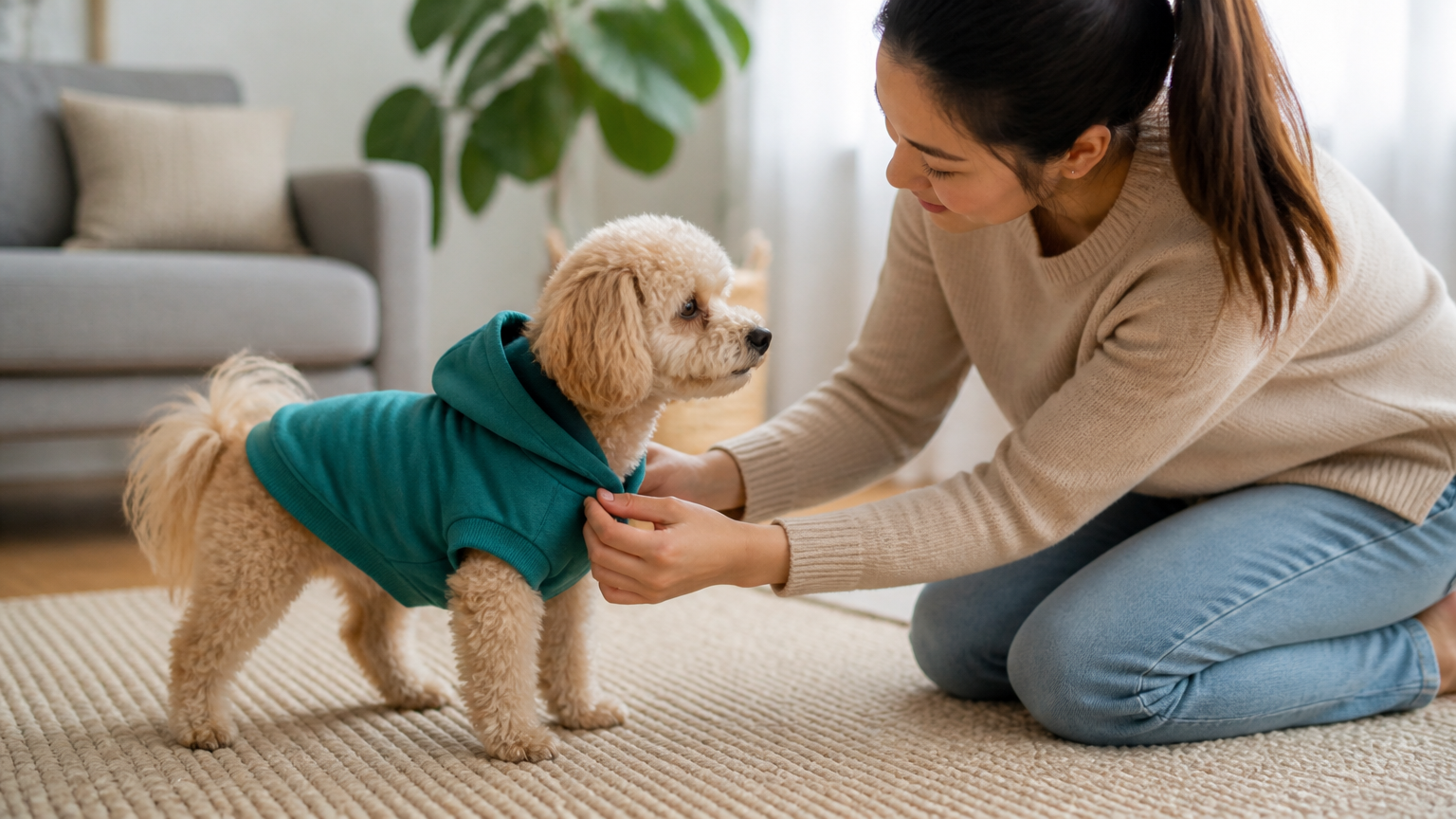
Introduce a new coat gradually, especially if your dog is unsure about the sound of fasteners or fabric moving against their body. Let your dog inspect it, reward calm behavior, and build up to a brief walk. An opening-front style may be worth considering for a dog who dislikes garments going over the head.
Check the coat after walks for dampness, dirt, and signs of rubbing. Dry a wet coat before using it again, and follow its care label. Pay attention to the chest and the area behind the front legs, where repeated movement can cause friction.
A coat adds coverage, but it doesn’t make every length of winter walk comfortable. If your dog is shivering, lifting their paws, or reluctant to continue, head inside and warm them up. Contact your veterinarian if signs of discomfort are severe, persist, or concern you.
Remove outdoor clothing when it’s no longer needed, and check your dog regularly for warmth and comfort if they wear a layer indoors. Avoid leaving clothing on an unattended dog where it could snag.
Finding the Right Coat
The best choice is the one that fits your dog’s proportions and the walks you actually take. Start with measurements, then compare the cut and fabric before deciding on a style.
- Choose room for the chest and shoulders without excess fabric at the waist.
- Match insulation and weather protection to your usual conditions.
- Test the coat with your dog’s collar or harness before heading out.
Key Takeaway: A sighthound-shaped cut is a useful starting point, but your dog’s measurements and movement are the final fit check.
Explore the dog coats in our seasonal apparel category at BaxterBoo with your dog’s measurements in hand.
FAQ
Do Greyhounds need coats in winter?
Many Greyhounds can benefit from a coat in cold weather, especially on longer or wet outings. The right layer depends on the individual dog and the conditions, so watch for signs of discomfort and adjust the walk as needed. (akc.org)
Can a Whippet wear a regular dog coat?
Yes, if the coat fits the chest, back, and waist comfortably. A style shaped for a sighthound may be easier to fit, but measurements and a movement check matter more than the label.
How should an Italian Greyhound coat fit?
It should cover the body without squeezing the chest, restricting the legs, or hanging loosely around the waist. Check the size chart and try the coat while your dog stands, walks, and turns.
Can my sighthound wear a coat indoors?
A light layer may be useful in a chilly room if your dog is comfortable wearing it. Check your dog regularly, remove the layer if they seem too warm, and avoid leaving an unattended dog in clothing that could snag.



- Site & Contents BaxterBoo.com. BaxterBoo is located in the United States.
- Privacy & Security
- Terms of Use
- Accessibility Statement
