
 Save 15% on your 1st Autoship learn more

 Email us
 Live Chat
 FAQs






Introduction
You’ve found a bag of dog food with freeze-dried meat, but the label leaves you wondering what’s actually in the bowl. Are those pieces a complete meal, a topping mixed into kibble, or simply a coating? And does freeze-dried organ meat change how you should feed it?
At BaxterBoo, we know those details matter when you’re choosing an everyday food. A good starting point is to look beyond the pictures on the front of the bag. Check how the meat is included, whether the whole recipe is complete and balanced, and which life stage it supports. The right choice is one that fits your dog’s nutritional needs and works for your household.
What Is Dog Food With Freeze-Dried Meat?
Dog food with freeze-dried meat contains meat that has had moisture removed through freeze-drying. Depending on the recipe, you might see recognizable pieces mixed with kibble, a coating on the kibble, or a food made mostly of freeze-dried pieces.
Freeze-dried does not automatically mean cooked or raw. Some products use freeze-dried raw meat, while others may start with cooked ingredients. Check the package for that distinction, especially if you have concerns about handling raw food.
The presence of meat pieces doesn’t tell you whether a recipe is suitable as your dog’s only food. For that, look for the nutritional adequacy statement on the package.
Freeze-Dried Dog Food


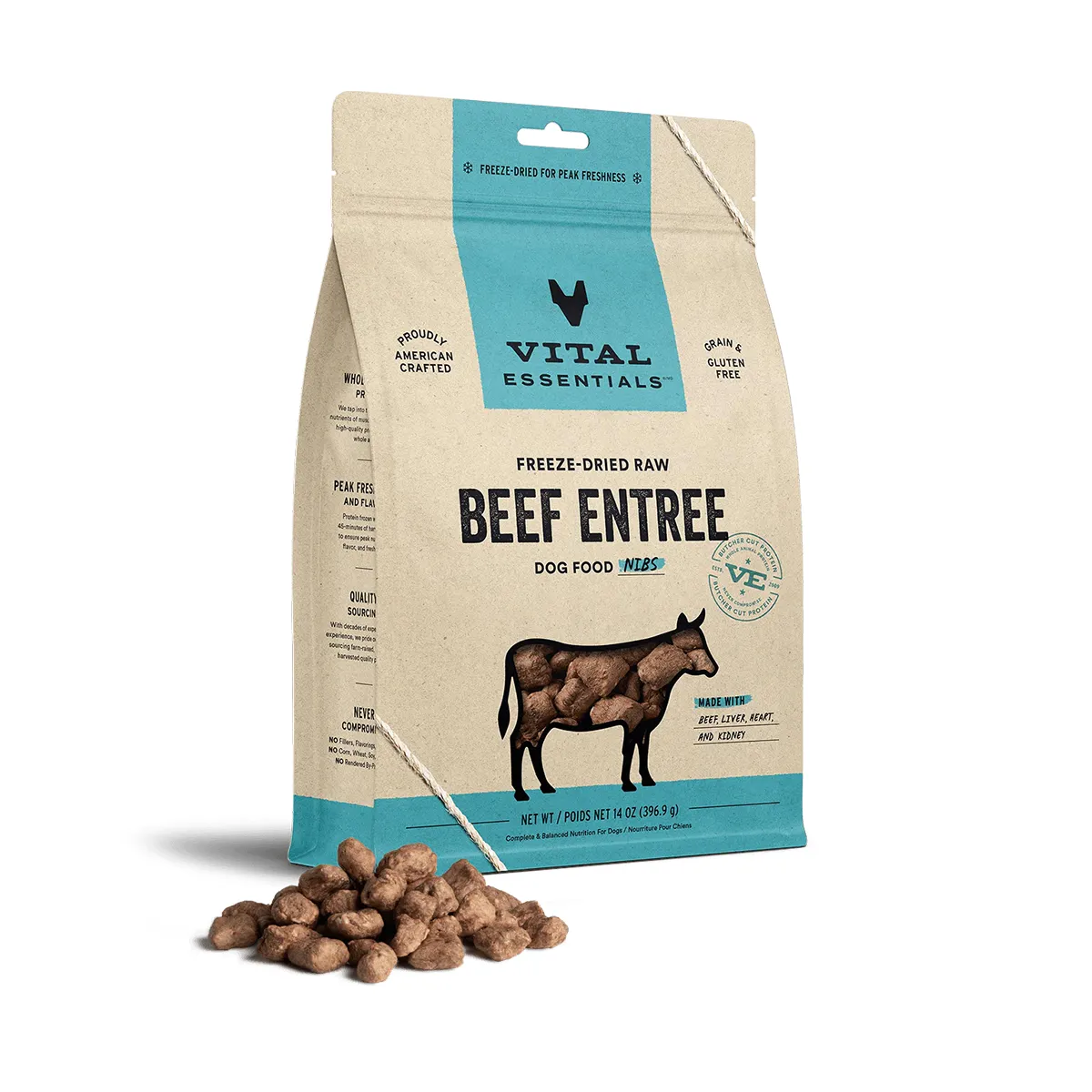
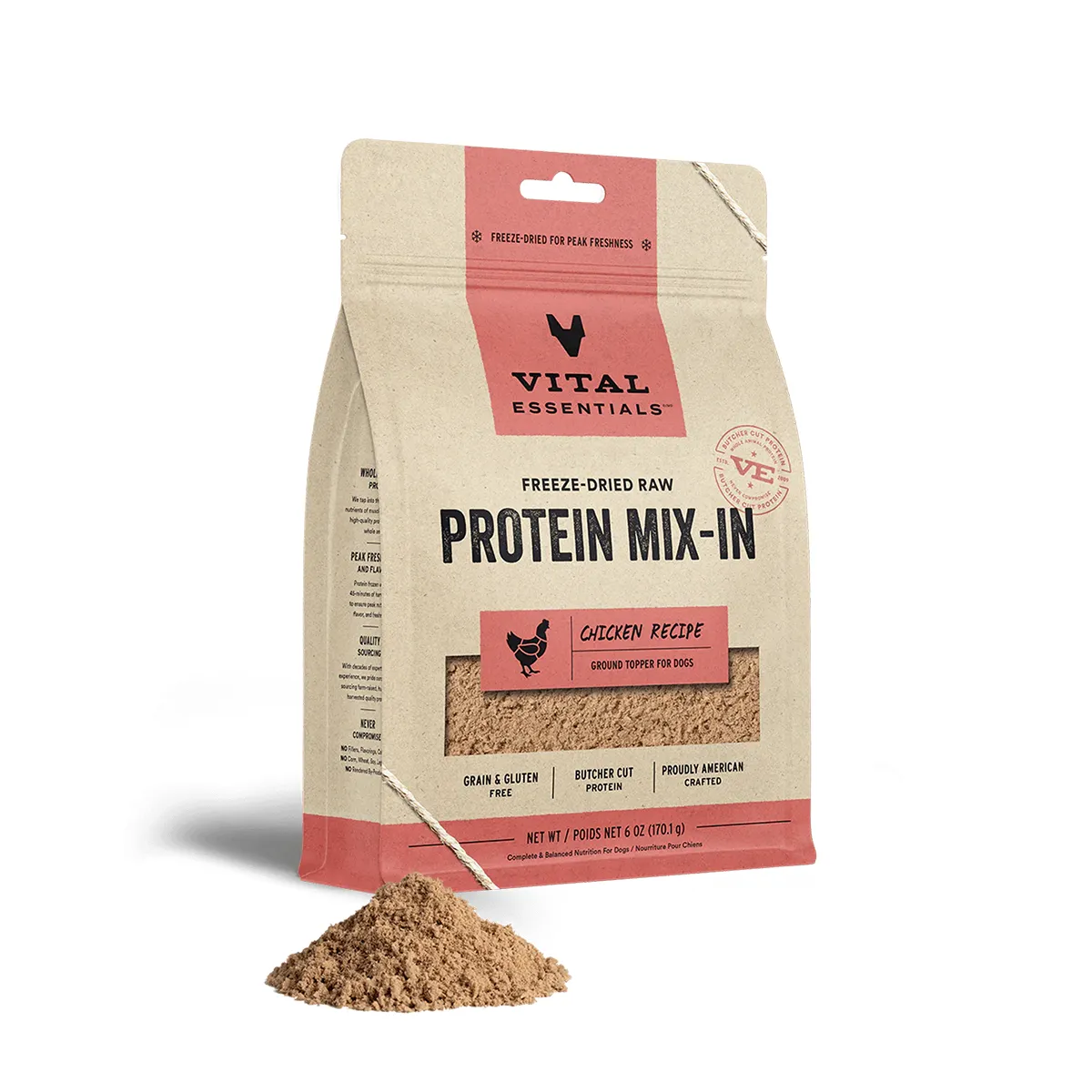

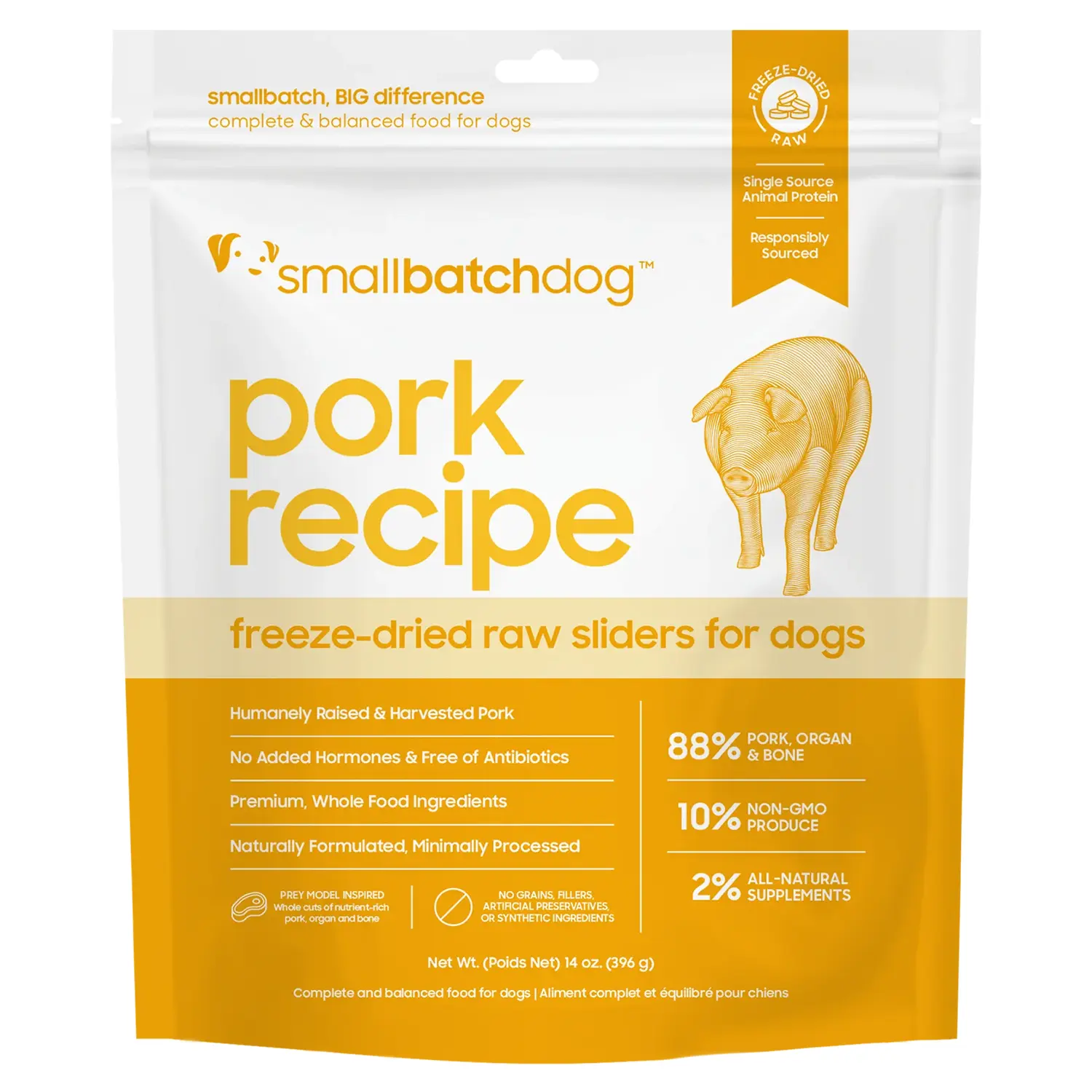


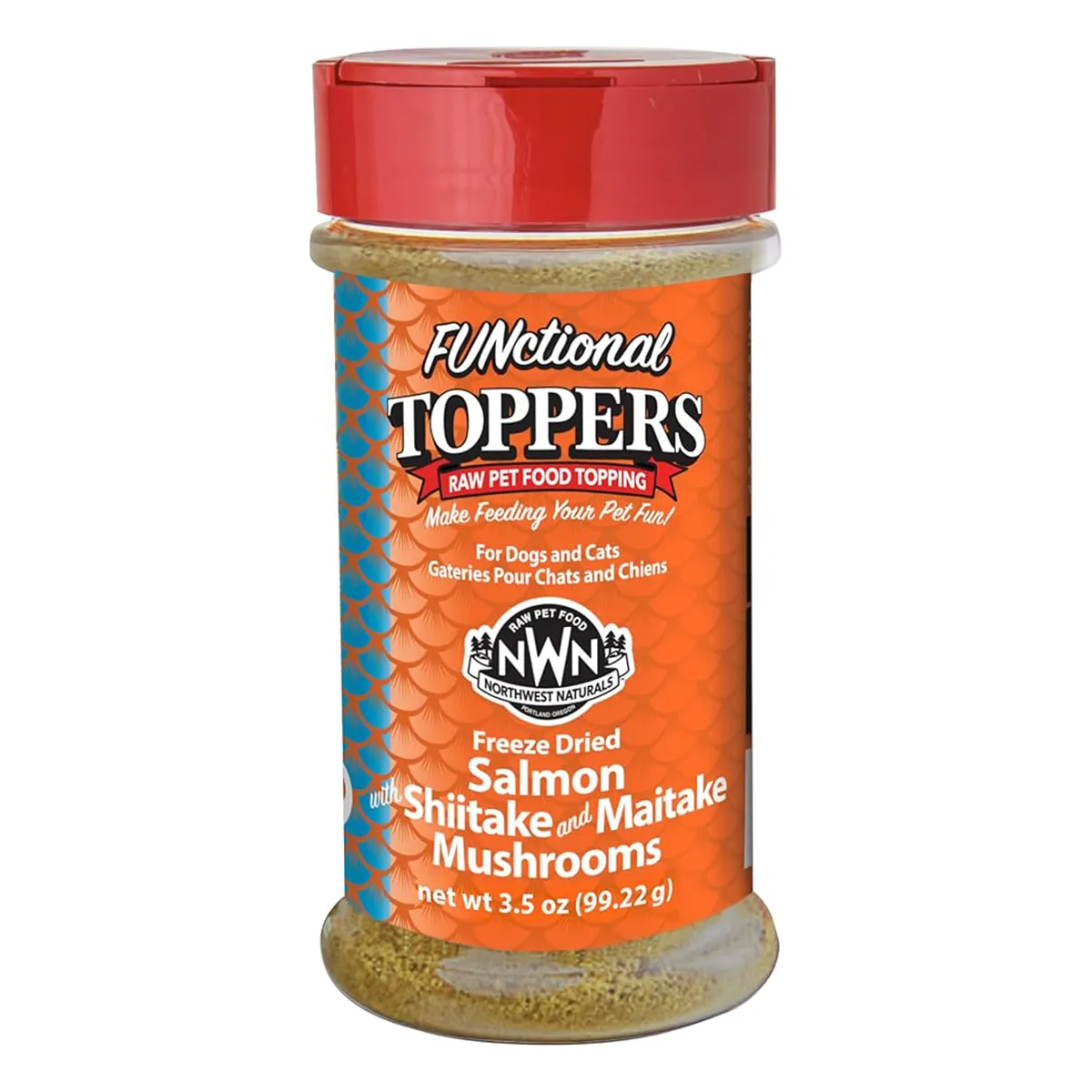

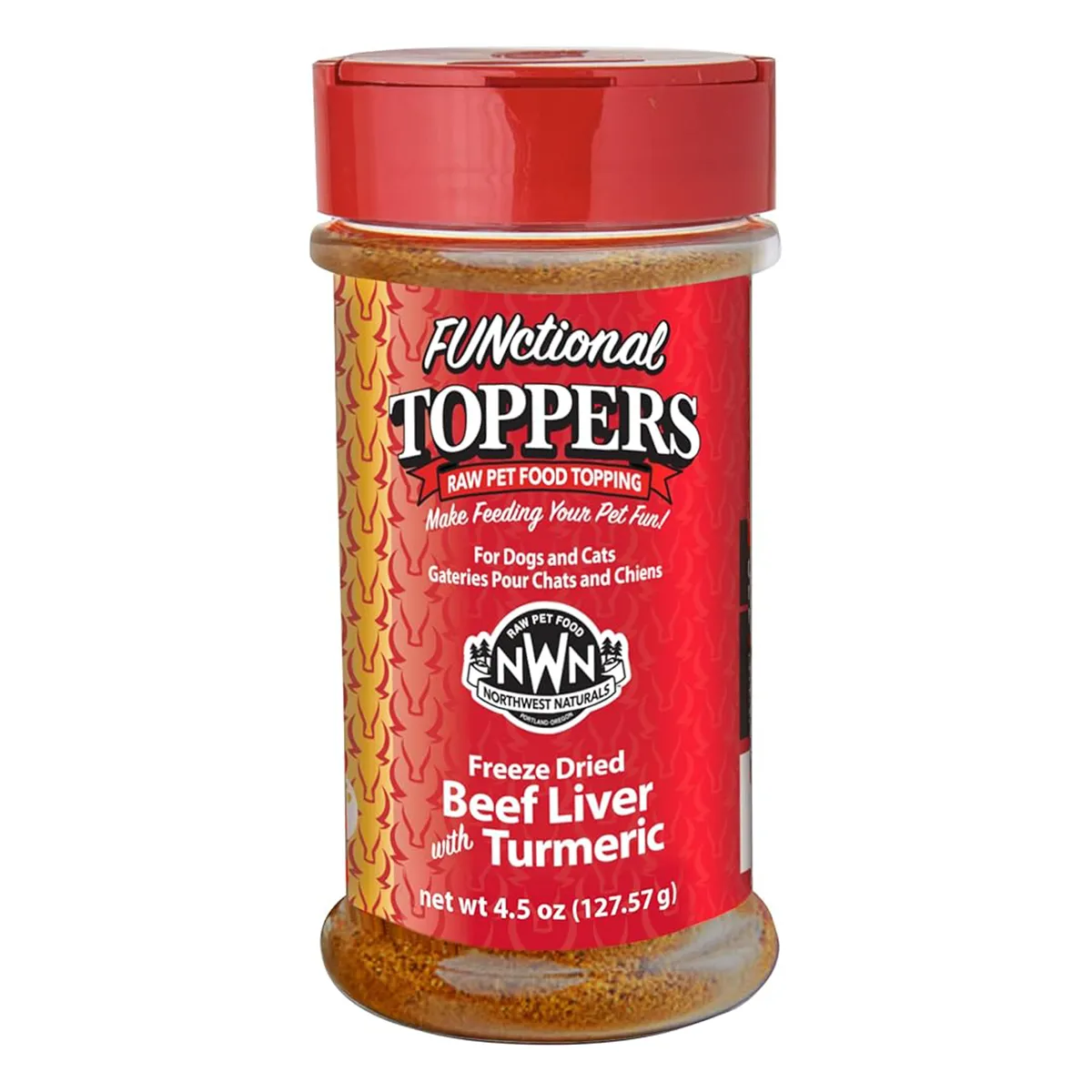


Compare the Main Types
The word “freeze-dried” describes a process, not a single kind of dog food. These are the formats you’re most likely to compare.
| Food type | What you’ll find | What to check |
|---|---|---|
| Kibble with freeze-dried bits | Dry kibble mixed with separate pieces of freeze-dried meat or other ingredients | Whether the whole recipe is complete and balanced, and what the pieces contain |
| Freeze-dried coated kibble | Kibble with freeze-dried material on the outside | Whether the package describes a coating, added pieces, or both |
| Complete freeze-dried food | Freeze-dried pieces or patties intended to provide a full diet | Life-stage statement, feeding amount, and preparation directions |
| Freeze-dried topper or treat | Pieces intended to be added to a meal or given separately | Whether it is labeled for supplemental feeding and how many calories it adds |
Dry dog food with freeze-dried bits can be a practical middle ground if you want kibble with added pieces in the same bag. A coated kibble may look more uniform. If visible chunks matter to you, check the product description rather than assuming every coated food contains them.
A full freeze-dried food is different from kibble with a few added pieces. It may also have different preparation instructions and a different feeding amount. Don’t assume that a cup of one food replaces a cup of another.
Decide How You Want to Use It
Start with the role the food will play in your dog’s bowl:
- For an everyday meal: Choose a recipe labeled complete and balanced for your dog’s life stage.
- For a familiar kibble with added texture: Look for a complete kibble recipe that lists freeze-dried pieces.
- For a separate addition: Choose a topper and account for its calories alongside the main food.
- For a full freeze-dried meal: Check whether the label calls for adding water and how much to feed.
Your dog may prefer one texture over another, but preference is individual. A food with meat pieces isn’t guaranteed to appeal to every dog.
Understanding Freeze-Dried Organ Meat
Some dog foods contain freeze-dried organ meat, such as liver, along with muscle meat and other ingredients. Organs can supply nutrients. For example, liver contains vitamin A.
That doesn’t mean adding extra liver automatically makes a meal better. A complete food is formulated as a whole recipe, and adding substantial amounts of any single ingredient can change the balance of the overall diet. An organ meat treat or topper is not necessarily a complete meal.
Read the ingredient list to identify both the organ and the animal it comes from. If your dog needs to avoid a particular protein, check the entire list, not only the name of the freeze-dried pieces. A recipe marketed around one meat can contain other animal ingredients too.
Vet Tip: If your dog has a diagnosed food allergy, a sensitive stomach, or a prescribed diet, ask your veterinarian before adding an organ meat topper or switching recipes.
How to Read the Label
A bag’s front panel can help you find the format you want. The details on the back help you decide whether it belongs in your dog’s bowl.
Find the Nutritional Adequacy Statement
Look for wording that says the food is complete and balanced for an appropriate life stage. You may see a reference to Association of American Feed Control Officials, or AAFCO, nutrient profiles or feeding trials.
An adult maintenance food is intended for adult dogs. Puppies need food labeled for growth, or for all life stages. If you have a large-breed puppy, check that the statement also addresses growth of large-size dogs.
A product labeled for intermittent or supplemental feeding has a different job. It can be used as an addition according to its directions, but it should not replace a complete diet on its own.
Check the Whole Ingredient List
Look for the named meat or organ you want, then read the rest of the list. Ingredients are listed by weight before processing. A position near the top does not tell you exactly how much of the finished food is freeze-dried meat.
The list also helps you spot ingredients your dog needs to avoid. Don’t rely on a flavor name alone if you’re checking for a sensitivity.
Compare Calories and Feeding Directions
Foods can differ in calories per cup, piece, patty, or other serving unit. Use the package’s feeding guide as a starting point, then adjust with your veterinarian’s help if your dog is gaining or losing unwanted weight.
For a useful comparison, check:
- The calories in the amount your dog would actually eat.
- Whether the feeding guide describes dry food or food prepared with water.
- The number of meals the package is likely to provide.
- Whether you’ll need to buy a separate complete food to use with a topper.
A larger bag is not always the better value if the recommended serving is also larger. Compare the cost of a day’s feeding rather than the package size alone.
Bottom line: Choose by the whole recipe, its life-stage statement, and its feeding directions, not by the amount of meat pictured on the front.
Feeding Freeze-Dried Bits or a Topper
If you buy a complete kibble that already contains freeze-dried pieces, follow the feeding directions for the whole mixture. Avoid separating the pieces and feeding only those as the main meal.
If you’re adding a separate topper, measure it and count its calories as part of the day’s food. Adding it on top of the usual full serving can increase total calorie intake. Ask your veterinarian how much to use if you’re unsure, particularly if your dog needs weight management or eats a therapeutic diet.
For example, if your veterinarian has helped you establish a daily calorie allowance, use the calories listed on both packages to plan the portions. The right amounts depend on the foods and your dog. Cups of different products are not interchangeable.
Some dogs pick out the freeze-dried bits and leave the kibble behind. If that happens regularly, check what your dog is actually eating and ask your veterinarian for guidance. A complete recipe only provides its intended balance when fed as directed.
Introducing a New Food
Step 1: Read both packages. Check the new food’s feeding and preparation directions. Keep your dog’s current food on hand for the change.
Step 2: Start with a small amount. Replace a small part of the usual food with the new recipe rather than adding a full serving on top. Increase the new food gradually while decreasing the old food.
Step 3: Watch your dog’s response. Pay attention to appetite and stool as you make the change. If your dog has ongoing digestive trouble or seems unwell, contact your veterinarian rather than continuing to increase the new food.
Step 4: Settle on a measured portion. Once your dog is eating the new recipe, use its feeding guide and your veterinarian’s advice to determine an appropriate daily amount.
If your dog is on a prescribed diet, check with your veterinarian before making a change. Even a small addition may not fit the reason the diet was prescribed.
Preparation, Storage, and Raw Food Safety
Follow the package directions for serving. Some freeze-dried foods are intended to be rehydrated, while others may be served dry or prepared either way. Make fresh drinking water available regardless of how the meal is served.
Store the food as directed and close the package after use. If you add water, follow the manufacturer’s instructions for handling and discarding leftovers. Don’t put unused moist food back into the dry package.
If the package describes the meat as raw, handle it as raw food. Freeze-drying is not a cooking step, and raw ingredients can carry harmful germs. Wash your hands after handling the food, clean bowls and preparation surfaces, and keep the food away from other household foods.
Households with young children, older adults, or people with weakened immune systems should discuss raw food risks with a healthcare professional. Your veterinarian can also help you choose a suitable diet for your dog.
Conclusion
The best starting point is a complete food suited to your dog’s age and needs. From there, choose the format that makes sense for the way you want to feed.
- Check whether freeze-dried meat appears as pieces, a coating, or part of a full meal.
- Read the nutritional adequacy statement and the complete ingredient list.
- Count topper calories and follow preparation and storage directions.
Vet Tip: Bring the food label to your next appointment if you need help comparing it with your dog’s current diet.
Explore the freeze-dried dog food category at BaxterBoo to compare formats and read each recipe’s feeding details.
FAQ
Is kibble with freeze-dried bits a complete meal?
It can be, but the added pieces don’t establish that on their own. Check the package for a complete and balanced statement that matches your dog’s life stage.
Is freeze-dried organ meat a complete dog food?
Organ meat by itself is not necessarily a complete diet. If it’s sold as a treat or topper, use it alongside an appropriate complete food and follow the feeding directions.
Does freeze-dried dog food need water?
Some recipes call for water, while others provide dry-serving directions. Follow the specific package instructions and always make fresh drinking water available.
Is freeze-dried dog food raw?
Some freeze-dried dog foods contain raw ingredients, but not all do. Check the label rather than assuming the processing method tells you whether the ingredients were cooked.






- Site & Contents BaxterBoo.com. BaxterBoo is located in the United States.
- Privacy & Security
- Terms of Use
- Accessibility Statement
