
 Save 15% on your 1st Autoship learn more

 Email us
 Live Chat
 FAQs
FAQs





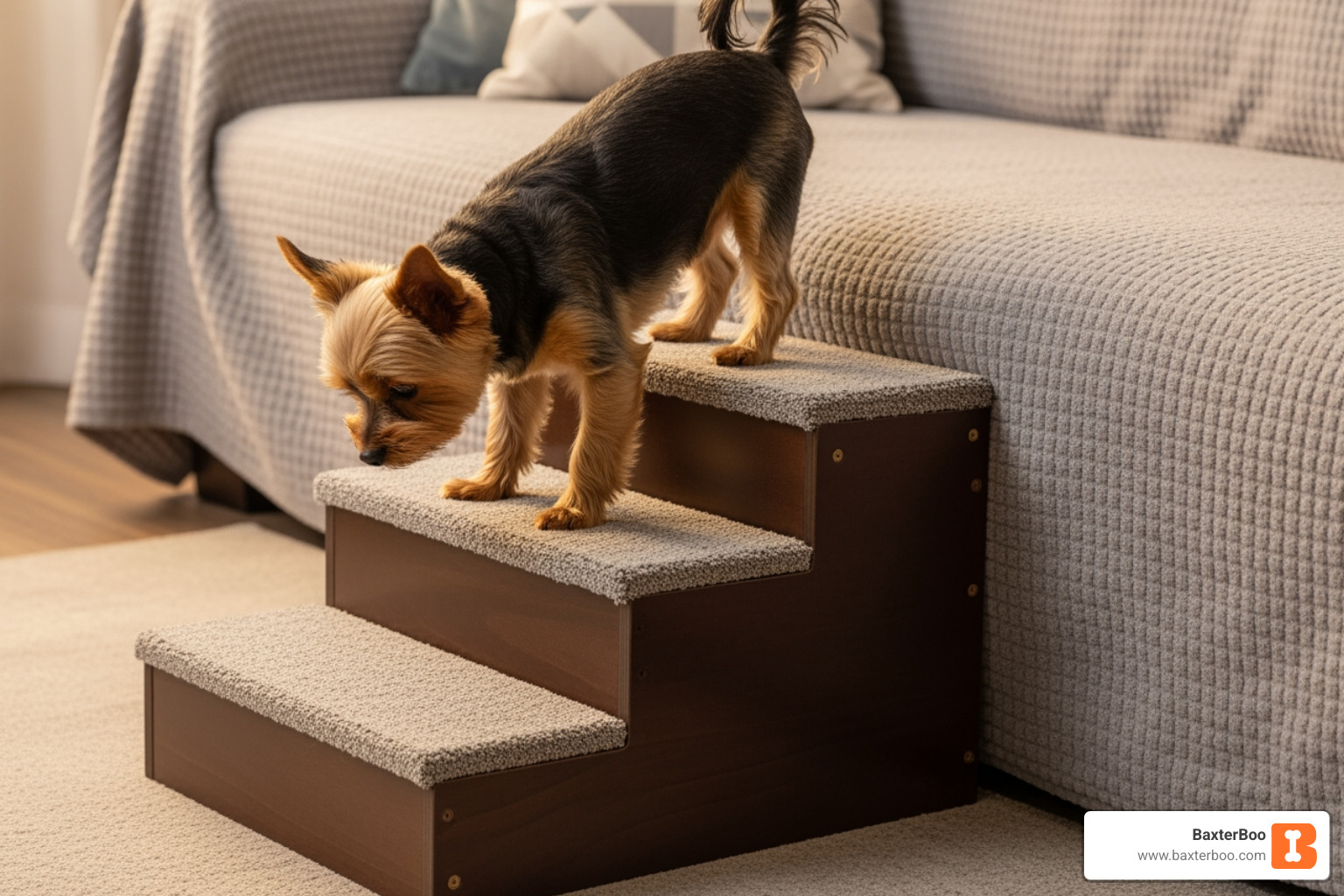
Why 3-Step Dog Steps Matter for Your Pet's Health
3 step dog steps are portable platforms that help dogs safely reach liftd surfaces like beds, couches, and cars without jumping. They're especially important for small breeds, senior dogs, puppies, and pets with joint issues who need to avoid the repetitive stress that jumping places on their hips, knees, and spine.
Key facts about 3-step dog stairs:
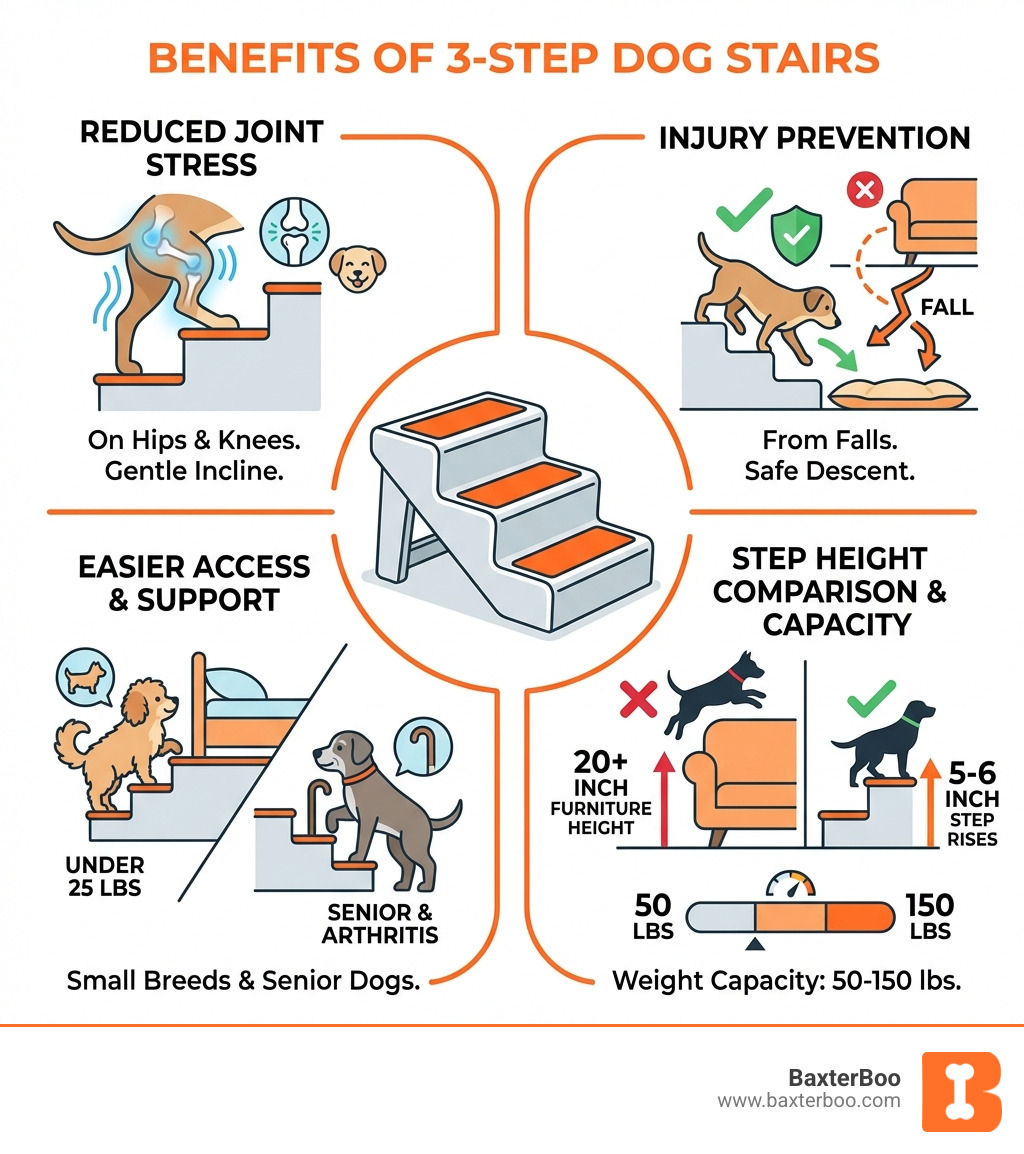
- Weight capacity: Most models support 50-150 lbs
- Typical dimensions: 15-25" height, with 5-6" step rises
- Best for: Small dogs, seniors, arthritic pets, breeds prone to back problems
- Price range: $47-$186 based on 253 available models
- Top features: Non-slip surfaces, machine washable covers, tool-free assembly
You love snuggling with your dog on the couch and falling asleep together in bed at night. But here's the hard truth: climbing stairs and going down repeatedly is hard on a dog's body, especially for puppies and older dogs. Every jump down from your bed or sofa puts stress on your pet's joints that adds up over time.
The good news? Three-step dog stairs give your furry friend a safer way to reach their favorite spots. Whether you have a dachshund with a long back, a senior Labrador with achy joints, or a small Yorkie who can barely see over the edge of your couch, the right set of steps can make a real difference in their comfort and independence.
The research is clear: products like FurHaven Stairs and the Pet Gear Easy Step III (which can support pets up to 150 lbs) help reduce joint stress while giving pets the freedom to join you wherever you are.
Why Your Dog Might Need 3-Step Dog Steps
We all want our canine companions to live long, happy, and pain-free lives. One often-overlooked aspect of pet care is the impact of everyday activities like jumping on and off furniture. For many dogs, especially those in certain life stages or with specific health conditions, these seemingly innocent actions can lead to significant joint stress and potential injuries. That's where 3 step dog steps come in, acting as silent heroes in pet mobility.
Using dog stairs can dramatically reduce the wear and tear on your dog's joints. Each time your dog jumps down from a bed or sofa, their joints absorb an impact that can be several times their body weight. Over time, this repetitive stress contributes to conditions like arthritis and hip dysplasia, and can exacerbate existing pain. By providing a gentle incline, dog steps allow your pet to ascend and descend gracefully, preserving their precious joint health.
Beyond injury prevention, dog steps offer increased independence. Imagine wanting to snuggle with your human but being physically unable to reach them. That's a reality for many smaller or less mobile dogs. With a set of reliable steps, they can easily access their favorite spots, whether it's your lap on the couch or a cozy corner of your bed. This independence isn't just about physical access; it significantly boosts their quality of life and strengthens the bond you share.
For our senior canine citizens, comfort is paramount. As dogs age, their bodies naturally become less agile. Arthritis sets in, muscles weaken, and the thought of jumping can be daunting, or even painful. 3 step dog steps become an essential tool for senior dog comfort, allowing them to continue enjoying the liftd spaces they once effortlessly conquered. Similarly, small breed accessibility is a huge factor. A tiny Chihuahua or a spunky Pomeranian might view your bed as a mountain, and a safe, easy path makes all the difference.
Finally, for dogs recovering from surgery, particularly orthopedic procedures, preventing re-injury is critical. Dog steps offer a controlled, low-impact way for them to steer their environment during the delicate post-operative period, aiding in a smoother recovery.
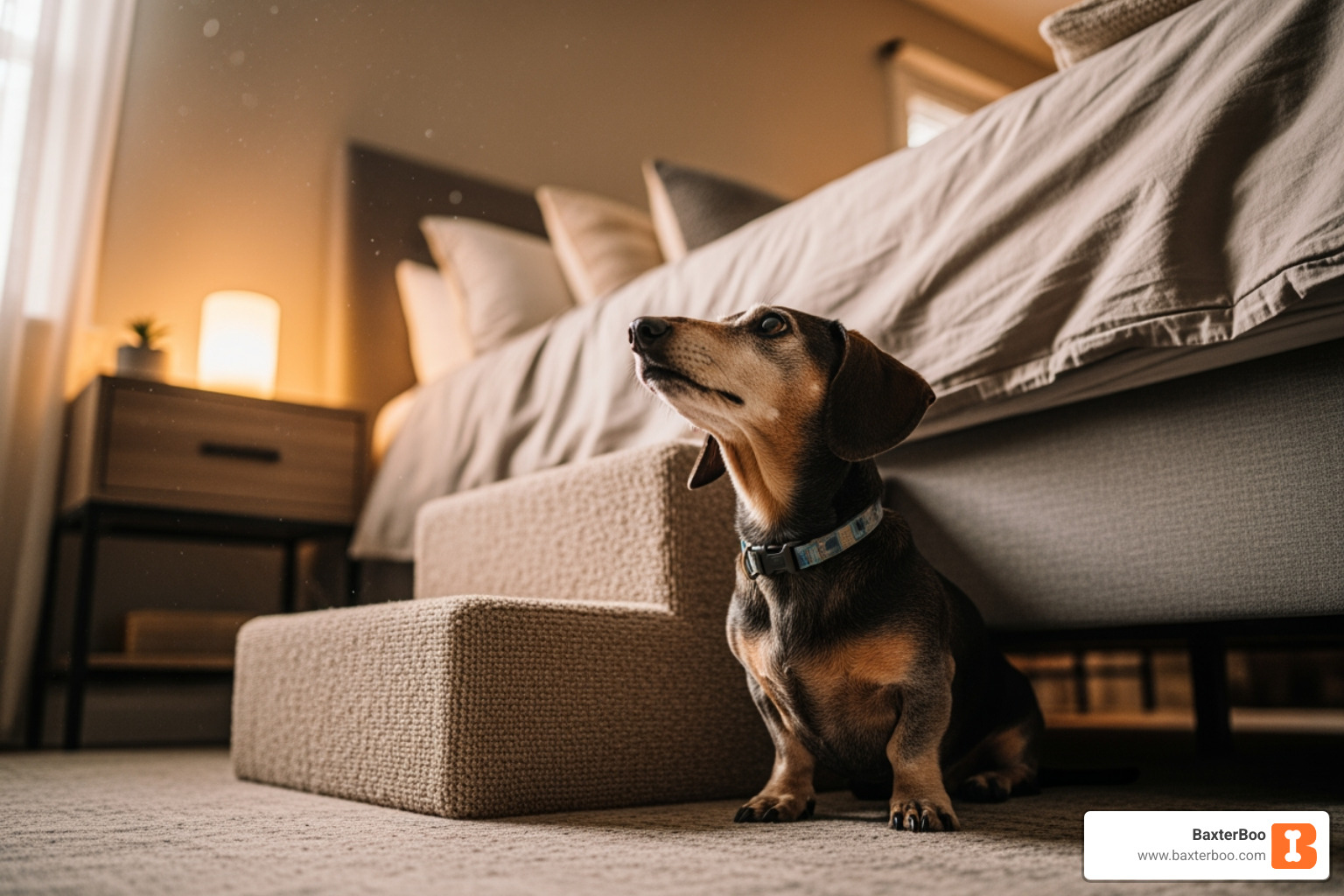
Benefits for At-Risk Dogs
While all dogs can benefit from the reduced impact of using steps, certain groups are particularly at risk and stand to gain the most. We often see these pets struggling with everyday jumps, and for them, 3 step dog steps are not just a luxury, but a necessity.
- Puppies: Their bones and joints are still developing, making them highly susceptible to injury from repetitive impacts. Protecting their growing bodies from unnecessary stress can prevent long-term orthopedic issues.
- Senior Dogs: As mentioned, age brings stiffness, arthritis, and decreased muscle mass. Steps help them maintain their dignity and access their favorite spots without pain or struggle.
- Breeds Prone to IVDD (Intervertebral Disc Disease): Breeds like Dachshunds, Beagles, and Corgis have long backs that are vulnerable to disc problems. Jumping and landing can cause severe spinal injury. Steps are crucial for minimizing this risk.
- Dogs with Arthritis: For these pups, every movement can be painful. Steps provide a gentle, pain-free way to move between different elevations, improving their comfort significantly.
- Overweight Dogs: Extra weight puts immense strain on joints. Steps reduce this strain, helping to prevent further damage and supporting a healthier lifestyle as they work towards a healthier weight.
- Hip Dysplasia: Dogs suffering from hip dysplasia experience discomfort and instability in their hip joints. Steps allow them to avoid the painful extension and flexion that comes with jumping.
Building Confidence and Independence
Beyond the physical benefits, dog steps have a profound psychological impact on our pets. Think about it: if your dog is constantly struggling or getting hurt trying to reach you or their favorite cozy spot, it can lead to anxiety and a reduction in their overall quality of life.
3 step dog steps help in:
- Reducing Fear of Jumping: Some dogs, especially smaller or more timid ones, develop a fear of jumping due after a bad experience or simply because the height seems too great. Steps eliminate this fear by providing a secure, gradual ascent.
- Empowering Small Pets: Our tiny friends often feel powerless in a world designed for larger beings. Steps give them the ability to join in on the fun, making them feel more included and confident.
- Access to Favorite Spots: Whether it's the sunny window sill for bird-watching or a specific cushion on the sofa, steps ensure your dog can reach their preferred lounging areas without needing your constant assistance.
- Cuddle Time: Let's be honest, one of the best parts of having a dog is the snuggles! Steps ensure your dog can easily get up for those precious cuddle moments, strengthening your bond.
- Window Access: Many dogs love to look out the window and observe the world. Steps can provide them with a safe boost to see what's happening outside, enriching their environment.
How to Choose the Perfect 3-Step Dog Steps
Selecting the right set of 3 step dog steps isn't just about picking the prettiest color or the cheapest option. It's about finding a mobility solution that perfectly fits your dog's needs, your home environment, and ensures their safety and comfort. We need to consider a few key factors to make an informed decision.
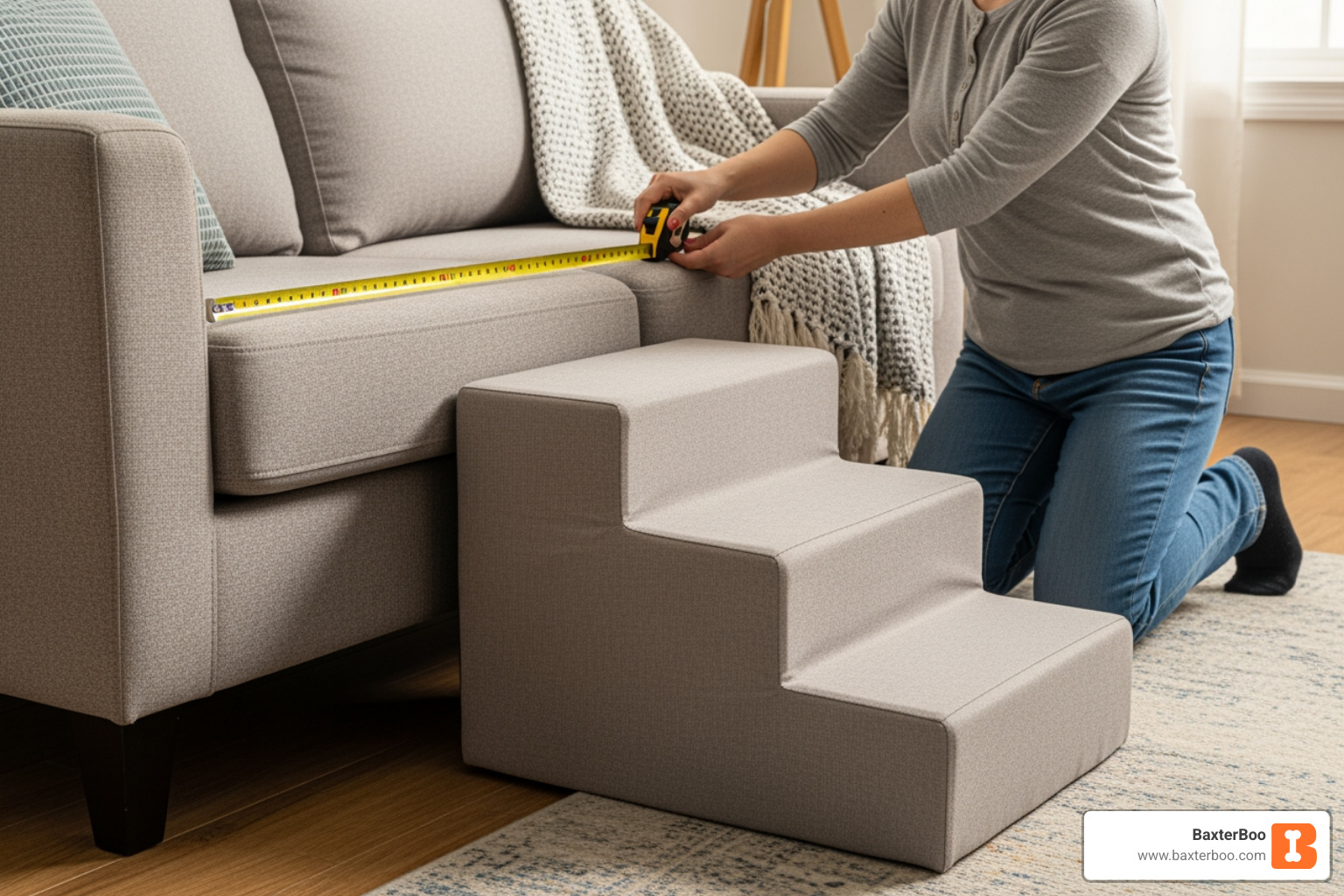
When we're looking for the ideal steps, we're essentially matching them to three main things: the furniture your dog needs to access, your dog's size and weight, and your preferences for material and maintenance. The goal is to make the transition as seamless and stress-free as possible for your furry friend.
Measure for the Right Fit: Height and Dimensions
This is arguably the most critical step in choosing dog stairs. A perfectly matched stair height to your furniture means your dog won't have to strain or jump that last bit.
- Match Stair Height to Furniture: Grab a tape measure and find the height of your bed, couch, or car entry point. The top step of the dog stairs should be as close as possible to this height, ideally within an inch or two. For example, if your bed is 20 inches high, you'll want steps that are around 18-20 inches tall. Many 3 step dog steps are designed with total heights ranging from 15 to 25 inches, making them suitable for most standard furniture.
- Wide Steps for Stability: Your dog needs enough space to comfortably place their entire paw on each step. Narrow steps can be precarious and make your dog hesitant. Look for steps that are at least as wide as your dog's body, or even wider for added security.
- Deep Treads for Confidence: The depth of each step is important for both small and large dogs. Smaller dogs need enough depth to get their entire body onto each platform, while larger dogs need sufficient space to comfortably place their paws without feeling cramped. A typical step depth is around 5-6 inches.
- Appropriate Rise: The "rise" is the height of each individual step. For dogs with joint issues or short legs, a lower rise (around 4-5 inches) is ideal as it requires less effort. Many 3 step dog steps feature an innovative incline on each step to reduce the amount of climbing needed, easing stress on your pet. For an example of quality steps that prioritize comfort and stability, check out the Furhaven Steady Paws Pet Stairs Cream.
Material and Surface: Comfort Meets Safety
The material and surface of the dog steps play a huge role in your pet's comfort, confidence, and the overall durability of the product.
- Foam Steps: Often made from high-density foam, these are lightweight, soft on paws, and ideal for smaller or very frail pets. They provide excellent cushioning and are generally easy to move.
- Plastic Stairs: These are usually very durable, easy to clean, and often more affordable. They can be lightweight and portable. However, ensure they have non-slip features on the steps themselves. Pet Gear's "Easy Step III Pet Stairs" are a popular plastic option, known for supporting pets up to 150 lbs.
- Wooden Models: Offering a more aesthetic appeal, wooden steps can blend seamlessly with your home decor. They are sturdy and durable, but it's crucial to ensure they have carpeted or rubberized non-slip surfaces to prevent slips.
- Non-Slip Surfaces: This is non-negotiable. Whether it's carpet treads, rubber grippers, or textured plastic, the surface of each step and the bottom of the stairs must prevent slipping. Slippery surfaces can lead to dangerous falls, eroding your dog's confidence in using the steps. The "Pet Gear Pet Step III" explicitly mentions rubber grippers on the bottom to keep them secure, a feature we highly recommend.
- Carpet Treads: Plush-covered steps provide a gentle surface that is soft on paws, reducing pain while climbing, especially for older or arthritic pets. Many carpet treads are easily removable and machine washable, making cleaning a breeze.
- Removable Covers: For hygiene and longevity, removable, machine-washable covers are a fantastic feature, especially for foam or upholstered steps.
Cleaning and Maintaining Your 3-step dog steps
We know life with pets can get a little messy, so ease of cleaning is a practical consideration for your dog steps.
- Machine Washable Covers: If you opt for steps with fabric or carpet treads, check if the covers are removable and machine washable. This makes keeping them fresh and hygienic incredibly easy.
- Wiping Down Plastic or Wood: For plastic or wooden steps, a simple wipe-down with a damp cloth and mild, pet-safe cleaner is usually all that's needed. This is great for quick clean-ups after muddy paws or minor spills.
- Durability and Longevity: Invest in steps that are well-built and sturdy. Look for reviews that mention the product's long-term performance. A good set of steps should withstand daily use from your dog for years to come.
- Routine Inspection: Periodically check your 3 step dog steps for any signs of wear and tear, loose parts, or damage. Ensure the non-slip features are still effective. This simple routine can prevent accidents and prolong the life of your steps.
Stairs vs. Ramps: Which Mobility Aid is Best?
When it comes to assisting your pet with mobility, 3 step dog steps are a fantastic option, but they're not the only game in town. Dog ramps also serve a similar purpose, and understanding the differences can help us choose the perfect aid for our furry friends.
| Feature | 3-Step Dog Steps | Dog Ramps |
|---|---|---|
| Incline/Ascent | Defined steps, typically 5-6 inches high per step. | Gradual, continuous incline. |
| Physical Exertion | Requires lifting paws and navigating individual steps. | Less physical exertion, smoother movement. |
| Joint Impact | Minimal impact compared to jumping, but still some lift. | Virtually no impact, ideal for severe joint issues. |
| Space Requirements | Generally more compact, steeper overall profile. | Can be longer and require more horizontal space for a gentle slope. |
| Pet Preference | Some dogs prefer steps, feeling more secure. | Often preferred by dogs with severe mobility issues or fear of steps. |
| Conditions Best For | Mild to moderate arthritis, IVDD prevention, small breeds, general assistance. | Severe arthritis, hip/elbow dysplasia, post-surgical recovery, very anxious dogs, very short-legged breeds. |
| Portability | Often foldable or lightweight for easy transport. | Many are foldable or telescopic, but can be bulkier than steps. |
| Versatility | Some 2-in-1 options exist (stairs and ramp). | Good for car access, higher surfaces where steps might be too steep. |
The choice between stairs and ramps often comes down to your dog's specific needs and preferences.
- Incline Steepness: Ramps offer a continuous, gentle slope, which can be less physically demanding than navigating individual steps. This makes them particularly suitable for dogs with severe mobility issues, such as advanced arthritis or hip dysplasia, where even a small step can be painful.
- Physical Exertion: For dogs with significant weakness or pain, the effort to lift their paws for each step on a stair can be too much. A ramp allows them to walk up with less exertion.
- Space Requirements: Generally, 3 step dog steps tend to be more compact, occupying less floor space due to their steeper, more vertical design. Ramps, to maintain a gentle incline, often need to be longer, requiring more horizontal space. This is a crucial consideration for smaller living areas.
- Pet Preference: Some dogs instinctively prefer steps, feeling more secure with distinct platforms under their paws. Others, especially those who are hesitant or have vision problems, might find a smooth ramp less intimidating. It can sometimes be a trial-and-error process to see what your dog takes to best.
- Conditions like Severe Arthritis: For pets with severe joint pain, a ramp is often the preferred choice as it eliminates any jarring impact or significant joint flexion. However, for preventing IVDD in breeds like Dachshunds, steps can be very effective by providing a controlled ascent and descent, preventing them from jumping.
- Unique Solutions: We've even seen innovative solutions like inflatable dog water ramps designed for pools, boats, and docks, offering a solution for water-loving dogs to enter and exit water safely. These unique ramps are sturdy, wide, and long enough for the dog, with an anti-slip mat.
Both 3 step dog steps and ramps are valuable mobility aids. If your dog has very severe mobility challenges, or if steps prove too difficult even with training, a ramp might be the better option. In cases of extreme mobility impairment, a Best Friend Mobility Dog Wheelchair might even be considered to give your dog the freedom to move independently. We're here to help you find the best solution for your beloved companion.
Training Your Dog to Use Stairs: A Simple Guide
So, you've chosen the perfect set of 3 step dog steps – now what? The next step is to introduce them to your dog! While some dogs will naturally take to steps, others might need a little encouragement, especially if they're timid or not used to new objects. The good news is that with a little patience and positive reinforcement, we can teach almost any dog to use their new stairs.
The goal is to make this a fun and rewarding experience, not a stressful one. Keep your energy positive and your training sessions short and sweet!
Step-by-Step Positive Reinforcement Training
We'll use a method called "luring" with high-value treats to guide your dog up and down the stairs.
- Gather Your Supplies: You'll need your 3 step dog steps, plenty of tiny, high-value treats (think cheese, cooked chicken, or training treats), and your dog's favorite toy. For added safety, especially if your dog is hesitant, we recommend placing cushions or pillows around the base and sides of the stairs to provide a soft landing zone if they accidentally slip. You can remove these once your dog is confident.
- Pick the Right Location: Place the stairs next to the piece of furniture your dog wants to access (e.g., your bed, the couch). Make sure the path to the top of the stairs is clear and inviting.
- Introduce the Stairs (No Pressure!): Let your dog sniff and investigate the stairs on their own. Don't force them onto the steps. You can place a few treats on the very first step to encourage them to approach.
- Luring with Treats:
- Hold a treat in front of your dog's nose, just above the first step.
- As they step onto the first stair, say a cheerful "Yes!" or "Good!" and immediately give them the treat.
- Repeat this for each step, gradually luring them up one step at a time.
- Rewarding Paw Placement: Even if they just put one paw on a step, reward them! We want to reinforce any interaction with the stairs.
- Praising Progress: Use lots of verbal praise and gentle petting throughout the process. Your enthusiasm will make your dog feel more comfortable and confident.
- Reaching the Top: Once your dog successfully makes it to the top, give them a jackpot of treats and lots of praise! This is a big achievement. Let them enjoy their time on the furniture, reinforcing that the stairs lead to good things (like cuddles!).
- Practicing Going Down: Going down can sometimes be more challenging for dogs than going up.
- Once your dog is comfortable going up, repeat the luring process in reverse.
- Stand at the bottom of the stairs with a treat. Lure your dog down one step at a time, rewarding each successful descent.
- Be extra patient here, as their four-legged anatomy can make going down feel a bit awkward initially.
- Keep Training Sessions Short: Aim for training sessions of no more than 5 minutes at a time. If your dog seems overwhelmed or loses interest, stop and try again later. Even 30-second sessions can be effective for very hesitant dogs. The key is to end on a positive note.
- Consistency is Key: Practice regularly, but don't overdo it. Soon, your dog will associate the stairs with positive experiences and use them independently.
Troubleshooting Common Issues with 3-step dog steps
Even with the best intentions, we might encounter a few bumps along the training path. Don't worry, we've got some solutions!
- Overcoming Fear: If your dog is afraid of the new object, leave the stairs in place for a few days without any pressure. Let them get used to its presence. You can even place their favorite blanket or toy on the steps to make them more inviting.
- Building Confidence: Sometimes, it's not fear, but a lack of confidence. Ensure the stairs are stable and don't wobble. If they feel shaky, your dog won't trust them. Also, check that the steps aren't too steep or too small for your dog.
- What to Do If a Dog Refuses: If your dog consistently refuses to engage, don't force them. Try using even higher-value treats (something they absolutely adore!). You can also try scattering a few treats on and around the steps, letting them "find" the rewards.
- When to Take a Break: If your dog is showing signs of stress (tail tucked, ears back, yawning, licking lips, trying to get away), it's time for a break. Push too hard, and you might create a negative association.
- Consider a Ramp: If, after consistent effort, your dog still finds stairs physically challenging or too intimidating, a dog ramp might be a better alternative, as discussed earlier.
- When to Consult a Professional: If you're struggling and not seeing progress, don't hesitate to seek expert help. A certified professional can assess your dog's specific needs and offer custom guidance. We recommend you consult a certified trainer or dog behavior consultant. Look for professionals with a CBCC-KA or a CDBC certification—you can find one near you using the Certified Dog Trainer and Behavior Consultant Directory.
Conclusion
Providing your pet with 3 step dog steps is more than just a convenience; it's an investment in their long-term health, happiness, and overall quality of life. We've seen how these simple aids can significantly reduce joint stress, prevent injuries, and empower dogs of all ages and sizes to maintain their independence. From energetic puppies learning safe habits to senior dogs enjoying pain-free access to their favorite cuddle spots, the benefits are clear and profound.
At BaxterBoo, we're committed to pet wellness and understand the importance of proactive care for our beloved companions. By choosing the right 3 step dog steps – considering factors like height, material, and non-slip features – and patiently training your dog, you're taking a vital step in preserving their joint health and ensuring they can continue to be an active, integrated part of your family for years to come.
A healthy pet is a happy pet, and a happy pet makes for a happy home. So, go ahead, lift your pet's comfort and give them the gift of easy access to all the best spots. For an extra boost to their joint health, consider exploring our range of mobility support options. You can explore mobility supplements for extra joint support to complement the physical benefits of their new stairs.






