
 Save 15% on your 1st Autoship learn more

 Email us
 Live Chat
 FAQs
FAQs





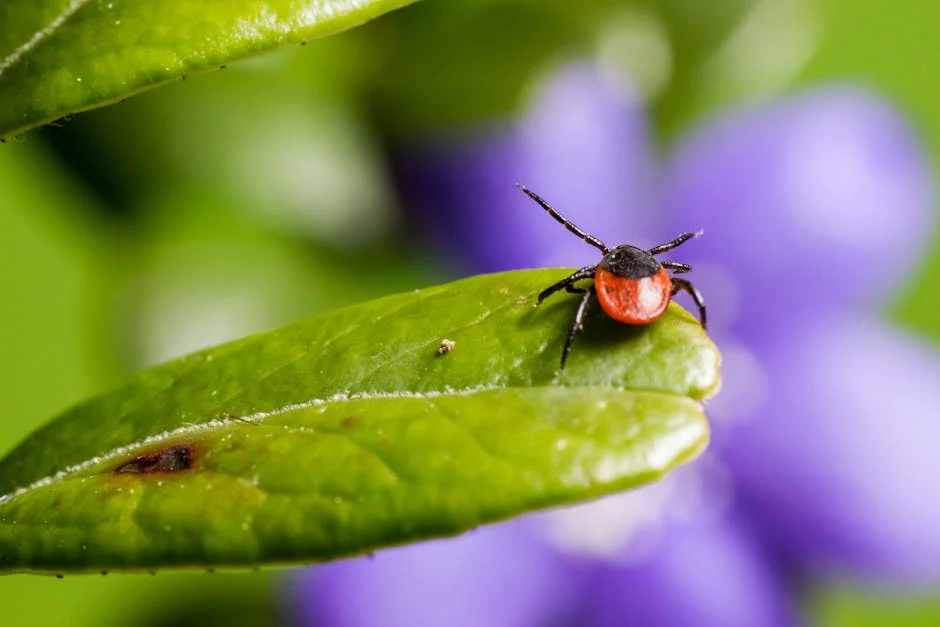
Why Black Ticks on Dogs Are a Serious Health Threat
Black ticks on dogs are small, dark parasites that can transmit dangerous diseases — including Lyme disease — to your pet. Here's what you need to know at a glance:
- Most common black tick: The black-legged tick (deer tick), Ixodes scapularis in the East and Ixodes pacificus in the West
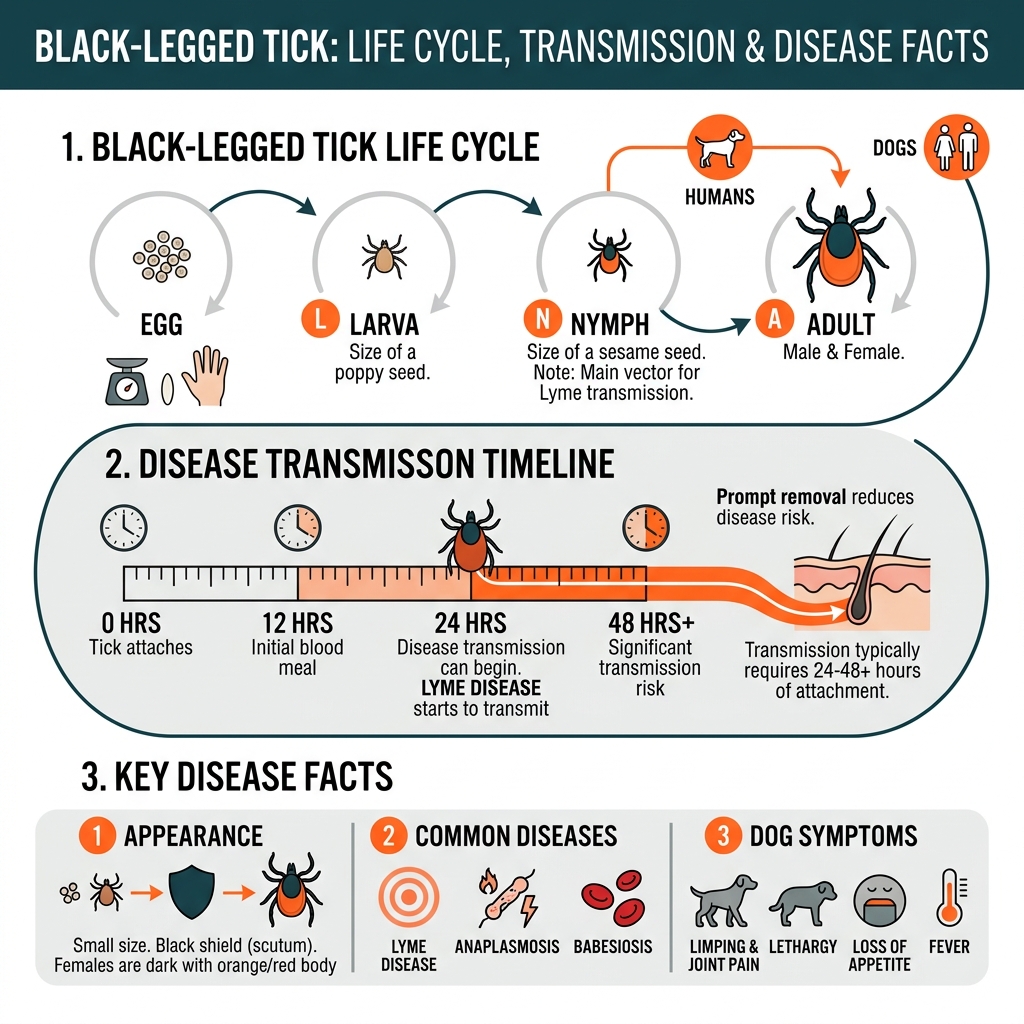
- Size: Adults are about the size of a sesame seed; nymphs are as small as a poppy seed
- Where found: On dogs in wooded, grassy, or leafy areas — most often around the ears, neck, between toes, and under the collar
- Key diseases: Lyme disease, anaplasmosis, babesiosis, and ehrlichiosis
- Transmission window: An infected tick must be attached for at least 24 hours to transmit Lyme disease
- What to do: Remove the tick with fine-tipped tweezers, clean the area, and monitor your dog for symptoms
These ticks don't jump or fly. They climb to the tips of grasses and shrubs and wait — a behavior called "questing" — then latch on as your dog brushes past. That's what makes them so easy to miss.
The problem is bigger than most pet owners realize. According to CDC data, tick-borne disease cases in the U.S. more than doubled between 2004 and 2019, rising from roughly 22,500 to over 50,800 cases. And black-legged ticks have now been found in half of all U.S. counties.
The good news? With the right knowledge and tools, you can protect your dog effectively.
Identifying Black Ticks on Dogs: Species and Appearance
When we talk about black ticks on dogs, we are usually referring to the black-legged tick, famously known as the deer tick. In our neck of the woods here in Illinois and across the Eastern United States, the specific species is Ixodes scapularis. If you travel toward the Pacific Coast, you’ll encounter its cousin, Ixodes pacificus.
Identifying these tiny hitchhikers can be tricky because they change appearance significantly depending on their life stage and whether they have recently eaten.
- Adult Females: These are the most recognizable. They have a dark brown to black "shield" (called a scutum) near their head, while the rest of their body is a darker orange-red. Once they feed, they can expand to the size of a pea and turn a pale gray or tan color.
- Adult Males: These are smaller than females and are almost entirely dark brown or black. They don't engorge (swell up) as much as females do.
- Nymphs: These are the most dangerous stage for disease transmission because they are the size of a poppy seed. They look like tiny black or dark brown dots on your dog's skin, often mistaken for a new freckle or a speck of dirt.
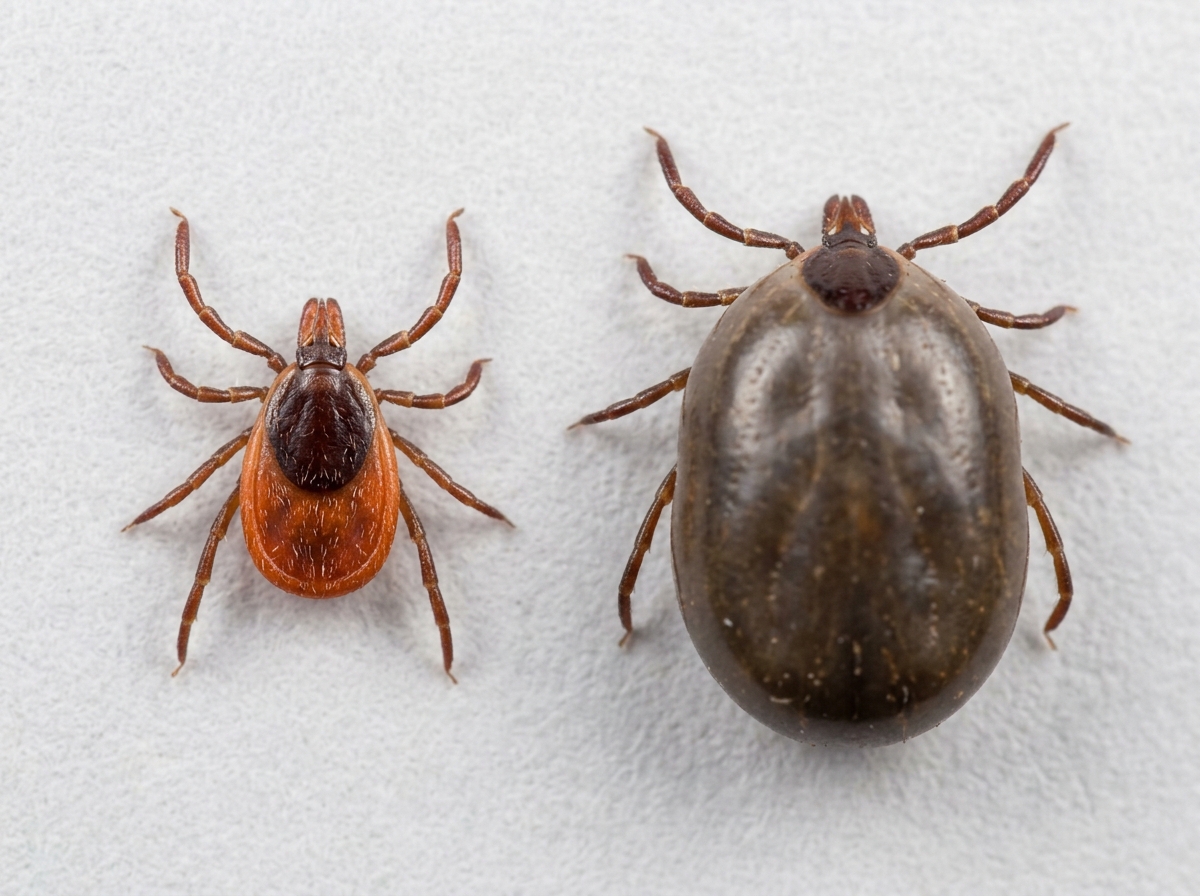
Unlike the American Dog Tick, which has white or silver markings on its back, black-legged ticks have no white markings at all. This "plain" dark appearance is a key giveaway. A study on ticks in half of all U.S. counties highlights that these parasites are expanding their territory, making it more likely than ever that your pup might encounter one.
Comparison of Common Ticks Found on Dogs
| Feature | Black-Legged (Deer) Tick | American Dog Tick | Brown Dog Tick |
|---|---|---|---|
| Color | Dark brown/Black shield | Brown with white/silver | Reddish-brown |
| Size (Unfed) | Sesame seed (Adult) | 1/8 to 3/16 inch | 1/8 inch |
| Key Disease | Lyme Disease | Rocky Mountain Spotted Fever | Ehrlichiosis |
| Habitat | Wooded, leafy areas | Grassy fields, trails | Indoors and kennels |
Common Attachment Sites for Black Ticks on Dogs
Ticks are opportunistic. They don't just land anywhere and stay there; they often crawl around your dog’s body looking for thin skin and a cozy, warm spot where they won't be easily disturbed. When checking for black ticks on dogs, we recommend focusing on these "hot spots":
- Ear Folds: Ticks love the nooks and crannies of the ear flap and the entrance to the ear canal.
- Between Toes: The soft webbing between a dog’s paw pads is a favorite hiding spot.
- Under Dog Collars: The area under a collar or harness provides the perfect darkness and protection for a tick to feed.
- Groin and Armpits: These areas are warm and have very thin skin, making it easy for the tick to attach.
- Eyelids: It sounds scary, but ticks often attach right along the eyelid margin, where they can be mistaken for a skin tag.
- Tail Base: Check the underside of the tail and around the base where the fur is often thick.
Life Cycle and Seasonal Activity
The black-legged tick has a complex, two-year life cycle that requires three blood meals to complete.
- Year One: Eggs hatch into six-legged larvae in the summer. These tiny larvae feed on small animals like mice or birds.
- Year Two: After molting, they become eight-legged nymphs. This usually happens in the spring and summer. Nymphs are extremely active and are responsible for the majority of Lyme disease cases in humans and pets because they are so hard to see.
- Adulthood: By fall, the nymphs molt into adults. Adult females seek out larger hosts, like deer or our dogs, to have one final meal before laying 1,500 to 2,000 eggs.
In Illinois, we see peak activity in the spring and fall, but it is a myth that ticks disappear in the winter. Black-legged ticks can remain active whenever the temperature is above freezing. If there is no snow on the ground and the sun is out, they can be questing for a host.
Health Risks and Diseases Transmitted by Black Ticks
The reason we worry so much about black ticks on dogs isn't just the "ick" factor; it's the pathogens they carry. These ticks are the primary vectors for Borrelia burgdorferi, the bacterium that causes Lyme disease.
Statistics show that on average, 1 in 3 adult black-legged ticks carry Lyme disease, while 1 in 5 nymphs carry it. However, Lyme isn't the only concern. These ticks can also transmit:
- Anaplasmosis: A bacterial infection that affects white blood cells.
- Ehrlichiosis: Though more common with other tick species, some black-legged ticks can carry specific strains.
- Babesiosis: A parasite that attacks the red blood cells, leading to anemia.
One of the most important things to remember is the transmission window. Generally, an infected tick must be attached for 24 to 48 hours before the bacteria that causes Lyme disease moves from the tick's gut to its salivary glands and into your dog. This is why daily tick checks are such a powerful tool—if you find and remove the tick quickly, you can often prevent the disease entirely.
Recognizing Symptoms of Black Ticks on Dogs Infections
Unlike humans, dogs don't usually get the "bullseye" rash that is so characteristic of Lyme disease. Instead, the symptoms in dogs can be much more subtle and may not appear for weeks or even months after the bite.
Keep an eye out for:
- Intermittent Lameness: Your dog might limp on one leg today, seem fine tomorrow, and then limp on a different leg next week. This is often called "shifting leg lameness."
- Swollen, Painful Joints: The joints may feel warm to the touch.
- Fever and Lethargy: A sudden loss of energy or a "depressed" mood.
- Loss of Appetite: Your dog may stop eating or become very picky.
- Swollen Lymph Nodes: You might feel lumps under the jaw or behind the knees.
If left untreated, Lyme disease can lead to more serious complications, including kidney failure (Lyme nephritis), which is often fatal. For more details on what to look for, you can review the signs and symptoms of Lyme infection provided by the CDC.
Transmission Timeline and Disease Mechanisms
When a tick bites, it secretes a cement-like substance to stay firmly attached and an anesthetic so the dog doesn't feel the bite. As it feeds, the warm blood entering the tick's body triggers the bacteria (like Borrelia) to begin migrating.
It takes time for this migration to happen. Because the process usually takes over 24 hours, "quick-kill" preventives are incredibly effective. If the tick dies within a few hours of biting, the bacteria never get the chance to make the trip into your dog's bloodstream.
Safe Removal and Immediate Treatment Steps
If you find a black tick on your dog, don't panic! The goal is to remove it as quickly as possible without stressing the tick, which could cause it to regurgitate fluids into your pet.
- Use Fine-Tipped Tweezers: Don't use blunt household tweezers or your fingers. You need to get a precise grip.
- Grasp at the Head: Place the tweezers as close to the dog's skin as possible, grasping the tick's head or mouthparts.
- Pull Straight Up: Use steady, even pressure. Do not twist or jerk, as this can cause the mouthparts to break off and stay in the skin.
- Clean the Area: Once the tick is out, clean the bite site with soap and water or rubbing alcohol. We love using Vets Best Flea + Tick Wipes for Dogs for a quick and easy clean-up that also helps soothe the skin.
- Save the Tick: Place the tick in a small jar or baggie with a bit of isopropyl alcohol. This kills the tick and allows your vet to identify it or test it if your dog gets sick later.
What to Avoid During Tick Removal
There are plenty of "old wives' tales" about tick removal, but many of them are actually dangerous.
- DO NOT burn the tick: Using a hot match or cigarette can burn your dog and cause the tick to release more pathogens.
- DO NOT use petroleum jelly or dish soap: Waiting for the tick to "suffocate" just gives it more time to transmit disease.
- DO NOT twist the body: This almost guarantees the head will break off.
- DO NOT handle with bare hands: Ticks carry zoonotic diseases that can infect humans through small cuts in the skin. Always wear gloves or use a tissue.
Prevention Strategies for a Tick-Free Pet
The best way to handle black ticks on dogs is to make sure they never get a chance to bite in the first place. At BaxterBoo, we advocate for a multi-layered approach to prevention.
Year-Round Preventives
In Illinois, tick season can be year-round depending on the weather. Using a vet-approved preventive is the foundation of safety.
- Topical Sprays: For an extra layer of protection before a hike, PetArmor Fastact Plus Flea & Tick Spray is a great option to kill ticks on contact.
- Natural Alternatives: If you prefer a more plant-based approach for your home and pet, Wondercide Flea & Tick Mosquito Spray uses essential oils like cedarwood and rosemary to repel and kill pests.
- Lyme Vaccine: Talk to your vet about the Lyme vaccine. While it doesn't prevent ticks from biting, it provides an internal defense against the bacteria itself.
Environmental Controls and Home Safety
Your yard is the first line of defense. Ticks thrive in humidity and shade, so making your yard less "tick-friendly" goes a long way.
- Mow Frequently: Keep your grass short. Ticks can't survive the dry heat of a short-clipped lawn.
- Remove Leaf Litter: Black-legged ticks love to hide in damp piles of leaves. Rake them up and dispose of them.
- Create a Barrier: If your yard borders a wooded area, create a 3-foot wide barrier of wood chips or gravel. Ticks are reluctant to cross these dry, hot surfaces.
- Check Yourself: Ticks can hitch a ride on your clothes and then crawl onto your dog once you're inside. After a walk, toss your clothes in the dryer on high heat for 10 minutes—this kills any hidden ticks.
For a deeper dive into the habits of these specific pests, check out this detailed black-legged tick species profile.
Frequently Asked Questions about Black Ticks
How long does a black tick stay on a dog?
A black-legged tick will typically stay attached for three to seven days if left undisturbed. During this time, they undergo a slow feeding process. The first 24 hours involve very little blood intake as they "cement" themselves in. After that, they begin to engorge, growing significantly in size before eventually dropping off to molt or lay eggs.
Can black-legged ticks infest my home?
Generally, no. Unlike the Brown Dog Tick, which can complete its entire life cycle indoors, black-legged ticks require high humidity (over 80%) to survive. The air in most homes is too dry for them to live for more than a few days. However, they can still be accidentally transported inside on your dog or your own clothing, where they might crawl off and find a new host.
Are black ticks dangerous to humans?
Yes, absolutely. Lyme disease is a zoonotic risk, meaning humans can get it too. While you can't "catch" Lyme disease directly from your dog, you and your dog are likely visiting the same tick-infested areas. If your dog is bringing ticks into the house, your family is at risk. Always use protective clothing (long sleeves and pants tucked into socks) and DEET-based repellents when heading into the woods.
Conclusion
Dealing with black ticks on dogs is a part of pet parenthood, especially for those of us enjoying the beautiful trails and parks in Illinois. However, a tick bite doesn't have to mean a health crisis. By performing daily tick checks, using high-quality preventives, and knowing how to safely remove these parasites, you can keep your furry best friend safe and happy.
At BaxterBoo, we are committed to your pet's wellness. Whether you're looking for organic sprays or vet-approved medications, we’ve curated the best products to help you enjoy the outdoors worry-free.






