Save 15% on your 1st Autoship learn more

 Email us
 Live Chat
 FAQs
FAQs





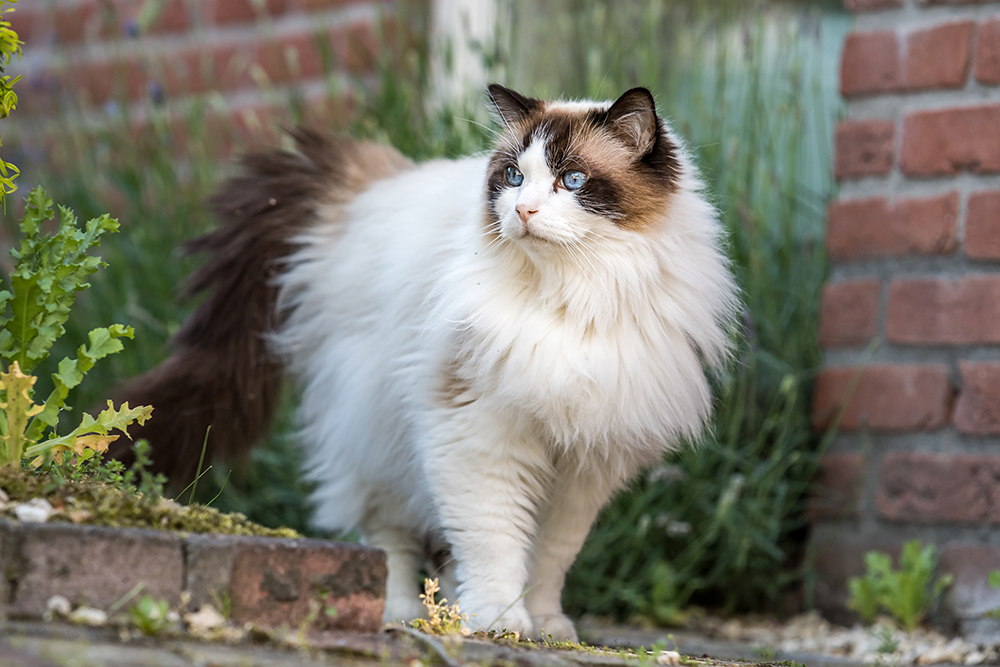
Cats were first domesticated to help with pest control. Back then, it wasn't advantageous to people for cats to lose their wild attributes. Even now, when cats are primarily companion animals, many still retain some feral tendencies. However, the ragdoll cat isn't like this. This is a relatively new breed that was bred specifically to be a companion animal rather than a predator.
History
Ragdolls originated in California in the 1960s. A cat breeder named Ann Baker wanted to create a large, loving cat with long, beautiful fur that would make a perfect companion animal. She chose larger-than-average cats with long coats and gentle demeanors to produce the first generation of ragdolls.
The ragdoll is so named because, when you pick it up or pet it, its body goes completely limp. The implication is that you could pick it up like a doll and carry it around. However, a ragdoll cat is a living creature that is capable of feeling pain and deserving of respectful treatment. Therefore, when you hold a ragdoll cat, you should support its entire body, e.g., one arm under the front legs and one arm under the hindquarters. It is also acceptable to cradle the ragdoll in your arms and carry it around like a baby; the cat won't raise any objection.
Other cat breeders soon started following Baker's lead and breeding ragdoll cats of their own. The Ragdoll Fanciers Club International was founded for the purpose of standardizing the breed's appearance and genetic make-up. The goal was to achieve recognition by cat registries, a process that gained traction in 1993 when the Cat Fanciers Association first began registering ragdolls and culminated in 2000 when ragdolls received the organization's full recognition.
Appearance
The ragdoll is a pointed breed, meaning that the fur on the ears, face, legs, and tail is darker than the fur on the body. However, this is not evident in kittenhood. Ragdoll kittens are pure white, and it is only when they are about two years old that their coloration becomes evident. The colored portions of their coats come in many different colors and patterns.
No matter the coat color or pattern, all ragdoll cats have stunning blue eyes. Their ears are relatively small and rounded in appearance compared to the large, pointy ears that most cats have.
Ragdolls are large cats. Males can weigh up to 20 pounds, while females typically range between 10 and 15 pounds. They can also be up to 40 inches long, including the tail. Their medium-to-long coats of fur can make them look even larger than they actually are.
Personality
Ragdolls are very mellow, easygoing cats. They make good family pets because they're very friendly and affectionate with everyone, including kids, and very patient with handling that may not always be the most gentle. They also tend to get along well with other cats and with dogs that are receptive to feline companionship.
Ragdolls aren't high-energy cats, and they don't have much of a prey drive. They aren't the kind of cats that like to play with toys on their own. They like social interaction, so they'd prefer it if you'd play a game with them. Some ragdolls play games that are more common for dogs. For example, if you throw a cat toy for a ragdoll, she may fetch it and bring it back to you.
Ragdolls are lap cats that crave attention. They are the kind of cats that will follow you from room to room to keep tabs and see what you are up to. They have loud, throaty purrs but otherwise tend not to be very vocal. When they do meow, their voices tend to be very soft and sweet.
Health
Ragdolls are generally healthy cats that can live for up to 17 years. However, like any purebred animal, they are susceptible to some inherited conditions. For example, ragdolls can develop hypertrophic cardiomyopathy. This is a condition in which the heart becomes enlarged due to thickening of the muscle, which makes it pump blood less efficiently. This is a disease that has no cure and is difficult to prevent.
Ragdolls are also prone to develop bladder stones that make urination difficult and painful. A cat with bladder stones may strain and cry when using the litter box, and the urine may be bloody. Cats should always have access to fresh drinking water, but ragdolls should also eat wet cat food, at least occasionally, because the extra hydration can help prevent kidney stones.
Large cat breeds are at risk of putting on too much weight, and a ragdoll is no exception. It is normal for ragdolls to have a pad of belly fat, but otherwise, you should prevent them from putting on weight by feeding them carefully measured servings of food proportionate to their weight.
Grooming
The long fur of a ragdoll cat was designed to avoid matting. Long-haired cats typically have an undercoat of denser fur, but the ragdoll has only a single-layer coat. Nevertheless, a ragdoll should be brushed regularly to prevent tangles. You can use a curry brush for this, and a ragdoll cat will probably enjoy it as long as you are gentle.
Long hair on the tail can pick up fragments of excrement from the litter box. You can prevent this by keeping the box clean. Like other cats, a ragdoll is a self-groomer, but you can give your pet a bath if you notice her coat looking stringy or feeling greasy.
The ragdoll is a very popular breed, meaning that kittens can cost hundreds or thousands of dollars. There are also rescue organizations that rehome ragdoll cats in need.