
 Save 15% on your 1st Autoship learn more

 Email us
 Live Chat
 FAQs
FAQs





Introduction
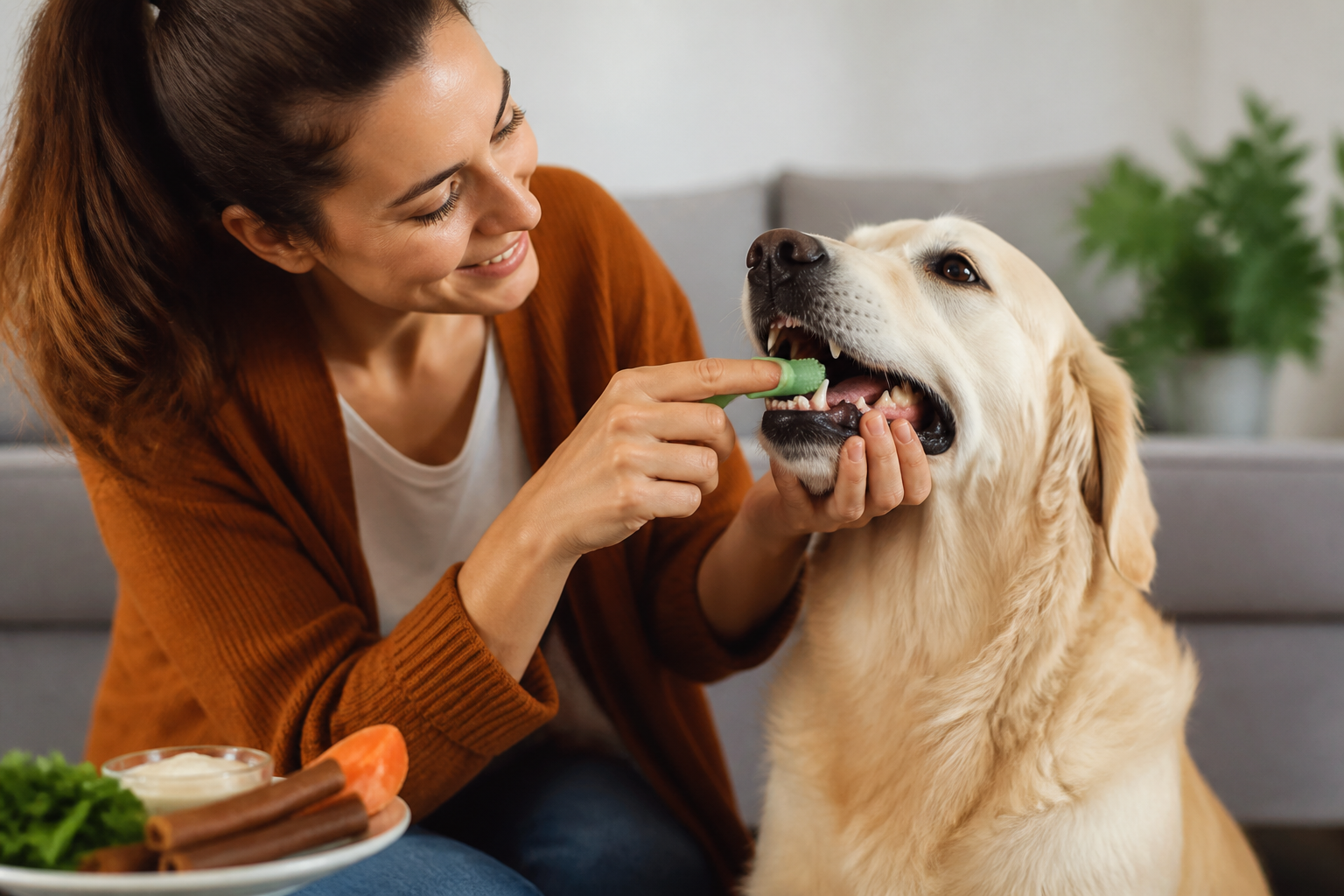
You lean in for a pup kiss and catch a whiff of something that definitely does not smell like roses. It is a common moment for many dog owners. We often worry about bad breath, but it is usually a sign of plaque buildup or gum irritation. At BaxterBoo, we know that brushing isn't always easy, especially if your dog views the toothbrush as a foe. This article covers practical, natural ways to scrub away grime and support oral health without the stress. From crunchy snacks to safe chewing habits, you can take steps today to keep those pearly whites shining. Our goal is to help you build a routine that feels like a treat rather than a chore. By using natural tools and healthy habits, you can support your dog’s long-term wellness.
Quick Answer: You can clean your dog's teeth naturally by using mechanical tools like raw bones and textured toys. Adding dental-friendly foods like carrots and using coconut oil as a natural antibacterial paste also helps.
The Importance of Natural Dental Care
Many pet owners feel guilty when they skip a day of brushing. It is hard to keep up with a daily routine when your pet is wiggly or resistant. However, oral health is tied to much more than just fresh breath. Bacteria in the mouth can enter the bloodstream. This can eventually affect the heart, liver, and kidneys.
Natural dental care focuses on prevention. It uses the dog's natural instincts to chew and gnaw to remove debris. While these methods are effective, they work best as part of a consistent routine. If your dog already has heavy brown tartar or red gums, natural methods may not be enough.
Vet Tip: If your dog has loose teeth, bleeding gums, or a sudden change in eating habits, skip the natural home remedies and see a veterinarian immediately. These are signs of advanced periodontal disease that require professional intervention.
Chewing as Nature's Toothbrush
Dogs are hardwired to chew. In the wild, canines cleaned their teeth by gnawing on the bones and hides of their prey. This mechanical action scrapes the surface of the tooth. It also massages the gums to increase blood flow. You can mimic this at home with the right supplies.
Natural Raw Bones
Raw bones are one of the most effective natural teeth cleaners. They are soft enough to give slightly under a dog's jaw but hard enough to scrape away plaque. You must always use raw bones. Cooked bones become brittle and can splinter, which is dangerous for your dog's digestive tract.
- Choose the right size: The bone should be large enough that your dog cannot swallow it whole.
- Monitor the session: Always watch your dog while they chew to prevent choking.
- Limit the time: 15 to 20 minutes is usually enough for a good cleaning session.
Yak Chews and Bully Sticks
If raw bones feel too messy for your living room, there are excellent alternatives. We often recommend yak cheese chews. These are made from traditional Himalayan recipes using yak and cow milk. They are extremely hard. As your dog chews, their saliva slowly softens the edges. This creates a gentle scraping action that reaches the gum line.
Bully sticks are another favorite. These are single-ingredient chews that are high in protein. They provide a lot of friction as your dog works on them. Brands like RedBarn offer high-quality options that avoid the chemicals found in many mass-produced rawhide products.
Key Takeaway: Mechanical cleaning through chewing is the most effective natural way to remove plaque before it hardens into tartar.
DIY Natural Toothpaste Recipes
You should never use human toothpaste on a dog. It often contains xylitol, which is a sweetener that is highly toxic to pets. It also contains fluoride, which can be harmful if swallowed in large amounts. Instead, you can make a safe version at home using pantry staples.
The Coconut Oil Method
Coconut oil is a superstar for dog dental health. It contains lauric acid, which has natural antibacterial and antifungal properties. Many dogs also happen to love the taste. This makes it much easier to get them to cooperate.
Step 1: Scoop a small amount of solid coconut oil. / Use about a teaspoon for a medium dog. Step 2: Add a pinch of baking soda. / This provides a very mild abrasive texture to help lift stains. Step 3: Add a bit of dried parsley. / Parsley is a natural breath freshener that is safe for dogs. Step 4: Use a finger brush or a piece of gauze. / Rub the mixture gently over the teeth and gums.
Using Cinnamon and Kelp
Some owners find success adding a tiny bit of cinnamon to their DIY paste. Cinnamon is known for its anti-inflammatory properties. Another powerful addition is kelp powder. Certain types of brown algae contain enzymes that help break down the biofilm on a dog's teeth.
Dental Friendly Fruits and Vegetables
Your dog's diet plays a massive role in their oral health. While most people think dry kibble cleans teeth, that is mostly a myth. Most kibble pieces are small and shatter instantly. They provide almost no mechanical cleaning. However, certain raw fruits and vegetables can act as natural scrubbers.
- Carrots: Whole, raw carrots are crunchy and require significant chewing. This helps scrape the teeth.
- Apples: Slices of apple can help clean the surface of the teeth. Just be sure to remove all seeds and the core.
- Celery: Because celery is fibrous and watery, it acts like a natural dental floss. It also helps produce more saliva, which washes away food particles.
Key Takeaway: Crunchy, dog-safe vegetables provide a low-calorie way to add mechanical cleaning to your dog's daily routine.
The Role of Water Additives and Supplements
If your dog will not let you near their mouth, you can use products that work through their water bowl or their food. These are helpful for maintaining the "chemical" balance of the mouth. They aim to reduce the number of harmful bacteria in the saliva.
Water Additives
These are flavorless liquids you add to your dog's drinking water. They often contain enzymes or minerals that prevent plaque from mineralizing into tartar. Look for products that are formulated specifically for pets. At BaxterBoo, we carry several trusted brands that focus on ingredient safety.
Probiotics for Oral Health
Bad breath often starts with an imbalance of bacteria. Dental-specific probiotics can help. These are usually powders you sprinkle on food. They introduce "good" bacteria that crowd out the ones that cause odors and decay. Brands like Zesty Paws often include these in their wellness lines.
Toys Designed for Dental Health
Not all toys are created equal. Some toys are designed specifically to clean teeth during play. Look for rubber toys with nubs, ridges, or deep grooves. As your dog bites down, the rubber massages the gums and wipes the teeth.
- Kong Toys: These are durable and can be stuffed with your DIY coconut oil paste. This encourages long chewing sessions.
- Rope Toys: Cotton ropes can act as a natural floss. However, you must inspect them regularly. If your dog starts to pull off and swallow the threads, take the toy away.
- Texture Matters: Avoid toys that are too hard. A good rule is the "fingernail test." If you cannot make a small dent in the toy with your fingernail, it might be hard enough to crack a tooth.
When Natural Methods Aren't Enough
Natural cleaning is a wonderful tool, but it has limits. Once plaque turns into tartar, it becomes hard like concrete. No amount of carrots or coconut oil will remove it. At this stage, your dog needs a professional cleaning from a veterinarian.
Many owners worry about anesthesia during these cleanings. While there are risks with any medical procedure, modern veterinary medicine is very safe. Anesthesia allows the vet to clean under the gum line, which is where the real damage happens. Anesthesia-free "scaling" only cleans the visible part of the tooth. It leaves the bacteria under the gums to continue causing infection.
Utilizing the BaxterBoo Pharmacy
Sometimes, your vet may prescribe a specific dental diet or an oral rinse to treat an infection. Our pet pharmacy offers a wide range of FDA-approved medications and prescription pet foods. We facilitate this through our partnership with Pet's Choice. If your vet recommends a specialized diet like Royal Canin Dental or Farmina Vet Life, we can help you get those items delivered right to your door. This is a great way to manage chronic dental issues that natural methods cannot solve alone.
Bottom line: Natural care is for prevention, but medical issues require veterinary expertise and potentially prescription support.
Creating a Weekly Dental Routine
Consistency is more important than perfection. You do not have to do everything every day. A balanced weekly routine might look like this:
- Monday: A quick 1-minute rub with coconut oil.
- Tuesday: A raw carrot for a snack.
- Wednesday: A 20-minute session with a yak chew or bully stick.
- Thursday: A game of fetch with a textured rubber toy.
- Friday: Another quick coconut oil rub.
- Saturday: A raw bone session (supervised).
- Sunday: Check the mouth for any redness or new odors.
This variety keeps your dog interested. It also attacks plaque from multiple angles. It combines mechanical scraping with antibacterial agents and healthy nutrition.
Helpful Checklist for Starting Natural Dental Care
- Check your pantry for coconut oil and baking soda.
- Buy a bag of large, whole carrots.
- Inspect your dog's current toys for helpful textures.
- Look inside your dog's mouth to establish a "baseline" for what is normal.
- Set a recurring reminder on your phone for a weekly "mouth check."
Conclusion
Cleaning your dog’s teeth naturally is a journey of small, daily choices. By swapping processed treats for raw veggies and providing high-quality chews, you can make a massive difference. We are here to support that journey with expertly curated products and a pharmacy you can trust. Remember that every dog is different. What works for a Labrador might be too hard for a Yorkie. Stay observant and keep the routine fun for your pet.
Key Takeaway: A combination of mechanical chewing, natural antibacterial pastes, and a healthy diet can significantly reduce the need for frequent professional cleanings.
If you are ready to start your dog's new dental routine, browse our dog dental food and treat selection. You can find everything from dental wipes to prescription diets through our pet pharmacy partnership. For even more savings on your pet's essentials, consider signing up for the MVP Rewards programme or setting up our Autoship programme for your favorite dental chews.
FAQ
Can I use human mouthwash for my dog's bad breath? No, you should never use human mouthwash for a dog. Many brands contain alcohol or xylitol, both of which are toxic to pets. Instead, use a pet-specific water additive or a natural rub made from coconut oil and parsley.
How often should I give my dog a raw bone for teeth cleaning? Feeding a raw bone once or twice a week is usually sufficient for dental maintenance. Giving them more frequently can sometimes lead to constipation due to the high calcium content. Always supervise your dog and remove the bone once they have chewed it down to a small, swallowable size.
Are "dental treats" from the grocery store actually natural? Many mass-market dental treats contain synthetic dyes, fillers, and wheat gluten. To keep things natural, look for single-ingredient chews like bully sticks or yak cheese. Always check the ingredient label for items you recognize as real food.
Will a natural diet prevent all dental problems? While a natural diet and raw bones help immensely, some dogs are genetically prone to dental disease. Small breeds, in particular, often have crowded teeth that trap food easily. Regular veterinary check-ups are still necessary to ensure no hidden issues are developing under the gum line.






