
 Save 15% on your 1st Autoship learn more

 Email us
 Live Chat
 FAQs
FAQs





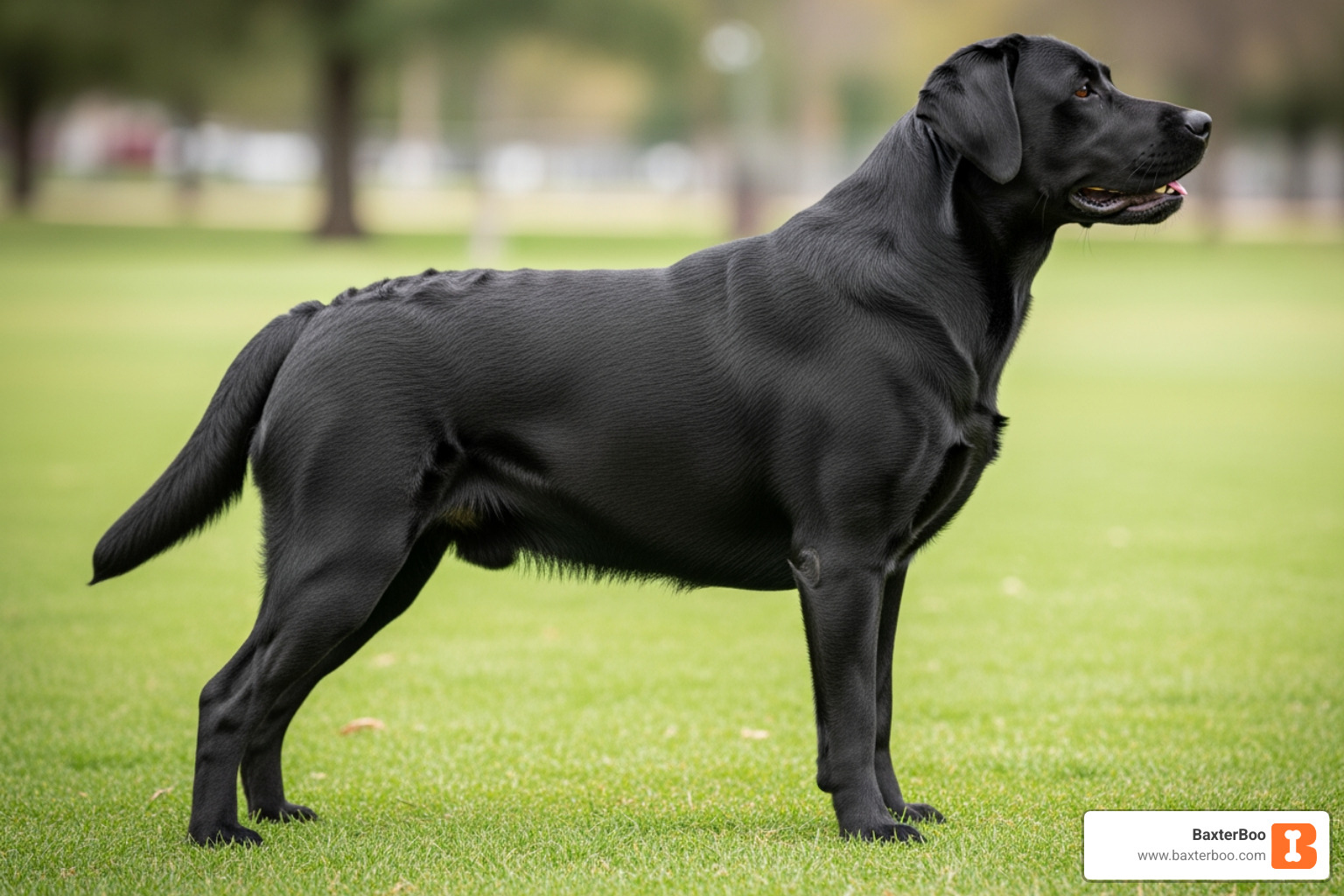
Understanding the Ideal Black Lab Weight
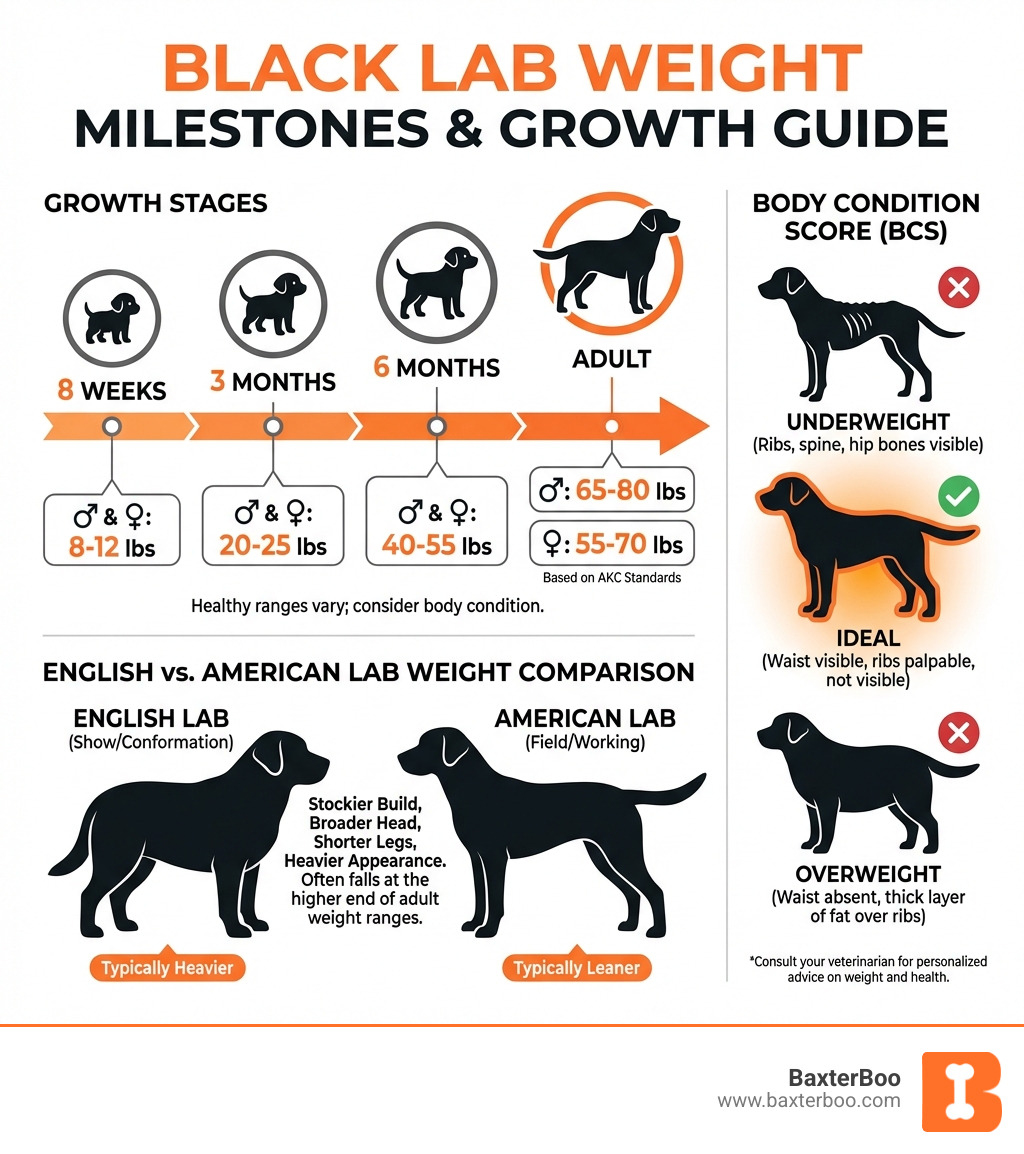
Black lab weight typically falls within these ranges, based on AKC breed standards:
| Sex | Weight Range | Height Range |
|---|---|---|
| Male | 65-80 lbs (29-36 kg) | 22.5-24.5 inches |
| Female | 55-70 lbs (25-32 kg) | 21.5-23.5 inches |
These are healthy target ranges — but as you'll see below, your dog's ideal weight depends on more than just the scale.
If you've ever stood next to another Lab owner at the dog park and wondered why your 70-pound black Lab looks nothing like their 85-pound one, you're not alone. Black Labs vary a lot in size — and that's completely normal.
Labrador Retrievers are one of the most popular dog breeds in the US, and black is the most common coat color. They're loyal, energetic, and built for work — originally bred as fishing companions in Newfoundland before English breeders refined them into the retrievers we know today.
But here's the thing: a "healthy" black Lab doesn't always match the number on the scale. Body type, breeding line, age, and fitness level all play a role. A lean field Lab at 68 lbs and a stocky show Lab at 82 lbs can both be perfectly healthy — or both be overweight.
This guide breaks down exactly what a healthy black Lab should weigh, what factors shift that number, and what to watch for.
When we talk about the "ideal" weight for a Labrador, we usually look toward the official breed standards. The Labrador Retriever was first recognized by the Kennel Club (UK) in 1903 and later by the American Kennel Club (AKC) in 1917. Since then, these organizations have maintained strict guidelines to ensure the breed retains its functional, athletic build.
However, "standard" doesn't mean "identical." Depending on which side of the Atlantic you are on, or whether your dog comes from show or field lines, the target number might shift. For example, the standard The Kennel Club(UK)standard emphasizes a stable, powerful build, while the AKC standard allows for a slightly taller, more agile frame in some contexts.
| Organization | Male Weight | Female Weight |
|---|---|---|
| AKC (US) | 65–80 lbs | 55–70 lbs |
| Kennel Club (UK) | 65–80 lbs | 55–70 lbs |
While the weight ranges look similar on paper, the UK standards often result in a "blockier" dog that carries more bone and muscle, which can push a dog toward the higher end of the scale without them being considered "fat."
Average Black Lab Weight for Males vs. Females
In Labradors, boys are almost always bigger than girls—a trait known as sexual dimorphism.
- Males: A healthy adult male typically clocks in between 65 and 80 pounds. They stand about 22.5 to 24.5 inches at the shoulder. They tend to have broader heads and thicker necks.
- Females: Adult females are usually more refined, weighing between 55 and 70 pounds and standing 21.5 to 23.5 inches tall.
Growth patterns are also important to keep in mind. A black lab weight will increase rapidly during the first six months. Most Labs reach their full height by 12 months, but they often continue to "fill out" and add muscle mass until they are two years old. If your 10-month-old male is only 55 lbs, don't panic—he might just be a "late bloomer" or belong to a leaner American line.
Factors That Impact Black Lab Weight
Why does one Lab stay trim on three cups of food while another gains weight just by looking at a biscuit? Several factors are at play:
- Genetics: Some Labs are biologically programmed to be hungry. Scientific research on POMC gene and obesity has shown that many Labradors carry a specific mutation in the POMC gene. This mutation essentially "turns off" the signal that tells the dog they are full, leading to a constant, obsessive search for food.
- Neutering and Spaying: Altering your dog changes their metabolic rate. Research suggests that neutered or spayed dogs may require fewer calories than intact dogs to maintain the same weight.
- Age: As Labs hit their senior years (around 7-9 years old), their metabolism slows down, and they may become less active. This is when the "middle-age spread" often occurs.
- Metabolism: Just like humans, some dogs simply have a higher "resting" burn rate. Active hunting dogs or those involved in high-intensity sports like dock diving will naturally burn more than a Lab whose main job is guarding the sofa.
English vs. American: How Breeding Lines Affect Size
If you've noticed two distinct "looks" in black Labs, you're seeing the difference between English (show) and American (field) lines. This is perhaps the biggest factor in why two healthy dogs can have vastly different weights.
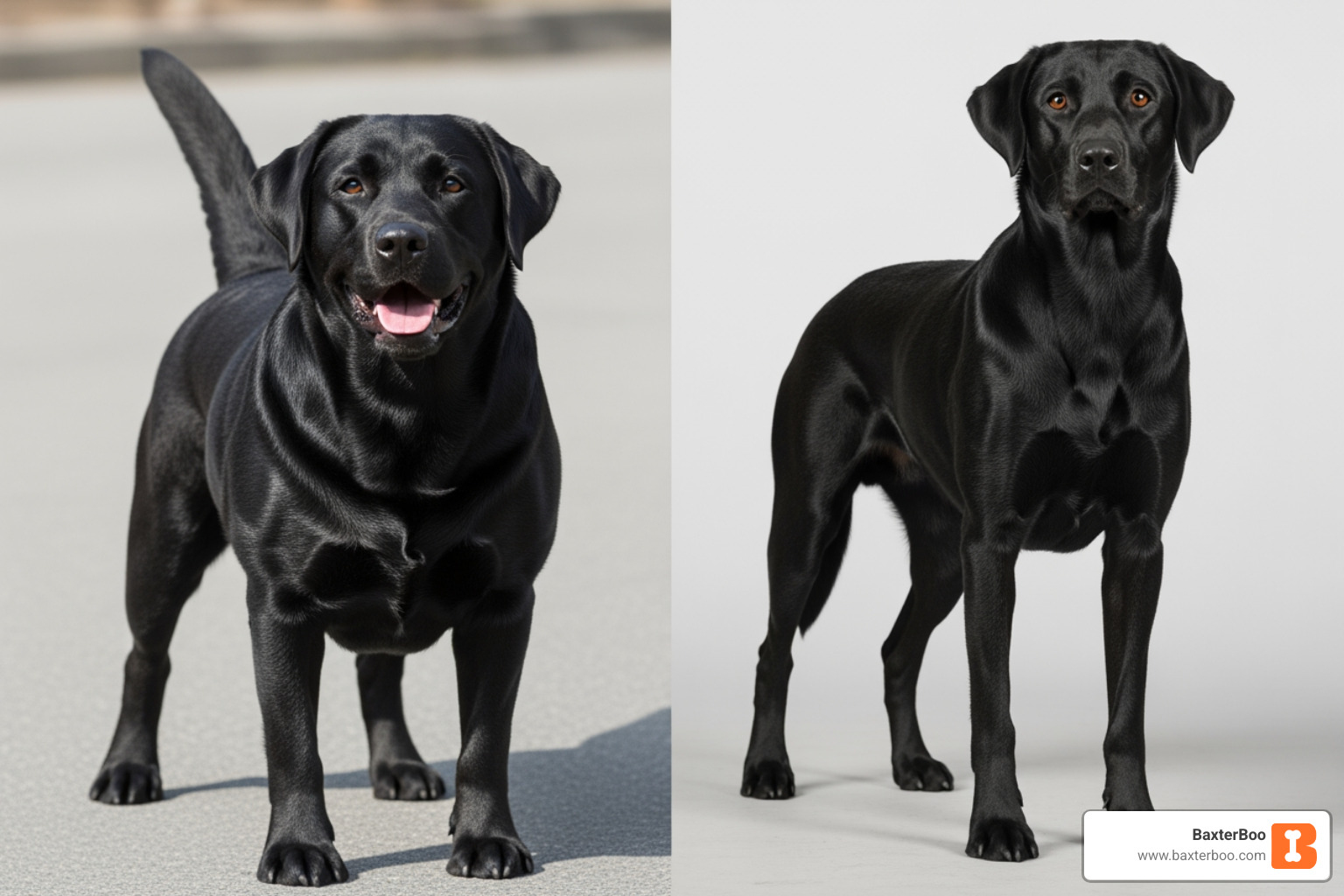
English (Show) Labradors
These dogs are bred to meet the aesthetic standards of the show ring. They are "blocky," featuring:
- Shorter legs and a stockier build.
- A "barrel chest" (wide ribcage).
- A thick "otter tail."
- A broader, more square head. Because of their heavy bone structure and muscle, English Labs often weigh 70–85 lbs for males and 60–75 lbs for females.
American (Field) Labradors
Bred for hunting and athleticism, these Labs are built for speed and endurance. They are:
- Taller and leaner with longer legs.
- Narrows in the face and muzzle.
- Equipped with a thinner tail (sometimes with a slight curve). American Labs are often on the lighter end of the spectrum, typically 65–80 lbs for males and 55–70 lbs for females. An American Lab at 60 lbs might look "skinny" compared to an English Lab, but they are often in peak athletic condition.
Health Risks and Weight Management
At BaxterBoo, we are committed to pet wellness, and there is no greater threat to a Lab’s longevity than obesity. Extra weight isn't just a cosmetic issue; it puts immense strain on a breed already prone to joint problems.
Common Health Risks
- Hip and Elbow Dysplasia: These are genetic conditions where the joints don't fit together perfectly. Excess weight acts like a hammer on these joints, accelerating wear and tear and leading to painful arthritis.
- Bloat and GDV: Labradors have deep chests, making them prone to Gastric Dilatation-Volvulus (GDV), a life-threatening condition where the stomach fills with air and twists. Overweight dogs and those who eat too quickly are at higher risk.
- Joint Issues: Even without dysplasia, carrying an extra 10 pounds can lead to cruciate ligament tears, which often require expensive surgeries ranging from $3,500 to $7,000.
Management Strategies
To keep your black lab weight in the "green zone," we recommend a multi-pronged approach:
- The Rib Test: You should be able to feel your Lab’s ribs easily under a thin layer of fat, but you shouldn't see them sticking out. When looking from above, your dog should have a visible waist.
- Slow Feeders: Since many Labs have that POMC gene mutation, they tend to inhale their food. Using a slow-feeder bowl can prevent them from swallowing air and help them feel more satisfied.
- Exercise: Most Labs need at least 60 minutes of active exercise daily. Swimming is an excellent low-impact option for Labs that already have joint issues.
- Supplements: If your Lab is on the heavier side or is a senior, joint supplements can help manage inflammation. Ingredients like Glucosamine and Chondroitin are staples for breed health.
- Professional Guidance: If your Lab needs medication for weight-related issues or specialized diets, we offer expertly curated pharmacy services to help you manage those costs.
Frequently Asked Questions
Is my black Lab underweight?
It’s actually quite rare for a Lab to be underweight unless they are ill or have parasites. However, if your dog’s ribs, spine, or hip bones are clearly visible from a distance, or if they have very low energy and a dull coat, they may be underweight. Always consult a vet to rule out underlying issues like thyroid problems or intestinal worms.
Why is my black Lab so much larger than average?
Sometimes, genetics just throws a curveball. There are "genetic outliers" in the breed. For instance, a famous Lab named Robert weighed 152 pounds and stood 28 inches tall due to a growth hormone issue. If your Lab is 100+ lbs but doesn't look "fat," they might simply have a giant frame. However, most 100-lb Labs are unfortunately just carrying too much body fat.
Does coat color affect a Labrador's weight?
Scientifically, no. The genes for black, chocolate, and yellow coats are separate from the genes governing size. However, there is a "cultural" difference. Because chocolate Labs were historically more popular in the show ring, they are often bred for that "English" blocky look, making them appear heavier. Black Labs are found equally in both show and field lines, so their weight varies more based on their specific lineage than their color.
Interestingly, some studies have noted that chocolate Labs have a slightly shorter average lifespan (around 10.7 years) compared to black and yellow Labs (around 12.1 years), though this is likely due to a smaller gene pool rather than the color itself.
Conclusion
Whether your black Lab is a 60-pound "pocket rocket" or an 85-pound "absolute unit," the most important thing is their body condition. A healthy black lab weight is one that allows them to run, swim, and play without pain or excessive panting.
At BaxterBoo, we’re here to support your Lab's journey from puppyhood to their senior years. From high-quality slow feeders to mobility supplements designed to keep those hard-working joints moving, we curate only the best for your best friend. Based in Vernon Hills, IL, our team is dedicated to providing the wellness products and expert advice you need to keep your Lab happy, healthy, and at their ideal weight for years to come.






