Save 15% on your 1st Autoship learn more

 Email us
 Live Chat
 FAQs
FAQs





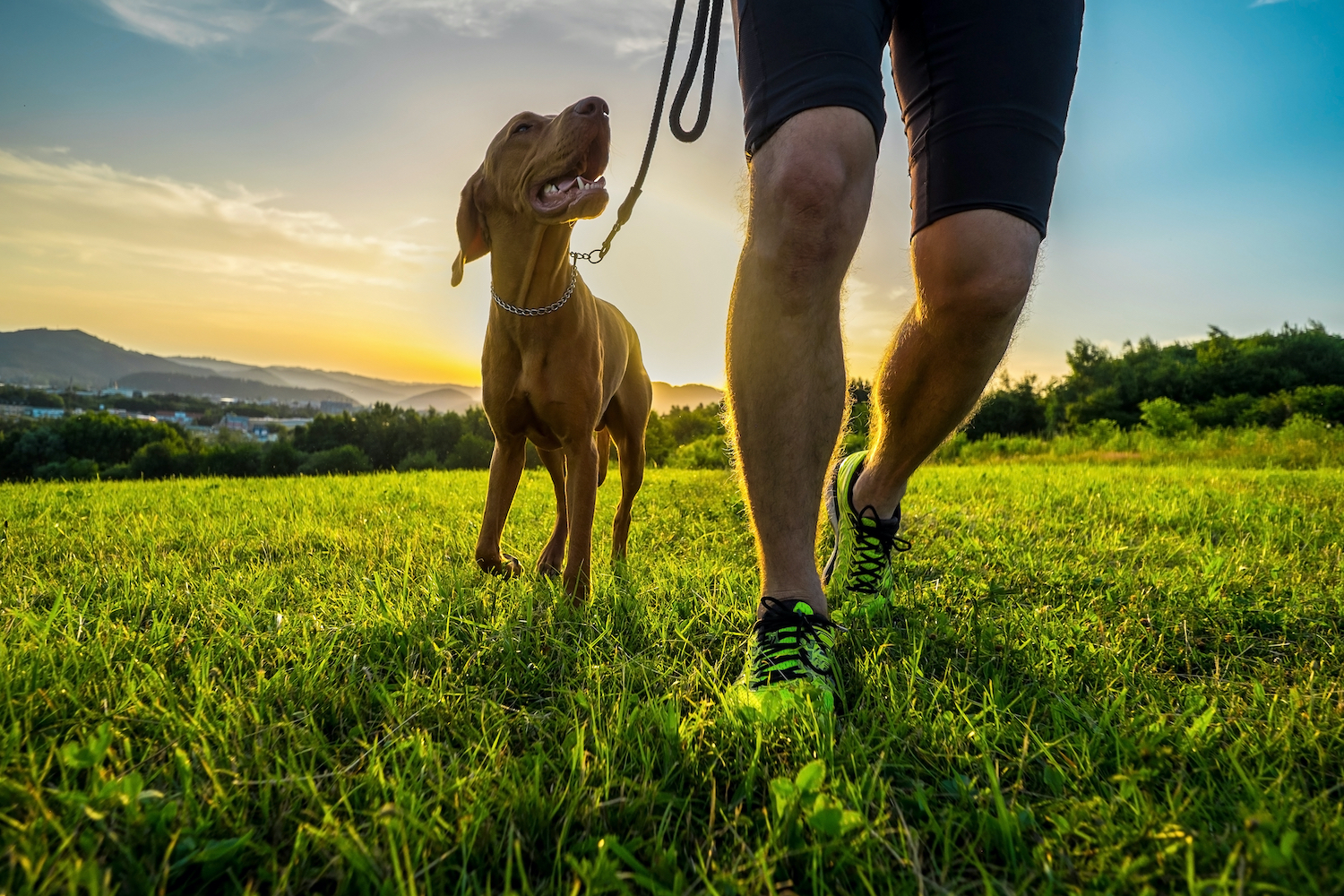
Both people and pets need exercise to stay healthy. There is a wide range of activities you can do with your dog, from a simple daily walk to canine sports competitions. It should be easy to find an exercise that appeals to both you and your dog. However, you do have to consider the safety of both you and your pet.
Benefits
Regular exercise helps you to maintain a healthy weight, improve your cardiovascular health, and lower the risk of developing serious chronic health complaints. It offers the same benefits for your dog.
Exercising also helps to improve mental health by reducing stress hormones and increasing production of brain chemicals that cause feelings of contentment, such as dopamine and serotonin. For your dog, exercise provides mental stimulation and prevents him from becoming bored. In addition to boosting your dog's mental health, it can also prevent or ameliorate behavioral problems.
Research shows that people who have a workout partner to whom they have to be accountable stick with an exercise program longer than those who do not. This may be even more true when your workout partner is a pet dog who can't really exercise on her own without your involvement. Exercising with your dog can be an important bonding experience. It can also help you get out and socialize with other people and their pets, potentially making new friends in the process.
Safety
While exercising regularly can offer health benefits, physical activity can also put you and your dog at risk of illness or injury. It is important to consider your own safety as well as that of your dog when planning an exercise program.
Overexertion can be dangerous for both people and pets. Whatever activity you choose to do with your dog, start at a low level that you know both you and your pet can achieve. As you and your pet build strength and stamina, gradually increase your activity level, but never push yourself or your dog beyond what either of you can do.
Be aware of the weather when you exercise with your pet. Dogs don't sweat, so hot weather can be especially dangerous for them. A cooling vest can help them regulate their temperature, but be sure you can recognize the signs of heat illness in your dog and get him into the shade if you notice them.
Cold weather can also present challenges for dogs. Dogs with thin coats can be sensitive to cold and may need a jacket to keep warm. Ice can also collect between the pads of your dog's feet and injure her. Consider putting dog booties on her feet before going out to prevent this.
Dehydration can be dangerous and potentially deadly for both people and dogs. It can happen at any time, but especially when the weather is hot. Always bring a water bottle for both you and your dog, especially if you don't know whether you'll have access to drinking fountains or other safe sources of water.
It's a good idea to carry a pet first aid kit with you when exercising with your dog, especially if you are going far from home. If your dog gets sick or hurt, you can use the kit to stabilize her condition until you can get her in to see the vet.
Whether you exercise with your dog in your own neighborhood or travel to other places, be aware of local leash laws. Many communities require a dog to be on a leash when out in public.
Simple Exercises
It is a good idea to start out with simple exercises that just about any dog can do. Walking is generally a good exercise for any dog regardless of age, breed, or size. The American Kennel Club offers a program called FIT DOG in which participants commit to walking with their pets at least 150 minutes per week. This equates to one 30-minute walk or two 15-minute walks per day, five days per week.
If you and your dog are a little more athletic and up to a greater physical challenge, you could try jogging together. Take your dog's breed and activity level into consideration when thinking about jogging. Some breeds, such as retrievers, are willing and able to jog long distances with you while others, such as greyhounds, would prefer short sprints. A hands-free leash may make jogging with your dog easier and more comfortable for you while still keeping your dog safe. Also consider your dog's age as jogging is not appropriate for puppies or older dogs.
When it comes to dog exercise, fetch is about as simple as it gets. Some dogs, especially retrievers, are genetically hardwired to fetch, while other breeds may need to be taught. A flying disc makes a good fetch toy, and there are ways that you can increase your activity level as well, such as involving your dog in a game of Ultimate Frisbee.
Elderly dogs may have pain in their joints which makes many types of exercise difficult or painful. For example, jogging is a high-impact activity that puts a lot of pressure on the joints. Even walking may be too much for some arthritic dogs. These pooches may benefit from swimming because the water supports their bodies, putting almost no pressure on the joints. Swimming is natural for some dogs, while other breeds struggle, so your pet should always wear a life vest when swimming.
More advanced dog exercises include dog yoga, agility training, and canine freestyle, which is dancing with your dog. Many communities offer classes in these types of activities.