Save 15% on your 1st Autoship learn more

 Email us
 Live Chat
 FAQs
FAQs





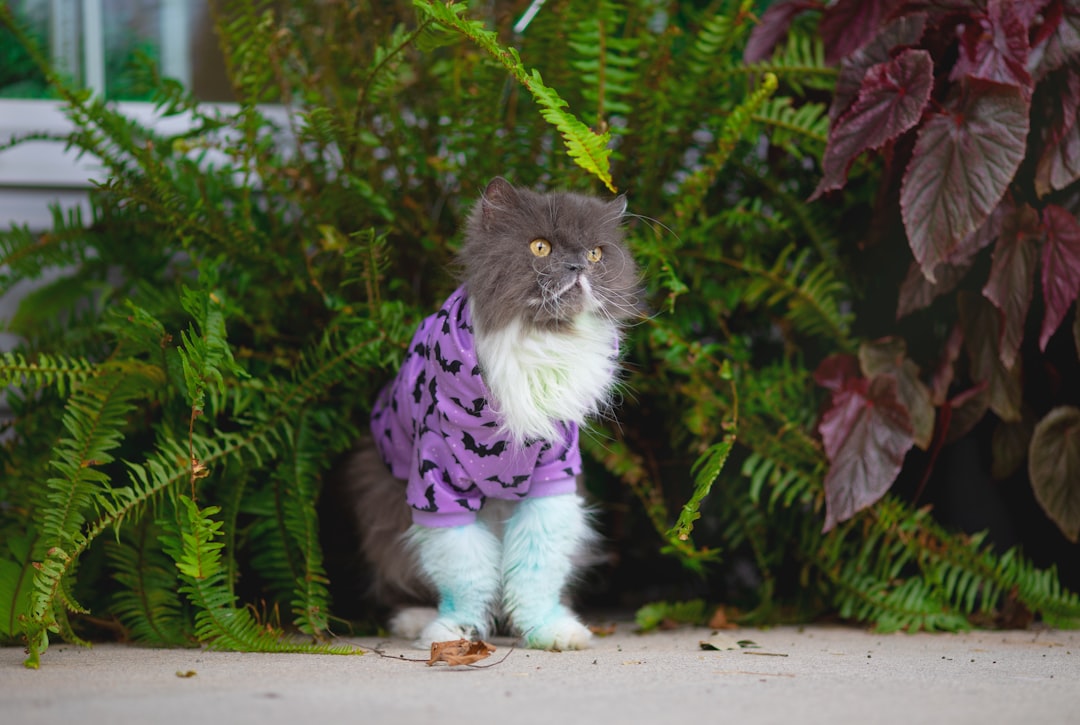
Why Cat Winter Sweaters Are More Than Just Fashion
A cat winter sweater is more than an adorable accessory; it's a practical way to keep certain cats warm and comfortable during colder months. But not every cat needs one, and knowing when your feline friend could benefit from extra warmth is key.
When Does Your Cat Need a Winter Sweater?
- Hairless or thin-coated breeds (Sphynx, Devon Rex, Cornish Rex, Peterbald)
- Senior cats or kittens who have difficulty regulating body temperature
- Indoor cats in drafty or cold homes
- Cats with health conditions or low body fat
- Cats showing signs of being cold (shivering, hiding, seeking warm spots)
The growing pet apparel market shows that many owners are willing to invest in their cat's comfort. However, not all cats need sweaters, and some actively dislike wearing them. This guide will help you decide if a winter sweater is right for your cat, how to choose one that's safe and comfortable, and how to introduce it without stress so you can make the best choice for your furry friend's health and happiness.
Does Your Cat Really Need a Sweater?
Whether your cat needs a cat winter sweater depends on several factors. While some are fine with their natural fur, others need an extra layer for health and comfort. At BaxterBoo, we're all about pet wellness—and that means helping you figure out what's best for your feline friend.
Signs of a Cold Cat
Cats often hide discomfort, but their body language reveals when they're cold. Shivering is the most obvious sign. Subtler clues include hiding in small, enclosed spaces like under blankets or in closets. You might also find them constantly seeking warmth by curling up in sunny spots or near heating vents.
Cold cats also instinctively tuck their paws under their bodies and curl into a tight ball to conserve heat. If you notice these behaviors when the temperature drops, your cat is likely telling you they could use some help staying warm.
As one expert put it: "If you are cold, your cat is likely cold too."
Breeds That Get Cold
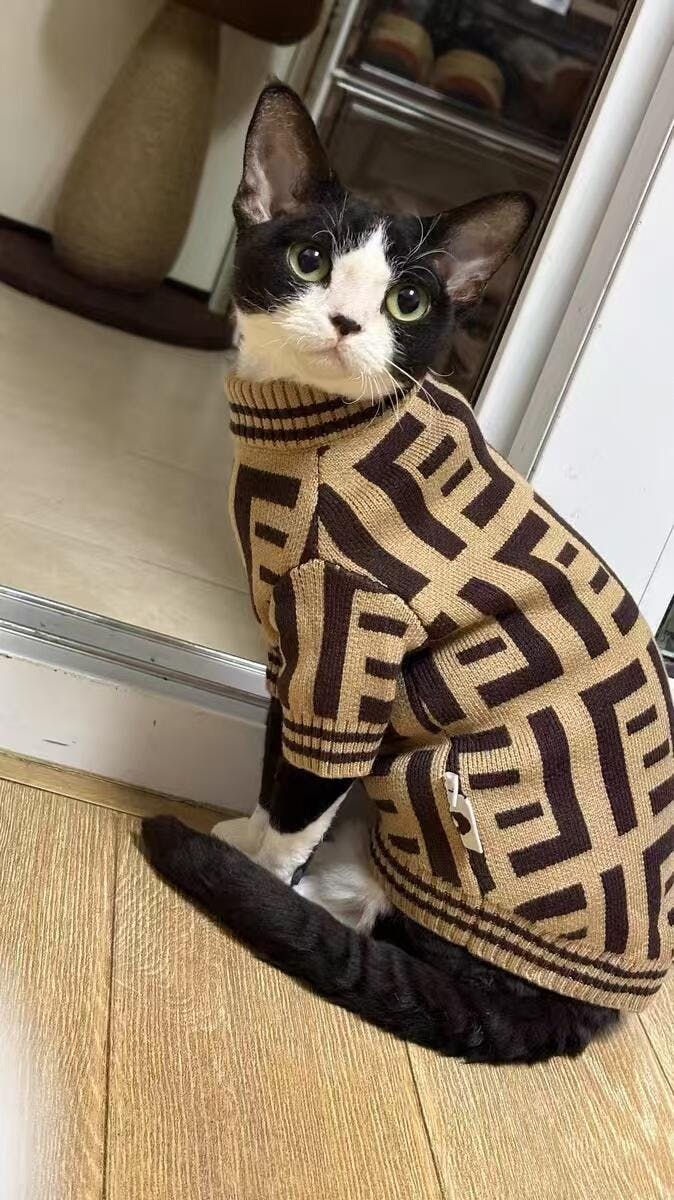
Some breeds get cold more easily. Sphynx cats, with no fur, have zero natural insulation and genuinely need an extra layer in cold environments.
Devon Rex and Cornish Rex cats have delicate, wavy coats that offer minimal protection. Peterbald cats, which can be hairless or have very fine coats, face similar challenges.
For these breeds, a cat winter sweater is less about fashion and more about basic comfort and health.
Other Factors
Age is also a factor. Senior cats and kittens often struggle with temperature regulation and can get cold quickly.
Illness is another consideration. Cats recovering from surgery, managing health conditions, or those with low body fat feel the cold more because they lack natural insulation.
Benefits Beyond Warmth
Sweaters offer benefits beyond just warmth. For some cats, the gentle pressure of a well-fitted sweater provides anxiety relief, similar to a thunder shirt.
They can also offer skin protection. Sweaters can prevent cats from scratching irritated skin or licking off medication. One customer shared how sweaters helped manage their cat's neck allergies, keeping the skin safe while it healed.
For adventurous cats who enjoy supervised outdoor time ("catexploring"), a functional cat winter sweater is essential gear for cold weather, keeping them safe and comfortable as they explore.
Choosing the Perfect Cat Winter Sweater
Once you've decided your cat needs a sweater, the next step is finding the right one. The goal is a cat winter sweater that's warm, safe, and comfortable, allowing your cat to move freely.
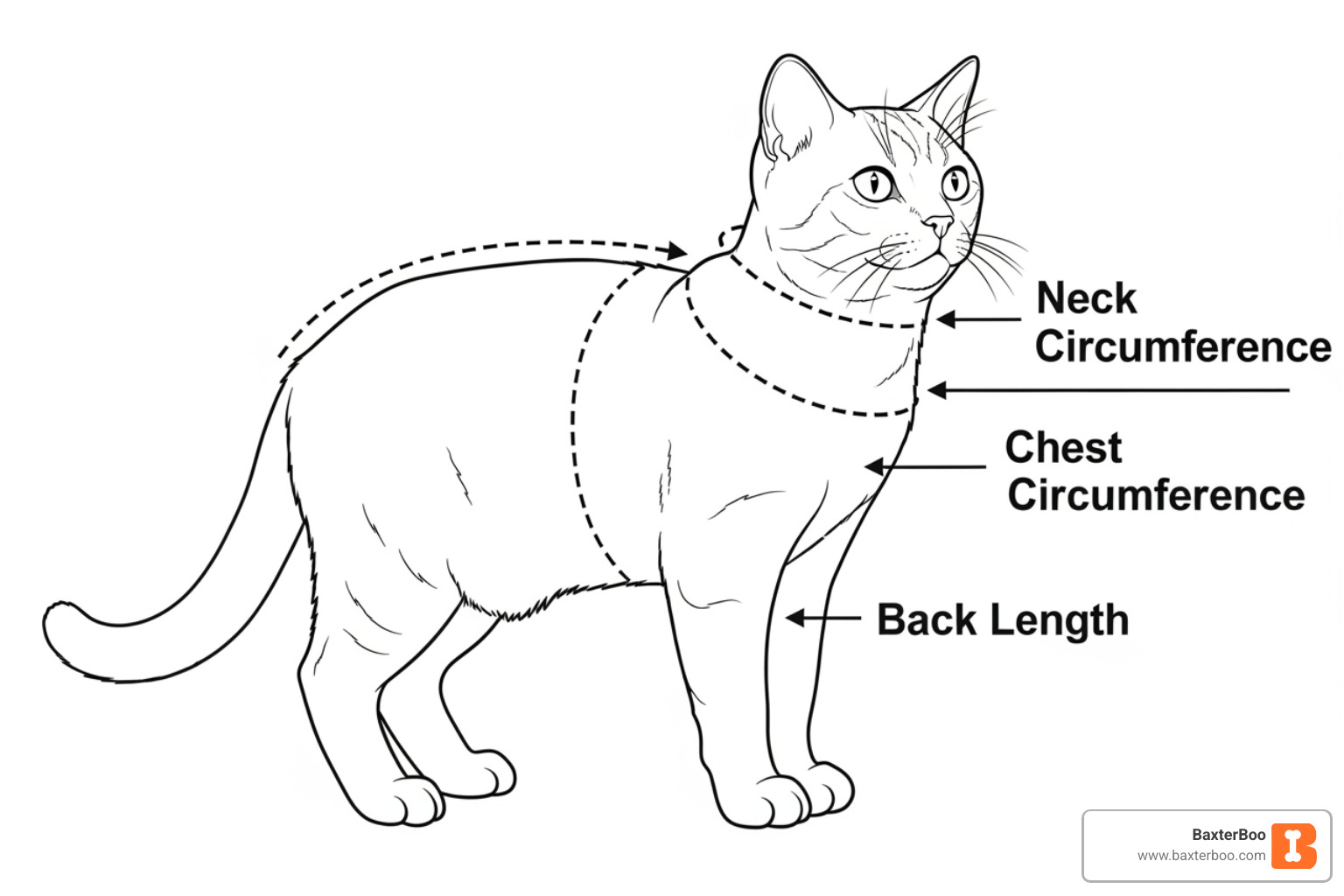
Finding the Right Fit: A Measurement Guide
Getting the size right is the most important step. A sweater that's too tight is restrictive, while one that's too loose can be a hazard. Grab a soft tape measure and treats to get three key measurements:
- Neck girth: Measure around the widest part of the neck, where a collar sits. Ensure you can fit two fingers underneath.
- Chest girth: Measure around the broadest part of the chest, just behind the front legs. This is a crucial measurement for a good fit.
- Back length: Measure from the base of the neck to the base of the tail.
Compare your measurements to the manufacturer's size chart, as sizing varies by brand. If between sizes, size up. Your cat must be able to walk, jump, eat, and use the litter box freely. The BaxterBoo Boo Turtleneck Cat Shirt is a great example of a well-fitted design.
The Best Materials for a Cat Winter Sweater
The right fabric is as important as the fit. Choose soft, comfortable materials that are gentle on your cat's sensitive skin.
- Fleece: Soft, lightweight, warm, breathable, and easy to wash.
- Soft cotton: A gentle, breathable natural fiber ideal for sensitive skin.
- Acrylic blends: A durable and affordable option that balances warmth and comfort.
- Wool or alpaca: Provides superior insulation for very cold weather. The BaxterBoo Chilly Dog Handmade Alpaca Fairisle Wool Dog Sweater is a quality example.
Avoid itchy or stiff materials, loose threads or embellishments (choking hazards), heavy fabrics that restrict movement, and zippers or hard fasteners that can pinch. Choose soft, breathable fabrics to prevent overheating and keep skin healthy.
Key Features and Popular Styles
Consider style and function to find the best design for your cat.
- Pullover sweaters: A simple design that slips over the head.
- Button or snap closures: A good alternative for cats who dislike pullovers.
- Turtlenecks: Provide extra neck warmth, great for hairless breeds. Ensure the neck isn't too tight. The BaxterBoo Fabdog Chunky Turtleneck Dog Sweater is a stylish option.
- Hoodies: Cute but can be impractical. Choose a lightweight hood that doesn't block vision.
- Harness compatibility: Crucial for outdoor adventures. Look for a leash opening or a design that works with a harness.
For wet weather, pair a sweater like the BaxterBoo Worthy Dog Plaid Dog Sweater with a water-resistant layer. The best cat winter sweater is one your cat will actually wear.
Safety First: How to Keep Your Cat Comfortable and Secure
A cat winter sweater can be wonderful, but it should never compromise your cat's safety or comfort. At BaxterBoo, we're committed to pet wellness, which means ensuring every product improves your cat's life.

Supervision is Key
Always supervise your cat when they wear a sweater, especially at first. This helps prevent accidents and lets you see how your cat is reacting. Even if your cat seems comfortable, check on them periodically, as comfort can change with activity.
Signs of Discomfort
Not every cat will accept a sweater. Learn to read your cat's body language to know when to take it off. Signs of distress include:
- Hiding or freezing in place
- Aggressive behavior like growling, hissing, or swatting
- Rapid, jerky tail flicking
- Ears flattened back against their head
- Constantly biting or pulling at the fabric
- Excessive grooming
- Difficulty walking, jumping, or using the litter box
If you see these signs, remove the sweater immediately. Forcing it will only cause stress and create a negative association.
Potential Hazards
Even with a good fit, be aware of potential safety issues:
- Choking hazards: Avoid sweaters with loose threads, buttons, or other small embellishments that can be chewed off.
- Overheating: A sweater can interfere with natural temperature regulation. Watch for panting (unusual in cats), lethargy, or rapid breathing.
- Restricted movement: Your cat must be able to move, stretch, and groom normally.
- Skin irritation: Prolonged wear can trap moisture. Use breathable fabrics and give your cat regular sweater-free breaks. Check for redness under the arms and around the neck.
- Snagging: A sweater can catch on furniture or branches. Supervise your cat to prevent them from getting trapped.
Regular Checks
Check your cat regularly while they wear a sweater. Ensure it isn't twisted or bunched up, and look for any skin irritation. These quick checks prevent problems and are a good excuse for a cuddle.
How to Introduce Your Cat to Wearing a Sweater
Let's be honest—most cats aren't exactly thrilled about wearing clothes. They're independent creatures who prefer to be unencumbered. But with patience, positive reinforcement, and the right approach, many cats can learn to tolerate (and some even enjoy) wearing a cat winter sweater. The key is making it a positive experience from the start.
Start with Scent Swapping
Before you even think about putting the sweater on your cat, let them get familiar with it on their own terms. Place the sweater near their favorite sleeping spot or somewhere they spend a lot of time. You can even gently rub it against their cheeks or along their body to transfer their scent onto the fabric. This helps the sweater smell less foreign and more like "theirs."
The Art of Gradual Introduction
Think of this process like dating—you wouldn't propose on the first meeting, right? The same principle applies to sweaters. We recommend breaking the introduction into small, manageable steps, always pairing each step with something your cat loves.
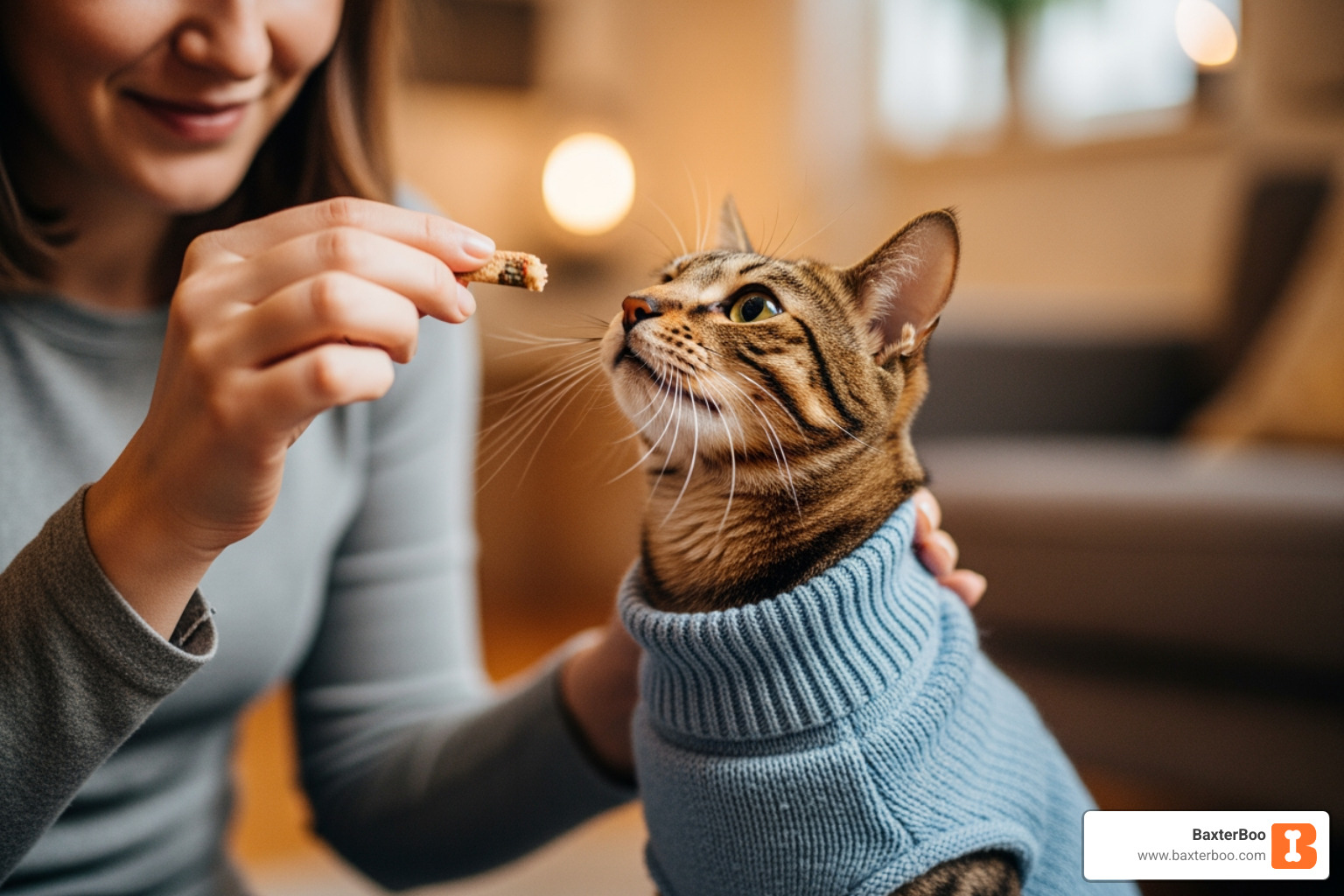
Start by simply showing your cat the sweater for a few seconds, then immediately offer a high-value treat (think tuna or their absolute favorite snack) and lots of praise. Do this several times over a few days until they seem relaxed around it.
Next, gently touch the sweater to your cat's back for just a second or two, then reward them right away. Gradually increase how long the sweater touches them, always following with treats and praise. The goal is to help them associate the sweater with good things, not stress.
When they're comfortable with that, try the next step based on your sweater style. For a pullover, gently guide just their head through the neck hole, then immediately take it off and reward them. For a button-up style, drape it lightly over their back for a moment. Keep these sessions incredibly brief—we're talking seconds, not minutes.
Once your cat tolerates partial wear without fussing, you can try putting the sweater on completely. But here's the important part: only leave it on for 30 seconds to a minute at first. Distract them with treats, playtime, or petting. Then remove the sweater while the experience is still positive, and shower them with more treats and praise.
Choose a Calm Time
Timing is everything. Introduce the sweater when your cat is naturally relaxed—perhaps after they've eaten or just woken from a nap. Avoid trying when they're in full-on play mode, feeling stressed, or distracted by something else. A calm cat is much more receptive to new experiences.
Positive Reinforcement is Everything
Every single step of this process should come with rewards. Use their favorite treats, offer gentle petting, and speak to them in a soothing, encouraging voice. Some cats respond well to playtime as a reward too. The more positive associations your cat makes with the sweater, the more likely they are to accept it.
Never Force It
This is perhaps the most important rule: if your cat shows clear signs of distress, stop immediately. Forcing a cat into clothing when they're hissing, growling, or struggling will only create negative associations and make future attempts even harder. Some cats simply won't tolerate sweaters, and that's okay. It doesn't mean you've failed—it just means your cat has strong preferences, which is very on-brand for cats.
Monitor Body Language Throughout
Pay close attention to what your cat is telling you. A relaxed cat will have soft eyes, ears in a natural position, and might even purr. Signs that you need to slow down or stop include flattened ears, a twitching tail, freezing in place, or trying to back away. Your cat's comfort should always come first.
With patience and a gentle approach, many cats will gradually adapt to wearing a cat winter sweater. Some might even come to appreciate the extra warmth on chilly days. But remember, the journey is just as important as the destination—keep it positive, keep it gradual, and always respect your cat's boundaries.
Frequently Asked Questions about Cat Sweaters
Can my cat wear a dog sweater?
It's one of the most common questions we hear at BaxterBoo, and honestly, it makes sense—dog apparel often has a much wider selection! The short answer is yes, many sweaters designed for dogs can work beautifully for cats. We've seen plenty of products labeled as "Dog Sweater" that are perfectly suitable for our feline friends.
That said, there are some important considerations to keep in mind. Cats and dogs have different body shapes. Cats are generally more flexible and have a more slender, streamlined build. A dog sweater might be too bulky or have leg holes positioned differently, which could restrict your cat's natural movement. The last thing we want is for your cat to feel trapped or uncomfortable.
Sizing is absolutely critical. Don't assume that a "small dog" sweater will automatically fit a "small cat"—it rarely works that way. Always refer to the specific size chart for the garment and measure your cat carefully using the guidelines we discussed earlier (neck girth, chest girth, and back length). Compare those measurements to the manufacturer's chart, and when in doubt, size up slightly.
Style matters too. Some dog sweaters are designed with features that work great for dogs but not so much for cats—think thick hoods, overly large armholes, or bulky materials that might overwhelm a smaller feline frame.
Many of our popular dog sweaters, like the BaxterBoo Hip Doggie Cable Knit Dog Sweater, can work wonderfully for cats as long as you ensure the fit is spot-on. Just remember: comfort and unrestricted movement always come first.
How often should I wash my cat's sweater?
This is a practical question that depends on several factors—how often your cat wears the sweater, their activity level, and whether they have any skin sensitivities.
For regular wear, we recommend washing your cat's sweater every one to two weeks. This keeps it fresh and hygienic without being excessive. If your cat wears the sweater for outdoor adventures or gets it dirty more frequently, you might need to wash it more often. Active "catexplorers" definitely fall into this category!
For cats with skin allergies or sensitivities, more frequent washing can be beneficial. Regular washing removes accumulated dander, oils, and potential irritants from the fabric that could aggravate sensitive skin. Customer we mentioned earlier whose cat wears sweaters to protect his skin from itching and medication? Keeping those sweaters clean is an important part of managing his skin health.
Always follow the care instructions on the sweater's label. Many cat winter sweaters are machine washable, which makes life easier, but some delicate materials like wool, alpaca, or cashmere may require hand washing or specific gentle detergent. Some sweaters can be ironed at a maximum temperature of 110°C, while others should never be bleached or dry cleaned. We generally recommend air drying to maintain the shape and prevent shrinkage.
Regular washing isn't just about cleanliness—it's about maintaining your cat's comfort and skin health while extending the life of the sweater.
Can my cat wear a sweater all day?
While a cat winter sweater provides wonderful warmth when your cat needs it, we don't recommend leaving it on all day, every day without breaks. Here's why.
Supervision remains important. If you're not home to keep an eye on your cat, it's safer to remove the sweater. This prevents potential snagging hazards, ensures they don't overheat, and gives you peace of mind.
Overheating is a real concern. Cats can overheat more easily than you might think, especially if they're active or if the room temperature changes throughout the day. Their natural fur coat is designed to help regulate their body temperature, and adding a sweater can sometimes interfere with that process. Watch for signs like panting, lethargy, or rapid breathing.
Skin and fur health matter too. Prolonged wear can trap moisture against your cat's skin, potentially leading to irritation, matting of fur, or even fungal issues. Just like we need to let our skin breathe, so do our cats. Regular "sweater-free" time allows their natural coat to do its job and prevents any buildup of oils or moisture.
Every cat needs freedom of movement. Even the best-fitting sweater can become uncomfortable after several hours. Cats need time to stretch fully, groom themselves properly, and move without any restrictions.
We recommend using cat winter sweaters for specific periods when your cat genuinely needs extra warmth—during cold weather, in drafty areas, or for supervised outdoor excursions. Think of it as a cozy tool for specific situations rather than an all-day uniform. Your cat will appreciate the warmth when they need it and the freedom when they don't.
Conclusion
So, there you have it—everything you need to know about cat winter sweaters! We've covered a lot of ground together, from figuring out whether your feline friend actually needs that extra layer of warmth to choosing the perfect fit and material. We've talked about the breeds that benefit most, like the adorable Sphynx and Devon Rex, and we've explored how sweaters can do more than just keep your cat cozy—they can help with anxiety, protect sensitive skin, and even make outdoor adventures more comfortable.
But here's what matters most: your cat's comfort and safety always come first. A sweater should never cause stress or discomfort. We've walked through how to introduce a sweater gradually, using treats and positive reinforcement, and we've highlighted the warning signs that tell you when your cat isn't happy. The truth is, not every cat needs a sweater, and some simply won't tolerate wearing one—and that's completely okay! Your cat's happiness is what counts.
At BaxterBoo, we're passionate about pet wellness. We believe every pet deserves to feel comfortable, safe, and loved, whether they're rocking a stylish turtleneck or strutting around in their natural fur coat. We've carefully curated our collection to offer high-quality options that prioritize both function and comfort, so you can feel confident in whatever choice you make for your furry family member.
If you've determined that a cat winter sweater is right for your kitty, we're here to help you find exactly what you need. Explore our full collection of pet apparel for every season and find the perfect warmth and style for your beloved companion. Here's to keeping your cat cozy, happy, and thriving all winter long!