Save 15% on your 1st Autoship learn more

 Email us
 Live Chat
 FAQs
FAQs





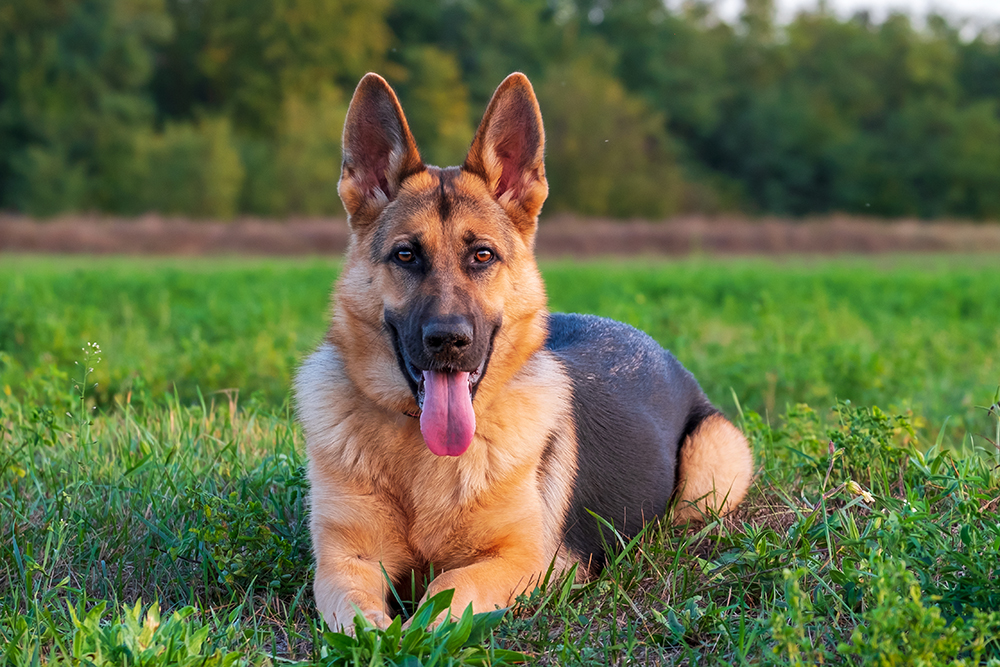
Often referred to colloquially as German shepherds, the official name for the breed according to the American Kennel Club is the German Shepherd Dog. German Shepherd Dogs are among the most recognizable dog breeds in the world and are consistently popular. As implied by the name, they were originally bred for herding. Because of their intelligence, adaptability, and trainability, they are suited for a wide range of other jobs. German Shepherd Dogs were the first seeing eye dogs and are still common as service dogs and therapy dogs. Many serve in the military and with law enforcement where they perform jobs such as search and rescue, detection of drugs and contraband, and tracking. However, not all German Shepherd Dogs are working dogs. They also make loving and loyal pets.
History of the German Shepherd Dog
German Shepherd Dogs were first bred in the late 1800s. Captain Max von Stephanitz was the first to register the breed and was heavily involved in combining different German breeds to get just the right mix of intelligence and strength. The AKC first recognized the breed in 1908.
With the turn of the century, Germany transitioned from an agricultural society to a more industrial one. Nevertheless, the intelligence of the German Shepherd Dog allowed it to adapt to many different kinds of jobs, such as guard dogs. German Shepherd Dogs were trained by the German military to serve in World War I as trackers and messengers as well as guards. American soldiers fighting in Europe during World War I admired the breed's strength, courage, and intelligence. When they went home after the war, some of them brought German Shepherd Dogs with them.
The popularity of the German Shepherd Dogs in the United States was solidified in the 1920s when a GSD named Rin Tin Tin became the star of a series of silent films. Rin Tin Tin was a loyal and courageous dog that helped people get out of many dangerous situations. American audiences loved him, and many wanted to bring home a dog just like him to add to their families.
Perhaps in part because of Rin Tin Tin, the popularity of the German Shepherd Dog in the United States remained high even during and after World War II, even though GSDs served as military dogs in the German army during the conflict as they had during World War I. Nevertheless, for a while, the AKC referred to the breed merely as "the Shepherd" so that it would not suffer from any lingering anti-German sentiment.
Characteristics of the German Shepherd Dog
The German Shepherd Dog is a large, powerful breed. It can stand up to 26 inches at the shoulder. Male GSDs weigh between 65 to 90 pounds on average, while females tend to be lighter, ranging from 50 to 70 pounds. The German Shepherd Dog is an athletic breed. Not only can they reach top speeds when they run, but they have high endurance so they can keep up the pace over long distances, which is part of what makes them valuable as trackers and search-and-rescue dogs. German Shepherd Dogs have powerful jaws that can exert 238 pounds of pressure when they bite.
While all dog breeds derive from wolves, the German Shepherd Dog retains some distinctly lupine characteristics, particularly the long snout and ears that stick up. Interestingly, German Shepherd Dogs have floppy ears when they are puppies, but as they mature, the ears stick up. Even if GSDs retain some wolfish characteristics, they are all dog. Ill-advised attempts to cross-breed wolves with German Shepherd Dogs in the 1920s resulted in uncontrollably vicious animals and were quickly abandoned.
A German Shepherd Dog has a medium-length coat with two layers. The undercoat is soft and insulating while the outer coat is coarser and more water resistant. This makes the GSD a good all-weather dog. Color-wise, the coat of a GSD usually has at least some black. Some GSDs are all black, while others combine black with another color, such as tan, silver, red, or cream. There are even German Shepherd Dogs that are all white, and the AKC recognizes this as an acceptable color variation.
German Shepherd Dogs are loyal and affectionate to their family members. However, they tend to be reserved with strangers, constantly on the alert for potential threats.
Needs of the German Shepherd Dog
Because German Shepherd Dogs have such a powerful bite, it is important to train and socialize them from an early age. Fortunately, GSDs are really easy to train. Not only are they intelligent, but they are eager to please, so they respond very well to positive reinforcement in the form of treats and clicker training.
German Shepherd Dogs are energetic and need plenty of exercise. Because they are so intelligent, they also need mental stimulation. If they get bored or frustrated, they can become destructive. Taking your GSD for a long walk every day can help fulfill her needs for both exercise and mental stimulation. Before you leave your dog for any length of time, you may also want to give her a puzzle toy to keep her mind occupied until you get back.
The medium-length coat of the German Shepherd Dog looks pretty easy to maintain, and it is, but you should brush your pet regularly to remove loose hairs from his body. Also be aware that your GSD will "blow coat" twice a year in the spring and fall, and his shedding will increase during this time.
Discipline is not instinctual for German Shepherd Dogs. They have to be trained just like any other breed. However, if you are willing to invest the effort, they can make wonderful pets.