
 Save 15% on your 1st Autoship learn more

 Email us
 Live Chat
 FAQs
FAQs





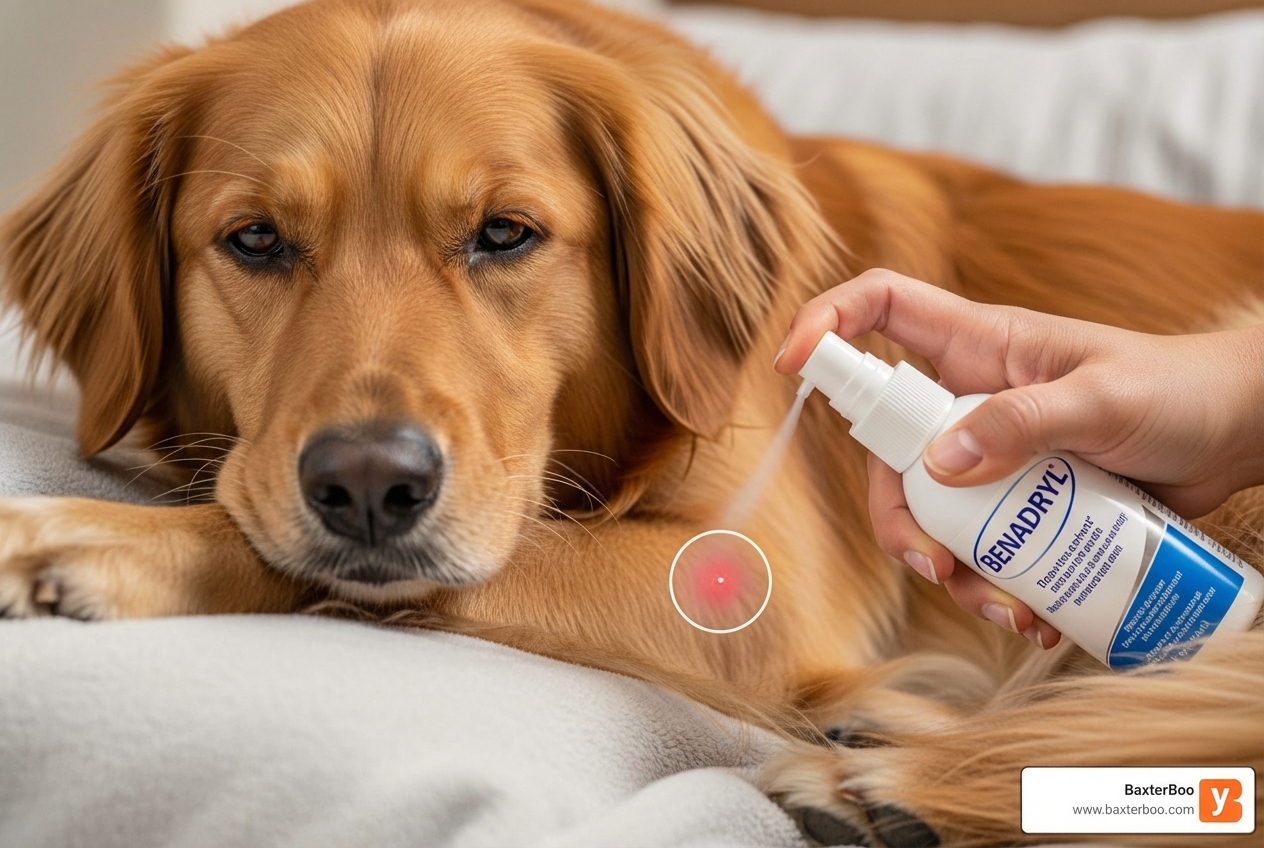
Why Pet Parents Are Turning to Topical Relief Solutions
Benadryl spray for dogs can provide quick relief for minor skin irritations, insect bites, and localized itching when used correctly. Here's what you need to know:
Safe Use Guidelines:
- Apply only to intact skin - Never spray on open wounds, oozing sores, or broken skin
- Keep spray 2-4 inches away from the affected area
- Prevent licking for 30-45 minutes after application using distraction or an e-collar
- Limit to 3 applications per day maximum
- Not for puppies under 12 weeks or pregnant/nursing dogs
- Check ingredients carefully - Avoid products with xylitol, benzocaine, or high alcohol content
If your dog is scratching relentlessly, you know how distressing it can be—for both of you. That itch that won't quit, the red patches appearing on their skin, or the irritation from a sneaky bee sting can turn a happy pup into an uncomfortable, anxious companion.
Many pet parents find themselves reaching into their medicine cabinets, wondering if human products like Benadryl spray can help their furry friends. The good news? Topical diphenhydramine products can offer quick, localized relief for certain types of skin irritation in dogs. The important part? Knowing when, how, and if it's the right choice for your specific situation.
Research shows that Benadryl spray typically provides relief within 5-10 minutes of application, making it a popular first-aid option for minor issues. However, it's not a one-size-fits-all solution, and some formulations designed for humans can actually be harmful to pets.
This guide will walk you through everything you need to know about using Benadryl spray safely on your dog—from understanding what's actually in the bottle to recognizing when it's time to skip the spray and head straight to the vet.
What is Benadryl Spray and How Does It Work?
When we talk about Benadryl spray for dogs, we're primarily referring to topical products containing diphenhydramine. This active ingredient is an antihistamine that can help alleviate localized itching and minor skin irritations. While the brand name Benadryl is widely recognized, it's crucial to understand the specific ingredients in any spray we consider using on our furry friends.
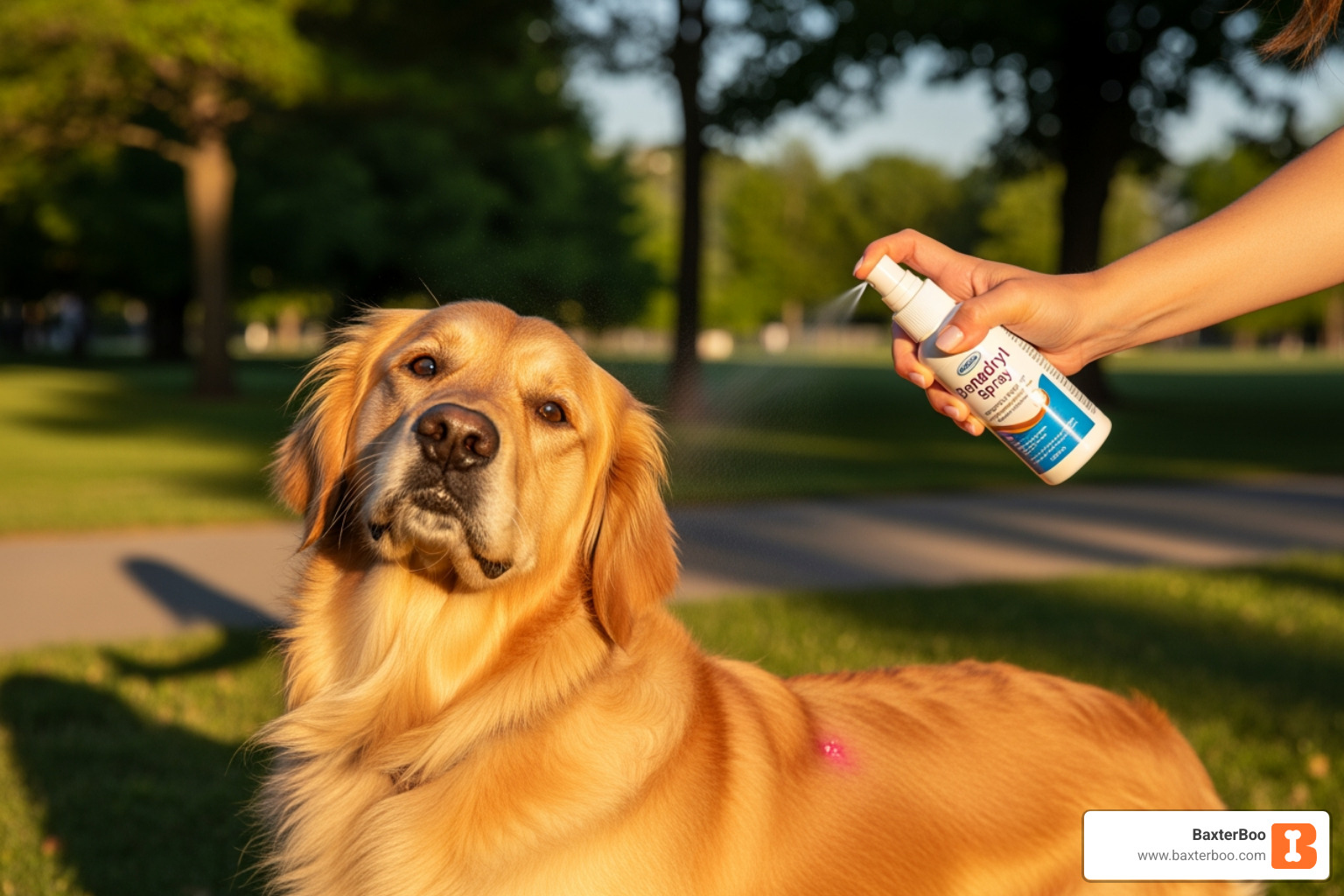
Understanding the Active Ingredients
The primary active ingredient we're interested in for Benadryl spray for dogs is Diphenhydramine HCl. This is the antihistamine component. Concentrations of diphenhydramine in topical sprays typically range from 1-2%. Some human Benadryl sprays may also contain zinc acetate, which acts as a topical analgesic and skin protectant, further aiding in itch relief and minor wound protection.
However, a significant warning comes with using human-formulated sprays: many contain inactive ingredients that are harmful to dogs. We must always check the label to ensure there is no alcohol content, as this can cause irritation or be toxic if ingested in large amounts. Similarly, we absolutely must avoid any product containing xylitol, an artificial sweetener that is highly toxic to dogs, even in small quantities. Some human sprays also include numbing agents like benzocaine or lidocaine, which are generally not recommended for pets without veterinary guidance.
True veterinary-labeled sprays undergo additional safety testing for animal skin absorption rates and toxicity thresholds, but many over-the-counter human Benadryl sprays are commonly used off-label for canines under veterinary guidance. This underscores the importance of carefully reading labels and consulting our vet before application.
The Science Behind the Soothe
So, how exactly does Benadryl spray for dogs work its magic? It's all about histamine. When a dog experiences an allergic reaction, an insect bite, or a minor skin irritation, their body releases histamine—a compound that triggers inflammation, redness, and, most notably, that maddening itch.
Diphenhydramine is a first-generation antihistamine. This means it works by blocking the H1 receptors that histamine would normally bind to. By preventing histamine from attaching to these receptors in the skin, diphenhydramine helps to reduce the localized inflammatory response. This action leads to a decrease in itching and redness, providing much-needed relief.
Some topical formulations may also have slight local anesthetic properties due to the diphenhydramine, contributing to a numbing effect on the irritated skin. This dual action—blocking histamine and providing a mild numbing sensation—is why Benadryl spray can offer quick relief. Studies show that relief can often be felt within 5-10 minutes of application, making it a valuable tool for immediate comfort.
When and How to Use Benadryl Spray for Dogs
Knowing when and how to use Benadryl spray for dogs effectively and safely is paramount. It's a targeted solution, not a cure-all, and proper application ensures maximum benefit with minimal risk.
Conditions That May Benefit from Benadryl Spray for Dogs
Benadryl spray for dogs is best reserved for minor, localized skin issues. Think of it as a first-aid step for those "oops" moments that don't immediately warrant a vet visit. Here are some situations where it might offer relief:
- Minor skin irritations: Small, non-oozing red patches from environmental contact.
- Insect bites: Annoying mosquito bites or minor fly bites that cause localized itching.
- Bee stings (mild reactions): For localized swelling and itching from a single sting, assuming your dog is not showing signs of a severe allergic reaction (more on this later!). The "three-minute rule" suggests spraying within three minutes for maximum anti-inflammatory effect before histamine fully activates local immune responses.
- Early-stage hot spots: Small, moist, irritated areas that your dog has just started licking or chewing. Topical Benadryl can help reduce the initial itch, but hot spots often require further veterinary attention.
- Contact dermatitis: Minor rashes or irritation from brief exposure to irritating plants or new detergents.
- Minor allergic rashes: Small, contained areas of itchiness not accompanied by widespread symptoms.
It's crucial to remember that Benadryl spray is for symptom relief of minor issues. If the problem is widespread, persistent, or worsening, it's time to consult a veterinarian.
Step-by-Step Application Guide
Applying Benadryl spray for dogs correctly is key to its effectiveness and safety. Follow these steps for a smooth experience:
- Clean the Area: Before applying, gently clean the affected skin with saline solution or plain water. This removes any irritants or debris. Pat the area completely dry afterward.
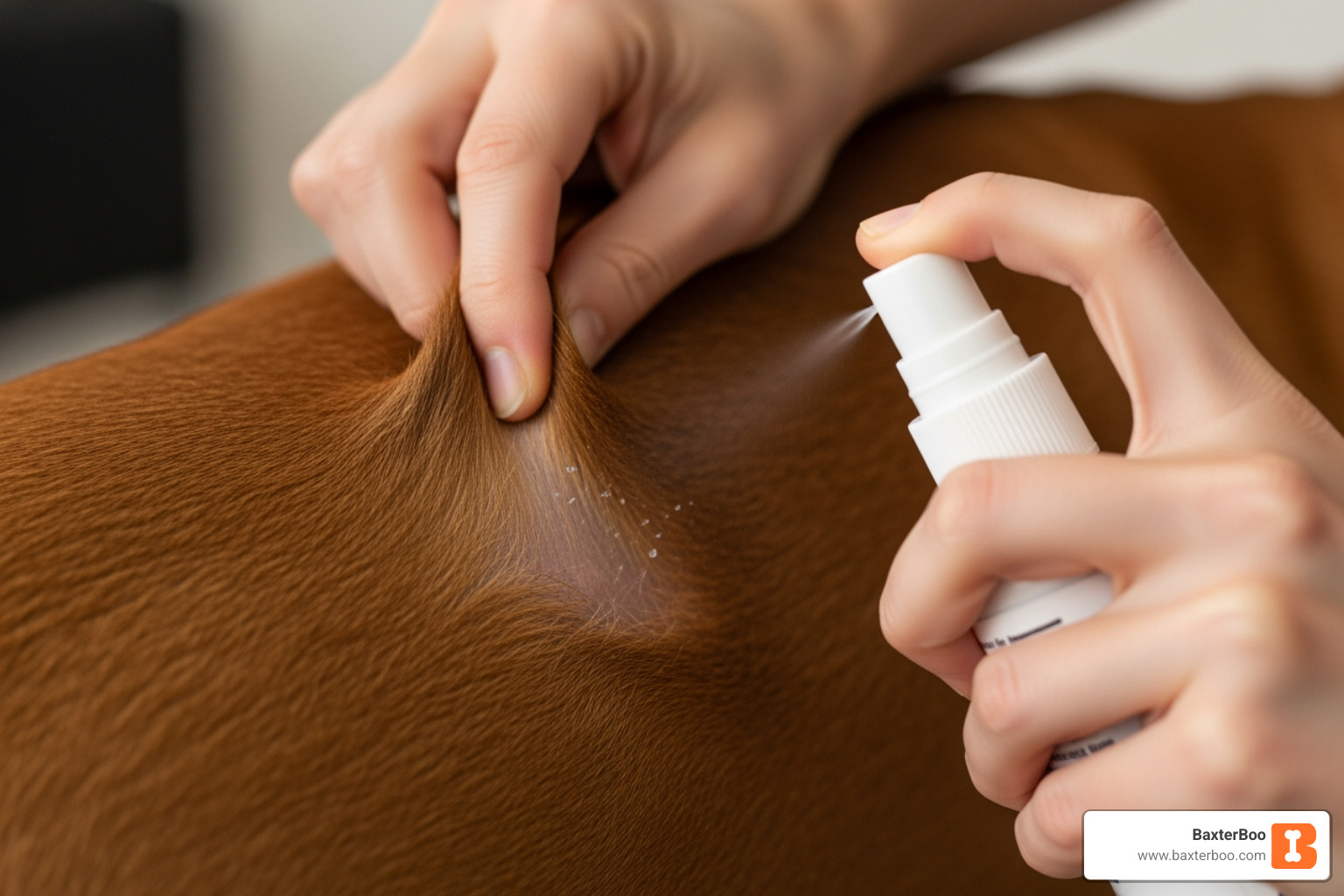
- Part the Fur: If your dog has long or thick fur, gently part it to ensure the spray reaches the skin directly. Clipping surrounding fur can be helpful for matted or very dense coats.
- Shake Well: Always shake the Benadryl spray bottle vigorously before each use to ensure the active ingredients are evenly distributed.
- Spray Distance: Hold the bottle 2-4 inches from the affected area. This allows for targeted application without excessive spread.
- Application Duration: Spray for a maximum of 2-3 seconds. This ensures a light, even coating.
- Preventing Licking: This is perhaps the most critical step! After application, supervise your dog closely to prevent them from licking the treated area for 30-45 minutes. This allows the medication to absorb and start working without being immediately ingested. Distraction with a favorite toy or a flavorful treat can help. If licking is inevitable, an Elizabethan collar (e-collar) might be necessary.
- Application Frequency: Do not exceed three applications in 24 hours.
- Storage Instructions: Store your Benadryl spray for dogs in its original container, protected from light, at room temperature, with the cap tightly closed. Keep it out of reach of children and pets to prevent accidental ingestion.
Proper Dosing and Coverage for Benadryl Spray for Dogs
When using Benadryl spray for dogs, topical dosing is different from oral dosing and requires careful consideration. While there isn't a universally established "spray dose" like oral medications, a general guideline for the active ingredient diphenhydramine is 1-2 mg per 10 pounds of body weight per application site.
For example, a 50-pound dog with a hot spot on its flank could safely receive up to 10 mg topically on that specific area. This translates to a very light, targeted spray. The key is to limit coverage to less than 10% of your dog's total body surface area. Applying over a large area increases the risk of systemic absorption and potential side effects. Thin-skinned breeds and puppies under 12 weeks require reduced dosing or extra caution due to unpredictable absorption.
Avoiding overdose is crucial. While topical application generally carries a lower risk of systemic overdose compared to oral ingestion, excessive application over large areas or frequent licking can lead to problems. Always err on the side of caution. If you're unsure about the appropriate amount for your dog's size and the affected area, it's always best to consult your veterinarian.
The Merck Veterinary Manual provides general guidelines for oral diphenhydramine dosing in dogs, typically 2 to 4 milligrams per kilogram of body weight, two to three times a day. While this applies to oral forms, it highlights the importance of precise dosing based on weight. You can find more information about antihistamine use in veterinary medicine on the Merck Veterinary Manual.
Safety First: Precautions and Potential Side Effects
While Benadryl spray for dogs can be a helpful tool, it's not without its considerations. As responsible pet parents, we must prioritize safety and be aware of potential risks.
Recognizing Potential Side Effects
Even with careful application, we should monitor our dogs for any adverse reactions after using Benadryl spray. Most side effects from topical application are mild and localized:
- Local skin irritation: The treated area might show increased redness, mild stinging, or dryness. If this occurs, discontinue use.
- Drowsiness: If your dog licks a significant amount of the spray, they might experience drowsiness, lethargy, or mild sedation. This is because diphenhydramine can cross the blood-brain barrier.
- Unsteady walking or dilated pupils: These are more signs of systemic absorption, usually from licking, and warrant closer monitoring.
- Agitation: Rarely, some dogs (and cats!) can have the opposite reaction to antihistamines and become agitated or hyperactive.
What to do if licked: If your dog licks the treated area, first, try to prevent further licking. Offer them plain water or a flavorful treat to help remove the taste. Then, monitor them closely for the next few hours for signs of drowsiness, vomiting, or agitation. If symptoms are severe or concerning, contact your veterinarian or a pet poison control center immediately.
Who Should NOT Use This Spray?
Certain dogs should never receive Benadryl spray for dogs, or it should be used with extreme caution and under direct veterinary supervision:
- Puppies under 12 weeks: Their systems are still developing, and absorption/metabolism of medications can be unpredictable.
- Senior dogs: While not an absolute contraindication, senior dogs, especially those with underlying health issues, should be treated with caution. Their metabolism might be slower, prolonging effects.
- Pregnant or nursing dogs: The effects on developing fetuses or nursing puppies are not well-studied or understood for topical applications.
- Dogs with glaucoma: Antihistamines can sometimes worsen this condition.
- Dogs with heart conditions: Particularly those with arrhythmia or high blood pressure.
- Dogs with hyperthyroidism, prostate enlargement, or urinary retention.
- Open wounds or oozing sores: Never apply Benadryl spray for dogs to broken, raw, or oozing skin. The medication can be absorbed more rapidly, and the spray itself might cause further irritation or pain.
Always perform the "Three Checks" before any application: review your dog's medical history, verify no conflicting medications are being given, and assess the affected area's sensitivity.
Drug Interactions and When to Be Extra Cautious
Even topical medications can have drug interactions if enough is absorbed systemically. We should always inform our veterinarian about all medications, vitamins, supplements, or herbal therapies our pet is taking. Be especially cautious if your dog is on:
- Sedatives or tranquilizers: Benadryl's drowsy effect can be improved, leading to excessive sedation.
- Antidepressants: Certain types can interact with antihistamines.
- Other antihistamines: Combining different antihistamines can lead to an overdose.
- Apomorphine: This drug, used to induce vomiting, can interact negatively.
- Heparin or certain antifungals: These can potentially improve diphenhydramine's effects.
Additionally, it's important to note that Benadryl (diphenhydramine) can interfere with allergy testing results. If your dog is scheduled for allergy testing, your vet will likely advise discontinuing all antihistamines for a period beforehand.
For any concerns regarding your dog's health or potential medication interactions, especially if they are on a dewormer or other treatments, we encourage you to explore more info about our dewormer products or consult your veterinarian.
Benadryl Spray vs. Other Itch Relief Options
When our dogs are itchy, we want to provide relief. But Benadryl spray for dogs is just one tool in the toolbox. Understanding how it compares to other options, both topical and oral, helps us make informed decisions.
Topical vs. Oral Benadryl
The main difference between Benadryl spray for dogs (topical) and oral Benadryl (tablets, liquid) lies in how the medication is delivered and absorbed:
| Feature | Benadryl Spray (Topical) | Oral Benadryl (Tablets/Liquid) |
|---|---|---|
| Delivery | Directly to the skin | Systemic absorption via digestive tract |
| Speed of Action | Very fast (5-10 minutes for localized relief) | Fast (30-60 minutes for systemic relief) |
| Primary Use Case | Localized minor irritations, insect bites, hot spots | General allergies (seasonal, environmental), motion sickness, anxiety |
| Side Effect Profile | Primarily localized irritation; systemic effects if licked extensively | Drowsiness, dry mouth, urinary retention, GI upset |
| Licking Risk | High risk of ingestion if not prevented | No licking risk post-ingestion |
Topical Benadryl provides localized relief, targeting the itch directly at the source with minimal systemic absorption if used correctly. This makes it ideal for acute, small-area irritations. Oral Benadryl, on the other hand, provides systemic relief, meaning the active ingredient travels throughout the body to address more widespread allergic reactions or conditions like motion sickness.
When to choose each:
- Choose Benadryl spray for isolated bug bites, small allergic reactions on the skin, or early-stage hot spots where you need quick, targeted relief and can prevent licking.
- Choose oral Benadryl (under vet guidance) for generalized itching, hives covering a larger area, travel anxiety, or motion sickness.
Exploring Alternatives for Canine Itchiness
Sometimes, Benadryl spray for dogs isn't the right fit, or a more comprehensive approach is needed. BaxterBoo, your trusted pet supply retailer, offers a range of expertly curated products to help manage your dog's comfort.
- BaxterBoo's Hydrocortisone Sprays: Products like PetArmor® Hydrocortisone Spray provide quick relief for itching, rashes, and other minor skin irritations. Hydrocortisone works as an anti-inflammatory, often drying quickly to reduce the risk of ingestion. These are effective for similar conditions as Benadryl spray.
- Colloidal Oatmeal Shampoos and Sprays: For more widespread, mild itching or dry skin, colloidal oatmeal-based products can be incredibly soothing. They offer natural relief without drug interactions, making them suitable for chronic skin conditions or dogs on multiple medications.
- Prescription Medications: For persistent allergies or severe skin conditions, your veterinarian might prescribe more potent medications like Apoquel or Cytopoint. These are often more effective for chronic allergies, which some studies suggest antihistamines are only effective in controlling symptoms in about 25% of dogs.
- Nutritional Support: A healthy coat and skin start from within. Supplements containing omega-3 fatty acids can support skin health. For overall well-being and to potentially address stress-related itching, consider supplements like the Nutrisource Amplifull Mobility Soft Chew Dog Supplement, which supports joint health but can contribute to overall vitality.
- Behavioral Redirection: If itching stems from boredom or anxiety, addressing the root behavioral cause with appropriate enrichment, like durable chews, can be more effective than relying solely on topical medications. Check out our selection of long-lasting chews for your dog!
Frequently Asked Questions
We know you have questions, and we're here to provide clear, simple answers to help you care for your canine companion.
Can I use human Benadryl spray on my dog?
The short answer is yes, but with extreme caution and only after checking the ingredients carefully. Many human Benadryl sprays contain diphenhydramine HCl, which is the active ingredient we look for. However, human formulations often include other ingredients that are harmful to dogs, such as alcohol, xylitol, benzocaine, or lidocaine. We must always read the label to ensure the product contains only diphenhydramine and avoid any of these toxic or problematic additives. When in doubt, consult your veterinarian.
What should I do if my dog licks the Benadryl spray?
If your dog licks the area treated with Benadryl spray for dogs, don't panic, but do act quickly.
- Prevent further licking: Distract your dog with a favorite toy, a walk, or an engaging game. If necessary, consider using an e-collar temporarily.
- Rinse mouth: Offer your dog plain water or a flavorful treat to help remove any residue from their mouth. You can also gently wipe their mouth with a damp cloth.
- Monitor for symptoms: Watch for signs of drowsiness, increased lethargy, excessive drooling, vomiting, or, rarely, agitation. Most minor licking incidents result in mild, temporary drowsiness.
- When to call for help: If your dog shows significant vomiting, severe lethargy, collapse, tremors, or unusual behavior, contact your veterinarian immediately. You can also call the Pet Poison Helpline at (855) 764-7661 or the ASPCA Animal Poison Control at (888) 426-4435.
How long does it take for the spray to work?
One of the benefits of Benadryl spray for dogs is its rapid action. When applied topically to minor irritations, it typically starts to provide relief within 5-10 minutes. This quick onset makes it a great option for immediate comfort from localized itching. The duration of relief can vary, but generally, the effects are localized and help manage symptoms for a few hours, which is why applications can be repeated up to three times in a 24-hour period.
When to Call the Veterinarian
While Benadryl spray for dogs can be a useful first-aid tool, it's crucial to know its limitations and when professional veterinary attention is needed. We always advocate for a vet-first mindset for persistent or severe issues.
Signs Your Dog's Itch Needs Professional Attention
If your dog's itching or skin condition doesn't improve with a few applications of Benadryl spray for dogs, or if you notice any of these signs, it's time to schedule a visit with your veterinarian in Vernon Hills, IL, or your local vet:
- Itching persists for more than 24 hours despite home treatment.
- The affected rash or irritation is spreading or getting worse.
- You notice pus, foul odor, or excessive redness and swelling, indicating a possible infection.
- Your dog develops lethargy, loss of appetite, vomiting, or diarrhea in conjunction with the skin issue.
- The skin appears blistered, oozing, or extremely painful.
- Your dog is repeatedly self-traumatizing the area, leading to open wounds or significant hair loss.
These symptoms suggest an underlying issue that Benadryl spray for dogs cannot resolve and may require antibiotics, anti-fungals, steroids, or other specific treatments.
Emergency Situations Requiring Immediate Care
Some situations demand immediate veterinary care. Do not wait to see if Benadryl spray for dogs helps if you observe any of the following:
- Severe allergic reaction (anaphylaxis): This can manifest as sudden, widespread facial swelling (especially around the muzzle and eyes), difficulty breathing, profuse vomiting or diarrhea, collapse, or seizures. This is a life-threatening emergency.
- Trouble breathing: Labored breathing, gasping, or blue gums.
- Sudden collapse or extreme weakness.
- Repeated or severe vomiting and diarrhea.
- Suspected overdose: If your dog has ingested a large quantity of Benadryl spray or another medication, or is exhibiting signs of severe neurological distress (hyper-excitability followed by extreme lethargy, tremors, rapid heartbeat, dilated pupils, agitation, or seizures). Contact your veterinarian or a pet poison control center immediately.
When in doubt, a quick call to your vet is always the safest option. They can provide guidance and determine if an emergency visit is necessary.
Conclusion: A Tool for Comfort, Not a Cure-All
Navigating pet care can sometimes feel like a puzzle, especially when our beloved companions are uncomfortable. Benadryl spray for dogs emerges as a valuable piece of that puzzle—a quick-acting, localized solution for minor skin irritations, insect bites, and early-stage hot spots. We've learned that its effectiveness lies in understanding its active ingredients, proper application techniques, and most importantly, its limitations.
While it can provide rapid relief by blocking histamine receptors and offering a mild numbing effect, it is not a substitute for professional veterinary diagnosis and treatment. We've emphasized the critical need to check ingredients for harmful additives like alcohol and xylitol, to apply it sparingly to intact skin, and to diligently prevent licking. Furthermore, we've highlighted situations and conditions where this spray is contraindicated, such as in puppies, pregnant dogs, or those with serious underlying health issues.
Benadryl spray for dogs is best viewed as a first-aid tool for targeted, temporary comfort. For persistent, worsening, or severe symptoms, or for any concerns about your dog's well-being, your veterinarian remains your best resource.
At BaxterBoo, we are committed to your pet's wellness and comfort, offering a range of expertly curated products and information to support their health journey. We believe that informed pet parents make the best decisions.
Ready to explore solutions for your dog's overall health? Explore more dog health solutions on our website.






