Save 15% on your 1st Autoship learn more

 Email us
 Live Chat
 FAQs
FAQs





Why Your Dog Needs Mental Stimulation Every Day
Dog boredom busters are puzzles, toys, and activities that encourage your dog to experiment, problem-solve, and burn mental energy. They're essential tools for keeping your furry friend happy, healthy, and out of trouble—whether you're dealing with cabin fever during winter months or just trying to prevent destructive behavior while you're at work.
Quick Solutions for Dog Boredom:
- Mental Enrichment: Puzzle toys, snuffle mats, stuffed Kongs
- Physical Exercise: Flirt poles, fetch games, 30-45 minutes daily activity
- Scent Work: Treasure hunts, sniffari walks, hide-and-seek games
- Training Sessions: Short 2-5 minute sessions throughout the day
- DIY Options: Cardboard boxes, muffin tin puzzles, towel rolls with treats
We've all been there. You're on a call while your dog looks like they're telepathically messaging you to take them for a walk. Or they start barking, whining, or chewing your favorite shoe. They're bored.
A dog's brain needs a workout just as much as their body does. In fact, using their sense of smell is so enriching that these kinds of activities can be just as exhausting as physical exercise. Dogs have an excellent sense of smell—depending on your pup's breed, it's about 10,000 to 100,000 times better than yours. That's a powerful tool sitting idle when dogs don't get proper mental stimulation.
The good news? You don't need expensive equipment or hours of free time. Most dogs benefit from just 30-45 minutes of mental exercise every day, which can be broken into short sessions. Something as simple as making your dog work for their food—instead of eating from a regular bowl—can be incredibly fulfilling.
Whether you're dealing with a high-energy puppy who's chewing everything in sight or an older dog who seems restless and anxious, the right boredom busters can transform their day. A tired dog is more likely to nap peacefully than get into trouble while you're out.
Identifying the Signs: Is Your Dog Bored or Depressed?
Before we dive into all the fun dog boredom busters, it’s crucial to understand what your dog is trying to tell you. Sometimes, behaviors that look like boredom can be signs of something more serious, like anxiety or even depression. While canine mood disorders aren't classified with the same diagnostic labels as human ones, we can infer a dog's internal state from their outward behavior.
Signs of Boredom vs. Depression in Dogs
| Behavior Trait | Signs of Boredom | Signs of Depression |
|---|---|---|
| Energy Level | Restlessness, pacing, excessive energy, jumping, seeking attention | Apathy, lethargy, sedate, withdrawn, lack of interest in usual activities |
| Destructive Behavior | Chewing furniture, shoes, inappropriate items; digging; shredding; unrolling toilet paper | Typically less destructive, more subdued. |
| Vocalizations | Excessive barking, whining, howling | May be quieter than usual, or have changes in vocalizations. |
| Appetite | Normal or increased (often seeking food-related mischief) | Decreased appetite, refusal to eat, weight loss. |
| Social Interaction | Constantly bugging you for interaction, attention-seeking | Hiding, avoiding interaction, less responsive to commands or affection. |
| Response to Enrichment | Becomes less frustrated and more engaged with appropriate mental or physical stimulation | Remains withdrawn or unmotivated even with attempts at play or enrichment. |
A dog that is simply bored might chew your shoe or bark excessively, but they should become less frustrated and more content once you provide them with the mental or physical enrichment they need. As certified dog trainer Jenny Wyffels says, "If a dog is fulfilled, they are getting what they need... Are they relaxed? Comfortable? Do they lie down? Then they are content." This "nice off-switch" is a key indicator of contentment.
However, if your dog seems constantly anxious, agitated, isn't eating, or appears genuinely depressed and withdrawn, it’s time to contact your veterinarian. These could be signs of underlying medical issues or more serious behavioral problems that require professional diagnosis and treatment. Observing your dog's behavior, especially when you're not around, can be helpful. Using a pet camera can give you valuable insights into their actions and emotional state throughout the day.
For more insights on canine enrichment, check out this Animal Humane Society enrichment video on Instagram.
Mental Enrichment and Interactive Dog Boredom Busters
Providing mental stimulation and enrichment is paramount for your dog's overall well-being. It's not just about tiring them out; it's about engaging their minds, fulfilling their natural instincts, and preventing behavioral issues that often stem from boredom. Benefits include:
- Satisfying Foraging Instincts: Dogs are natural foragers. Making them "work" for their food, rather than simply eating from a bowl, taps into this innate drive and provides immense satisfaction.
- Cognitive Health & Problem-Solving: Dog boredom busters like puzzles challenge your pup to think, strategize, and use their problem-solving skills, keeping their brains sharp. This is particularly important for puppies, seniors, and even injured dogs who need mental activity without physical strain.
- Slower Mealtimes: Interactive feeders and puzzles can significantly slow down eating, which is beneficial for dogs who tend to gobble their food too quickly, reducing risks like bloat.
- Calming Effects: Activities involving repetitive licking, such as lick mats, have a scientifically proven calming effect on dogs. It's a fantastic way to help an overexcited or anxious dog settle down.
- Reduced Destructive Behavior: A mentally stimulated dog is less likely to resort to destructive chewing, excessive barking, or other undesirable behaviors born out of frustration and under-stimulation.
- Improved Bond: Engaging in interactive play and training with your dog strengthens your bond and builds trust.
A dog's brain workout is as important as exercising their body, and it's equally exhausting! For classic enrichment, we often turn to the versatile Kong. You can find a huge variety of Kong stuffing recipes to keep things fresh and exciting.
Choosing the Right Commercial Dog Boredom Busters
The market is brimming with fantastic interactive toys designed to beat boredom. These commercially available dog boredom busters are often well-designed, durable, and offer varying levels of challenge. Interactive dog toys were even a top trend at SuperZoo 2022, highlighting their growing popularity and effectiveness.
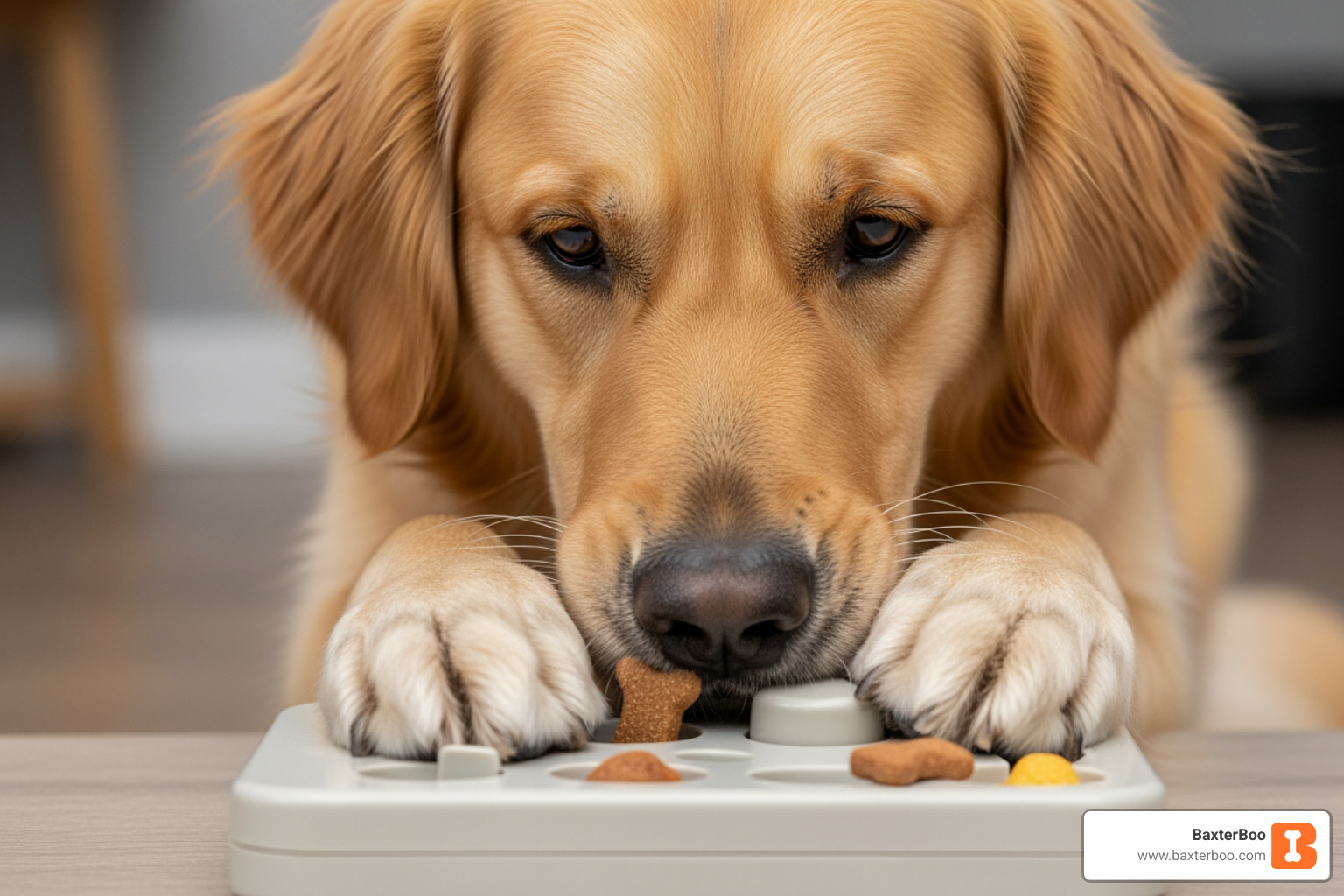
- Interactive Puzzles: These toys hide treats or kibble in compartments, requiring your dog to figure out how to move, slide, or lift parts to get the reward. Brands like Nina Ottosson by Outward Hound offer puzzles with increasing difficulty levels, ensuring your dog stays challenged as they get smarter. A dog puzzle can also double as a slow feeder, turning mealtime into a mental game.
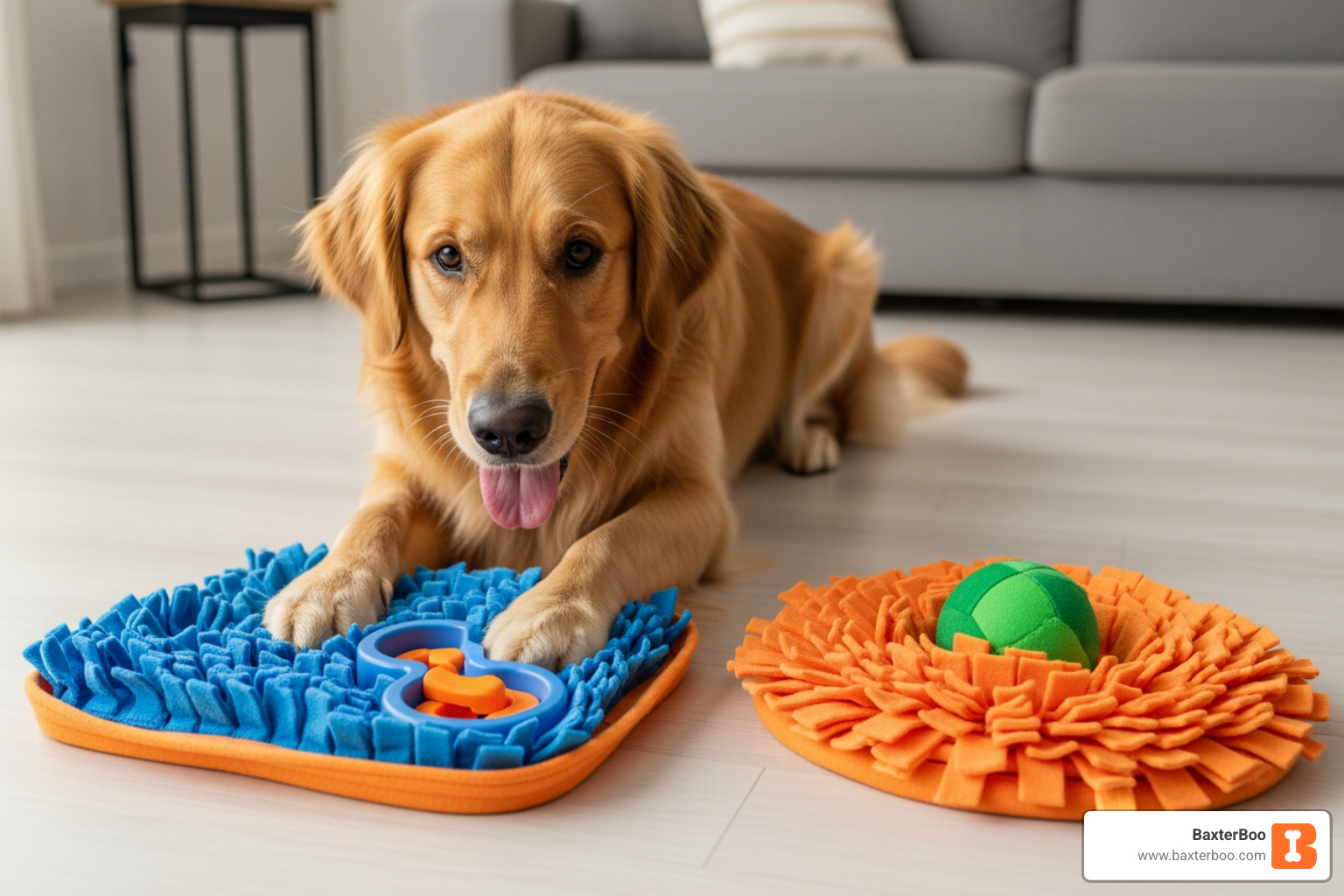
- Snuffle Mats: These soft, fabric mats have numerous flaps and pockets where you can hide dry food or treats. Snuffle mats engage your dog's powerful sense of smell, encouraging them to root around and forage, which is incredibly enriching. Injoya offers snuffle mats in fun shapes and designs, some even made from upcycled plastic water bottles!
- Treat-Dispensing Toys: Similar to puzzles, these toys release treats as your dog rolls, nudges, or manipulates them. The Toppl from West Paw is a favorite of ours, with a wide opening that's easy to stuff and clean. The LickiMat Classic Soother Slow Feeder is another excellent option, perfect for spreading soft treats or wet food for calming, repetitive licking.
- Plush Burrows ("Toys-Within-Toys"): Companies like ZippyPaws offer "Burrows" where smaller, squeaky plush toys are hidden inside a larger plush "burrow." Dogs love the challenge of pulling out the smaller toys, mimicking natural den-digging behavior. For instance, the plush Donutz box has three smaller doughnuts inside, and the churro cone holds three churro sticks – you get the idea! There are 28 different themes to choose from, like a ramen bowl or a pizza box.
- Tough Chewers: For dogs who can destroy toys in minutes, durable chew toys are essential. While not always "interactive" in the puzzle sense, a long-lasting chew can keep a strong chewer occupied for extended periods. Look for options like tender-tuffs by Smart Pet Love, which feature TearBlok technology for improved durability, or the Benebone Bacon Flavor Wishbone Tough Dog Chew Toy. Always supervise your dog with new chews to ensure safety.
- Toy Rotation: To keep your dog engaged and prevent them from getting bored with their toys, we recommend rotating them frequently. Even an old toy feels new and exciting when your dog hasn’t seen it for days! Keep a selection of 3-4 toys out at a time, and swap them every few days or once a week.
Why DIY Dog Boredom Busters Work
You don't need to break the bank to provide excellent mental stimulation. Many effective dog boredom busters can be made right at home with common household items. These DIY solutions are cost-effective, allow for custom difficulty levels, and are fantastic for engaging your dog's natural instincts.
- Household Items: Look around your home for items you can repurpose. Cardboard boxes, toilet paper rolls, old towels, and muffin tins are all excellent starting points.
- Cost-Effective: Making your own toys saves money, allowing you to create a wider variety of enrichment activities without a hefty price tag.
- Custom Difficulty: You can easily adjust the challenge level of DIY toys. For example, start with a simple treat puzzle where treats fall out easily, then progress to more complex setups.
- Cardboard Shredding: Give your dog a cardboard box filled with some kibble or treats. They'll love tearing it apart to get to the goodies inside. This satisfies their natural urge to shred and is surprisingly tiring!
- Muffin Tin Game: Place treats in a muffin tin and cover each cup with a tennis ball. Your dog has to use their nose and paws to remove the balls and get the treats. You can vary the difficulty by covering some cups with paper or leaving others open.
- Towel Rolls: Lay an old towel flat, sprinkle treats across it, and then roll it up tightly. Your dog will have a blast unrolling and sniffing out every last morsel. This is a great way to engage their scent drive indoors.
- Simple Treat Puzzle: Take a clean plastic container (like a yogurt cup or a plastic bottle) and cut a few holes in the lid or sides. Fill it with kibble or small treats, and let your dog roll and nudge it to dispense the food.
- DIY Snuffle Mat: Don't want to buy one? You can make a DIY snuffle mat by tying strips of fleece to a rubber sink mat. It's a fun craft project that results in a fantastic nose work tool.
Scent Work and Indoor Exploration Games
Dogs live in a world of scent, and leveraging their incredible olfactory senses is one of the most powerful dog boredom busters. Your dog's sense of smell is about 10,000 to 100,000 times better than yours! Engaging this superpower is not only mentally stimulating but also incredibly exhausting for them.
- Sniffari Walks: Instead of a brisk walk where you're rushing them along, let your dog lead the way on a "sniffari." This means allowing them to stop, sniff, and explore every interesting scent they find. This mental exploration is far more enriching than just covering distance. When you're out and about, consider taking your dog to pet-friendly outdoor dining areas; the FDA updated its food safety guidelines to allow pet dogs in outdoor dining areas in communities that permit it, making it easier to enjoy new smells and experiences together. You can even use a long lead (over 6-foot) to give them more freedom to explore safely.
- Treasure Hunts: This is a classic and highly effective nose work game. Start by letting your dog watch you hide a few high-value treats in easy-to-find spots around the house. Encourage them to "find it!" As they get the hang of it, you can increase the difficulty by hiding treats in more challenging locations or under objects. This game builds confidence and uses their natural hunting instincts.
- Hide and Seek: This game is fun for both of you! Have one person distract your dog while another hides in an easy spot. Call your dog's name, and when they find you, reward them with praise and a treat. As they understand the game, you can hide in more challenging places, letting them use their nose to track you down.
- Indoor Obstacle Courses: Use household items to create a simple obstacle course. Drape blankets over chairs to make tunnels, use pillows as problems, or arrange laundry baskets for them to weave through. Lead your dog through the course a few times, then let them explore it on their own, perhaps with treats hidden along the way.
- Box Tunnels and Forts: Repurpose old delivery boxes to build tunnels, towers, or a "city" for smaller dogs to explore. For larger dogs, create a blanket and pillow fort. Hide treats or favorite toys inside for them to find. These temporary, novel environments offer a sense of adventure and encourage exploration.
- Foraging Boxes: Fill a cardboard box with safe items like crumpled paper, empty toilet paper rolls, dog-safe packing peanuts, and a few toys. Then, sprinkle treats or kibble throughout. Your dog will love digging through the materials to find their reward, engaging both their nose and paws.
Training and Physical Exercise as Boredom Busters
Physical activity and ongoing training are fundamental dog boredom busters. They work hand-in-hand to ensure your dog is well-rounded, happy, and mentally stimulated.
Training as a Boredom Buster
Training sessions are not just for puppies! They are powerful mental workouts that provide structure, build confidence, and strengthen your bond.
- Short and Sweet Sessions: Training sessions don't need to be long. Just 2 to 5 minutes is perfect (even shorter for young puppies!). Break up your dog's day with several mini-sessions. This prevents them from getting overwhelmed and keeps learning fun.
- Positive Reinforcement: We always advocate for positive reinforcement. Reward desired behaviors with treats, praise, or a favorite toy. This makes training a positive experience and encourages your dog to offer new behaviors rather than waiting for instructions.
- Marker Training and Clickers: Using a marker, like a clicker, helps your dog understand precisely what action earned them a reward. This style of training focuses on teaching dogs how to learn and encourages their participation in the process. You can find clickers with wrist bands for easy use.
- Teach New Tricks: Beyond basic obedience, teaching your dog fun tricks like "shake a paw," "roll over," or "play dead" provides excellent mental stimulation. There are even AKC Trick Dog titles you can work towards!
- Behavior Modification: Training can also address specific behavioral challenges. If your dog has mobility issues, consider consulting your vet and exploring products like mobility supplements to support their comfort during exercise and training.
Physical Exercise to Prevent Boredom
A tired dog is a happy dog, and often, a well-behaved dog. Physical exercise is a primary dog boredom buster, burning off excess energy and contributing to their overall health.
- Adequate Exercise: Most dogs benefit from 30-45 minutes of large-muscle exercise every day. This isn't just a quick stroll around the block; it means vigorous activity that gets their heart rate up.
- Vigorous Activities: Think chasing a ball or flying disc in the yard or at a dog park. A ball launcher, like the ChuckIt! Classic Launcher, can help you get your dog really moving without overexerting yourself.
- Flirt Poles: A flirt pole resembles a giant cat teaser toy. It allows you to engage your dog in high-intensity chasing and pouncing without you having to run much. It's a fantastic way to burn energy quickly and teach impulse control (e.g., "leave it," "drop it").
- Make Walks Interesting: Daily walks should be more than just a potty break. Take different routes, allow for plenty of sniffing (as discussed in "Sniffari Walks"), and explore new environments. Mix up your routine to keep things fresh.
- Swimming: If your dog enjoys water, swimming is an excellent low-impact, full-body workout. Always ensure their safety with a properly fitted dog life jacket, especially if they are not strong swimmers.
Advanced Activities and Dog Sports
For dogs with high energy, strong working drives, or simply a love for activity, dog sports offer an unparalleled way to bust boredom and build a strong partnership.
- Structured Dog Sports:There are many organized dog sports that cater to different breeds and interests:
- Agility: Navigating obstacle courses with tunnels, jumps, and weave poles. Learn more about AKC Agility training.
- Lure Coursing or FastCAT: Chasing a mechanical lure across an open field, perfect for sighthounds and other fast dogs.
- Flyball: A team sport where dogs race over problems to retrieve a ball from a spring-loaded box.
- Treibball: A non-impact sport where dogs herd large inflatable balls into a goal using only their nose.
- Barn Hunting: Dogs use their scenting abilities to locate rats (safely enclosed in aerated tubes) hidden in a straw or hay bale maze.
- Canine Freestyle: Choreographed routines set to music, combining obedience, tricks, and dance moves.
- Dock Jumping: Dogs launch themselves off a dock into a pool of water, competing for distance or height.
- Rally-O: A companion sport where dog and handler steer a course with numbered stations, performing specified exercises.
- DIY Dog Sports at Home: You can create simplified versions of some sports in your backyard. Set up a mini-agility course with household items or build a digging pit for terriers who love to dig.
- Socialization and Playdates: Socialization isn't just for puppies! Adult dogs benefit immensely from being exposed to new people and places. Arranging playdates with compatible, vaccinated dogs provides mental stimulation and a healthy outlet for play. This helps them maintain social skills and burn excess energy, making it a fantastic dog boredom buster.
Safety First: Ensuring a Secure Play Environment
While we want our dogs to have endless fun with their dog boredom busters, safety should always be our top priority. Whether it's a DIY project or a commercial toy, responsible ownership means ensuring a secure play environment.
- Constant Supervision: We cannot stress this enough: always supervise your dog when they are engaging with any new toy or activity, especially DIY creations. This allows you to intervene if they try to ingest non-food items, choke, or get injured. Never leave a dog unsupervised with a toy that could pose a risk.
- Prevent Material Ingestion: Many DIY toys involve paper, cardboard, or plastic. While shredding a cardboard box is great enrichment, ensure your dog isn't eating large pieces of it. If your dog is prone to eating non-food items, stick to edible chews or toys made from durable, non-toxic materials.
- Choking Hazards: Ensure all toys, especially those with small parts or treats, are appropriately sized for your dog. A toy that's too small can be a choking hazard. Avoid throwing wood sticks during fetch, as they can splinter and cause severe injuries to your dog's mouth or throat.
- Brachycephalic Risks: For brachycephalic (short-nosed) breeds, like French Bulldogs or Pugs, certain DIY puzzles, such as a food tube puzzle, might pose a risk of eye injury due to their prominent eyes. Always consider your dog's specific anatomy when choosing or creating toys.
- Non-Toxic Supplies: When making DIY toys, use only non-toxic materials. For example, if using peanut butter, ensure it's dog-safe and does not contain xylitol.
- Check for Wear and Tear: Regularly inspect all toys for damage. Worn-out or broken toys can become dangerous, with sharp edges or detachable pieces that could be ingested. Discard damaged toys immediately.
- Safe Digging Zones: If you're building a dig pit, use kid-safe dirt or sand. Designate a specific corner of your yard for digging and mark it clearly to help your dog understand where it's okay to indulge their natural instinct.
- Puppy Exercise Guidelines: For young puppies, consult your veterinarian about appropriate exercise levels to avoid stress on developing joints. Over-exercising a puppy can lead to long-term orthopedic issues.
By keeping these safety measures in mind, we can ensure that our dogs enjoy their boredom busters in a fun and safe environment.
Frequently Asked Questions about Dog Boredom
How can I tell the difference between boredom and depression in my dog?
Boredom is typically a temporary state that manifests as restlessness, destructive behaviors (like chewing or barking), or excessive attention-seeking. A bored dog will usually become less frustrated and more content once provided with appropriate mental or physical enrichment. Depression, on the other hand, is a more persistent mood disorder characterized by apathy, lethargy, decreased appetite, withdrawal, and a lack of interest in previously enjoyed activities. If your dog shows persistent signs of anxiety, agitation, isn't eating, or seems continuously depressed, contact your veterinarian for professional advice.
How much mental exercise does my dog need every day?
Most dogs benefit from 30-45 minutes of mental exercise every day, similar to the amount of physical exercise they need. This doesn't have to be one continuous session; it can be broken into short, engaging activities throughout the day, such as 2-5 minute training sessions, puzzle toy play, or a quick treasure hunt. Even making your dog work for their meals with a slow feeder or food-dispensing toy contributes significantly to their daily mental workout.
Are DIY dog toys safe to leave with my pet unsupervised?
We strongly advise against leaving your dog unsupervised with most DIY toys. Many homemade dog boredom busters are made from materials like cardboard, paper, or plastic, which can be ingested, leading to choking hazards or internal blockages. Always supervise your dog when they play with DIY toys to ensure they don't eat non-food items or get into trouble. For unsupervised time, consider durable, commercially designed chew toys or food-stuffed rubber toys that have been "test-driven" while you're present to ensure they are safe for your individual dog.
Conclusion
At BaxterBoo, we understand that a happy dog is a well-stimulated dog. Providing your furry friend with a variety of dog boredom busters is not just about preventing mischief; it's about enriching their lives, engaging their natural instincts, and fostering a deeper bond with you. From exciting puzzle toys that challenge their minds to invigorating scent games and structured training sessions, the options are endless.
We're committed to your pet's wellness, which is why we offer an expertly curated selection of high-quality products, from vet-approved medications to organic options, at our online store and in Vernon Hills, IL. Whether you're looking for the latest interactive puzzle or the perfect durable chew, we've got you covered. Prioritizing your dog's mental health through consistent enrichment will lead to a more balanced, content, and happy pup.
Ready to find the perfect brain-teaser for your canine companion? Shop our full collection of puzzle dog toys today and release the fun!