Save 15% on your 1st Autoship learn more

 Email us
 Live Chat
 FAQs
FAQs





Why a No Pull Dog Harness Changes Everything
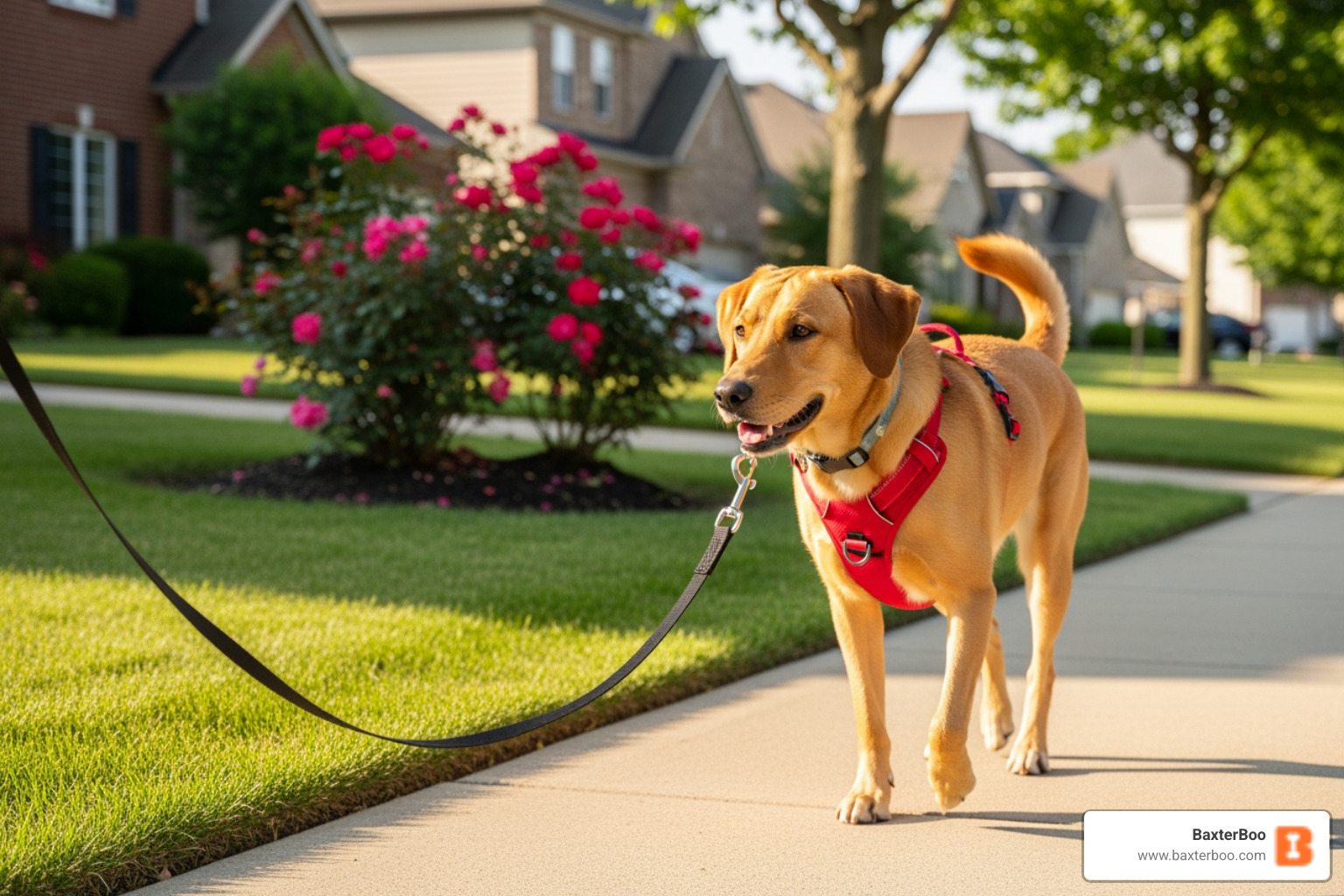
A no pull dog harness is a specialized harness designed with a front leash attachment point. When your dog pulls, it redirects their forward momentum to the side, naturally discouraging the behavior without causing pain or restricting movement.
Quick Comparison of No-Pull Harness Types:
| Harness Type | How It Works | Best For |
|---|---|---|
| Front-Clip | Leash attaches at chest, redirects pulling to the side | Most dogs, general training |
| Martingale-Style | Gentle tightening loop applies pressure when dog pulls | Strong pullers, escape artists |
| Combination/Leg-Strap | Pressure under front legs plus chest redirection | Powerful dogs, professional training |
If you've ever been pulled down the sidewalk by an excited pup, you know the struggle. Research shows that no-pull harnesses can reduce pulling by up to 90%. About 60% of dog owners report improved walk experiences and reduced stress after making the switch.
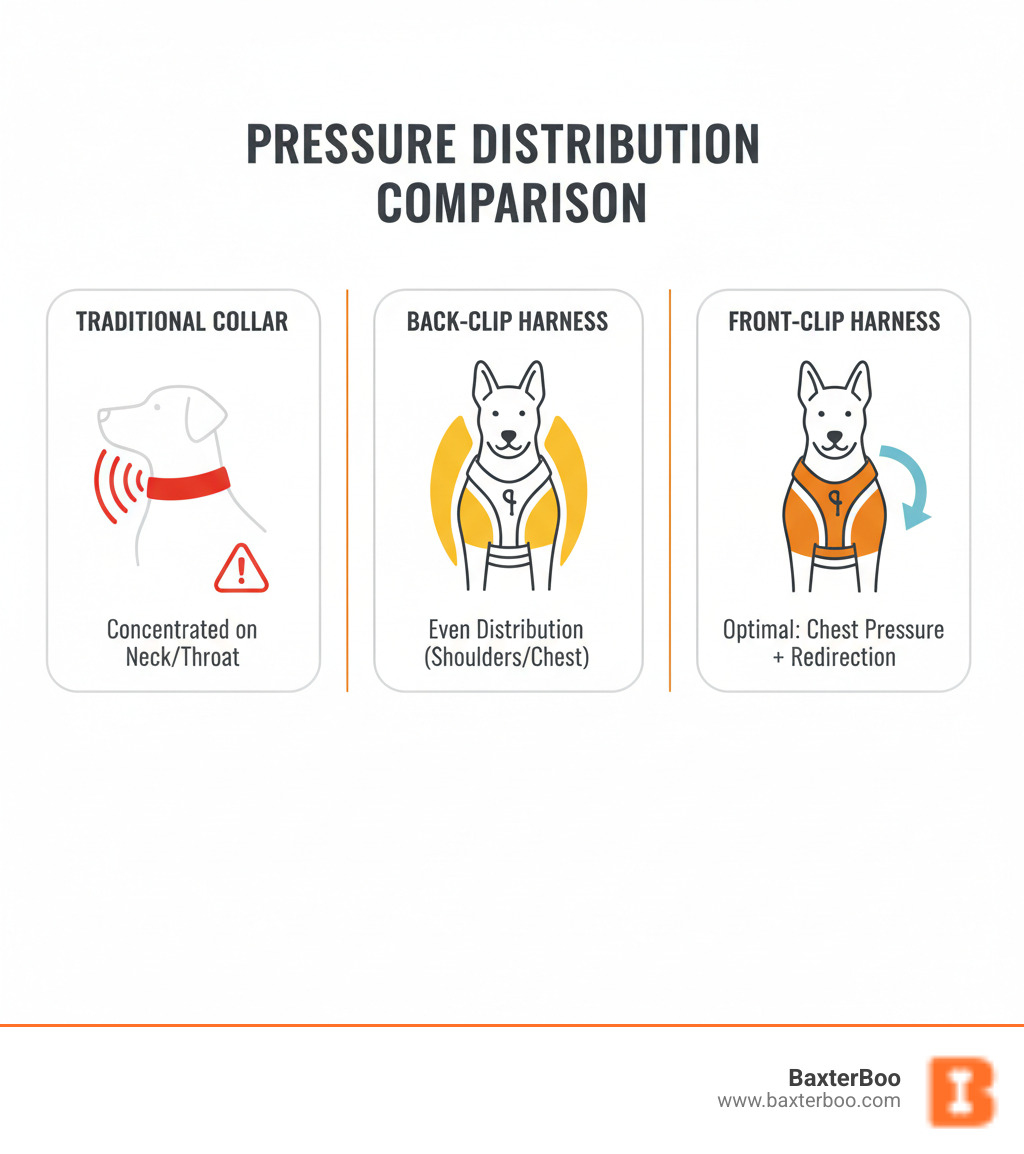
This matters because traditional collars put dangerous pressure on your dog's neck. A 2020 study confirmed that all types of collars can potentially injure a dog's neck, especially in breeds prone to tracheal collapse. Harnesses distribute pressure safely across the chest and shoulders.
However, not all harnesses are created equal. Back-clip harnesses can actually encourage pulling. True no-pull harnesses use smart design—like front clips or gentle tightening loops—to work with your dog's natural movement and discourage pulling without force. With the right harness, walks become enjoyable again, giving you better control and keeping your dog safer.
Understanding the Different Types of No-Pull Harnesses
Once you've decided a no pull dog harness is the right choice, the next step is understanding the different designs. Unlike regular back-clip harnesses that can encourage pulling (think sled dog), true no-pull designs use clever engineering to redirect your dog's forward motion or apply gentle pressure as a reminder.
It's all about working with your dog's natural movement patterns instead of against them. Let's break down the three main types to help you find the perfect match for your pup.
Front-Clip Harnesses
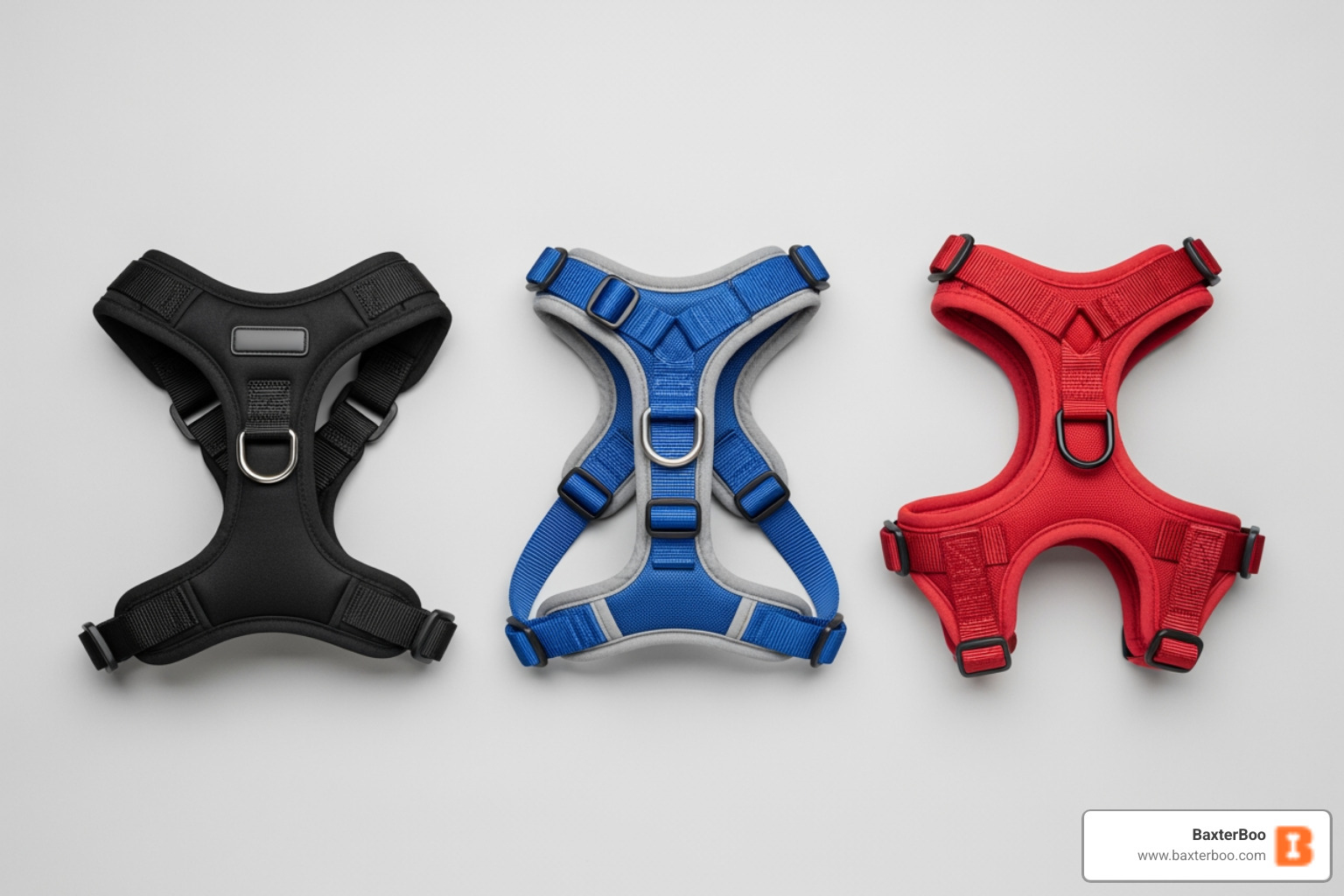
Ideal for beginners, front-clip harnesses are the most popular type of no pull dog harness because they are simple, effective, and comfortable. The leash clips to a D-ring on your dog's chest. When your pup tries to pull forward, they are gently steered to the side or back toward you. This redirection makes pulling less rewarding, and your dog quickly learns that a loose leash gets them where they want to go.
Look for Y-shaped harnesses, which experts recommend because they don't restrict shoulder movement, allowing for natural, long-term comfort. The beauty of front-clip harnesses is that they turn your dog's own energy into a training opportunity, redirecting them up to 50% more effectively than back-clip versions.
Martingale-Style (Tightening) Harnesses
For strong pullers or escape artists, martingale-style harnesses are an excellent solution. These designs use a loop that gently and safely tightens when your dog pulls, applying mild pressure as a signal to ease up. A well-designed martingale harness has built-in stoppers to prevent it from tightening too much, providing feedback without pain.
This mechanism helps dogs learn loose-leash walking through clear cause-and-effect. The tightening action also makes it much harder for a dog to back out of the harness, excelling at escape prevention.
Combination & Leg-Strap Harnesses
For dogs who pull with serious determination, combination harnesses offer maximum effectiveness. These designs use pressure under the front legs along with other control features. When your dog pulls, straps under their front legs gently tighten, creating a subtle lifting sensation that discourages the behavior.
This dual-action control combines front steering with this lifting action for comprehensive pull prevention. Many feature multiple D-rings (front, back, and side), allowing you to adjust your control level based on the situation. These are particularly helpful for powerful breeds or dogs still learning leash manners.
Choosing the Best No-Pull Dog Harness for Your Pup
Finding the right no pull dog harness is like finding the right pair of shoesfit and function are everything. The perfect harness can transform stressful tugs-of-war into peaceful strolls. But with so many options, how do you choose? Let's cover the essential features, proper fitting, and which harnesses work best for different dogs. And while you're thinking about your dog's comfort on walks, don't forget that a cozy hoodie can keep them warm on those chillier days. More info about dog apparel
Key Features to Look For
The best harnesses share features that make them effective and comfortable.
- Leash Attachment Points: Versatile harnesses offer both a front-clip for training and a back-clip for casual walks. Some have multiple D-rings for extra control.
- Padding and Comfort: Look for soft materials like neoprene or velvet lining, especially under the armpits and across the chest, to prevent chafing. Trainer Scarlett Cermak recommends foam padding for thin-coated dogs.
- Material and Durability: Strong, weather-resistant nylon webbing and robust, rust-resistant hardware (like stainless steel) are essential for longevity.
- Adjustability: Multiple adjustment points (four or more is ideal) allow for a custom fit that won't shift or restrict movement.
- Safety Features: Reflective stitching improves visibility on night walks, while locking buckles provide extra security. A sturdy traffic handle on the back allows for quick control in emergencies.
How to Measure Your Dog for a Perfect Fit
A properly fitted harness is critical for safety and effectiveness. An ill-fitting one can cause chafing, allow escape, or restrict movement.
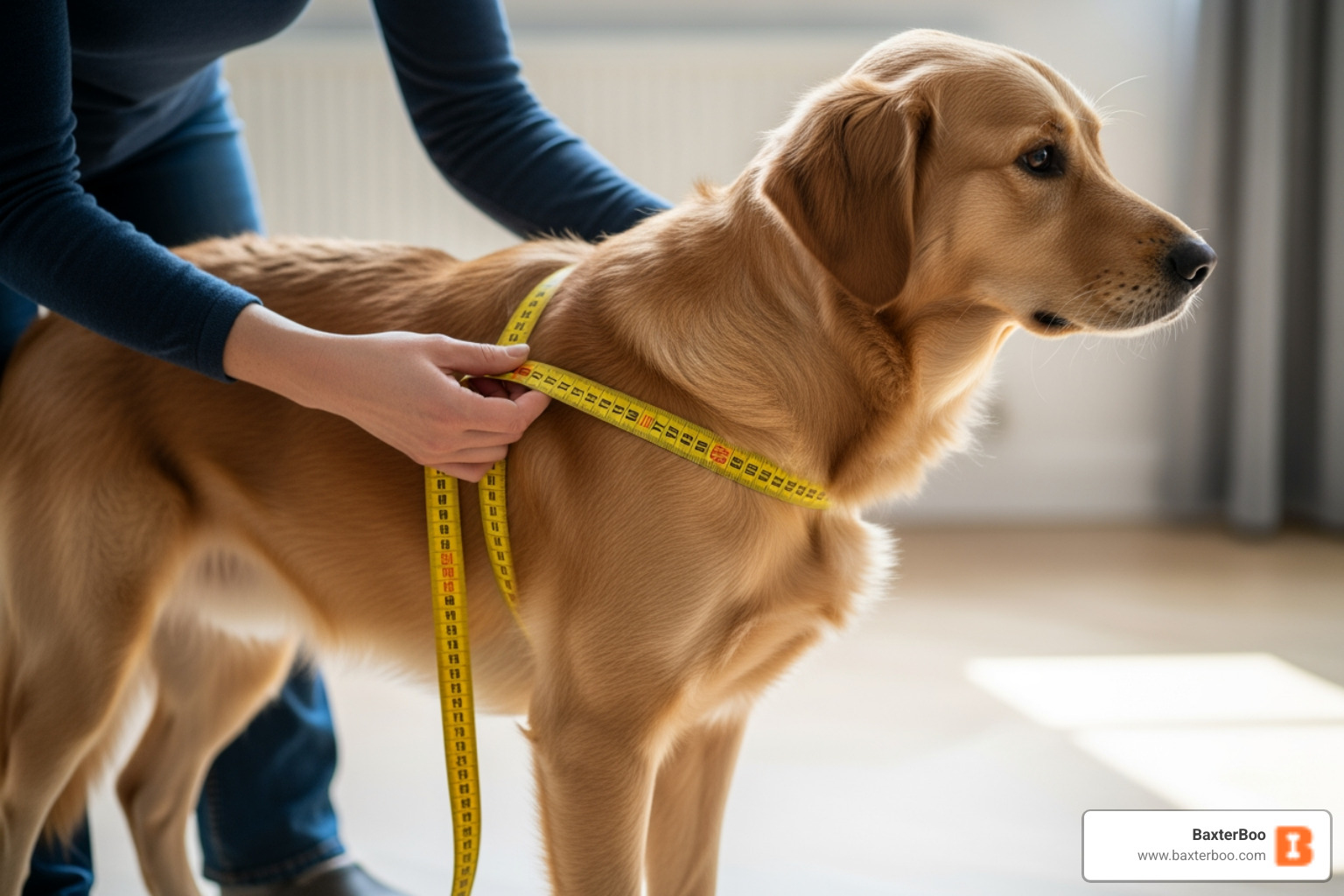
- Measure Chest Girth: Use a flexible tape measure around the widest part of your dog's chest, just behind the front legs. You should be able to slip two fingers underneath.
- Measure Neck: Measure where a collar would naturally sit, again ensuring a snug but not tight fit.
- Check the Fit: Use the two-finger rule for all straps. If you can fit your whole hand, it's too loose; if you can't fit two fingers, it's too tight.
Always consult the manufacturer's sizing chart, as sizes vary between brands. If your dog is between sizes, it's usually best to size up.
Best no pull dog harness for specific dogs
Different dogs have different needs. Match the harness to your pup.
- Strong Pullers: Need robust front-clip or martingale-style harnesses for superior control.
- Small Dogs: Do best with lightweight harnesses featuring thinner straps and breathable mesh.
- Puppies: Require a highly adjustable front-clip harness that can grow with them and establish good walking habits early.
- Brachycephalic (flat-faced) Breeds: A Y-shaped front-clip harness is essential to keep all pressure off their sensitive throat and airway.
- Senior Dogs: Need harnesses that are easy to put on, well-padded, and offer gentle control, such as comfortable step-in or Y-shaped designs.
- Active Dogs: Require durable harnesses with security features like traffic handles and reflective stitching.
Our Top Picks for No-Pull Harnesses
After diving deep into how these harnesses work, let's highlight the ones that deliver results. The best no pull dog harness is effective, comfortable, durable, and fairly priced. And just like you want the right gear for walks, supporting your pup's joint health matters too, especially for active dogs. More info about dog supplements
Best Overall: The Versatile Front-Clip Harness
For the perfect everyday no pull dog harness, we recommend a well-designed front-clip model. These work for most dogs in most situations.
A Y-shaped design is crucial for allowing natural shoulder movement, preventing discomfort and long-term joint issues. Front and back clip options offer versatility: use the front for training and the back for casual walks. A padded chest plate distributes pressure evenly for comfort.
Why we love this type: These harnesses are excellent training tools that work with your dog's movement to discourage pulling without pain. They are comfortable, versatile, and effective, making them the best place to start for puppies and adult dogs alike.
Best for Strong Pullers: The Control-Focused Tightening Harness
If your dog pulls like they're training for the Iditarod, you need a harness with more control, like a martingale-style design.
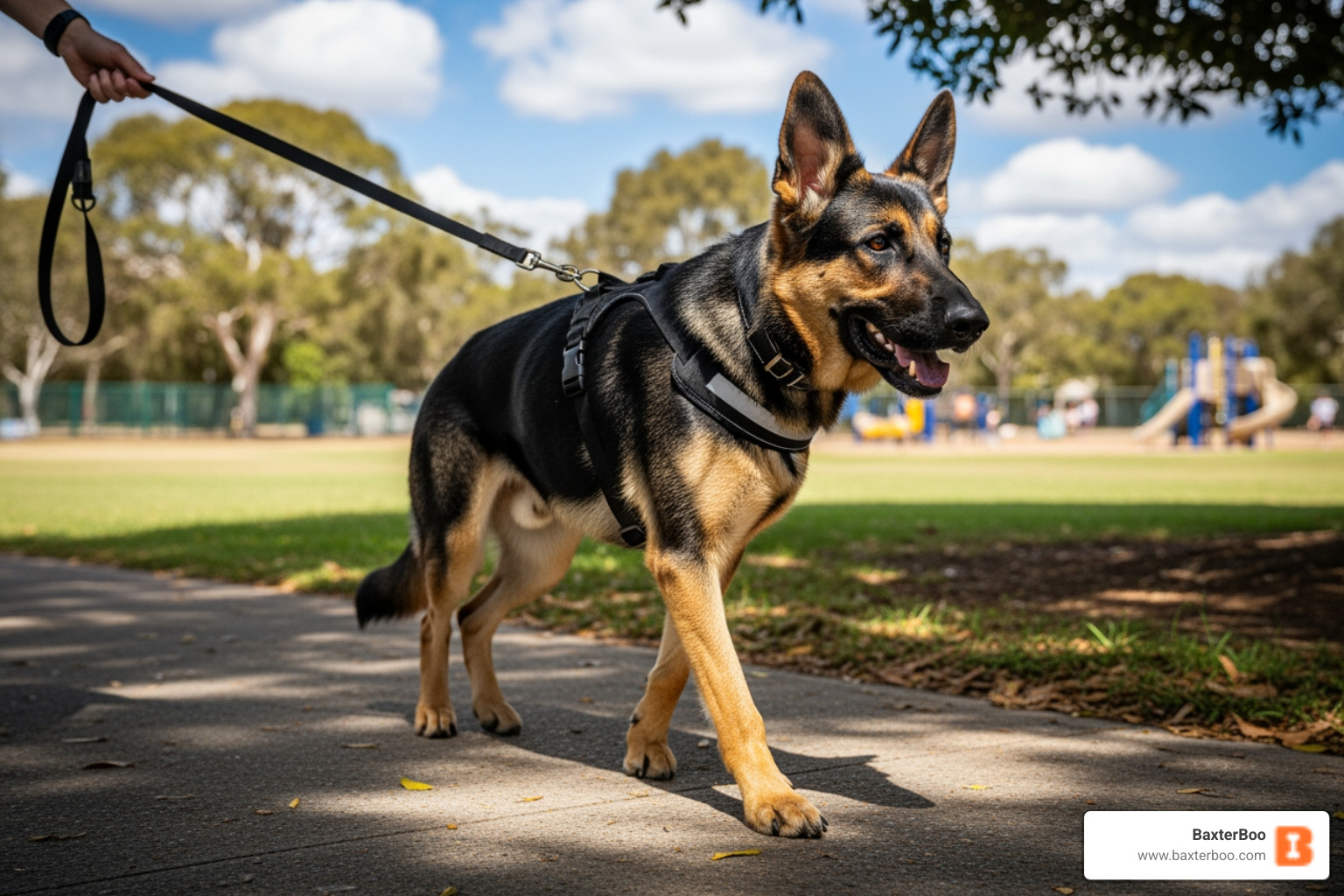
The martingale loop provides immediate, gentle feedback when your dog pulls, helping them learn to walk on a loose leash. Look for designs that combine this with front and back leash attachments for maximum control. Durability is key, with robust nylon straps and soft lining to prevent chafing.
Why we love this type: This style gives you back control without resorting to harsh tools. The martingale action provides clear communication, and the sturdy construction ensures safety, turning chaotic walks into manageable ones.
Best Budget-Friendly no pull dog harness
An effective no pull dog harness doesn't have to be expensive. A thoughtfully designed 3-in-1 no-pull harness proves you can get a great harness without breaking the bank.
This harness features a simple webbing design with an effective front-clip attachment that redirects your dog's pulling. Despite the lower price, it includes durable hardware for reliable performance. Its "3-in-1" versatility means you can use it as a front-clip trainer, a standard back-clip harness, or a basic car restraint.
Why we love this type: This harness delivers the core benefit of discouraging pulling at an accessible price. It's a great option if you're trying a no-pull harness for the first time or simply appreciate good value.
Harnesses vs. Collars: A Safer Way to Walk
If you've ever struggled with a lunging dog, you've probably wondered if there's a better way. The answer is yes, and it starts with understanding the difference between collars and harnesses. At BaxterBoo, we're passionate about pet wellness, and for dogs that pull, a no pull dog harness is dramatically safer.
| Feature | No-Pull Harness | Traditional Collar |
|---|---|---|
| Control | Excellent, redirects pulling | Poor, encourages pulling |
| Safety/Health Risk | Low, distributes pressure | High, risk of neck injury/tracheal damage |
| Comfort | High, padded, non-restrictive | Low, pressure on throat |
Why a Harness is a Safer Choice
When a dog pulls on a collar, all that force concentrates on their neck, home to the trachea, larynx, and other vital structures. This can lead to neck strain, spinal injuries, and damage to the esophagus. For small breeds, this pressure can worsen or trigger tracheal collapse, a serious condition where the windpipe flattens.
As veterinarian Dr. Lillian Baker states, "Harnesses are a safer option for dogs who pull." Science agrees: A 2020 study on collar pressure confirmed that all collar types can potentially injure a dog's neck. A no pull dog harness avoids these risks by distributing pressure across the stronger chest and shoulder areas.
Potential Drawbacks of Harnesses
While we believe in harnesses, they must be used correctly.
- Improper Fit: A harness that's too loose can be escaped, while one that's too tight can cause chafing and restrict movement. Always measure your dog and use the two-finger rule to check the fit.
- Chafing: This can occur in sensitive areas, which is why quality padding and soft materials are important features.
- Poor Design: Some T-shaped harnesses can interfere with shoulder movement. We recommend Y-shaped designs that allow a full range of motion.
A harness is a management tool, not a training replacement. It makes walks safer while you teach loose-leash walking through positive reinforcement.
A Note on Aversive Tools
At BaxterBoo, our commitment to pet wellness means we stand against prong collars, choke chains, and shock collars. These tools work by causing pain and can create fear, anxiety, and aggression, damaging the bond you share with your dog. As veterinary behaviorist Dr. Carlo Siracusa states, "I don't recommend punitive collars."
We endorse LIMA training principles (Least Intrusive, Minimally Aversive), which prioritize humane, effective methods. A well-fitted no pull dog harness is a far gentler and safer solution for teaching your dog to walk happily by your side.
Frequently Asked Questions about No-Pull Harnesses
We know that choosing the right walking gear brings up questions. Here are answers to common concerns about using a no pull dog harness.
Will a no-pull harness instantly stop my dog from pulling?
Think of a no-pull harness as a powerful training partner, not a magic wand. It's a highly effective management tool—research shows it can reduce pulling by up to 90%—but it works best when paired with positive reinforcement training. The harness makes pulling less rewarding by redirecting your dog. You complete the lesson by rewarding your pup when the leash is loose and stopping when they pull. Consistency is key to teaching new habits and making walks enjoyable for both of you.
Are no-pull harnesses cruel or uncomfortable for dogs?
No. When properly fitted, a no pull dog harness is a humane and comfortable tool. Modern designs use gentle redirection or mild, temporary pressure—not pain—to discourage pulling. As Dr. Lillian Baker notes, harnesses are safer because they distribute pressure across the chest and shoulders, avoiding the dangerous force a collar places on the delicate neck area. Compared to punitive tools like choke chains, a no-pull harness is a far kinder choice that reduces the risk of tracheal damage and neck strain.
Can my dog wear a no-pull harness all the time?
We recommend removing the harness when your dog is home and unsupervised. Here’s why:
- Safety: A dog can get their harness tangled on furniture or crate bars, leading to panic and potential injury.
- Durability: Unsupervised dogs, especially puppies, may chew on and destroy their harness.
- Comfort: Continuous wear can cause skin irritation or matted fur. Removing the harness allows your dog's skin to breathe.
Best practice is to put the harness on for walks and training, then take it off when you return home. This keeps your pup safe and your gear in great condition.
Conclusion
Walking your dog should be a joy, not an arm-wrestling match. A no pull dog harness can transform frustrating tugs-of-war into the peaceful strolls you and your dog deserve. By distributing pressure safely across the chest and shoulders, these harnesses offer a kinder, more effective way to manage pulling—reducing it by up to 90%.
More than just a control device, a no-pull harness is a tool for better communication. Paired with positive reinforcement, it helps you teach your dog that a loose leash is the best way to explore the world together. From powerful pullers to sensitive seniors, there is a design suited for every dog's unique needs. Taking the time to measure for a proper fit is a crucial investment in your dog's comfort and safety.
At BaxterBoo, our commitment to pet wellness means providing high-quality products that improve your life with your pet. A great harness makes daily walks less about managing behavior and more about enjoying the journey.
Ready to transform your walks from stressful to spectacular? Explore our curated collection of dog harnesses or Christmas holiday dog harnesses and find the perfect no pull dog harness to help you and your best friend walk happily side by side.