
 Save 15% on your 1st Autoship learn more

 Email us
 Live Chat
 FAQs
FAQs





Introduction
You are sitting on the sofa when your dog leans in for a friendly lick, and the smell is enough to make you pull away. While "dog breath" is a common joke among pet owners, it often points to a buildup of plaque and tartar that needs attention. At BaxterBoo, we talk to owners every day who want to keep their dogs healthy without the stress of a daily wrestling match over a toothbrush. While brushing is the gold standard for oral care, what your dog chews on during their downtime plays a massive role in keeping their gums and teeth clean. This article explores the best edible chews, durable toys, and natural options to support your dog's dental hygiene. We will help you identify which products are safe for their enamel and which ones might cause more harm than good.
The Science of the Chew
Dogs use their mouths to explore the world, but chewing serves a much more practical purpose for their health. When a dog chews on a textured object, the physical contact acts like a squeegee against the tooth surface. This mechanical action helps to scrape away soft plaque before it has a chance to harden into tartar. Tartar is much more difficult to remove and usually requires a professional cleaning under anesthesia.
Saliva production is another benefit of regular chewing. As your dog gnaws on a toy or a treat, their mouth produces more saliva. This fluid contains natural enzymes that help break down food particles and neutralize the acids produced by bacteria. Because dogs have 42 teeth crowded into their mouths, they have many small gaps where bacteria can hide.
It is important to remember that dog enamel is much thinner than human enamel. While their teeth look strong and sharp, they are surprisingly susceptible to fractures if they bite down on something too hard. This is why choosing the right material is just as important as the act of chewing itself.
Quick Answer: Dogs can chew on rubber dental toys, nylon bones, and VOHC-approved edible treats to clean their teeth. These items work by mechanically scrubbing plaque from the tooth surface and stimulating saliva to wash away bacteria.
Edible Dental Chews and Treats
Edible dental chews are one of the most popular ways to manage oral health. These are designed to be highly palatable so your dog views them as a reward rather than a chore. However, not all edible treats are created equal. The best options are those that have been tested for their ability to actually reduce plaque and tartar levels.
One of the best ways to verify a product is to look for the Veterinary Oral Health Council (VOHC) seal of acceptance. This group reviews data from clinical trials to ensure the treat does what the package claims. Many of the brands we carry, such as Greenies and certain Milk-Bone products, have earned this seal.
The texture of an edible chew is carefully engineered. Instead of crumbling immediately like a standard biscuit, dental chews are often chewy or flexible. This allows the tooth to sink into the treat, providing a scrubbing action all the way down to the gum line. Some treats also include chemical anti-plaque agents like polyphosphates. These ingredients help prevent minerals in the saliva from bonding to plaque and forming hard tartar.
Calorie Management
While edible chews are effective, they are also food. Many owners forget to account for the calories in these treats, which can lead to weight gain over time. If you give your dog a daily dental chew, you may need to slightly reduce their main meal portions. This is especially important for small breeds where a single large treat might represent a significant portion of their daily caloric needs.
Ingredient Sensitivities
If your dog has a sensitive stomach or food allergies, read the labels carefully. Some dental treats use wheat gluten or corn as a binder. For dogs with specific dietary requirements, look for grain-free dental chews or options made with limited ingredients. There are even vegetarian dental chews, such as Virbac Veggiedent, that use plant-based ingredients to freshen breath and clean teeth.
Key Takeaway: Edible dental chews provide both mechanical scrubbing and chemical plaque prevention, but they must be balanced with your dog's daily calorie intake.
Durable Rubber and Nylon Toys
For dogs that are aggressive chewers, edible treats might disappear in seconds. This does not give the treat enough time to actually clean the teeth. In these cases, non-edible toys are a better investment for long-term oral hygiene. Explore our dog chew toy selection for durable options.
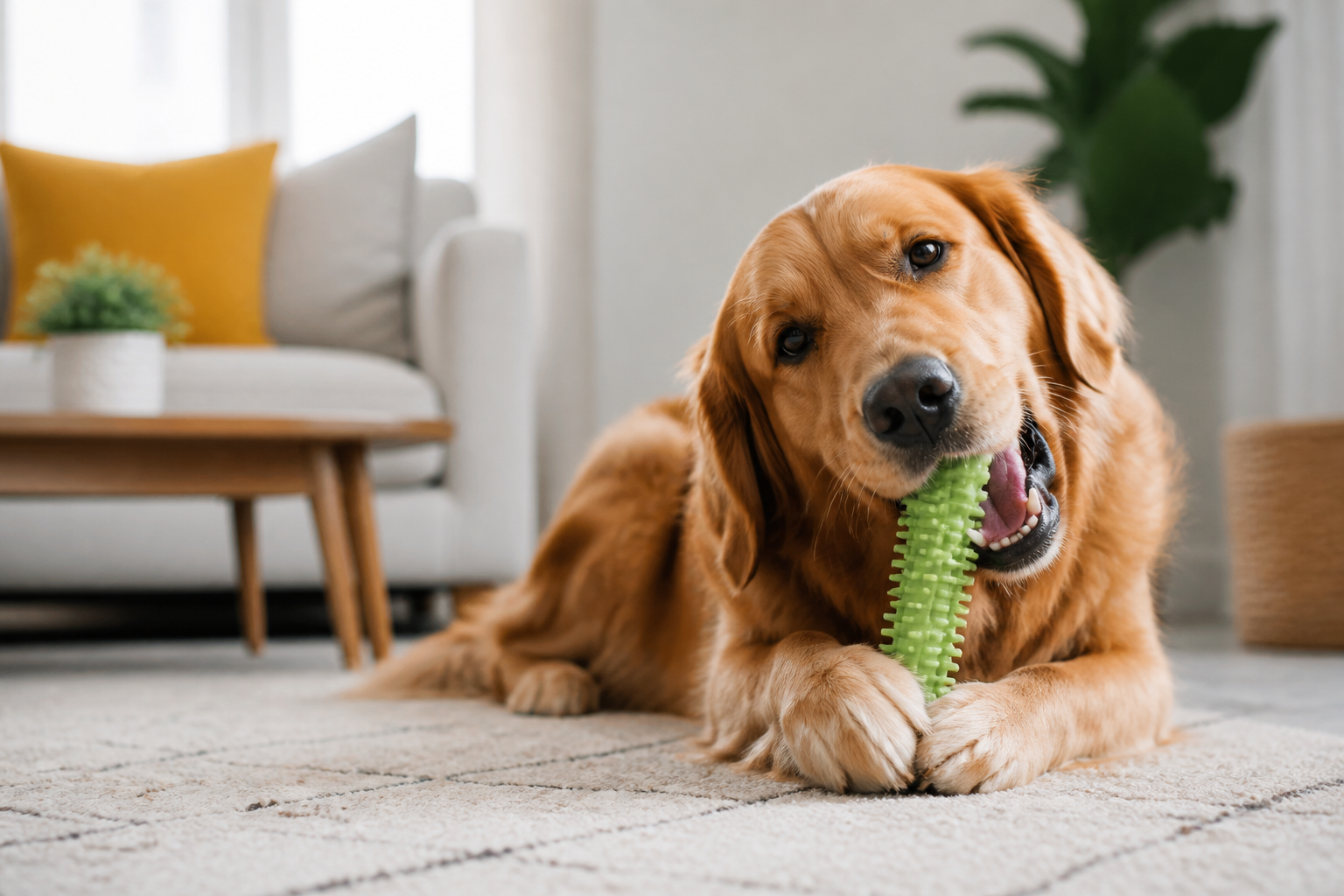
Rubber toys, like those made by Kong, are excellent for dental health. The material is firm enough to provide resistance but flexible enough to prevent tooth fractures. Some rubber toys are designed with specific ridges or nubs. As the dog chews, these ridges slide between the teeth and massage the gums. This helps to dislodge food debris that might be trapped in the back of the mouth.
Nylon bones are another popular choice. These are often flavored to keep a dog interested for long periods. As your dog chews a nylon toy, the surface becomes slightly roughened. This textured surface is very effective at "sanding" away plaque. However, you must monitor these toys closely. Once the nylon becomes too jagged or small enough to swallow, it is time to replace it.
The Fingernail Test
A good rule of thumb for any chew toy is the fingernail test. If you press your thumbnail into the surface of the toy and it leaves a slight indentation, the material is likely safe for your dog's teeth. If the toy is as hard as a rock and has no "give," it poses a high risk of breaking a tooth.
Interactive Dental Toys
Some toys allow you to smear dog-safe toothpaste or a small amount of peanut butter into grooves. This encourages the dog to spend more time working their teeth against the rubber. The longer they chew, the more cleaning action they receive. We often recommend these for high-energy dogs that need a job to do while they are relaxing at home.
Vet Tip: If your dog is a "power chewer" who destroys toys quickly, stick to hard rubber rather than thin plastic. Always supervise your dog with a new chew toy to ensure they do not swallow large pieces.
Natural Chews and Whole Foods
Some owners prefer a more natural approach to dental care. While processed treats are convenient, certain whole foods and animal-derived chews can also help. However, these come with specific safety considerations that you must keep in mind.
Rawhide is a traditional choice for cleaning teeth. When a dog chews rawhide, it becomes soft and leathery. This texture wraps around the teeth and provides a deep clean. However, rawhide is not easily digestible for all dogs. Some can swallow large chunks that cause intestinal blockages. If you choose rawhide, look for "pressed" varieties or those specifically treated for better digestibility.
Vegetables as Toothbrushes
Carrots and green beans are wonderful, low-calorie options for dental health. A cold, crunchy carrot requires a lot of gnawing, which helps scrape the front teeth. While vegetables do not contain the anti-plaque chemicals found in professional dental treats, they are a great way to provide mechanical cleaning without adding many calories to the diet.
The Debate Over Bones
Many people believe that raw bones are the most natural way for a dog to clean their teeth. While bones are very effective at removing tartar, they are also the leading cause of fractured teeth in veterinary clinics. Marrow bones and large beef bones are harder than a dog's enamel.
If you choose to give your dog bones, they should always be raw and never cooked. Cooked bones become brittle and can splinter, causing internal injuries. Even raw bones should be used with caution and under strict supervision.
Key Takeaway: Natural options like carrots and pressed rawhide can support dental health, but bones should be used cautiously due to the high risk of dental fractures.
Specialized Dental Diets
Sometimes, the best way to clean teeth is through the food your dog eats every day. Most standard kibble is designed to shatter as soon as a dog bites it. This means it provides very little cleaning action. Specialized dental diets, however, are formulated differently.
These diets often feature much larger kibble pieces. The size forces the dog to chew rather than swallow the food whole. The internal structure of the kibble is also different. Instead of crumbling, the fiber matrix is designed to hold the kibble together longer. This allows the tooth to penetrate the piece, scrubbing the surface as the dog bites down.
Some of these diets are available over the counter, while others require a prescription. For dogs with advanced dental disease or a high's propensity for tartar buildup, a prescription diet might be the most effective long-term solution. Our pharmacy carries a variety of these specialized foods, including Farmina Vet Life, through our partnership with Pet's Choice. If your veterinarian recommends a prescription dental diet, we can help you manage your orders and set up our Autoship programme so you never run out.
Bottom line: Dental diets use structural fiber and larger kibble sizes to turn every meal into a tooth-cleaning session.
Items to Avoid for Dental Safety
When searching for things your dog can chew, it is just as important to know what to avoid. Some items are marketed as "long-lasting" but are far too hard for the average dog's mouth. Using these can result in expensive vet bills for tooth extractions or root canals.
Avoid the following items to protect your dog's oral health:
- Animal Antlers: These are extremely hard and do not give at all when a dog bites down. They are a primary cause of slab fractures on the large premolars.
- Ice Cubes: While many dogs love them, biting into hard ice can cause microscopic cracks in the enamel.
- Animal Hooves: Much like antlers, these are often too hard and can splinter into sharp points.
- Dried Bully Sticks: While these are popular, they are very high in calories and can be quite hard. They should only be given to dogs with healthy, strong teeth and in moderation.
- Tennis Balls: The fuzz on a tennis ball is surprisingly abrasive. Over years of play, it can actually wear down the enamel on a dog's teeth, a condition known as "blunting."
If you notice your dog is suddenly reluctant to chew, or if they are dropping food, they may already have a dental injury or gum pain. In these cases, you should stop providing hard chews and consult your veterinarian immediately.
Vet Tip: If a chew toy is too hard to flex or indent with your thumb, it is likely too hard for your dog's teeth. Always choose safety over durability to avoid painful fractures.
Chewing for Different Life Stages
A dog's dental needs change as they grow. What is appropriate for a mature Lab might be dangerous for a young puppy or a senior dog with missing teeth.
Puppies
Puppies go through an intense teething phase where they need to chew to relieve the discomfort of new teeth coming in. However, their baby teeth are quite fragile. You should avoid hard nylon or heavy dental sticks until they are at least six months old and have their permanent adult teeth. Soft rubber toys and chilled washcloths are better options for young puppies. For more guidance, read about when dogs lose their puppy teeth.
Seniors
Senior dogs often deal with gum recession and loose teeth. For these dogs, hard chews can be painful. Look for "senior" versions of dental toys that use a softer rubber formulation. If a senior dog has already lost several teeth, a prescription dental diet with a specific texture might be more manageable than a hard dental bone.
Small Breeds
Small and toy breeds are notorious for dental problems. Their teeth are often crowded together, creating perfect pockets for bacteria to thrive. Because their jaws are smaller, they have less leverage, making it harder for them to break down large dental chews. Always choose size-appropriate treats to ensure they can actually get their back teeth around the object.
Key Takeaway: Adjust the hardness and size of chew items based on your dog's age and breed to ensure they stay safe and comfortable.
Signs of Dental Trouble
No matter how many dental chews you provide, they are not a substitute for professional veterinary care. You should regularly check your dog's mouth for signs of trouble. If you notice any of the following, a trip to the vet is necessary:
- Extremely foul breath that does not improve with brushing or treats
- Red, swollen, or bleeding gums
- Yellow or brown crust (tartar) near the gum line
- Loose or missing teeth
- Excessive drooling or pawing at the mouth
- A change in eating habits, such as chewing on only one side
Our pharmacy partnership with Pet's Choice allows us to provide FDA-approved medications for oral infections and pain management if your vet prescribes them. Addressing dental issues early can prevent bacteria from entering the bloodstream and affecting your dog's heart, liver, or kidneys.
Creating a Dental Routine
The best approach to oral health is a combination of different methods. A single dental chew once a week will not do much to prevent gum disease. Instead, try to build a routine that covers multiple angles of care.
Step 1: Daily Interaction / Provide a dental chew or a rubber toy every day. Give your dog about 20 to 30 minutes of chewing time to maximize the mechanical cleaning.
Step 2: Regular Brushing / Aim to brush your dog's teeth at least three times a week. Use a paste formulated for dogs, as human toothpaste contains xylitol, which is toxic to pets.
Step 3: Quality Diet / Feed a high-quality kibble that supports oral health. If your dog is prone to buildup, talk to your vet about a prescription dental diet.
Step 4: Annual Exams / Schedule a professional dental checkup at least once a year. Your vet can identify problems that are hidden beneath the gum line where a chew toy cannot reach.
By combining these steps, you can significantly reduce the risk of painful dental disease. We carry over 500 brands at BaxterBoo to help you find the exact combination of toys and treats that your dog loves. For additional guidance, explore our dog dental care products.
Conclusion
Chewing is one of the most effective ways for your dog to maintain a clean mouth and fresh breath. By choosing VOHC-approved treats, durable rubber toys, and safe natural options like carrots, you provide the mechanical action needed to fight plaque. Avoid items that are too hard, such as antlers or bones, to protect your dog's enamel from fractures. While chews are a powerful tool, they work best alongside regular brushing and professional veterinary checkups. If your dog needs a specialized diet or medication for dental health, our pharmacy partnership with Pet's Choice is here to support you. You can earn points on every dental treat and toy purchase through the MVP Rewards programme, making it easier to keep your dog's smile bright. Explore our dental care collection today to find the perfect match for your dog's chewing style.
FAQ
How often should I give my dog a dental chew?
Most dental treats are designed to be given once per day to provide consistent cleaning action. However, you must check the calorie count on the packaging to ensure you are not overfeeding your pet. For non-edible toys, your dog can enjoy them as often as they like, provided you monitor the toy for wear and tear.
Can puppies use dental chews to clean their teeth?
Puppies should generally wait until they have their adult teeth, usually around six months of age, before using hard dental sticks or nylon bones. Before that time, their baby teeth are too soft and can easily fracture. Stick to soft rubber toys or specifically labeled puppy dental treats during the teething phase.
Do dental chews replace the need for teeth brushing?
No, dental chews are a supplement to, not a replacement for, regular brushing. Brushing allows you to reach the inner surfaces of the teeth and the gum line more effectively than a chew can. Think of dental chews like sugar-free gum for humans; they help between cleanings, but you still need to brush.
What should I do if my dog swallows a large piece of a dental chew?
If your dog swallows a large chunk of an edible treat or a piece of a plastic toy, watch them closely for signs of distress. These signs include vomiting, lethargy, or a lack of bowel movements, which could indicate a blockage. Contact your veterinarian immediately if you suspect your dog has an intestinal obstruction.






