
 Save 15% on your 1st Autoship learn more

 Email us
 Live Chat
 FAQs
FAQs





Introduction
If you have ever spent a Saturday afternoon trying to untangle a stubborn knot from your dog's ears or wondered why their coat looks dull despite frequent baths, you have likely encountered the need for better grooming tools. For owners of long-haired, curly, or double-coated breeds, the grooming aisle can be a confusing place. You see rakes, combs, and bristled tools, but one specific item often stands out: the slicker brush.
At BaxterBoo, we know that the right tool makes the difference between a stressful chore and a bonding moment. This article explains exactly what a slicker brush is, how the design works, and which dogs benefit most from its use. We will also cover the best techniques to keep your dog comfortable during their grooming session. Understanding this essential tool is the first step toward maintaining a healthy, mat-free coat for your companion.
The Anatomy of a Slicker Brush
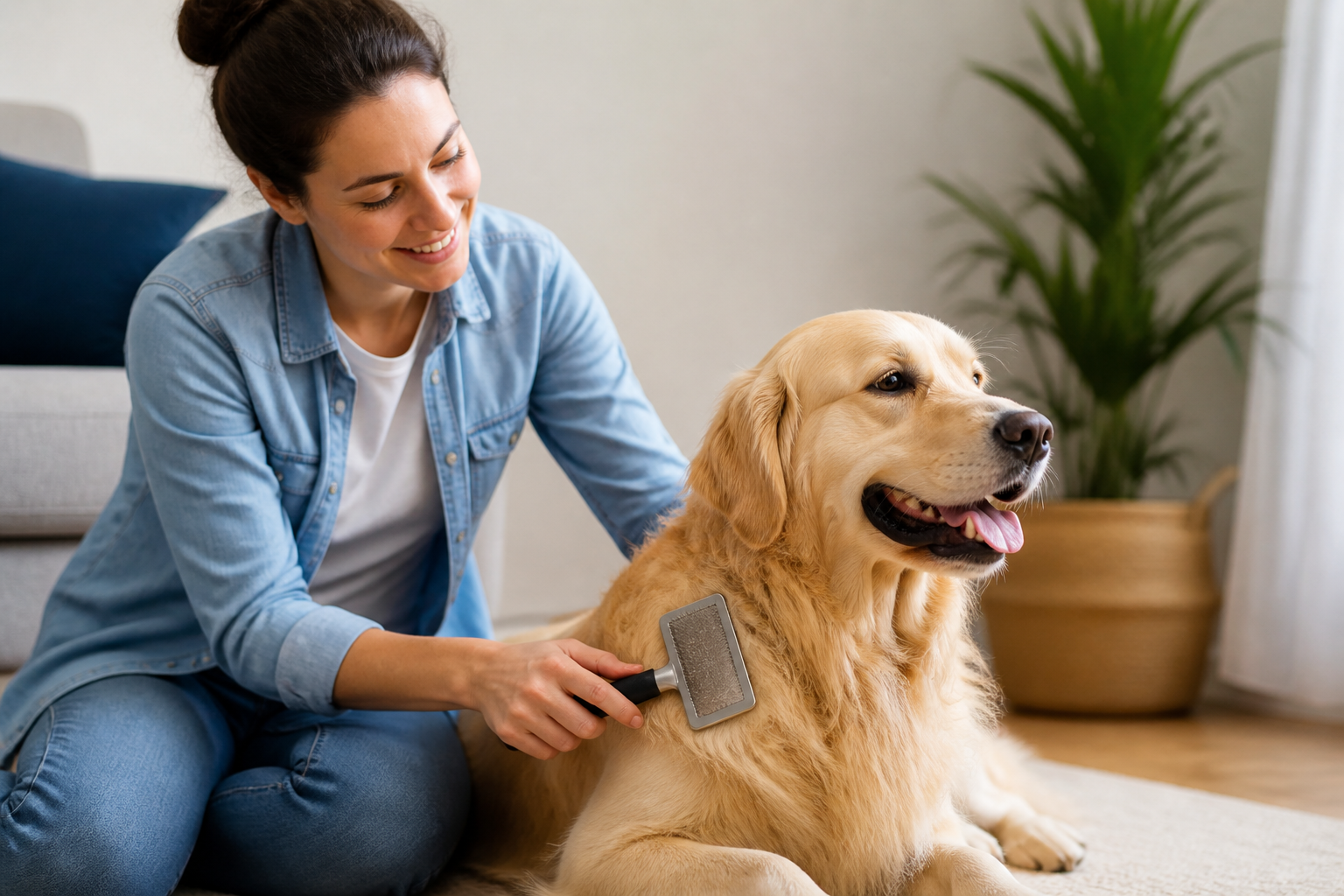
A slicker brush is easily identifiable by its distinct shape and pin structure. Unlike a standard human hairbrush, a slicker brush usually features a wide, flat, or slightly curved head. This head is covered with hundreds of tiny, thin wire pins. These pins are the most important part of the tool because they are designed to reach through the top layer of fur to address the undercoat and skin level.
The wire pins are typically angled or hooked. This slight bend allows the brush to grab onto loose hair and debris without scratching the skin when used correctly. The pins are often set into a flexible rubber cushion. This padding provides a bit of "give," which helps the brush contour to your dog's body. Some models feature protective tips on the pins, while others are "firm" for dense coats.
Quick Answer: A slicker brush is a grooming tool with fine wire pins set into a flat or curved head. It is specifically designed to remove mats, tangles, and loose fur from medium to long-coated dogs.
The handles are another key part of the design. Since grooming a large or long-haired dog can take time, we recommend looking for ergonomic grips. Most modern brushes use rubberized handles to prevent slipping. The overall goal of the slicker brush anatomy is to maximize surface area contact while providing the precision needed to work through tangles.
Why the Slicker Brush Is a Grooming Essential
The primary purpose of a slicker brush is to tackle the "trapped" hair that other brushes might miss. For dogs that shed, dead hair often gets caught in the surrounding fur instead of falling to the floor. If this hair stays trapped, it eventually twists into mats. A slicker brush pulls that dead hair out, preventing painful clumps from forming.
Beyond just removing hair, these brushes are excellent for removing surface debris. If your dog loves hiking or running through tall grass, they likely bring home burrs, seeds, and dried mud. The fine pins of a slicker brush act like a many-toothed comb to lift these foreign objects out of the coat. This keeps the fur clean and reduces the need for frequent baths.
Another benefit is the distribution of natural oils. As the pins move through the fur, they help move the oils produced by the skin down the hair shaft. This results in a natural shine and healthier skin. It also stimulates blood flow to the skin surface, which can promote better hair growth and overall skin health.
Understanding Different Pin Types and Flexibilities
Not all slicker brushes are created equal. The density and firmness of the pins determine how the brush performs on different coat types. Firm slicker brushes have stiffer wires that do not bend easily. These are best for dogs with very thick, dense coats or those with significant matting. They provide the strength needed to penetrate deep layers of fur.
Soft slicker brushes have more flexible pins. These are better suited for dogs with thinner coats, senior dogs with sensitive skin, or puppies who are just getting used to being groomed. If you use a firm brush on a dog with a thin coat, you risk "brush burn," which is skin irritation caused by the metal pins.
- Firm Pins: Best for Doodles, Golden Retrievers, and Newfoundlands.
- Soft Pins: Best for Yorkies, Maltese, or dogs with silkier hair.
- Coated Tips: Pins with tiny plastic balls on the ends for extra-sensitive skin.
- Long Pins: Designed to reach through the thickest double coats.
Choosing the right pin type is a balance between effectiveness and comfort. We carry a variety of options in our dog brushes and combs collection to ensure you can find the specific firmness that matches your dog's needs. If you are unsure, starting with a medium-flexibility brush is usually a safe bet for most breeds.
Key Takeaway: Match the pin firmness to your dog's coat density to avoid skin irritation while effectively removing mats.
Which Dog Breeds Benefit Most?
While almost any dog can be brushed with a slicker tool, it is the "gold standard" for specific coat types. Curly-coated breeds like Poodles, Bichon Frises, and various "Doodle" mixes are the primary candidates. Their hair grows continuously and traps shed fur easily. Without a slicker brush, these breeds can become matted down to the skin in a matter of weeks.
Long-haired breeds like Collies, Shetland Sheepdogs, and Bernese Mountain Dogs also require this tool. These dogs have a dense undercoat that sheds seasonally. A slicker brush is one of the few tools that can effectively reach that undercoat to remove the "dead" fluff before it causes problems. It is also useful for wire-haired breeds like Schnauzers or Airedale Terriers to keep their coat looking tidy between professional grooms.
On the other hand, short-haired breeds like Boxers or Beagles do not typically need a slicker brush. For those dogs, a rubber curry brush or a simple bristle brush is usually enough. Using a wire-pinned slicker on a very short coat can be uncomfortable because the pins have no "cushion" of hair to move through before hitting the skin.
How to Use a Slicker Brush Without Irritating Skin
The most common mistake owners make is using too much pressure. You should never "scrub" the skin with a slicker brush. Instead, think of the motion as a "pat and pull" technique. You gently place the brush into the fur and pull it away from the body in a smooth motion. This allows the pins to catch the tangles without dragging them across the skin surface.
To check if you are using the right amount of pressure, try the brush on your own forearm. If it feels scratchy or painful, you are pressing too hard. The weight of the brush itself is often enough pressure to get the job done. For long-haired dogs, it is best to work in sections. Start at the bottom of the leg and work your way up the body.
This method is often called "line brushing." You lift the hair with one hand and brush the hair underneath it. This ensures you are actually reaching the skin and not just smoothing over the top layer of fur. Many owners think they have brushed their dog thoroughly, only to find mats hiding deep near the skin later.
Step 1: Divide the coat. / Use your hand to pull a section of hair upward to reveal the skin line.
Step 2: Pat and pull. / Gently hook the brush pins into the hair near the skin and pull outward.
Step 3: Move in small sections. / Work across the dog's body in 2-inch sections to ensure total coverage.
Step 4: Check your work. / Run a metal comb through the section you just brushed to ensure no tangles remain.
Bottom line: Use a light touch and the "line brushing" technique to reach the undercoat safely.
Dealing With Mats and Tangles Safely
When you encounter a mat, do not try to pull the brush straight through it. This will hurt your dog and make them fear grooming. Instead, use the edge of the slicker brush to gently "pick" at the mat. Start at the end of the hair furthest from the skin and slowly work your way in. This breaks the mat into smaller, manageable pieces.
If a mat is very tight or close to the skin, you may need a specialized dematting and tangle-splitting tool. Never pull on a mat so hard that the skin bunches up. This is a sign that you are causing pain. For regular maintenance, using the slicker brush three to four times a week will prevent these mats from ever starting.
If your dog is particularly prone to tangles, consider the environment. Wet fur mats much faster than dry fur. Always brush your dog thoroughly before giving them a bath. Once a mat gets wet and then air-dries, it often tightens, making it nearly impossible to remove without clippers.
Comparing Grooming Tools
| Tool Type | Best Use Case | Coat Type |
|---|---|---|
| Slicker Brush | Removing mats and dead undercoat | Long, curly, or double coats |
| Bristle Brush | Finishing, adding shine, surface dirt | Short or sleek coats |
| Pin Brush | General detangling, daily brushing | Silky, long coats |
| Undercoat Rake | Heavy seasonal shedding | Thick double coats |
| Rubber Curry | Massaging skin, removing loose hair | Short-haired breeds |
The Connection Between Grooming and Skin Health
Grooming is about more than just looking good. It is a vital health check. While you are using your slicker brush, you have a front-row seat to your dog’s skin health. This is the best time to look for unusual lumps, bumps, redness, or signs of parasites like fleas and ticks. Regular brushing sessions allow you to catch these issues early before they become expensive veterinary problems.
If you notice your dog is excessively itchy or has red, inflamed skin, the cause might be allergies or environmental irritants. Our dog pharmacy offers a wide range of medications through our partnership with Pet's Choice. Whether your dog needs prescription allergy relief or a professional-grade flea and tick preventive, we can help you fulfill those needs with the convenience of home delivery.
Vet Tip: If you find a new lump or a patch of skin that is oozing or persistently red during grooming, schedule a visit with your veterinarian. Early diagnosis of skin infections or growths is key to successful treatment.
Checking the skin also helps you identify "hot spots." These are areas of intense irritation that dogs often chew on. A matted coat can trap moisture against the skin, which is a leading cause of these infections. By keeping the coat clear with your slicker brush, you are directly preventing these painful skin conditions.
Selecting the Right Size for Your Dog
Size matters when it comes to grooming efficiency. Slicker brushes come in everything from "tiny" for Toy Poodles to "extra-large" for Great Pyrenees. Using a brush that is too large for your dog makes it difficult to navigate tight areas like the armpits, behind the ears, and around the tail. These are exactly the spots where mats tend to form most often.
For most medium-sized dogs, a standard rectangular slicker brush is the most versatile. However, many professional groomers keep a smaller, circular "slicker" on hand for face and paw work. If you have a large breed, a bigger brush head will save you a significant amount of time and effort during your daily routine.
We recommend having at least two sizes if you own a large dog with a complex coat. Use the large brush for the back and sides, and a small brush for the legs and sensitive areas. This ensures you can reach every inch of the coat without accidentally poking your dog with a bulky tool in a narrow space.
Maintenance: How to Clean Your Slicker Brush
A dirty brush is less effective. As the pins fill with hair, they can no longer reach deep into the coat. You should remove the hair from the pins frequently during a single grooming session. Many modern slicker brushes now feature a "self-cleaning" button. When you press it, the pins retract into the base, leaving the hair in a neat "pad" that you can simply wipe away.
If you have a traditional brush, you can use a fine-toothed comb to lift the hair out of the pins. Occasionally, you should deep-clean the brush. Dust, skin oils, and dander can build up on the base of the pins over time. Use a bit of mild dish soap and warm water, but be careful not to soak brushes with wooden handles or those with deep foam padding, as they can trap moisture and grow mold.
Regularly inspect the pins for damage. If the wires become bent or the protective tips fall off, it is time to replace the brush. Damaged pins can scratch the skin and turn a pleasant grooming session into a painful experience. Keeping your tools in top shape is just as important as the brushing itself.
Key Takeaway: Clean your brush after every use and replace it if the wire pins become bent or damaged to ensure a safe grooming experience.
Conclusion
A slicker brush is one of the most valuable tools in any dog owner's grooming kit, especially for those managing long or curly coats. By removing dead hair, breaking up mats, and distributing skin oils, this tool keeps your dog comfortable and their coat looking its best. Remember to use a gentle "pat and pull" motion and choose the right pin firmness for your dog's specific needs.
Regular grooming sessions are the perfect time to bond with your pet and monitor their overall health. If you notice any skin issues or parasites during your routine, we are here to support you. You can find a wide selection of grooming tools, supplements, and prescription medications at BaxterBoo. Our goal is to provide the expert-curated products you need to keep your dog healthy from head to tail.
To get started on a better grooming routine, explore our dog grooming collection of high-quality brushes and combs. You can even set up our Autoship programme for your favorite grooming sprays or skin supplements to save on every order.
FAQ
Can I use a slicker brush on a puppy?
Yes, you can use a slicker brush on a puppy, but you should choose one with very soft pins or coated tips. It is important to start grooming early so your puppy gets used to the sensation. Keep sessions short and use plenty of treats to create a positive association with the brush.
How often should I use a slicker brush on my dog?
For long-haired or curly-coated breeds, we recommend using a slicker brush three to four times a week. If your dog has a very dense double coat or is currently in a high-shedding season, daily brushing may be necessary to prevent mats. Short-haired dogs generally do not require a slicker brush and can be brushed less frequently.
Will a slicker brush hurt my dog's skin?
A slicker brush will not hurt your dog if used correctly with a light touch. However, because the pins are made of wire, pressing too hard or "scrubbing" the skin can cause irritation or "brush burn." Always test the pressure on your own skin first and use the "pat and pull" technique to stay safe.
What is the difference between a pin brush and a slicker brush?
A pin brush looks like a standard hairbrush and is used for general detangling and smoothing long, silky coats. A slicker brush has much finer, more densely packed wire pins that are usually angled. The slicker brush is much better at removing dead undercoat and tackling stubborn mats than a standard pin brush.






