
 Save 15% on your 1st Autoship learn more

 Email us
 Live Chat
 FAQs
FAQs





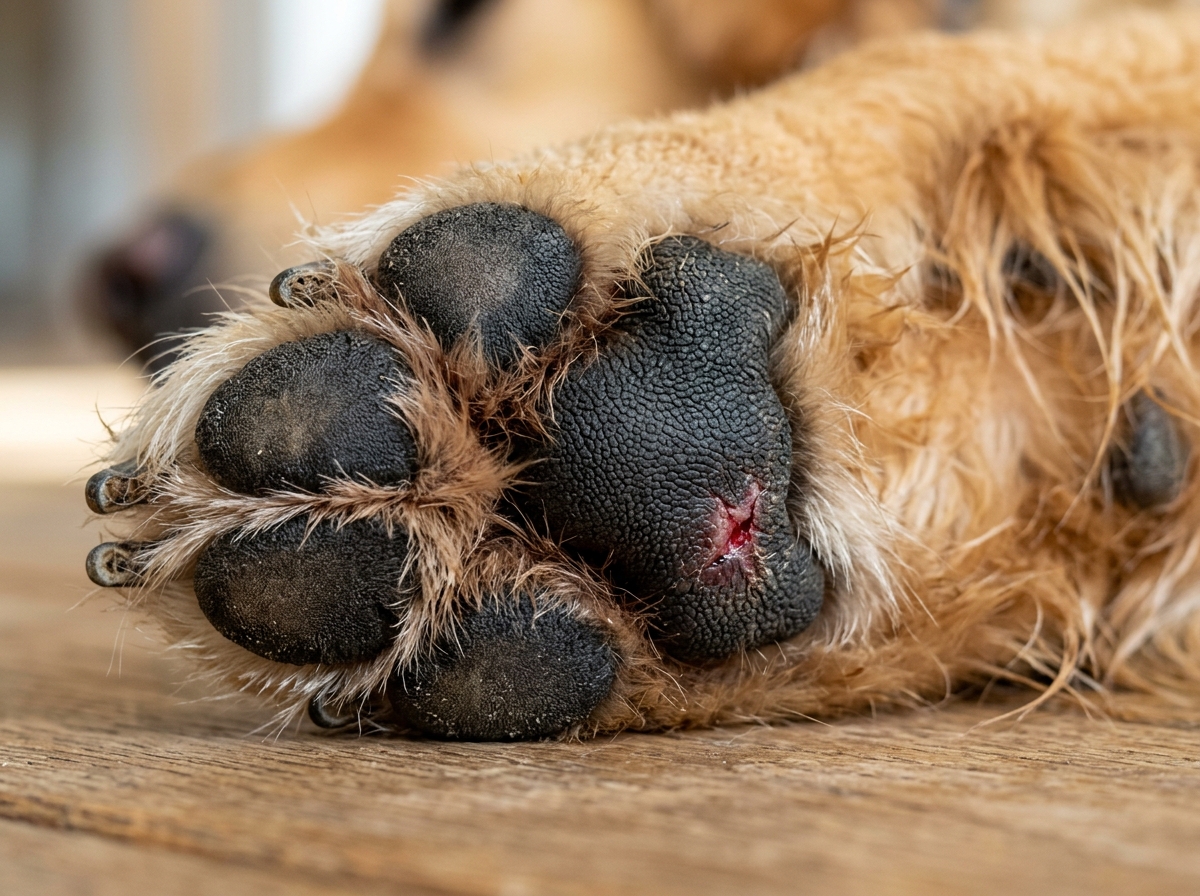
Your Dog Has Damaged Paw Pads — Here's What to Do
Damaged dog paw pads are more common than most pet owners expect, and they can range from a minor scrape to a serious injury that needs a vet's attention.
Quick answer — here's what to do right now:
- Stay calm and gently restrain your dog
- Inspect the paw — check the bottom, top, and between the toes
- Control bleeding — apply gentle pressure with a clean cloth for 10-15 minutes
- Clean the wound — rinse with cool water or diluted betadine solution
- Bandage it — cover with non-stick gauze and vet wrap, snug but not tight
- Prevent licking — use an e-collar or protective sock
- Call your vet if bleeding won't stop, the wound is deep, or you see signs of infection
Dogs rely on their paw pads for everything — walking, running, balance, shock absorption, and even regulating body temperature. Those tough little cushions are doing a lot of work every single day.
But they're not indestructible.
Hot pavement, sharp rocks, ice, chemicals, and rough terrain can all cause painful injuries. And because dogs walk on their paws constantly, even a small wound can become a serious problem if left untreated.
The good news? Most minor paw pad injuries can be managed at home with the right steps. And knowing when to call a vet can save your dog from a lot of unnecessary pain.
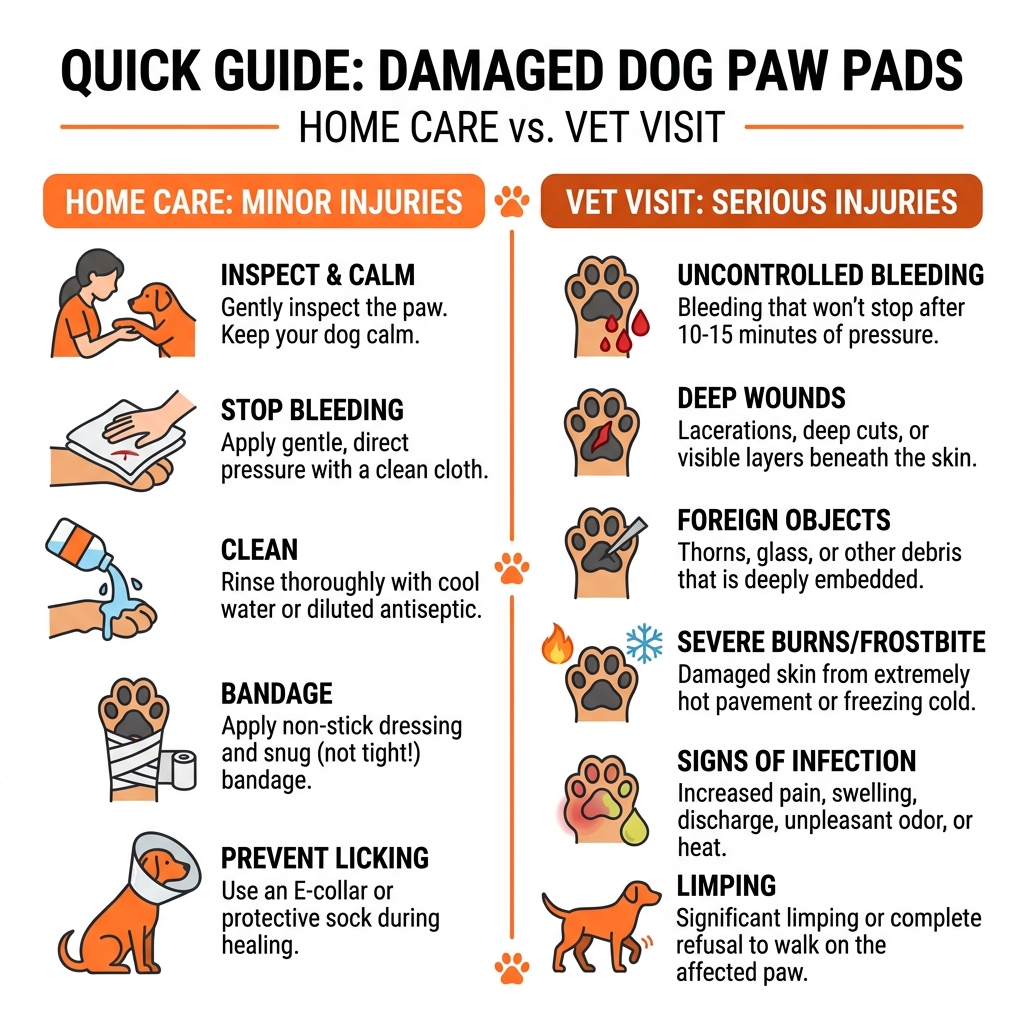
Identifying and Assessing Damaged Dog Paw Pads
Before we jump into the "how-to" of healing, let’s talk about what makes those "toe beans" so special. A dog’s paw pad is a marvel of biological engineering. It’s composed of specialized skin that is much thicker than the skin on the rest of their body, backed by a significant fatty layer.
Anatomy and Function
Your dog actually has several different types of pads. The large, heart-shaped pad in the middle is the metacarpal (front) or metatarsal (back) pad. The smaller ones under each toe are the digital pads. Then there’s that "mystery" pad higher up on the front legs called the carpal pad, which provides extra traction when your dog is navigating steep slopes or stopping suddenly.
These pads serve four primary functions:
- Shock Absorption: They protect the bones and joints from the impact of every step, run, and jump.
- Traction: The sandpaper-like texture helps your dog grip slick surfaces like tile or wet rocks.
- Insulation: The fatty tissue helps protect the inner structures of the foot from extreme temperatures.
- Ground Sensing: Dogs actually "feel" the terrain through their pads, which helps them sense where they are stepping.

Signs of Trouble
Because dogs are notoriously stoic, they might not always yelp the moment they get a cut. You have to be a bit of a detective. If you notice any of the following, your dog likely has damaged dog paw pads:
- Limping or Favoring a Leg: This is usually the first sign of discomfort.
- Excessive Licking or Chewing: Dogs use their tongues to soothe pain, but over-licking can lead to infection.
- Bleeding or Oozing: Even a small amount of blood on the floor is a red flag.
- Discoloration: Healthy pads are usually black or pinkish-grey; redness or dark purple spots can indicate bruising or burns.
- Foul Odor: A "cheesy" or metallic smell often points to a bacterial or yeast infection.
Common Causes of Damaged Dog Paw Pads
Why do these injuries happen? Well, dogs don't wear sneakers (unless we put them on!), so their feet are exposed to everything the world throws at them.
- Abrasive Surfaces: Running on concrete, gravel, or volcanic rock can wear down the pads, leading to "thin" skin or painful abrasions.
- Hot Pavement: This is a huge one in the summer. On an 86°F day, asphalt can reach 135°F. That’s hot enough to cause second-degree burns in less than a minute.
- Chemical Burns: Many people don't realize that household floor cleaners, lawn fertilizers, and winter ice melts contain caustic chemicals that can eat away at paw tissue.
- Extreme Cold and Frostbite: While pads have a fatty layer, they can still freeze in sub-zero temperatures. Ice and salt can also cause the pads to dry out and crack.
- Foreign Objects: Glass shards, metal scraps, thorns, and the dreaded "foxtail" (a barbed grass seed) can puncture or slice through the pad.
- Nutritional Deficiencies: Sometimes the problem comes from the inside. A lack of protein or a zinc deficiency can make the skin brittle. According to Scientific research on paw cracks, insufficient dietary protein can decrease the production of keratin, the protein that makes up the outer layer of the pad.
Treating and Repairing Injured Paws at Home
If the injury is minor — think a small scrape or a very shallow cut — you can often handle the initial "repair" work yourself. Here is our step-by-step guide to home first aid for damaged dog paw pads.
Step 1: Stay Calm and Secure Your Dog
Injured dogs are scared and in pain. Even the sweetest pup might nip if you touch a sore spot. Have someone help you hold the dog, or use a soft muzzle if necessary.
Step 2: Control the Bleeding
Paw pads have a lot of blood vessels, so even a shallow cut can look like a scene from a horror movie. Apply firm, steady pressure with a clean towel or gauze for at least 10 to 15 minutes. Resist the urge to lift the cloth to "check" every few seconds; you want a clot to form.
Step 3: Clean the Wound
Once the bleeding has slowed, you need to flush out any dirt or bacteria.
- Cool Water or Saline: A gentle rinse is a great start.
- Diluted Betadine: This is a veterinary favorite. Mix betadine with warm water until it looks like "weak iced tea." You can soak the entire paw in a Ziploc bag or a small bowl for 3 to 5 minutes to ensure it's thoroughly disinfected.
- Avoid Peroxide: While common in human medicine, peroxide can actually damage healthy tissue and delay healing in dogs.
Step 4: Protect and Bandage
After cleaning, pat the paw dry (don't rub!). Apply a small amount of antibiotic ointment or a manuka honey-based cream.
When it comes to bandaging, the goal is to keep the wound clean and prevent the dog from walking directly on the injury.
- Non-stick Gauze: Place this directly over the wound.
- Roll Gauze: Wrap this around the paw and up toward the "wrist" (carpus) or "ankle" (tarsus). This prevents the bandage from slipping off.
- Vetwrap: This self-adhering wrap is excellent for keeping everything in place.
The Two-Finger Test: Always ensure you can fit two fingers under the top of the bandage. If it's too tight, you risk cutting off circulation, which is far more dangerous than the original cut!
For protection during the healing phase, especially when going outside for potty breaks, we highly recommend using a high-quality boot. The Muttluks Deluxe Boots are a fantastic option because they provide a leather sole that mimics the feel of the pad while offering a waterproof barrier.
For more detailed steps, you can refer to this Veterinary guidance on first aid.
First Aid Steps for Damaged Dog Paw Pads
Managing a paw injury is an ongoing process. It’s not a "one and done" situation.
Debris Removal: If you see a small thorn or a piece of glass that is easily accessible, you can gently remove it with tweezers. However, if the object is buried deep in the pad, do not dig for it. You could cause more damage or push it deeper. Leave deep debris for the vet.
Preventing the "Lick Cycle": Dogs believe their saliva is a miracle cure. It isn't. While a gentle lick might remove some surface dirt, chronic licking introduces a host of bacteria and keeps the wound moist, which is the perfect environment for an infection.
- The "Cone of Shame": An Elizabethan collar is often the only way to truly stop the licking.
- Protective Socks: Inside the house, a breathable cotton sock can deter minor licking and keep your floors clean from any ointment.
- Boots for All Seasons: If your dog is active, they need protection that stays put. The Goo-eez All-Season Boots are designed with a gel interior that conforms to the paw, making them very comfortable for a dog that is already dealing with a sore foot.
When to Seek Professional Veterinary Care
Knowing your limits as a pet parent is vital. Some damaged dog paw pads simply cannot be fixed with a home first aid kit.
The "Go to the Vet" Checklist
You should call your veterinarian immediately if:
- Bleeding Won't Stop: If you’ve applied pressure for 15 minutes and it’s still pulsing or flowing freely.
- Deep Lacerations: If the cut is deep enough that you can see the fatty tissue underneath.
- Injury Flaps: If a large piece of the pad is hanging off. These "flaps" rarely heal on their own and often need to be surgically trimmed or debrided.
- Signs of Infection: Increased swelling, heat, pus (yellow or green discharge), or if your dog develops a fever or becomes lethargic.
- Embedded Objects: If a foxtail or piece of metal is stuck deep inside the tissue.
Minor vs. Emergency Injury Comparison Table
| Feature | Minor Injury (Home Care) | Emergency Injury (See Vet) |
|---|---|---|
| Bleeding | Stops within 5-10 minutes | Continues after 15 mins of pressure |
| Depth | Surface scrape or shallow nick | Deep gash, visible fat or bone |
| Foreign Body | Small surface thorn | Deeply embedded glass, metal, or foxtail |
| Pain Level | Dog is walking with a slight limp | Dog refuses to put any weight on paw |
| Burns | Slight redness, dog is comfortable | Blistering, peeling skin, charred tissue |
What the Vet Will Do
When you arrive, the vet will likely perform a physical exam and may recommend an X-ray to ensure no glass or metal is hidden deep within the paw.
Because paw pads are under constant pressure and friction, they don't hold stitches well. Often, a vet won't even try to suture a pad unless it's a very specific type of clean cut. Instead, they may use medical-grade skin glue or specialized "donut" bandages that take the pressure off the wound, allowing it to heal from the inside out. In some cases, sedation is required just to properly clean and debride the area because it is so sensitive.
Prevention and Long-Term Paw Maintenance
The best way to deal with damaged dog paw pads is to prevent them from happening in the first place! A little bit of maintenance goes a long way.
The 7-Second Rule
In the summer, always use the 7-second rule. Place the back of your hand on the pavement. If you can't hold it there comfortably for 7 seconds, it is way too hot for your dog's paws. Stick to the grass or wait until the sun goes down.
Nail Trimming
Keep those nails short! If a dog's nails are too long, they change the way the foot hits the ground, putting uneven pressure on the pads. Long nails are also more likely to snag on things, leading to torn nails and secondary pad injuries.
Moisturizing and Protection
Just like our hands, dog paws can get dry and cracked. Use a dog-safe paw balm to keep them supple. Avoid human lotions or Vaseline (more on that in a second).
For dogs in colder climates, salt and ice melt are the biggest enemies. We love the Muttluks Fleece Lined Boots for winter. They keep the paws warm and, more importantly, create a barrier against the caustic salts used on sidewalks.
Environmental Checks: Regularly survey your yard and the paths where you walk for broken glass, sharp metal, or thorny bushes. If you wouldn't walk there barefoot, your dog probably shouldn't either.
Frequently Asked Questions about Paw Injuries
How long does it take for a dog's paw pad to heal?
Healing time depends entirely on the severity of the injury.
- Minor scrapes and cracks: These usually show significant improvement within 1 to 3 days if kept clean and protected.
- Deep cuts or burns: These can take 2 to 3 weeks or even longer. Because the tissue on the pad is specialized, it regenerates slower than regular skin. The biggest hurdle is that dogs have to walk on their "bandages," which can reopen the wound. Restricting activity (no zoomies!) is the most important part of the recovery process.
Should I let my dog lick their injured paw?
In a word: No. While there is a grain of truth to the idea that some enzymes in saliva can kill certain bacteria, the "mouth-to-wound" pipeline mostly just introduces new, nasty bacteria. Excessive licking can also lead to "lick granulomas" or self-mutilation, where the dog actually makes the hole bigger. Use an Elizabethan collar or a protective boot to keep them away from the area until it is fully closed.
Can I use human lotion or Vaseline on my dog's paws?
We don't recommend it. Human lotions often contain scents and chemicals that aren't safe for dogs to ingest — and you know they will try to lick it off.
As for Vaseline (petroleum jelly), while it isn't strictly toxic in tiny amounts, it can cause significant stomach upset and even pancreatitis if a dog licks a large amount off their paws. It also tends to be very greasy and doesn't "soak in" as well as products specifically designed for canine skin. Stick to organic, non-toxic paw balms that are formulated to be "lick-safe."
Conclusion
At BaxterBoo, we know that your dog's wellness starts from the ground up. Damaged dog paw pads can be a literal pain in the foot, but with a little patience and the right gear, your pup will be back to their playful self in no time.
Whether you're looking for vet-approved ointments, organic paw balms, or the toughest boots on the market, we've curated a selection of high-quality supplies to keep those paws protected year-round. A little prevention today saves a lot of limping tomorrow!






