
 Save 15% on your 1st Autoship learn more

 Email us
 Live Chat
 FAQs
FAQs





Introduction
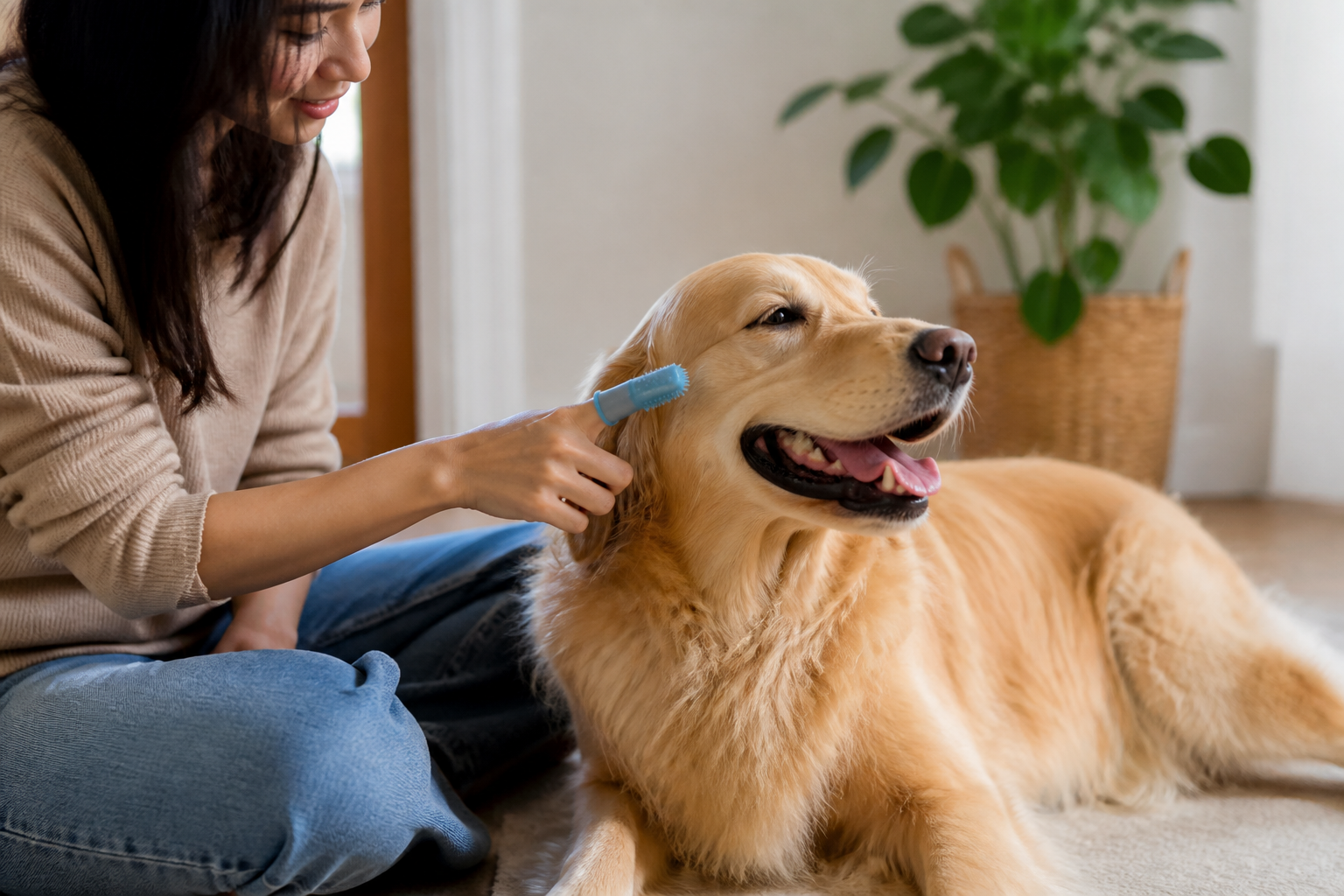
You are likely kneeling on the kitchen floor with a small silicone cap on your index finger while your dog tries to back away into the corner. It is a familiar scene for many pet owners attempting to get a head start on dental hygiene. You want to do the right thing for your dog's health, but you might wonder if that little rubber tool is actually scrubbing away plaque or if you are just massaging your dog's gums. At BaxterBoo, we see this question often from pet parents who want to keep those pearly whites clean without the struggle of a full sized toothbrush. This article will explore whether finger brushes actually work, when they are the right choice, and how to transition your dog to a more robust cleaning routine. Finger brushes are effective as a training tool and for certain small breeds, but they are often just the first step in a lifelong dental care journey.
Quick Answer: Finger brushes are effective for massaging gums and removing soft plaque in puppies or small dogs. However, they often lack the reach and abrasive power needed to clean back molars or remove hardened tartar in larger breeds.
Understanding the Finger Brush Design
A finger brush is a small sleeve designed to slide over your pointer finger. Most versions are made from soft, food grade silicone. They usually feature tiny nubs on one side and perhaps a textured surface on the other. Some specialty versions use nylon bristles similar to a traditional toothbrush, which are embedded into the silicone sleeve.
The primary appeal is the tactile feedback. Because the brush is on your finger, you can feel exactly where you are in your dog's mouth. You can tell if you are hitting a tooth or if you have slipped onto the cheek. This makes it much harder to accidentally poke your dog’s sensitive gums with the hard plastic of a traditional brush handle.
However, the design has a significant limitation. The silicone nubs on most finger brushes are relatively blunt. While they are great for spreading enzymatic toothpaste and rubbing the surface of the front teeth, they struggle to reach the tiny crevices between teeth. They also lack the "scrubbing" power of nylon bristles.
The Pros of Using Finger Brushes
For many dogs and owners, the finger brush is a vital entry point into dental care. If you have a dog that is terrified of long objects being inserted into their mouth, a finger brush feels much more like a natural petting motion.
Better Control and Feel
The biggest advantage is the sense of touch. When you use a traditional toothbrush, you are operating a tool at the end of a long handle. It is easy to lose track of which tooth you are scrubbing. With a finger brush, your brain knows exactly where your finger is located. This control is especially helpful when cleaning the tiny teeth of a Toy Poodle or a Yorkie.
Less Intimidating for Nervous Pets
Many dogs view a long, plastic toothbrush as a scary object. A finger brush is discreet. It allows you to keep your hand close to your dog's face, which can be more comforting for a nervous pet. It is an excellent tool for the "desensitization" phase of training.
Durability and Safety
Since finger brushes are usually one solid piece of silicone, there are no bristles to fall out and no hard handles to snap. They are also much softer on the gums. If your dog has mild gingivitis or sensitive gums, the soft silicone provides a gentle massage that can stimulate blood flow without causing bleeding.
Key Takeaway: Finger brushes are the ultimate training tool for puppies and fearful dogs because they prioritize comfort and tactile feedback over aggressive scrubbing.
The Limitations of Finger Brushes
While they have their place, finger brushes are rarely a complete solution for canine oral health. There are several reasons why most veterinarians eventually recommend moving to a traditional or three sided brush.
The Reach Problem
A dog's mouth is surprisingly long. The most important teeth to clean are the heavy molars in the very back. These are the teeth that do the most chewing and tend to accumulate the most tartar. Unless you have very long fingers and a very small dog, it is physically difficult to reach those back molars with a finger brush.
The Bite Risk
This is a practical safety concern. To use a finger brush, your finger must be inside your dog's mouth. Even the most well behaved dog might accidentally clamp down if they are startled or if you hit a sore spot. For larger breeds with powerful jaws, this is a significant risk for the owner.
Lack of Bristle Penetration
Plaque loves to hide under the gumline and in the grooves of the molars. Silicone nubs are too thick to get into those spaces. To truly prevent periodontal disease, you need thin, flexible bristles that can sweep away debris from the "sulcus," which is the tiny pocket where the tooth meets the gum.
Comparing Finger Brushes to Traditional Brushes
When deciding which tool to use, it helps to look at the specific needs of your dog's mouth. Not every dog requires the same equipment.
| Feature | Finger Brush | Traditional Dog Brush | 3-Sided Brush |
|---|---|---|---|
| Best For | Puppies and Tiny Breeds | All Life Stages | Fast Cleaners / Wriggly Dogs |
| Cleaning Power | Low to Moderate | High | Very High |
| Reach | Limited | Excellent | Good |
| User Safety | Lower (finger in mouth) | Higher (hand outside) | Higher |
| Learning Curve | Very Easy | Moderate | Moderate |
A traditional option such as the Pure and Natural Pet Organic Dental Solutions Bamboo Dog Toothbrush offers a small head and nylon bristles for dogs ready to move beyond a finger brush.
Vet Tip: If you notice your dog has red, swollen gums or brown buildup that doesn't rub off, skip the finger brush and head to the vet. These are signs of existing dental disease that requires a professional cleaning before you start a home routine.
When are Finger Brushes Most Effective?
Despite the limitations, there are specific scenarios where a finger brush is actually the superior choice. We often recommend them to our customers at BaxterBoo for these exact situations.
Puppy Training
Starting a puppy with a traditional toothbrush can be overwhelming. A puppy’s mouth is small, and they are usually more interested in biting the brush than letting you scrub. A finger brush allows you to combine "mouth handling" training with actual cleaning. It sets the stage for a lifetime of easy vet visits.
For more guidance on early oral care, read these pet dental care tips.
Senior Dogs with Loose Teeth
If you are caring for a senior dog with fragile dental health, a traditional brush might be too abrasive. A soft silicone finger brush allows you to gently wipe away food debris and apply soothing dental gels without putting pressure on loose or sensitive teeth.
Brachycephalic (Flat-Faced) Breeds
Dogs like Pugs, French Bulldogs, and Boston Terriers have very crowded mouths. Their teeth are often rotated or overlapping due to their short jaw structure. A finger brush can sometimes navigate these tight, irregular spaces more easily than a standard rectangular brush head.
How to Properly Use a Finger Brush
If you decide that a finger brush is the right tool for your current stage, you need to use the right technique to make it effective. Simply rubbing it around for five seconds will not do much.
Step 1: Introduce the taste. Put a small amount of dog-safe enzymatic toothpaste on your bare finger and let your dog lick it off. Never use human toothpaste, as it contains xylitol and fluoride which are toxic to dogs.
Step 2: Add the brush. Once they like the paste, put the finger brush on and let them lick the paste off the nubs. This creates a positive association with the tool.
Step 3: The lifting motion. Gently lift your dog's lip with your free hand. Use the finger with the brush to rub the front canine teeth in a circular motion.
Step 4: Gradually move back. Over several sessions, try to reach further back. Focus on the outside of the teeth, as this is where most plaque accumulates.
Step 5: Reward. Always follow a brushing session with a high value reward or praise.
Bottom line: Success with a finger brush depends more on consistency and technique than on the tool itself.
Transitioning to a Traditional Toothbrush
Most pet owners find that once their dog is comfortable with a finger brush, it is time to upgrade. This transition is important for long term health, especially as dogs age and plaque begins to harden into tartar.
You do not have to switch overnight. You can use the finger brush on the front teeth where you have more control and use a traditional brush with a long handle for the back molars. This "hybrid" approach ensures the whole mouth is covered.
When looking for a traditional brush, look for one with an angled handle. This helps you reach around the curve of the jaw. Brands like Arm and Hammer or Virbac offer brushes specifically shaped for canine anatomy. We carry a wide variety of these options at BaxterBoo to help make the transition easier.
Explore our selection of Arm & Hammer products for dog dental care options.
Supporting Dental Health Beyond Brushing
Brushing is the gold standard, but it is not the only way to keep your dog's mouth healthy. A multi-pronged approach is usually most effective.
Dental Diets and Kibble
Some premium dog foods are formulated specifically for dental health. The kibble is often larger and has a texture that "scrubs" the tooth as the dog bites down. Brands like Royal Canin and Farmina Vet Life offer specialized diets that can help reduce plaque buildup.
Dental Chews and Toys
If your dog refuses all forms of brushing, dental chews are a helpful secondary option. Look for the VOHC (Veterinary Oral Health Council) seal of approval. This seal means the product has been tested and proven to reduce plaque or tartar by a certain percentage.
You can compare options in our dog dental and breath care category.
For additional ideas, browse 10 best dental chews for dogs.
Water Additives and Gels
For dogs that are particularly difficult to handle, water additives can help. These liquids contain enzymes that break down the biofilm of plaque before it can harden. While not as effective as mechanical scrubbing, they are better than doing nothing at all.
The Importance of Professional Care
No matter how effective your at-home brushing routine is, it cannot replace professional veterinary care. Even the best human brushers still go to the dentist twice a year. Your dog is no different.
During a wellness exam, your vet will check for signs of periodontal disease, which can lead to bacteria entering the bloodstream and affecting the heart, liver, and kidneys. If your dog requires a professional cleaning or has a persistent infection, our pharmacy can help. Through our partnership with Pet's Choice, the BaxterBoo pharmacy carries FDA-approved medications and prescription dental diets that your vet may recommend for ongoing health management.
Visit our dog pharmacy when your veterinarian recommends prescription support.
Vet Tip: Schedule a dental checkup at least once a year. Home brushing is about prevention, but a vet is needed for diagnosis and treatment of underlying issues.
Common Mistakes to Avoid
To make your finger brush as effective as possible, avoid these common pitfalls that many well meaning owners fall into.
- Using only water: Without enzymatic toothpaste, you are losing half the benefit. The enzymes do the "chemical" work of breaking down plaque while you do the "mechanical" work of scrubbing.
- Forcing the mouth open: This creates fear. It is better to do a five second successful session than a two minute struggle.
- Neglecting the gumline: Plaque hides where the tooth meets the gum. Make sure you are angled toward the gums, not just the middle of the tooth.
- Using a dirty brush: Silicone can trap bacteria. Wash the finger brush thoroughly with hot water after every use and replace it every few months.
Is a Finger Brush Worth It?
The short answer is yes, but with caveats. A finger brush is a fantastic "bridge" tool. It bridges the gap between doing nothing and performing a full, professional style brushing. It is a low cost, low stress way to improve your dog's quality of life.
If you are a new puppy owner, a finger brush should be at the top of your shopping list. If you have an older dog who has never had their teeth touched, it is the safest way to start. However, if your goal is the most effective plaque removal possible for a large breed dog, you will eventually want to move toward a bristled brush with a handle.
We have been helping pet owners navigate these choices since 2006. Our goal is to provide the gear that fits your dog’s specific personality and needs. Whether you choose a simple silicone sleeve or a high tech three sided brush, the most important thing is that you start today.
Key Takeaway: The best toothbrush for your dog is the one they will actually let you use every single day. Consistency beats "perfect" equipment every time.
Conclusion
Are finger brushes effective for dogs? They are highly effective for training, gum stimulation, and cleaning the front teeth of small breeds. While they may struggle to reach deep molars and lack the abrasive power of nylon bristles, they serve as a vital stepping stone in a pet’s dental care routine. By starting with a finger brush and gradually introducing more thorough tools, you can prevent painful dental disease and expensive vet bills. For the best results, pair your brushing routine with quality dental chews and regular veterinary checkups. Explore our dog dental care collection to find the perfect match for your dog's size and comfort level.
Bottom line: Use a finger brush to build trust and clean accessible areas, but aim to graduate to a traditional brush for a truly deep clean.
FAQ
Can I use a finger brush on a large dog?
You can use a finger brush on a large dog for the front teeth, but it is often ineffective for the back molars. Large dogs have much deeper mouths, and reaching the rear teeth with your finger can be difficult and potentially unsafe if the dog accidentally bites down. A long-handled toothbrush is a better choice for medium to large breeds to ensure a thorough and safe clean.
Do finger brushes actually remove tartar?
No, finger brushes cannot remove tartar, which is plaque that has hardened into a bone-like substance. Once tartar forms, it usually requires professional scaling by a veterinarian under anesthesia. Finger brushes are designed to remove soft plaque and food debris before they have a chance to mineralize into tartar.
How often should I replace a silicone finger brush?
You should replace a silicone finger brush every 2 to 3 months, or sooner if you notice any signs of wear. If the silicone becomes cloudy, develops tears, or if your dog bites pieces off, discard it immediately. Regularly inspect the brush for trapped bacteria or mold in the nooks and crannies of the nubs.
Is it better to use a finger brush or a dental wipe?
Finger brushes are generally more effective than dental wipes because they provide more mechanical friction to scrub away plaque. Dental wipes are good for a quick "freshen up" or for dogs that absolutely refuse to have any tool in their mouth. However, for a true cleaning that reaches the gumline, a finger brush or traditional toothbrush is the superior option.






