
 Save 15% on your 1st Autoship learn more

 Email us
 Live Chat
 FAQs
FAQs





Introduction
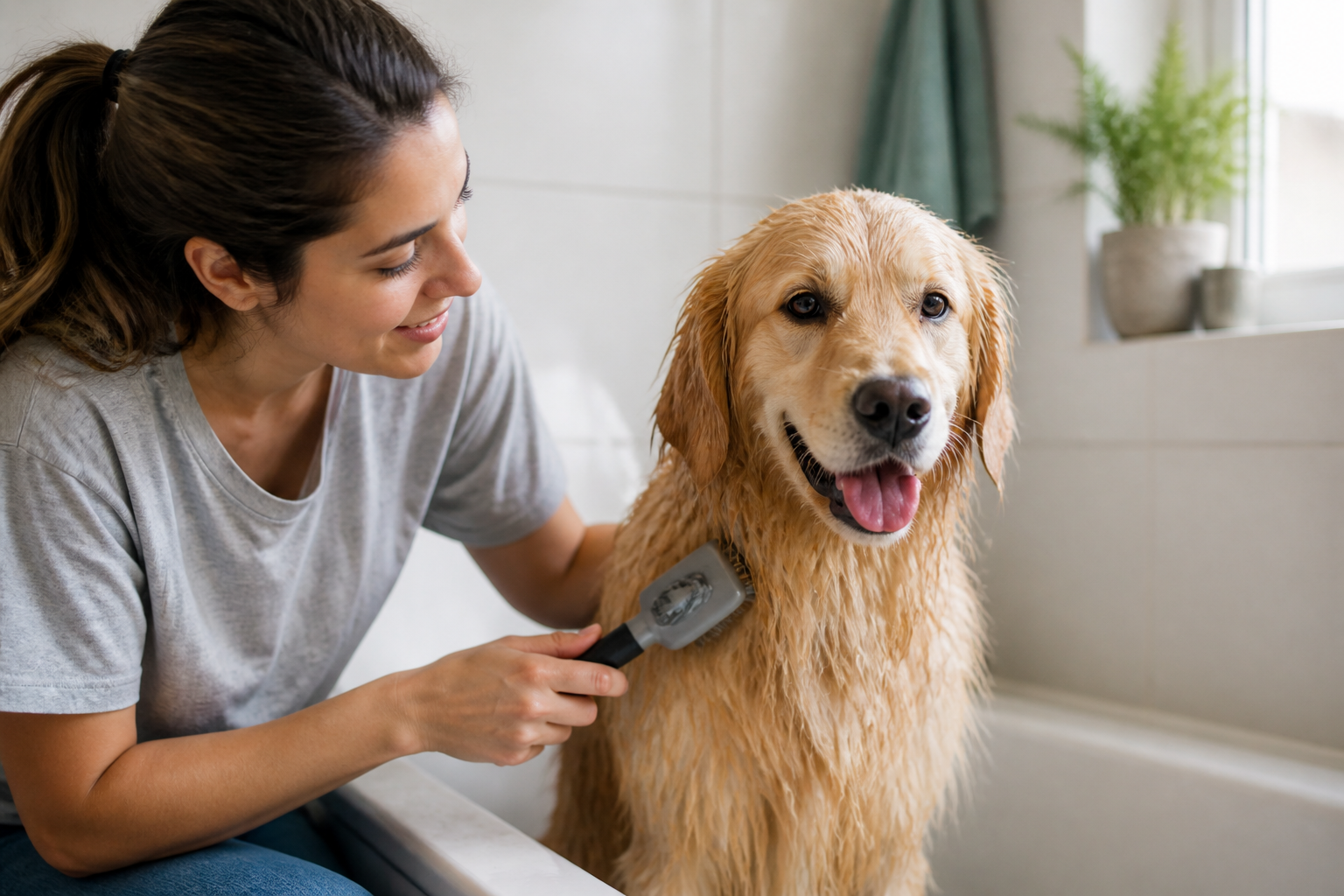
You just finished bath time and your dog is shaking water all over the bathroom. As you reach for the towel, you might wonder if you should grab the brush next. Many owners think brushing a wet dog is the best way to get through tangles. Others worry that it might damage the fur. At BaxterBoo, we hear this question from pet parents every single week. The answer is not a simple yes or no. It depends on your dog's coat type, the tools you use, and whether you are using a conditioner. This guide covers the science of wet hair and the best practices for home grooming. We want to help you keep your dog's coat healthy and shiny without causing any unnecessary pain.
Quick Answer: You should generally avoid brushing a soaking wet dog to prevent hair breakage and skin irritation. However, brushing a damp coat that has been treated with conditioner can be helpful for certain breeds and coat types.
The Science of Wet Hair and Why It Matters
To understand why wet brushing is controversial, we have to look at the structure of the hair itself. Each strand of your dog's hair is made of proteins held together by different types of bonds. The most common are hydrogen bonds. These bonds are very sensitive to water. When your dog's coat gets wet, these bonds temporarily break. This makes the hair much more elastic than it is when dry.
Because the hair is more elastic, it can stretch further before it snaps. While that might sound like a good thing, it actually makes the hair weaker. When you pull a brush through wet hair, you are stretching it to its limit. If the hair is already weakened by dirt or age, it will break much more easily. This can lead to a frizzy appearance or a coat that looks thin over time.
Wet hair also causes the cuticle to swell. The cuticle is the outer layer of the hair shaft. When it swells, it becomes rougher. This roughness increases friction between the hair strands. Instead of the brush gliding through, it catches on these rough edges. This is why brushing a wet dog can often feel like you are fighting against the fur.
Key Takeaway: Water makes dog hair more elastic but significantly weaker. Brushing at this stage often leads to stretching and snapping rather than smooth detangling.
The Risks of Brushing a Soaking Wet Coat
Brushing a dog immediately after they jump out of the tub carries several risks. The most immediate concern is matting. If your dog has a double coat or long hair, water can act like a glue. It causes loose hair to clump together. If you try to brush these clumps while they are saturated, you might actually tighten the knots. This makes them even harder to remove once the coat dries.
Skin irritation is another major factor. A dog's skin becomes softer and more sensitive when it is wet and warm from a bath. The metal pins of a slicker brush or the sharp edges of a de-shedding tool can easily scrape the skin. You might not notice the small scratches right away. However, these micro-tears can lead to "brush burn" or even infections if bacteria get into the skin.
Finally, there is the comfort level of your pet. Brushing wet hair often involves more pulling and tugging. If your dog has a negative experience during grooming, they will be less likely to cooperate next time. We want grooming to be a bonding experience, not a chore that your dog fears.
Why Professional Groomers Often Brush Wet
If you visit a professional groomer, you might see them brushing a dog while the hair is still damp. This can be confusing for owners who are told to only brush dry hair. Professionals have specific reasons for this, and they use specialized techniques that are hard to replicate at home.
Groomers almost never brush a dirty, wet coat. They wait until the dog is thoroughly clean and conditioned. Dirt and oils make the hair sticky and more prone to damage. Once the coat is clean, the hair is much more manageable. Professionals also use high-velocity dryers. These dryers blow the water off the coat while separating the hairs. Brushing while using one of these dryers is called "fluff drying." It helps create that signature salon look.
Another secret is the use of professional-grade conditioners and detangling sprays. These products coat the hair shaft with lubricants. This reduces the friction caused by the swollen cuticle. It allows the brush to glide through the hair even if it is still damp. Without these high-quality products, wet brushing is much riskier.
How Coat Type Changes the Rules
Every dog is different, and their coat type determines how you should handle bath time. What works for a Labrador will not work for a Poodle.
Double-Coated Breeds
Breeds like Huskies, Shepherds, and Golden Retrievers have a soft undercoat and a tougher topcoat. You should never brush these dogs when they are soaking wet. The undercoat can become a matted mess very quickly. The best approach for these dogs is to brush them thoroughly before the bath. After the bath, use a towel to pat them dry, then wait until they are about 80% dry before using a rake or slicker brush.
Curly and Wavy Coats
Poodles and Doodles are the exception to many grooming rules. Their hair is more like human hair and tends to tangle easily. If you let a curly coat air dry without brushing, it will often form tight curls that lead to mats. For these dogs, brushing while damp—not soaking—is often necessary. You must use a leave-in conditioner or a grooming spray to protect the hair bonds.
Short-Haired Breeds
Dogs like Boxers or Beagles have it easy. Their hair is too short to really tangle or mat. While you don't really need to brush them when wet, using a rubber curry brush during the bath can help remove loose fur. This is a gentle way to de-shed without hurting the skin. A rubber grooming brush designed for wet or dry use can be a useful option for bath time.
| Coat Type | Best Time to Brush | Recommended Tool |
|---|---|---|
| Double Coat | Fully Dry or 80% Dry | Undercoat Rake / Slicker |
| Curly/Wavy | Damp with Conditioner | Pin Brush / Slicker |
| Short Hair | During Bath (Wet) | Rubber Curry Brush |
| Long/Silky | Dry or Damp with Spray | Steel Comb / Pin Brush |
How to Safely Brush a Damp Coat
If you decide to brush your dog while they are still damp, you must follow a specific process. This minimizes the risk of damage and keeps your dog comfortable.
Step 1: Pat dry with a towel. / Never rub the coat vigorously with a towel. Rubbing creates tangles and frizz. Instead, press the towel into the fur to soak up the moisture.
Step 2: Apply a grooming spray. / Use a high-quality detangling spray or a leave-in conditioner. This provides the lubrication needed to protect the hair shaft from the brush pins.
Step 3: Start from the bottom. / Do not start at the top of the dog's back. Start at the ends of the hair on the legs or tail. Work your way up toward the skin in small sections.
Step 4: Use a gentle touch. / Use light strokes. If the brush catches on a knot, stop. Use your fingers to gently pull the knot apart before trying the brush again.
Vet Tip: If you notice your dog's skin is red, flaky, or has an unusual odor after grooming, consult your veterinarian. These can be signs of a skin infection or underlying allergy. Our pharmacy carries FDA-approved treatments for skin conditions through our partnership with Pet's Choice if your vet issues a prescription.
Essential Tools for Wet and Dry Grooming
Having the right tools makes a massive difference in the health of your dog's coat. At BaxterBoo, we carry over 500 trusted brands to ensure you have exactly what you need for your specific breed. You can browse our dog grooming supplies to compare brushes, combs, shampoos, conditioners, and other grooming essentials.
- Slicker Brushes: These have fine, short wires close together. They are great for removing loose fur and detangling, but use them carefully on wet skin.
- Pin Brushes: These look like human hairbrushes but with rounded ends on the pins. They are much gentler for damp brushing long-haired breeds.
- Rubber Curry Brushes: These are the only tools we recommend using while the dog is actually in the tub. They massage the skin and pull out dead hair without any risk of scratching.
- Steel Combs: A high-quality comb is essential for checking your work. If the comb can't pass through a section of hair, there is a hidden mat that needs attention.
For bath-time brushing, the KONG Zoom Groom Natural Rubber Dog Grooming Brush is designed for use on wet or dry coats.
Caring for Your Dog's Skin Health
Grooming isn't just about how your dog looks. It is a vital part of their overall health. When you brush your dog, you are also inspecting their skin for lumps, bumps, or parasites. Fleas and ticks often hide in the thickest parts of the coat, such as the neck and the base of the tail. Regular grooming helps you catch these issues early. You can also explore the flea and tick collection when reviewing your dog's routine care supplies.
If your dog has sensitive skin or chronic allergies, the type of shampoo and conditioner you use is critical. Using human products can disrupt the pH balance of a dog's skin, leading to dryness and itching. Look for products with soothing ingredients like oatmeal or aloe.
For dogs with ongoing skin issues, your vet might recommend a prescription medicated shampoo. We can help you manage these needs through our pharmacy. By working with Pet's Choice, we offer a wide range of prescription pet foods and medications that support skin and coat health. This allows you to get your dog's regular supplies and their medical needs all in one place.
Bottom line: A healthy coat starts with healthy skin and the right grooming products.
The Importance of Brushing Before the Bath
The most common mistake pet owners make is skipping the pre-bath brush. If your dog has mats or tangles, adding water will only make them worse. Water causes the hair fibers to swell and tighten around each other. This turns a small knot into a hard "felted" mat that may eventually need to be cut out with clippers.
Always take ten minutes to brush your dog before they ever get near the water. This removes the bulk of the loose undercoat and ensures that the shampoo can actually reach the skin. If you find a mat that is too tight to brush out, do not get it wet. Try using a mat splitter or a small amount of cornstarch to help loosen the fibers while the hair is dry.
If your dog is a heavy shedder, brushing before the bath also saves your plumbing. You would be surprised how much fur can end up clogging your drain after just one wash. Keeping that fur on the brush instead of in the pipes is a win for everyone.
For more bath preparation guidance, read these dos and don'ts for bathing your dog.
Common Myths About Brushing Wet Hair
There is a lot of conflicting advice online about grooming. Let's clear up some of the most common myths.
Myth 1: Brushing a wet dog is the only way to get them clean.
Brushing doesn't actually clean the dog. The bath does that. Brushing helps remove dead hair and debris, but doing it while wet can actually push dirt deeper into the coat if you aren't careful.
Myth 2: You should let your dog air dry completely before brushing.
For some breeds, this is fine. But for dogs with long, silky, or curly hair, letting them air dry without any brushing can lead to "pin curls" and tangles. The goal is to brush when the hair is mostly dry but still slightly damp and flexible.
Myth 3: All brushes are the same.
This is a dangerous myth. Using a de-shedding tool with a blade on a wet coat is a recipe for disaster. These tools are designed to be used on dry hair to "cut" through the dead undercoat. Using them on wet, elastic hair can result in bald patches or skin nicks.
Myth 4: Conditioner is just for show.
Conditioner is a functional tool. It closes the hair cuticle and replaces the natural oils that shampoo might strip away. It is especially important if you plan to do any damp brushing.
Building a Grooming Routine
Consistency is the secret to a great coat. If you only brush your dog once a month after a bath, you will always struggle with tangles. We recommend a "little and often" approach. Brushing for five minutes every few days is much better than a marathon session once a month.
- Daily: A quick once-over with a soft brush for long-haired breeds.
- Weekly: A deeper session with a slicker brush or rake to manage the undercoat.
- Monthly: A full bath, condition, and damp-brushing session.
If you find that grooming is becoming a struggle, consider using treats to create a positive association. The MVP Rewards programme is a great way to save on high-quality treats that you can use during grooming sessions. You can earn points on every purchase and use them for future discounts on grooming gear or food.
Conclusion
Brushing your dog's hair when wet requires caution and the right technique. While a soaking wet coat is prone to breakage and matting, a damp coat treated with a quality conditioner can be safely groomed to achieve a professional finish. Always prioritize your dog's comfort and the integrity of their hair bonds. By using the right tools and following a consistent routine, you can keep your pet looking their best without the stress.
- Never brush a soaking wet, dirty coat.
- Always brush before the bath to remove mats.
- Use a grooming spray or conditioner if you must brush damp hair.
- Choose the right tool for your dog's specific coat type.
If you are looking for new grooming supplies or need to restock your favorite shampoo, explore our dog shampoo and conditioner selection. You can also sign up for our Autoship programme to ensure you never run out of the essentials, and you'll save on your first order.
Bottom line: When in doubt, wait for the coat to dry, but always use a conditioning spray to keep the hair healthy.
FAQ
Why does my dog's hair feel rough after brushing it wet?
When you brush hair while it is wet, the cuticle is swollen and rough. If you don't use a conditioner, the brush creates friction against these rough edges, which can lead to a coarse or frizzy texture. Using a leave-in spray helps smooth the cuticle back down for a silkier feel.
Can I use my own hairbrush on my dog?
It is generally not recommended to use human brushes on dogs. Our hair and skin have different pH levels, and dog brushes are specifically designed to penetrate thick fur or reach the undercoat. A human brush often just slides over the top layer of a dog's coat, leaving the mats underneath untouched.
What should I do if I find a mat while my dog is wet?
If you find a mat during or after the bath, do not pull on it with a brush. Apply a generous amount of conditioner directly to the mat and let it sit for a few minutes. Gently try to pick it apart with your fingers or a wide-tooth comb before using a blow dryer to finish drying the area.
Is it okay to brush a puppy's hair when wet?
Puppy coats are usually much softer and thinner than adult coats, making them very delicate. It is best to avoid wet brushing puppies until they have their adult coat. Instead, focus on getting them used to the feeling of a soft brush while they are dry and calm to build a positive grooming habit.






