Save 15% on your 1st Autoship learn more

 Email us
 Live Chat
 FAQs
FAQs





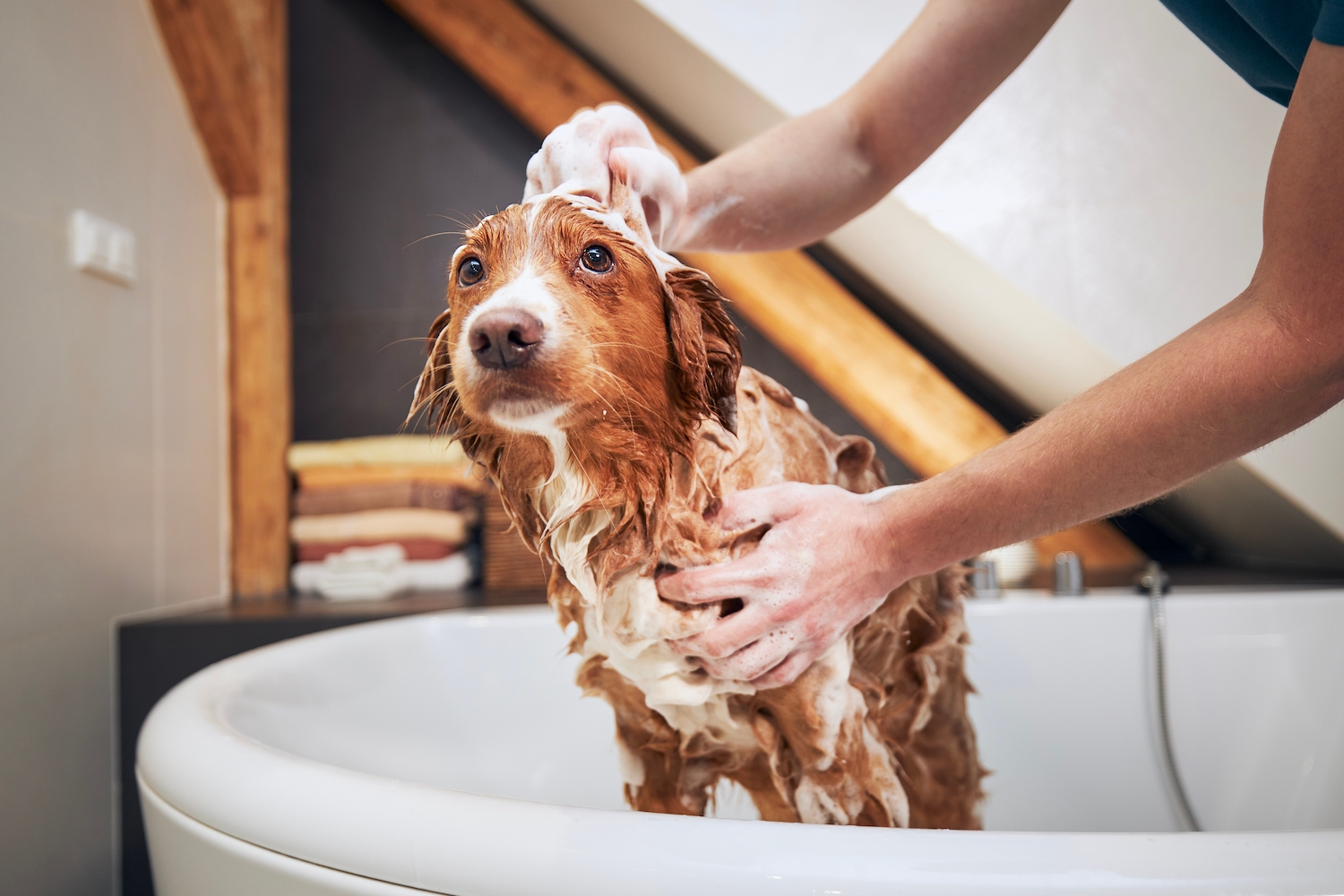
Not all dogs feel the same way about water: Some love it, some tolerate it, and some despise it. Nevertheless, all dogs need baths at least once in a while to keep a healthy, shiny coat. Your approach to your dog's bath can help determine whether it is a positive or negative experience for both of you. Here are some tips to make your dog's bath better, as well as mistakes to avoid.
DO Bathe Your Dog on a Regular Basis
Scheduling a dip in a tub for your dog on a regular basis helps you to remember to do it. Bathing is important for a dog's health and hygiene. Furthermore, if it happens on a predictable basis, your dog may start to accept it as just a regular part of life instead of something strange and scary.
DON'T Bathe Your Dog Too Often
With that said, dogs don't need to bathe as often as people do. Bathing your dog too often could strip natural oils from his coat and lead to dry skin and other health problems.
How often you should bathe your dog depends on factors such as her breed and coat length. Generally speaking, dogs with longer coats need to be bathed more often than those with shorter coats. However, you should get breed-specific recommendations from a veterinarian or dog breeder.
DO Get All Your Supplies Ready Beforehand
You and your dog both want the bath to go as quickly and smoothly as possible. If you make sure that you have everything you need ready beforehand, including dog shampoo and a towel, you can work more efficiently and make things easier on yourself and your dog.
DON'T Use Shampoo Made for Humans
Dogs need a shampoo with a different pH than people do. Using shampoo made for humans may dry out your dog's skin. It may also not rinse properly, leaving behind a chemical residue that your dog could accidentally ingest. Make sure you only use a shampoo made for dogs when giving your pet a bath.
DO Lather and Rinse Thoroughly
Your dog may only get a few baths a year, so you want to get as much out of each one as possible. Make sure your dog gets completely wet by slowly pouring water over him in the bath. Alternatively, you can use a sprayer or a hose. Work up a good lather with the shampoo, then make sure to rinse him completely so you don't leave any residue behind.
DON'T Pour Water Over Your Dog's Head
You can pour water over your dog's body, but if you pour it over her head, it could get into her eyes or ears. This is unpleasant for dogs under any circumstances, but it can be dangerous if the water gets into your dog's ears. It could create an environment for bacteria to grow and lead to an infection.
DO Wash Your Dog's Face Carefully
To avoid getting shampoo in your dog's eyes, you should use a damp cloth to clean his face. Pay particular attention to the area under the eyes. If your dog has light-colored fur, this is where tear stains can form.
DON'T Splash Water in Your Dog's Face
Whether you mean to or not, splashing water in your dog's face can upset her. Don't do this on purpose, and be careful not to do it by accident.
DO Make Sure the Water Is the Right Temperature
Water that is too hot could scald your dog, while water that is too cold could contribute to hypothermia. Aim for a comfortable, lukewarm temperature.
DON'T Put Your Dog in the Water Without Testing the Temperature
You can test the temperature of your dog's bathwater by sticking your hand in the water. If it is too hot or cold for you, it is probably the wrong temperature for your dog as well.
DO Brush or Comb Your Dog After the Bath
Brushing or combing after a bath is especially important if your dog has long hair. Use a detangler made for pets to make brushing easier.
DON'T Pull at Mats or Tangles With the Comb or Brush
Pulling at tangles or mats with a brush or comb causes your dog pain. He will likely form a negative association with bathing and be even more reluctant to take his bath next time. If you run into any large mats or tangles, gently work them out with your fingers. There are special pet brushes like the Pet Life Shampoo Dispensing Massage and Bathing Brush which can gently remove knots and tangles while providing a wonderful lather.
DO Ask for Help Bathing Your Dog
If your dog is very large, or very uncooperative, you may not be able to handle her bath by yourself. You may need someone to help restrain your pet so you have both hands free for lathering, scrubbing, and rinsing.
DO Approach Your Dog's Bath With a Positive Attitude
Dogs pick up on human emotions, and they take their cues from you. If you approach the bath with enthusiasm, it communicates to your dog that you view it as a positive experience, and he is more likely to do the same. On the other hand, if you approach the bath with apprehension, it tells your dog that this is definitely not going to be fun.
DON'T Punish Your Dog During or After the Bath
Punishing your dog for unwanted behavior during a bath solidifies the experience as negative in her mind. Instead, look for opportunities to reward the behavior that you do want.
The more positive you can make the bathing experience for your dog, the more cooperative he is likely to be next time. While he may never like baths, he may start to tolerate them better.