
 Save 15% on your 1st Autoship learn more

 Email us
 Live Chat
 FAQs
FAQs





Introduction
You might notice your dog’s breath smells a bit stronger than usual during a morning cuddle. Or perhaps you see a small amount of yellow buildup along their gum line while they are playing with a toy. These moments often lead pet owners to look for natural, safe ways to manage oral hygiene at home. Coconut oil has gained a lot of attention as a simple solution for dog dental care.
At BaxterBoo, we have helped pet owners find practical health solutions since 2006. We know that dental health is a major part of your dog’s overall wellness. This post covers the science behind using coconut oil for teeth, how to apply it safely, and what it can and cannot do for your dog's mouth. Understanding these details helps you build a routine that actually works.
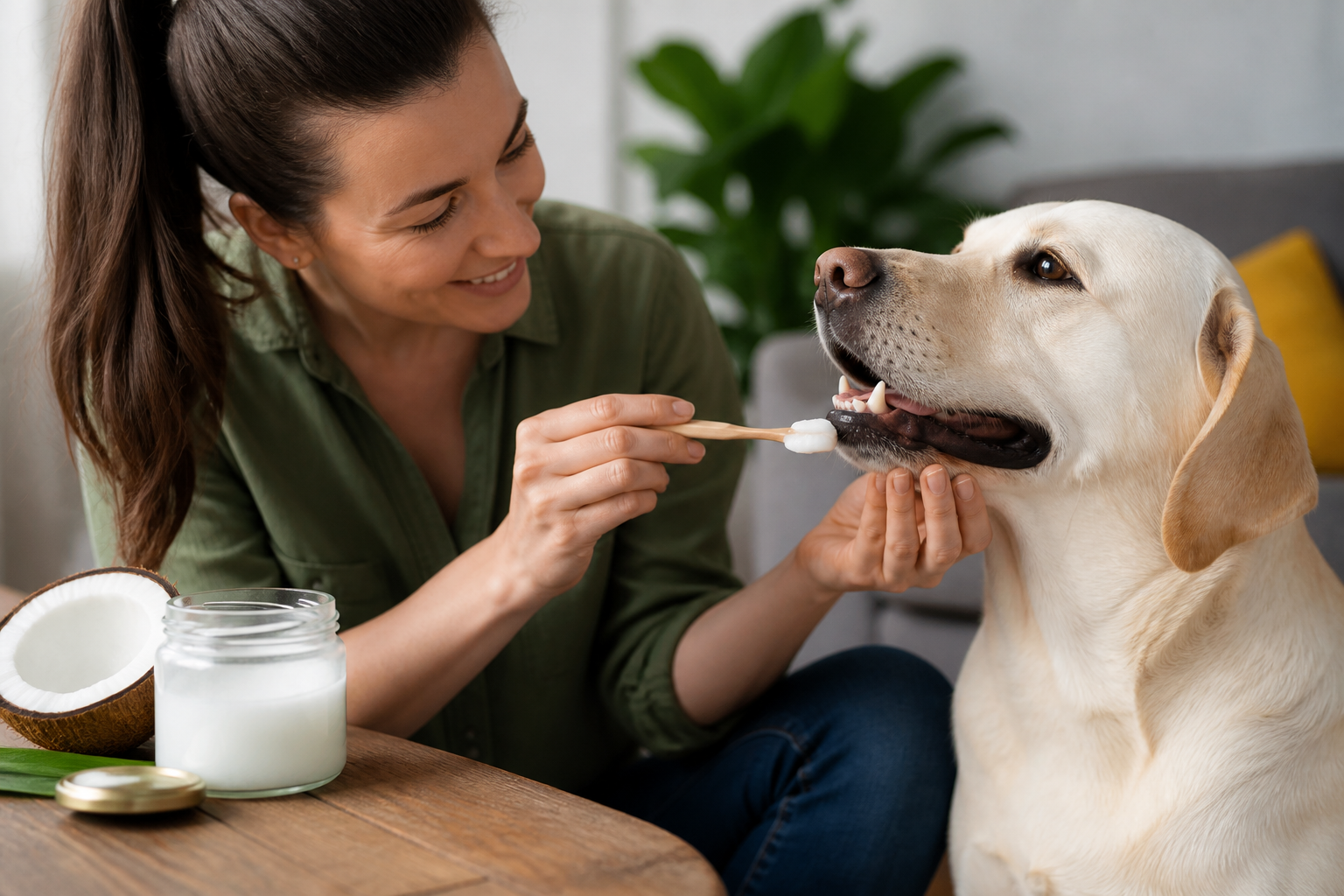
Quick Answer: Yes, you can use coconut oil to clean your dog’s teeth. It acts as a safe, tasty brushing medium that contains lauric acid to help manage bacteria. It works best when used with a toothbrush rather than as a standalone treatment.
How Coconut Oil Works for Dental Health
Coconut oil is not just a popular kitchen staple. It contains specific types of fats called medium-chain triglycerides. About half of the fat in coconut oil is lauric acid. This specific fatty acid is the reason many people use it for oral care. When lauric acid interacts with certain types of bacteria, it can help disrupt their growth.
In a dog’s mouth, plaque is a soft film of bacteria that forms on the teeth every day. If this film is not removed, it reacts with minerals in the saliva and hardens into tartar. Coconut oil helps by making the mouth a less friendly place for those bacteria to thrive. This can result in fresher breath and a slower buildup of plaque.
It is important to remember that coconut oil is a support tool. It does not have the abrasive power to scrub teeth on its own. It works by providing a slippery, antimicrobial base that makes the mechanical action of brushing more effective. We carry many products in our dog dental care category that complement this natural approach, from specialized toothbrushes to dental toys.
The Benefits of Using Coconut Oil
One of the biggest hurdles in dog dental care is the dog's cooperation. Many dogs dislike the taste of commercial pet toothpastes. Coconut oil offers a few distinct advantages for the average pet owner.
- Palatability: Most dogs love the taste of coconut. Instead of fighting the brush, many dogs will actively lick it. This turns a chore into a rewarding experience.
- Safety: Dogs cannot spit out toothpaste. Whatever you put in their mouth will be swallowed. Coconut oil is food-grade and safe for consumption in small amounts.
- Gum Health: The oil can help moisturize dry or irritated gum tissue. This is especially helpful for older dogs or those with minor sensitivity.
- No Hidden Additives: Some low-quality pet products contain artificial sweeteners or dyes. Pure coconut oil is a single-ingredient solution.
Key Takeaway: Coconut oil is a safe, high-value reward for dogs that makes the process of brushing much easier to manage daily.
What Coconut Oil Cannot Do
It is easy to get excited about natural remedies, but we must be realistic about the limits of coconut oil. It is not a miracle cure for advanced dental disease. If your dog already has thick, brown tartar or red, bleeding gums, coconut oil will not fix the problem.
Tartar is mineralized plaque. Once it has hardened onto the enamel, it is like concrete. No amount of oil or manual brushing will dissolve it. Removing tartar requires a professional dental cleaning performed by a veterinarian. This usually involves scaling and polishing under anesthesia to ensure the area under the gum line is clean.
Coconut oil also cannot fix a rotted tooth or an abscess. If your dog is dropping food, pawing at their mouth, or has a sudden change in breath odor, it is time for a professional checkup. You can also review warning signs of dental problems in dogs before your appointment.
Step-by-Step Guide to Brushing with Coconut Oil
If you are ready to start, the key is to go slowly. You want your dog to associate the oil and the brush with a positive experience.
Step 1: Let them taste it. / Put a small amount of coconut oil on your finger and let your dog lick it off. Do this for a few days without introducing a brush.
Step 2: Introduce the brush. / Put a pea-sized amount of oil on a soft-bristled dog toothbrush. Let them lick the oil off the bristles while you hold the brush still.
Step 3: Lift the lip. / While they are licking the oil, gently lift their upper lip with your free hand. Touch the brush to their front teeth for just a second.
Step 4: Start the circles. / Gently move the brush in small circles along the gum line. Focus on the outside of the teeth, as this is where the most plaque accumulates.
Step 5: Reward and stop. / Give them a treat or praise immediately after you finish. Keep the first few sessions under thirty seconds.
Vet Tip: If your dog has a history of dental pain or significant buildup, consult your veterinarian for a professional assessment. They may recommend a professional cleaning before you begin an at-home maintenance routine.
Choosing the Right Coconut Oil
Not all coconut oil is created equal. When you are shopping, look for specific labels to ensure you are getting the best quality for your pet. Processing can strip away the very compounds that make the oil useful.
Look for "Virgin" or "Extra Virgin" coconut oil. This means the oil was extracted from fresh coconut meat rather than dried kernels. It usually has a stronger coconut scent and higher levels of lauric acid. "Cold-pressed" is another important term. It means the oil was extracted without high heat, which preserves the natural nutrients.
Avoid refined coconut oil if possible. Refined oils are often bleached and deodorized. While they are still safe to eat, they lack the antimicrobial punch of virgin oil. Always check the ingredient list to ensure there are no added scents, flavors, or preservatives.
Safety and Caloric Intake
Coconut oil is a fat. While it is a healthy fat, it is also very calorie-dense. A single tablespoon contains about 120 calories. For a small dog, this can be a significant portion of their daily caloric needs.
If you are using coconut oil daily, you must account for those calories in their diet. You might need to slightly reduce their meal portions or the number of treats they receive. Using too much oil too quickly can also lead to digestive upset. Some dogs may experience loose stools if their system is not used to the high fat content.
Bottom line: Start with a very small amount of coconut oil and watch your dog’s digestion for a few days before increasing the frequency.
Risks for Specific Health Conditions
While coconut oil is generally safe, it is not appropriate for every dog. Certain health conditions make high-fat supplements risky.
Dogs with a history of pancreatitis should generally avoid coconut oil. This condition involves inflammation of the pancreas, and high-fat foods can trigger a painful flare-up. If your dog is prone to this condition, speak with your vet before adding any oils to their routine.
Overweight dogs also need careful monitoring. Since weight management is crucial for joint health and longevity, the extra calories from coconut oil might do more harm than good. In these cases, a water additive or a low-calorie dental chew might be a better choice. Our pharmacy carries prescription diets, such as Farmina Vet Life or Royal Canin, that are specifically formulated for weight management and dental care through our partnership with Pet's Choice.
Frequency and Consistency
How often should you brush? The short answer is every day. Plaque begins to turn into tartar within 24 to 48 hours. If you only brush once a week, you are leaving most of that plaque to harden on the teeth.
Consistency is more important than duration. A quick thirty-second scrub every night is much better than a ten-minute session once a month. Because coconut oil tastes like a treat, most owners find it easier to stay consistent. You can even keep a small jar and a toothbrush near your dog's food bowl to remind you to do it after their last meal of the day.
If your dog absolutely refuses a toothbrush, you can use a finger brush or a clean piece of gauze wrapped around your finger. This is less intrusive and still allows you to rub the oil onto the teeth and gums. The friction from your finger is still better than no cleaning at all.
Complementary Dental Tools
Coconut oil is a great start, but a well-rounded dental routine often involves multiple layers. We carry over 500 trusted brands that offer various ways to keep a dog's mouth clean.
- Dental Chews: Products like Greenies dental dog chews or dental treats from NutriSource can help scrape away plaque through chewing.
- Rubber Toys: Brands like Kong make specialized dental toys with ridges that clean teeth as the dog plays.
- Water Additives: These are helpful for dogs that do not allow any mouth handling. They work by breaking down the biofilm in the mouth.
- Prescription Diets: For dogs with chronic dental issues, your vet might prescribe a specific food. You can fulfill these through our pharmacy and have them delivered via Autoship to save on every order.
Using these tools alongside coconut oil creates a comprehensive approach. While the oil manages bacteria, the chews and toys provide the mechanical scraping needed to keep the teeth shiny and white.
Monitoring Your Dog's Progress
When you start a new routine, take a "before" picture of your dog's teeth. Check the back molars and the canine teeth especially. After a month of consistent cleaning, check again. You should see less redness along the gums and notice that their breath is significantly improved.
Pay attention to your dog's behavior during brushing. If they start to flinch or pull away from the brush in a specific spot, they may have a painful tooth. This is a sign to stop and schedule a veterinary visit. Early detection of dental pain can prevent more serious health issues like heart or kidney disease, which can be linked to chronic oral infections.
When to Seek Professional Help
Home care is about prevention, not treatment. There are several signs that indicate your dog needs a professional dental cleaning rather than just a home scrub.
- Persistent Bad Breath: If the breath stays foul even with daily brushing, there may be an underlying infection.
- Bleeding Gums: Healthy gums should be pink and firm. Bleeding during brushing is a sign of gingivitis.
- Loose or Broken Teeth: These are painful and can lead to serious infections if not addressed.
- Difficulty Eating: If your dog drops food or chews on only one side of their mouth, they are likely in pain.
In these cases, the best course of action is to visit your veterinarian. They may prescribe medications or specialized diets which you can easily manage through our pet pharmacy. Our partnership with Pet's Choice ensures you have access to FDA-approved medications and prescription foods for ongoing health needs.
Integrating Oral Care into Daily Life
The easiest way to make dental care stick is to build it into your existing habits. For example, you can brush your dog's teeth right after you brush your own at night. Or, make it part of their winding-down routine before bed.
By using coconut oil, you turn a medical necessity into a bonding moment. Your dog gets a tasty treat, and you get the peace of mind that you are protecting their health. It is a simple, cost-effective way to show your pet you care.
We invite you to explore our selection of dog healthcare products to find the perfect brush or toy to pair with your coconut oil. If you have questions about which products are right for your dog's age or size, our team is always here to help.
Summary of Using Coconut Oil
Cleaning your dog's teeth with coconut oil is a practical choice for many households. It provides a safe, chemical-free way to manage oral bacteria and improve the brushing experience. However, it must be used as part of a larger plan that includes mechanical brushing, a healthy diet, and regular veterinary checkups.
Key Takeaway: Success in dental care comes from daily consistency and using tools that your dog enjoys, like the taste of high-quality coconut oil.
As your dog ages, their dental needs may change. Senior dogs may require more frequent cleanings or softer brushes. Always stay observant and adjust your routine as needed to keep your pet comfortable and healthy.
Bottom line: Coconut oil is a fantastic brushing aid, but it works best when combined with regular mechanical brushing and professional veterinary care.
To keep your pet's routine consistent, consider signing up for our Autoship programme. This allows you to get your favorite dental treats, toys, and supplements delivered right to your door with a discount on your first order. You can also join our MVP Rewards program to earn points on every purchase you make for your dog or cat. Our warehouse in Vernon Hills is always stocked with the best brands to support your pet's health.
FAQ
Does coconut oil remove tartar from a dog's teeth?
No, coconut oil cannot remove hardened tartar once it has bonded to the tooth enamel. Tartar is a mineralized substance that requires professional scaling by a veterinarian to remove safely. Coconut oil is best used as a preventative tool to help reduce the bacteria that form soft plaque before it hardens.
How much coconut oil should I use for my dog's teeth?
For most dogs, a pea-sized amount on a toothbrush is sufficient for a single cleaning session. If you are also adding it to their food for general health, a common guideline is about one-quarter teaspoon for every ten pounds of body weight. Always start with a smaller amount to ensure your dog does not experience any digestive upset or loose stools.
Is coconut oil safe for all dogs to swallow?
Coconut oil is generally safe for dogs to swallow in small amounts because it is a food-grade product. However, dogs with certain health conditions like pancreatitis or those who are significantly overweight should use it with caution or avoid it entirely due to the high fat content. Always consult your veterinarian if your dog has a history of digestive issues or metabolic conditions.
Can I just let my dog lick coconut oil instead of brushing?
While licking coconut oil provides some antimicrobial benefits from the lauric acid, it is much less effective than brushing. The mechanical action of the brush bristles is what actually disrupts and removes plaque from the tooth surface and gum line. For the best results, use the coconut oil as a "toothpaste" on a soft-bristled dog brush or a finger brush.






