
 Save 15% on your 1st Autoship learn more

 Email us
 Live Chat
 FAQs
FAQs





Introduction
You are standing in the bathroom ready to start a new wellness routine for your dog. You have your own tube of peppermint toothpaste in hand and wonder if a small dab would hurt. It seems like a quick and easy solution for that lingering "dog breath." However, this is one moment where sharing is definitely not caring. Using human toothpaste on your dog is a major safety risk that can lead to emergency veterinary visits.
At BaxterBoo, we have spent years helping pet owners find the right supplies to keep their companions healthy from nose to tail. We know that dental hygiene is just as important for dogs as it is for us, but the tools must be different. This guide will explain exactly why your toothpaste is off-limits for your pet. We will also show you how to choose safe alternatives and how to start a brushing routine that your dog might actually enjoy.
Quick Answer: No, you should never use human toothpaste to clean a dog's teeth. Many human formulas contain ingredients like xylitol and fluoride that are highly toxic to dogs. Pet-specific toothpaste is designed to be swallowed safely and comes in flavors like poultry or beef.
Why Human Toothpaste Is Dangerous for Dogs
The primary reason human toothpaste is a "no-go" involves how dogs interact with the product. When you brush your teeth, you spit the excess paste into the sink. Dogs do not have the ability to rinse and spit. They swallow every bit of the paste you put in their mouth. Human toothpaste is formulated with the assumption that it will be expectorated, not digested. This leads to several chemical concerns.
The Threat of Xylitol
Xylitol is perhaps the most dangerous ingredient found in many modern human toothpastes. It is an artificial sweetener that is perfectly safe for people but deadly for dogs. Even a small amount of xylitol can cause a rapid, life-threatening drop in blood sugar called hypoglycemia. This happens because a dog's pancreas confuses xylitol with real sugar and releases a massive amount of insulin.
In more severe cases, xylitol ingestion can lead to acute liver failure. Because toothpaste is often used in a concentrated form, the risk is high. Many "natural" or "sugar-free" human toothpastes use xylitol as a primary sweetener. You must always keep these products out of reach of your pets.
Fluoride Toxicity
Fluoride is a staple in human dental care for strengthening enamel. While it is beneficial for us, it is toxic to dogs when swallowed in significant amounts. Since dogs swallow all their toothpaste, the cumulative effect of daily fluoride ingestion can lead to fluoride poisoning. Symptoms often include severe vomiting, drooling, and diarrhea. In extreme cases, it can cause tremors or heart issues.
Foaming Agents and Detergents
Most human toothpastes contain sodium lauryl sulfate or other detergents that create a satisfying foam. This foam helps us feel like our teeth are getting clean. For a dog, these foaming agents are a recipe for an upset stomach. Swallowing these detergents often leads to gastric distress, vomiting, and loose stools. Dogs generally find the sensation of foaming in their mouth to be frightening or unpleasant, which will make them resist future brushing attempts.
High Sodium Content
Some human formulas use baking soda or other salts for whitening and cleaning. While small amounts of baking soda are sometimes used in homemade dog recipes, many human pastes contain levels of sodium that are too high for regular ingestion. This can disrupt the acid balance in a dog's digestive tract.
Key Takeaway: Human toothpaste is a chemical hazard for dogs because they cannot spit. Toxic ingredients like xylitol and fluoride can cause everything from stomach upset to fatal liver failure.
The Reality of Canine Dental Disease
It is easy to think of dental care as a cosmetic issue, but it is a fundamental part of physical health. It is estimated that more than 80 percent of dogs over the age of three show signs of periodontal disease. This condition starts as simple plaque, which is a sticky film of bacteria. If not brushed away, plaque reacts with minerals in the saliva to form tartar, also known as calculus.
Tartar is hard and cannot be removed with a toothbrush. It provides a rough surface where even more bacteria can grow. This bacteria eventually moves under the gumline. This leads to inflammation, infection, and the destruction of the bone and tissue that hold the teeth in place.
Systemic Health Connections
Dental disease does not stay in the mouth. The mouth is highly vascular, meaning it has a significant blood supply. When the gums are inflamed and infected, bacteria can enter the bloodstream. Once in the blood, these bacteria can travel to major organs.
Veterinarians have linked chronic dental disease to issues with the heart, liver, and kidneys. Maintaining a clean mouth is not just about avoiding "stinky breath." It is about protecting your dog's long-term organ function. For more guidance, read about warning signs of bad teeth in dogs.
Signs of Dental Pain and Infection
Dogs are notorious for hiding pain. This is an evolutionary trait; showing weakness in the wild was dangerous. A dog with a rotting tooth or a painful abscess might still try to eat their kibble. You have to look for subtle signs that things are not right:
- Red, swollen, or bleeding gums
- Persistent bad breath that smells "rotten" rather than just "doggy"
- Yellow or brown crust (tartar) on the teeth
- Excessive drooling
- Pawing at the mouth or rubbing the face against furniture
- Dropping food while eating or chewing on only one side of the mouth
- A sudden loss of interest in hard chew toys
Vet Tip: If you notice bleeding gums or loose teeth, stop brushing and schedule a veterinary exam immediately. Brushing over an active infection or a fractured tooth can be extremely painful for your dog and may cause them to become fearful of the process.
Professional Care and the BaxterBoo Pharmacy
While at-home brushing is the best preventative measure, some dogs require more advanced help. If your dog already has significant tartar buildup, a toothbrush will not fix it. They will likely need a professional dental cleaning under anesthesia performed by a veterinarian. This allows the vet to scale the teeth and clean deeply under the gumline where a brush cannot reach.
Sometimes, a vet will identify a chronic condition that requires more than just a cleaning. This is where our partnership with Pet's Choice comes in. Through the BaxterBoo pharmacy, you can access FDA-approved medications and prescription pet foods.
For dogs with severe dental issues or a history of rapid tartar buildup, your vet might prescribe a specific dental diet. These diets are formulated with a specific kibble structure that scrubs the teeth as the dog eats. Our pharmacy can fulfill these prescriptions, ensuring you have the exact medical tools your vet recommends. We also carry prescription-strength flea and tick preventatives and other health supplies to keep your pet in peak condition.
Choosing the Right Dental Tools for Your Dog
Since human toothpaste is off the table, you need a kit designed for a canine's unique needs. Modern pet stores offer a variety of specialized tools. You can browse our dog dental care collection to compare toothpaste, brushes, chews, and other oral-care supplies.
Enzymatic Pet Toothpaste
The gold standard for dog dental care is enzymatic toothpaste. These formulas contain natural enzymes that break down food particles and bacteria. These enzymes keep working even after you stop brushing. Unlike human paste, these are meant to be swallowed. They are also available in flavors that dogs love, such as poultry, beef, malt, and even peanut butter. This turns a medical chore into a reward for the dog.
For a product designed for use with a finger brush or along the gumline, consider OxyFresh Pet Dental Gel Toothpaste.
The Right Toothbrush
You have a few options when it comes to the hardware:
- Standard Dog Toothbrushes: These look like human brushes but often have an angled handle to reach the back molars. Some have two heads to clean both sides of the tooth at once.
- Finger Brushes: These are small silicone or rubber sleeves that fit over your index finger. They have soft bristles on the end. Many beginners find these easier to use because you can feel exactly where you are in the dog's mouth.
- Soft Baby Brushes: For very small toy breeds, a soft-bristled human baby toothbrush can work well if specialized dog brushes are too large.
Gauze Wraps
If your dog is very resistant to a plastic brush, starting with a piece of gauze wrapped around your finger can be a great intermediate step. The texture of the gauze provides enough abrasion to remove plaque while being much less intimidating than a brush.
Bottom line: Invest in an enzymatic toothpaste and a soft brush to make the process safe, effective, and tasty for your pet.
How to Brush Your Dog's Teeth: A Step-by-Step Guide
Teaching a dog to accept brushing is a marathon, not a sprint. If you rush the process, you might end up with a dog that hides the moment the toothbrush comes out. Follow these steps over the course of several days or even weeks. BaxterBoo’s pet dental care tips offer additional guidance for building the routine gradually.
Step 1: The Taste Test
Start by letting your dog lick a small amount of pet toothpaste off your finger. Do this for a few days without trying to touch their mouth. You want them to associate the tube of toothpaste with a delicious treat.
Step 2: Finger Rubbing
Once they love the taste, put a little paste on your finger. Gently rub your finger along their outer gums and teeth. Focus on the large "canine" teeth in the front and the big molars in the back. Keep it short and give lots of praise.
Step 3: Introducing the Brush
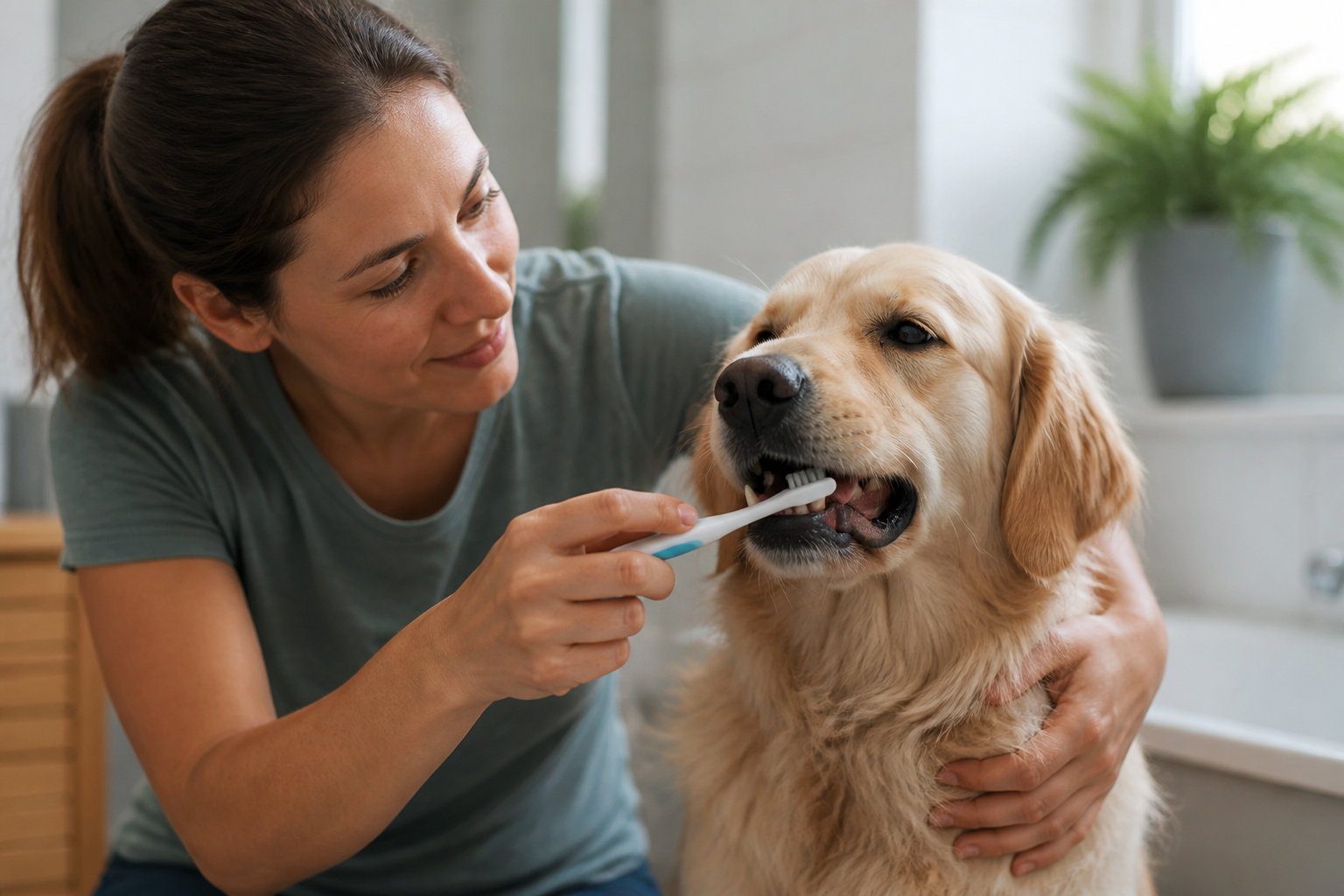
Put a small amount of toothpaste on the brush and let them lick it off. Gently move the brush against one or two teeth in a circular motion. You do not need to open their mouth wide. Simply lift the lip and brush the outside surfaces.
Step 4: The Full Clean
Gradually increase the number of teeth you brush. Aim for about 30 seconds per side. Do not worry about brushing the inside of the teeth (the side near the tongue). A dog's tongue is very abrasive and usually does a decent job of keeping the inner surfaces clean.
Step 5: The Reward
Always end the session with a high-value treat or a favorite game. This reinforces that the "weird thing with the brush" leads to a great reward.
Key Takeaway: Patience is vital. It is better to brush two teeth well than to fight your dog to do the whole mouth and create a negative experience.
Consistency and Frequency
How often should you be doing this? In a perfect world, you would brush your dog's teeth every day. Plaque can turn into hard tartar in as little as 24 to 48 hours. If daily brushing is too much for your schedule, aim for at least three times a week. This is the minimum required to provide a significant health benefit and prevent the accumulation of calculus.
If you struggle to remember, try to link it to an existing habit. Brush their teeth after they come in from their final walk of the night or right after you brush your own teeth. Keeping the kit visible on the counter can also serve as a helpful reminder.
Alternatives for Dogs Who Resist Brushing
We realize that some dogs, especially rescues or older dogs with existing dental pain, may never fully accept a toothbrush. While brushing is the "gold standard," there are other ways to support oral health.
Dental Chews and Treats
Specific treats are designed to be hard or "rubbery" so that as the dog chews, the treat scrapes against the tooth surface. Look for treats that have the Veterinary Oral Health Council (VOHC) seal. This seal means the product has been scientifically tested and proven to reduce plaque or tartar. You can also review our guide to dental chews for dogs for additional options.
Dental Toys
Rubber toys with nubs or ridges can help massage the gums and scrape away soft plaque during play. Some toys are even designed to hold a bit of pet toothpaste in the grooves. This allows the dog to "brush" their own teeth while they chew.
Water Additives
These are liquids you pour into your dog's water bowl. They contain enzymes or mild antiseptics that help kill bacteria in the mouth. While they are not as effective as physical scrubbing, they are a great "hands-off" supplement for difficult pets. The OxyFresh Pet Dental Kit combines dental products and finger brushes for a more complete routine.
Dental Gels and Sprays
If your dog won't let you scrub, you can sometimes apply a dental gel to their gums. These gels are designed to mix with saliva and coat the teeth. They use enzymes to break down plaque without the need for a brush.
Vet Tip: Even if you use chews and additives, your dog still needs a yearly dental checkup. These tools are supplements to care, not a replacement for a professional's eyes on your dog's mouth.
Keeping Yourself Safe
A dog's mouth contains a high concentration of bacteria. If you have any cuts or scratches on your hands, you might want to wear gloves while brushing. Regardless of whether you wear gloves, always wash your hands thoroughly with soap and water after the session is over.
Rinse the toothbrush well and store it in an upright position to air dry. Just like your own toothbrush, you should replace your dog's brush every three months. If the bristles start to fray or look dirty, toss it out sooner. If you have multiple dogs, each one needs their own dedicated brush to prevent the spread of bacteria between them.
Conclusion
Taking care of your dog's teeth is one of the most effective ways to extend their life and improve their daily comfort. While it might be tempting to use what is already in your cabinet, human toothpaste is a danger you should never ignore. Stick to products designed for dogs and keep the experience positive with plenty of praise and rewards.
By establishing a routine now, you can avoid the pain of dental infections and the high cost of emergency oral surgeries. Whether you use a finger brush, an enzymatic paste, or specialized dental treats, the effort you put in today will pay off in years of healthy snuggles and fresh-smelling breath.
To get started on your dog's dental journey, explore our full collection of dog dental care supplies. From tasty enzymatic pastes to VOHC-approved chews, we have everything you need to keep those pearly whites shining. You can also take advantage of the MVP Rewards programme to earn points on every dental purchase, making it easier to maintain this vital health habit.
FAQ
What happens if my dog accidentally eats a little bit of my toothpaste?
If your dog licks a tiny amount of human toothpaste that does not contain xylitol, they may only experience a mild stomach ache or some drooling. However, if the toothpaste contains xylitol, even a small lick is a medical emergency. You should call your veterinarian or an animal poison control center immediately if you suspect xylitol ingestion.
Can I use baking soda and water as a DIY dog toothpaste?
While baking soda is not toxic like xylitol, it is very salty and alkaline. If your dog swallows a significant amount, it can cause an electrolyte imbalance or an upset stomach. Most dogs also hate the taste of baking soda, which can make them fight the brushing process. A flavored pet toothpaste is a much safer and more pleasant option for your dog.
My dog's gums bleed a little when I brush. Is this normal?
A small amount of pink on the brush can be common if you are just starting a routine and your dog has mild gingivitis. However, heavy bleeding or bright red gums are signs of advanced periodontal disease or infection. If the bleeding persists for more than a few days of gentle brushing, you should consult your veterinarian for a professional evaluation.
Do I really need to brush if I give my dog dental chews every day?
Dental chews are a helpful supplement, but they are not a total replacement for brushing. Chews usually only clean the tips of the teeth and the chewing surfaces. They often miss the gumline where the most dangerous bacteria live. Brushing remains the most effective way to remove plaque from the entire tooth and keep the gums healthy.






