Save 15% on your 1st Autoship learn more

 Email us
 Live Chat
 FAQs
FAQs





Introduction
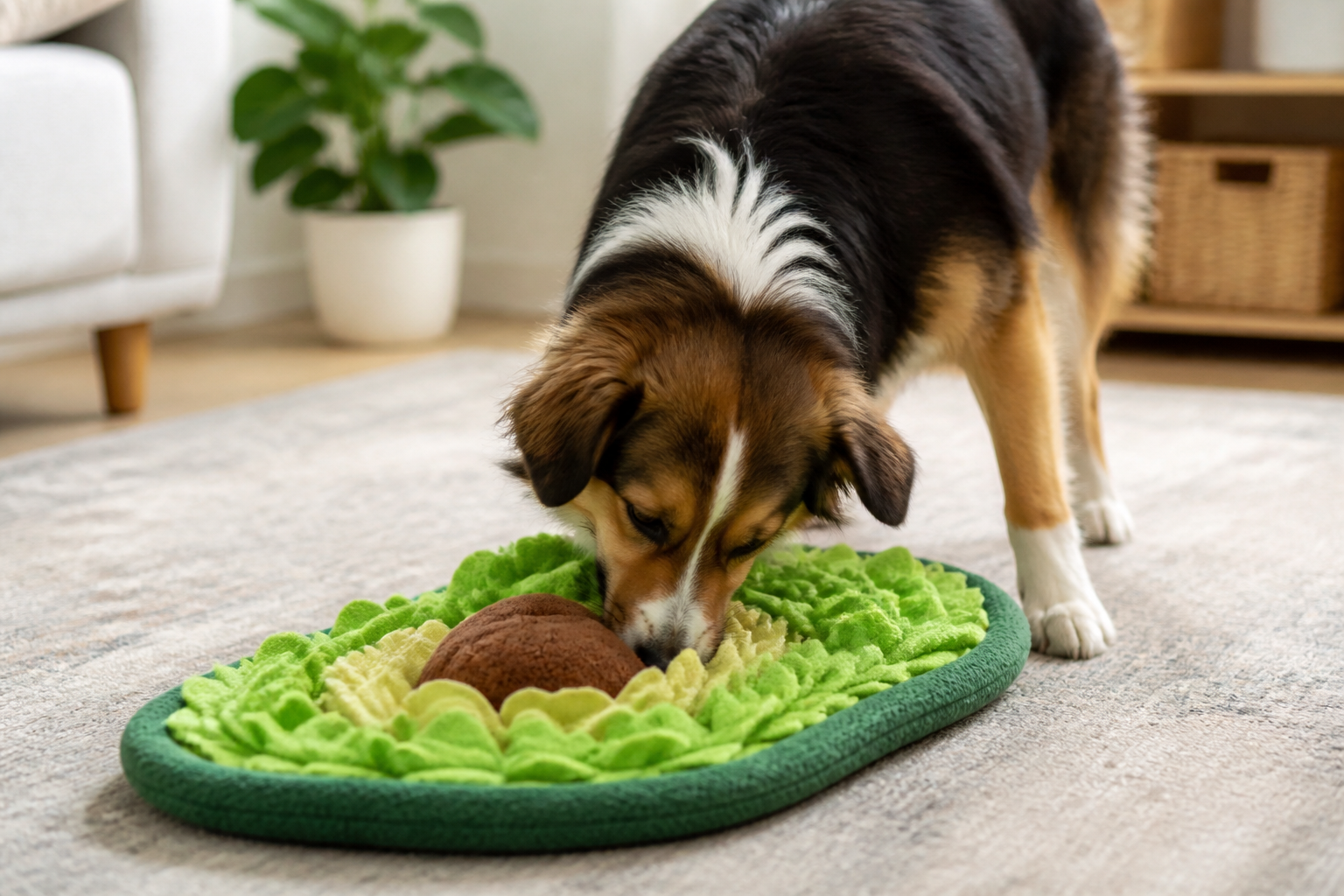
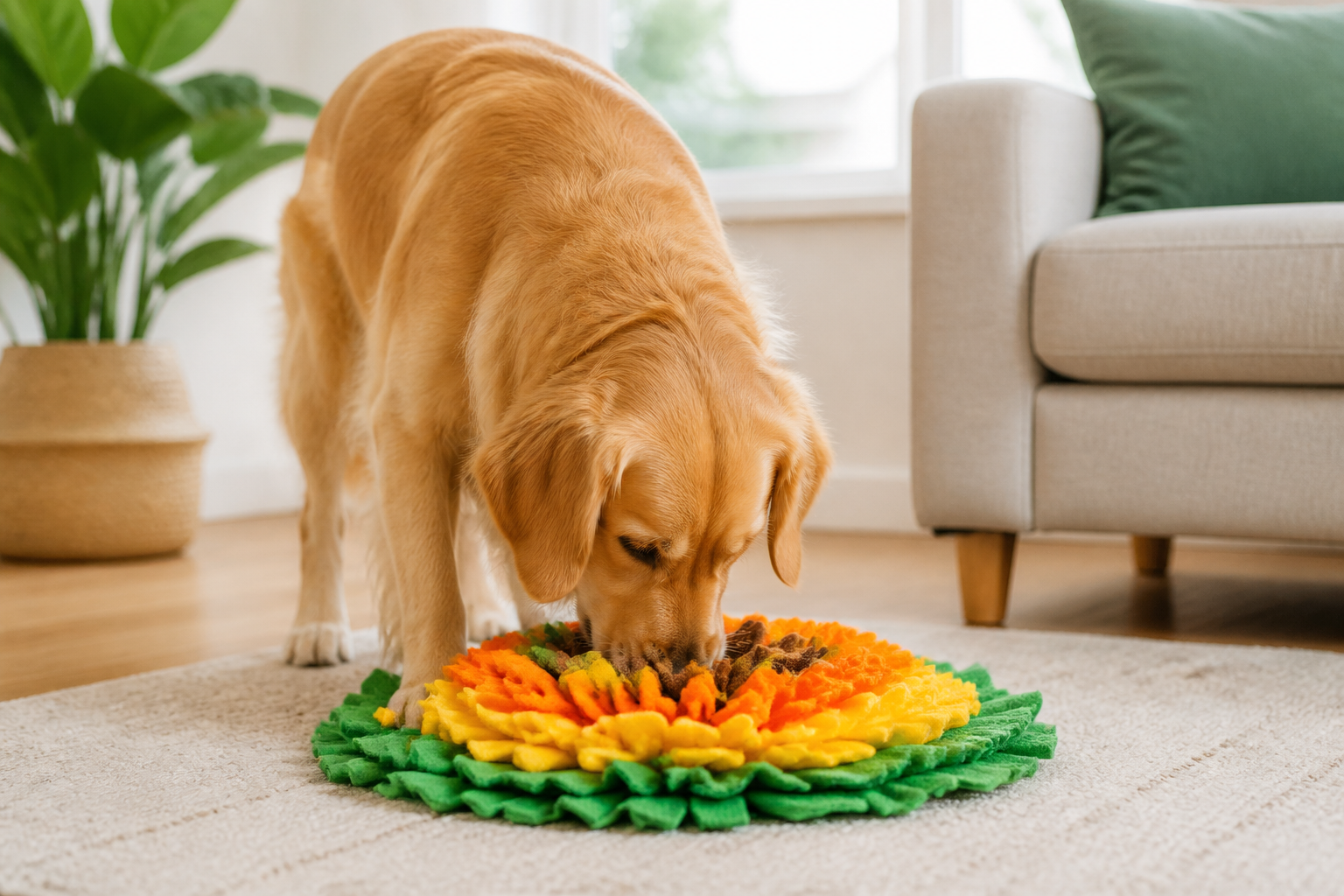
You just put a fresh bowl of kibble down and your dog inhaled it in under ten seconds. Moments later, you hear that telltale rhythmic gulping that means a mess is coming to your carpet. This "scarf and barf" routine is a common struggle for many pet owners. It often leads people to discover the world of enrichment. Snuffle mats are a fantastic tool for slowing down fast eaters and providing mental stimulation on rainy days.
At BaxterBoo, we know that the safety of these tools depends entirely on the materials used to make them. Whether you are shopping for a pre-made mat or gathering supplies for a DIY project, the quality of the fabric and the sturdiness of the base matter. This guide covers everything you need to know about choosing durable, non-toxic, and washable snuffle mat materials. By the end of this article, you will understand which fabrics hold up to heavy sniffing and which bases keep your floors safe.
The Importance of Material Selection
A snuffle mat is essentially a puzzle. It uses fabric strips tied to a sturdy base to hide kibble and treats. Because your dog will be using their nose, mouth, and sometimes paws to navigate the mat, the materials must be rugged. Low-quality materials can quickly become a safety hazard if they tear or shed fibers.
For more ideas, see our guide to indoor enrichment activities for dogs.
If your dog is a heavy chewer, the material choice becomes even more critical. They might try to pull the strips off the base instead of just sniffing for the food. We always recommend choosing fabrics that do not fray. Fraying leads to loose threads. These threads can get wrapped around a dog's teeth or, worse, be swallowed and cause intestinal issues.
Selecting the right materials also affects how often you have to replace the toy. A well-made mat with high-density fabric can last for years. A flimsy mat made from cheap felt will likely fall apart after just a few sessions. We want you to have a tool that survives the washing machine and the enthusiasm of a hungry pup.
Key Takeaway: Material quality directly impacts safety. Always prioritize non-fraying fabrics and non-toxic bases to prevent ingestion and ensure the mat lasts through repeated use.
Choosing the Right Base Material
The base is the foundation of the entire snuffle mat. It needs to be heavy enough to stay in place but flexible enough to be comfortable for your dog. If the base is too light, your dog will simply flip the mat over to get the treats. This defeats the purpose of the enrichment exercise.
Rubber Sink Mats
Rubber sink mats are perhaps the most popular choice for DIY snuffle mats. They are typically made of heavy-duty, flexible rubber or silicone. These mats feature a grid of holes that makes tying fabric strips very easy.
The weight of the rubber helps keep the mat from sliding across hardwood or tile floors. When shopping for a rubber base, look for "natural rubber" or "BPA-free silicone." These are generally safer if your dog happens to take a little nibble of the corner. Avoid mats with a strong chemical odor. This smell can be off-putting to a dog whose nose is inches away from the surface.
Plastic Grids and Drainage Mats
Some people use plastic locker mats or industrial drainage tiles. These are very durable and offer a rigid structure. They are excellent for larger dogs who might be more physical with their toys.
The downside to rigid plastic is the potential for sharp edges. If you cut a large plastic mat down to size, you must sand or smooth the edges. A sharp plastic corner can easily scratch a dog's sensitive snout. These bases are also harder to fit into a standard washing machine compared to flexible rubber.
Heavy-Duty Fabric and Canvas
Some commercial snuffle mats use a thick canvas or oxford cloth base. This is often backed with a non-slip material, similar to the bottom of a high-quality dog bed. Fabric bases are much lighter than rubber. To compensate for the lack of weight, these mats often feature suction cups or long straps that can be tied to furniture.
If you choose a fabric base, ensure the stitching is reinforced. The constant pulling and rooting from a dog's nose can stress the seams where the snuffle strips are attached. A fabric base is generally the easiest to fold up and take with you when traveling.
For a ready-made option, explore our dog toys collection, including interactive toys designed for enrichment.
Quick Answer: The best base material is a heavy, non-slip rubber sink mat. It provides enough weight to prevent flipping and has a built-in grid for easy fabric attachment.
Selecting the Best Fabric for Snuffling
The fabric strips are where the actual "snuffling" happens. This material needs to be soft on the nose but tough enough to withstand being pulled. Not all fabrics are created equal in the world of pet enrichment.
Why Fleece is the Standard
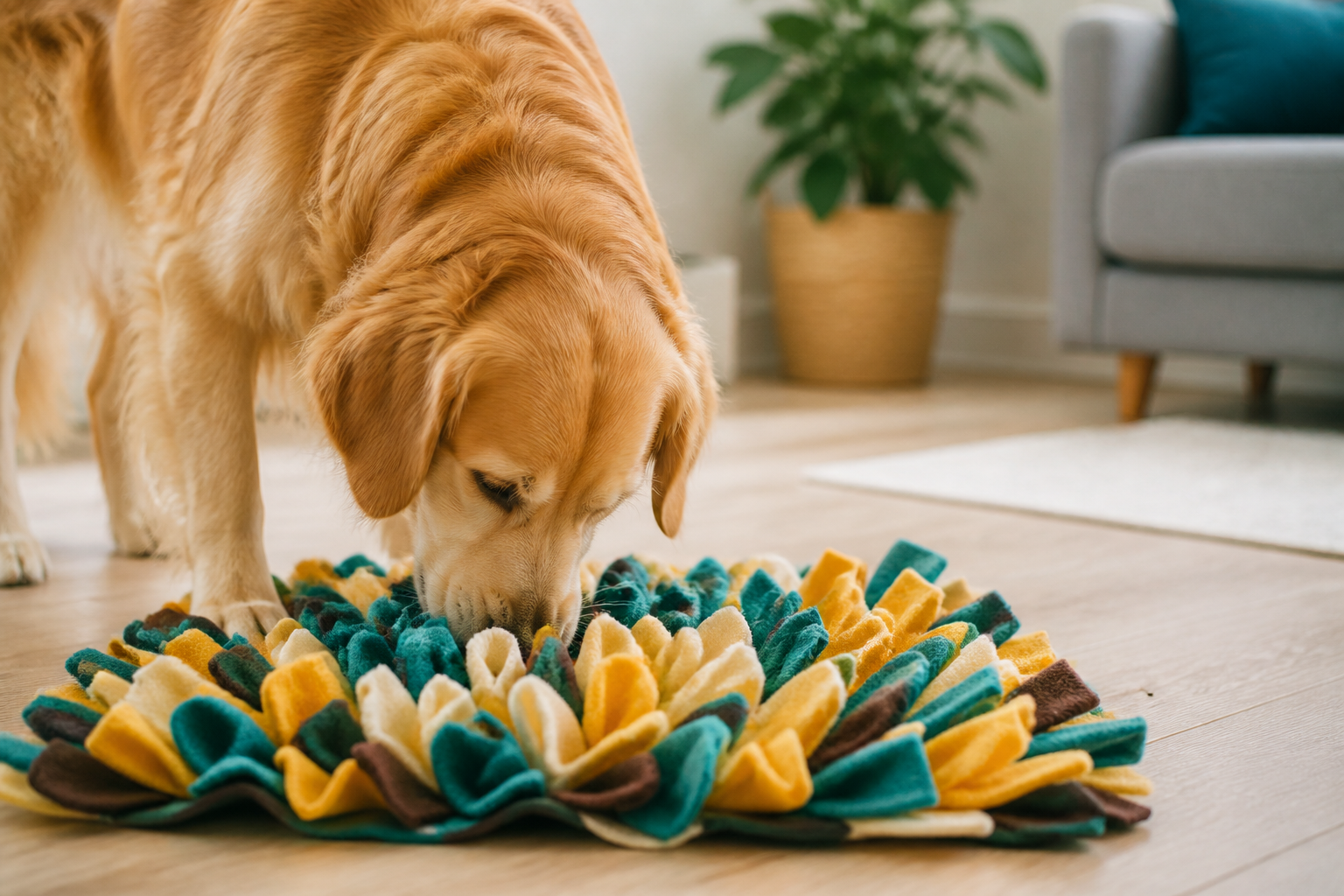
Fleece is the gold standard for snuffle mat materials. It has several properties that make it ideal for this specific use. First, fleece does not fray when cut. This means you do not have to hem the edges of hundreds of strips.
Second, fleece is slightly elastic. When you tie it to a base, the knot stays tight. Other materials like cotton can work themselves loose over time. Fleece is also highly absorbent of scents. This helps keep the dog engaged even after the physical treats are gone.
Types of Fleece to Consider
- Anti-Pill Fleece: This is the highest quality. It stays smooth even after many trips through the wash. It is usually thicker and more durable.
- Blizzard Fleece: This is a very common type of fleece. It is dense and soft. It is slightly more prone to "pilling" than anti-pill fleece, but it is still a great choice.
- Coral or Luxe Fleece: These are much fluffier. While they feel great, they are often too "hairy." The long fibers can get stuck in a dog's mouth or trap too much saliva and bacteria.
Fabric Alternatives to Avoid
You might be tempted to use old t-shirts or towels. We generally advise against this. Cotton t-shirt material frays easily. Those tiny threads can be dangerous if swallowed. Towels have looped fibers. A dog's claw can easily get snagged in a towel loop, leading to a torn nail or a panicked pet.
Felt is another material often found in cheap, imported snuffle mats. Felt is essentially pressed fibers. It lacks the structural integrity of woven or knitted fabrics. A dog can easily rip a felt strip in half, creating a choking hazard. Always stick to high-quality polyester fleece for the best results.
Construction Materials and Fasteners
If you are making your own mat, how you attach the fabric is just as important as the fabric itself. Most people use a simple knotting technique. However, there are other considerations for the assembly process.
Tying vs. Sewing
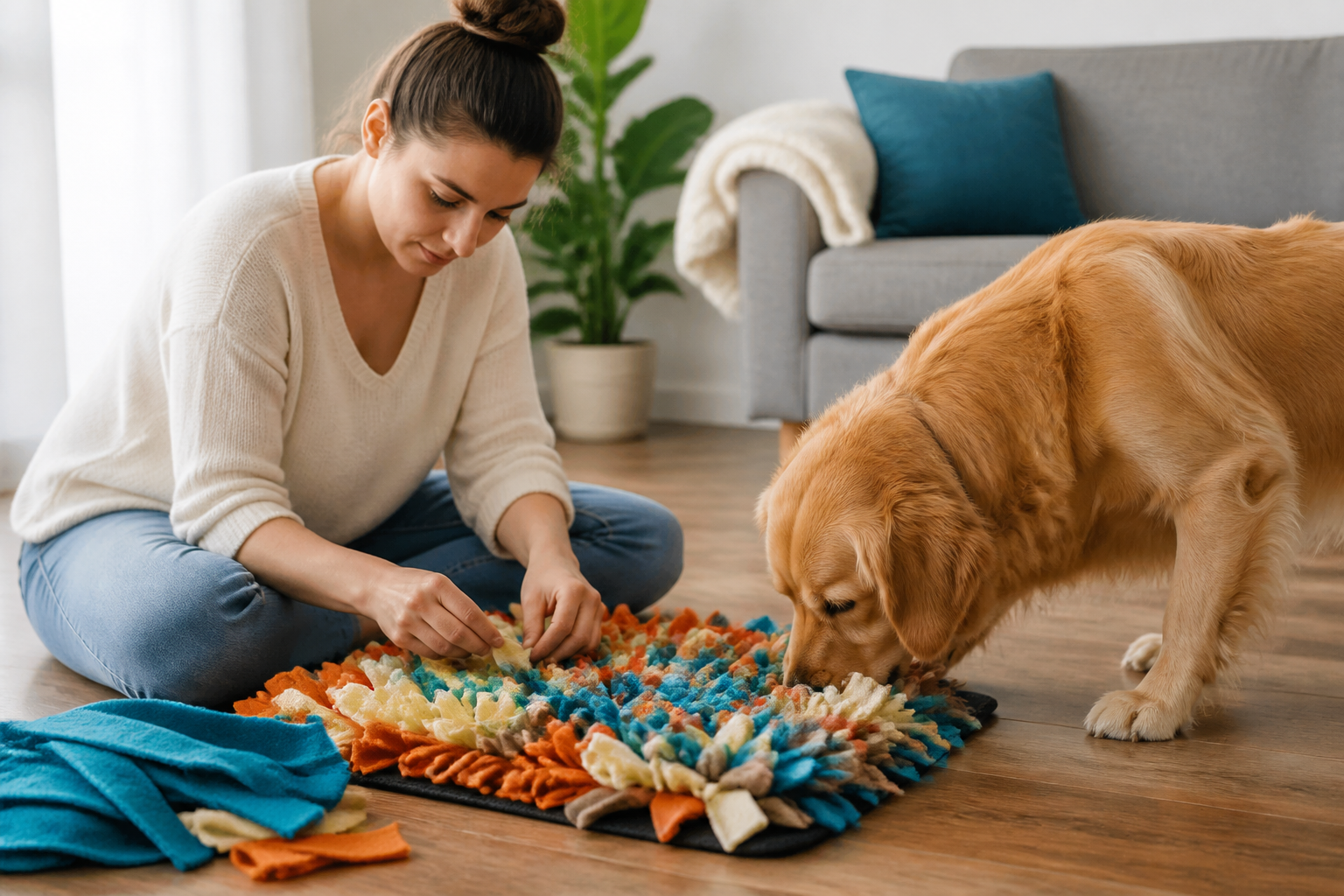
Tying strips through a rubber grid is the most common DIY method. It creates a dense, "shag carpet" effect. This density is what makes the dog work harder to find the food. If you are sewing strips onto a fabric base, you need to use a heavy-duty upholstery thread. Standard all-purpose thread will likely snap under the pressure of a large dog foraging.
For additional enrichment ideas, read about DIY dog boredom busters and puzzle play.
Zip Ties and Reinforcements
Some people use zip ties to connect multiple small rubber mats to make a larger one. If you do this, you must be extremely careful. The "tail" of the zip tie must be cut flush. Any remaining sharp nub can poke your dog. We recommend covering any zip tie connections with extra-thick fleece strips to act as a cushion.
Choosing Strip Dimensions
The size of your fabric strips affects the difficulty of the puzzle. Most experts suggest strips that are 1 to 2 inches wide and 6 to 8 inches long. If the strips are too short, they won't hide the food well. If they are too long, they can get tangled or flop over, making it too easy for the treats to fall out.
Vet Tip: If your dog has a history of "pica" (eating non-food items), supervise every snuffle session. Inspect the mat before and after use for any missing or torn fabric strips that may have been ingested.
Safety and Health Considerations
While snuffle mats are great for mental health, they do require some safety oversight. The primary concern is ingestion. No fabric is truly indestructible. If your dog starts chewing the mat instead of sniffing it, the session should end immediately.
Choking Hazards
Small pieces of kibble are usually safe. However, if you use small, hard treats, make sure they don't get wedged in a way that causes the dog to gulp down a large piece of fabric while trying to get the treat. The goal is foraging, not wrestling.
The "Scarf and Barf" Connection
Many owners use snuffle mats to slow down eating. This is excellent for preventing regurgitation. However, if your dog has chronic digestive issues, a snuffle mat is only one part of the solution.
Our dog pharmacy carries prescription medications and veterinary diets through Pet's Choice. If your dog struggles with frequent vomiting, gas, or weight management, it is important to talk to your veterinarian. They may recommend a specific prescription diet that can be fed via the snuffle mat to manage these health conditions effectively.
Preventing Resource Guarding
If you have multiple dogs, the materials won't matter as much as the environment. Snuffle mats involve high-value rewards. This can trigger resource guarding. Always give each dog their own mat and plenty of space. We recommend using the mats in separate rooms if your dogs show any signs of tension over food.
Cleaning and Material Longevity
One of the biggest mistakes pet owners make is neglecting to clean the snuffle mat. Dogs produce a lot of saliva while they work. This moisture, combined with food crumbs, can lead to bacteria growth and mold if the materials aren't breathable and washable.
Machine Washing Fleece
One reason we love fleece is that it is machine washable. You should wash your snuffle mat at least once every two weeks if used daily.
- Shake the mat outside to remove all loose crumbs.
- Place the mat in a mesh laundry bag to protect the strips and your machine.
- Use a pet-safe, scent-free detergent.
- Wash on a cold or warm gentle cycle.
- Avoid fabric softeners, as they can irritate a dog's nose.
Drying the Mat
Never put a rubber-based snuffle mat in the dryer. The heat can warp the rubber or cause it to become brittle and crack. Instead, roll the mat in a towel to squeeze out excess water. Lay it flat in a well-ventilated area to air dry. If you used a canvas or fabric-only mat, you might be able to tumble dry on low, but air drying is always the safest way to preserve the materials.
When to Replace the Mat
Even the best materials have a lifespan. Inspect your mat regularly for these signs of wear:
- Thinning fabric strips that tear easily.
- A base that has become stiff or started to crumble.
- Lingering odors that do not go away after washing.
- Missing knots or loose threads.
Bottom line: Regular hygiene and frequent safety inspections will extend the life of your snuffle mat and keep your dog healthy.
The Best Foods for Different Materials
The materials you choose might dictate what kind of food you can use. Some fabrics trap oils more than others, which can affect cleanup.
Dry Kibble and Hard Treats
Dry kibble is the best option for almost any snuffle mat material. It doesn't leave much residue behind. If you are using a very dense mat with many fleece strips, smaller kibble works better because it falls deeper into the "grass."
Explore our dog food selection for kibble options that can work well in enrichment routines.
Dehydrated and Freeze-Dried Treats
At BaxterBoo, we carry a wide selection of freeze-dried dog treats from brands like Stella & Chewy's and Vital Essentials. These are perfect for snuffling. They have a strong aroma that keeps dogs motivated, but they are dry enough that they won't gunk up the fleece strips.
Avoiding Wet or Greasy Foods
Avoid using wet food, peanut butter, or greasy treats like cheese in a snuffle mat. These will soak into the fleece and the base. This makes the mat nearly impossible to get truly clean. If you want to use these types of treats, a silicone lick mat is a much better tool for the job.
Step-by-Step Material Prep for DIY
If you have decided to build your own, here is how to prepare your materials for success.
Step 1: Prep the base. / Clean your rubber sink mat with mild soap and water. If it is too large, use heavy-duty shears to cut it to your desired size and smooth any rough edges.
Step 2: Measure and cut. / Cut your anti-pill fleece into strips. Use a rotary cutter and a mat for speed, or sharp fabric scissors for precision. Aim for 1.5 inches by 7 inches.
Step 3: Organize by color. / If you are creating a pattern, sort your strips into piles. This makes the tying process much faster and prevents you from running out of one color halfway through.
Step 4: The first row. / Start in one corner and work your way across. Pass one end of the strip through a hole and the other end through the adjacent hole. Tie a single overhand knot.
Step 5: Check density. / After the first few rows, flip the mat over. If you can see a lot of the base through the fleece, you may need to tie strips diagonally as well to increase the density.
Conclusion
Choosing the right snuffle mat materials is about more than just aesthetics. It is about creating a safe, durable environment for your dog to exercise their natural instincts. High-quality anti-pill fleece and a sturdy, non-toxic rubber base are the best options for both DIY projects and store-bought mats. Remember to keep the mat clean, supervise your pet, and watch for signs of wear.
- Prioritize anti-pill fleece for its durability and safety.
- Use a heavy rubber base to prevent the mat from slipping or flipping.
- Avoid materials like towels or felt that can fray or tear.
- Wash the mat regularly to prevent bacteria buildup.
If you are looking for the perfect treats to hide in your new mat, explore our collection of premium treats and kibble. For those managing a dog's weight or digestive health, our pharmacy offers convenient access to prescription diets through Pet's Choice. Join the MVP Rewards programme today to earn points on every snuffle-worthy purchase!
FAQ
What is the safest fabric for a snuffle mat?
Anti-pill polyester fleece is the safest and most effective material. It does not fray when cut, which reduces the risk of your dog ingesting loose threads. It is also soft on their nose and holds its shape well after multiple washes.
Can I use a bath mat as a base for a snuffle mat?
While some people use microfiber bath mats, they are often too light and lack the necessary holes for a dense snuffle mat. A rubber sink mat is a better choice because it provides weight to keep the mat in place and a grid for secure tying.
How do I stop my dog from chewing the fabric strips?
Supervision is key when introducing a snuffle mat. If your dog starts to chew or tug on the fabric, redirect them to the food or temporarily take the mat away. Over time, most dogs learn that the mat is for sniffing, not for destruction.
Is it okay to put a snuffle mat in the washing machine?
Most fleece-based snuffle mats are machine washable. You should use a gentle cycle with cold water and place the mat in a laundry bag to prevent damage. Always air dry the mat, as the heat from a dryer can damage the rubber base or the fabric fibers.