Save 15% on your 1st Autoship learn more

 Email us
 Live Chat
 FAQs
FAQs





Introduction
You might notice your rabbit tossing their ceramic food bowl or digging at the corner of their enclosure when the hay runs low. These behaviors are not just random habits but are expressions of a deep, biological need to forage and explore. Foraging is the primary job of a rabbit in the wild, and when we provide food in a simple dish, we take away hours of their daily activity. At BaxterBoo, we believe that enrichment should be accessible to every pet owner, which is why we love the idea of creating your own foraging tools. This guide will walk you through the process of a snuffle mat for rabbits diy project that uses simple materials to transform mealtime into a brain-teasing game. We will cover the best materials to use, how to construct the mat safely, and how to maintain it for your bunny.
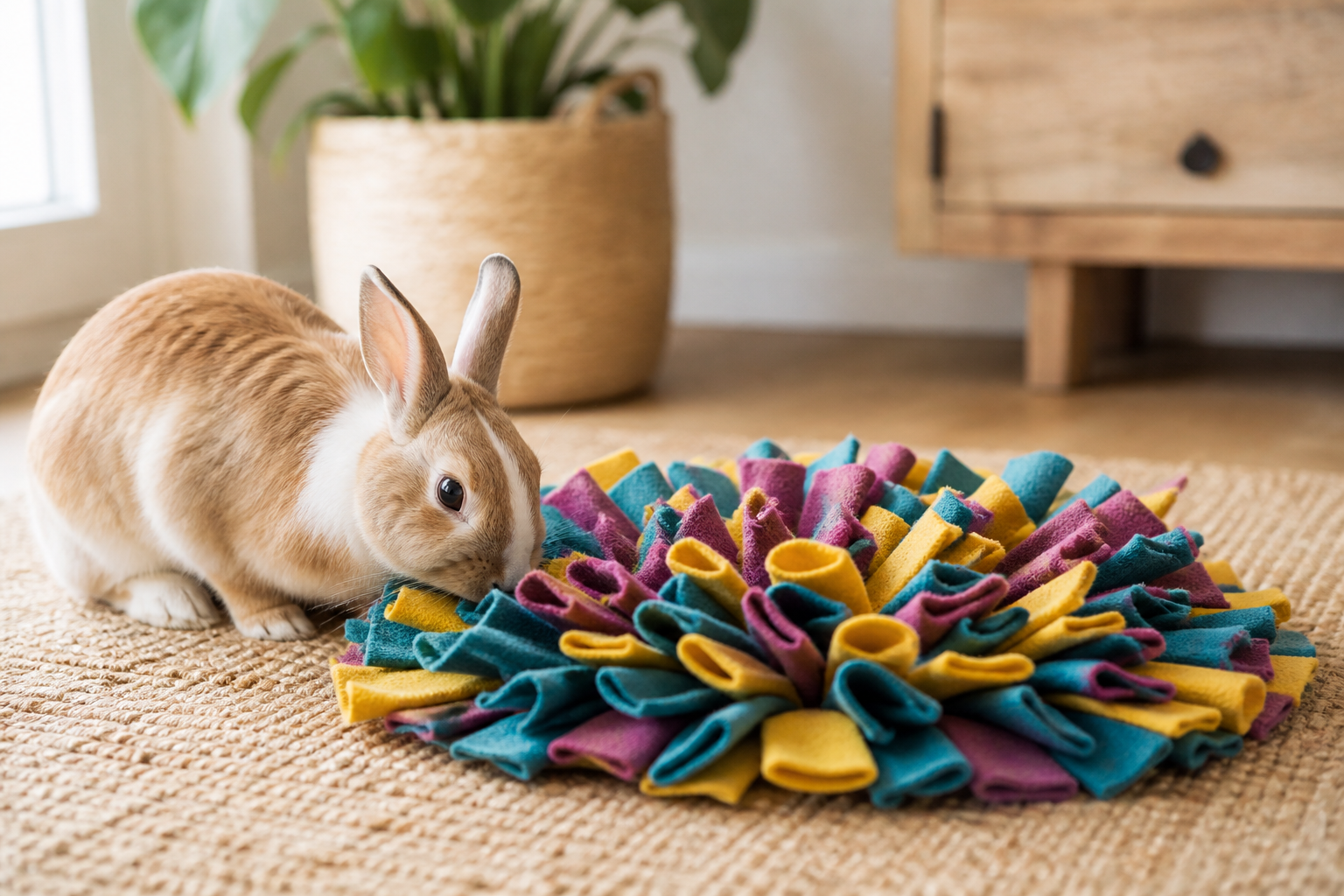
Quick Answer: A DIY snuffle mat for rabbits is made by tying strips of fleece fabric through the holes of a rubber mat. This creates a dense, soft surface where you can hide pellets or dried herbs, forcing your rabbit to use their nose to find their food.
Why Your Rabbit Needs a Foraging Experience
Rabbits are naturally geared toward searching for their food. In the wild, they spend a significant portion of their waking hours sniffing through grass, brush, and dirt to find the best greens and roots. When they live in our homes, this instinct does not go away. A rabbit that does not have a way to express these foraging behaviors can become bored, which often leads to destructive chewing on furniture or baseboards.
Using a snuffle mat allows your rabbit to engage their sense of smell, which is incredibly sensitive. They have about 100 million scent cells, making their nose a powerful tool for navigating the world. By hiding their daily pellets or a few dried flower treats inside the layers of fleece, you turn a thirty-second meal into a fifteen-minute mental workout. This kind of mental stimulation is just as important as physical exercise for maintaining a happy, healthy pet. For more ideas, explore this guide to creating indoor enrichment activities.
The act of "snuffling" also provides a sense of calm. Many pet owners find that their rabbits are more relaxed after a session with a foraging mat. It gives them a focused task to complete, which can be especially helpful for high-energy breeds or younger bunnies that seem to always be looking for trouble.
Choosing the Safest Materials for a DIY Rabbit Snuffle Mat
Before you start cutting fabric, you need to select the right materials. Not all mats or fabrics are safe for rabbits. Since bunnies are notorious for nibbling on everything in their path, you must choose items that minimize the risk of ingestion or injury.
The base of your snuffle mat needs to be sturdy but flexible. Most people use a rubber sink mat or a heavy-duty anti-fatigue mat with pre-drilled holes. Look for a base made of non-toxic rubber or silicone. Avoid mats with a strong chemical odor, as this can be overwhelming for a rabbit and might indicate the presence of volatile organic compounds. The holes should be large enough to thread fabric through but small enough that the mat remains structurally sound.
For the "grass" portion of the mat, fleece is the gold standard. Unlike cotton or wool, fleece does not fray when cut. This is a critical safety feature because frayed threads can be easily swallowed or wrapped around a rabbit's toes, leading to serious medical issues. Fleece is also soft on their delicate noses and paws. You can find fleece blankets or fabric remnants at most craft stores. We recommend washing the fabric first with a pet-safe, scent-free detergent to remove any factory residues before you begin the assembly.
Key Takeaway: Always use anti-pill fleece for your DIY projects because it does not create dangerous loose threads. A silicone or rubber base with pre-existing holes provides the best foundation for a durable, safe mat.
Step-by-Step Guide to Your Snuffle Mat for Rabbits DIY Project
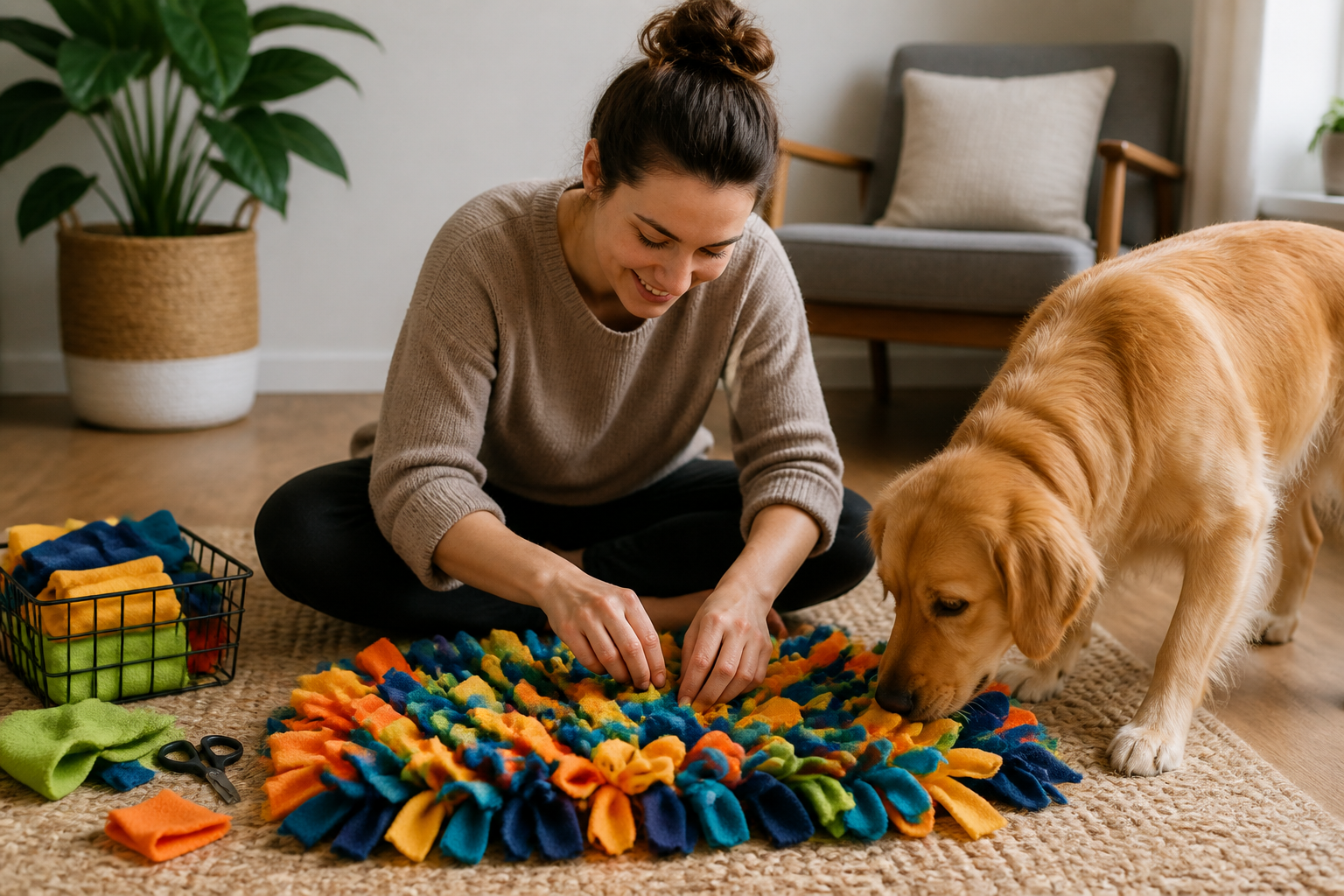
Building the mat is a repetitive process that is quite relaxing once you get into a rhythm. You do not need any sewing skills to complete this project, just a good pair of fabric scissors and some patience.
Step 1: Prepare your fabric strips.
Start by cutting your fleece into strips. For a standard rabbit-sized mat, strips that are roughly one inch wide and six to eight inches long work best. You will need a lot of these strips to create a dense mat. If the strips are too sparse, the treats will fall right to the bottom and be too easy to find. If they are too long, they might become a tripping hazard or be too heavy for the rabbit to move with their nose.
Step 2: Begin the first row of tying.
Take your rubber base and push one end of a fleece strip through the first hole and the other end through the adjacent hole. Pull the ends until they are even, then tie a single knot. A double knot is usually not necessary and can make the mat lumpy and uncomfortable for the rabbit to stand on. Continue this process across the entire first row until every pair of holes has a strip tied through it.
Step 3: Fill in the vertical and diagonal gaps.
To make the mat truly "snuffle-worthy," you need to fill in the gaps between the holes in every direction. Go back through and tie strips between the holes vertically and even diagonally if the mat allows. The goal is to have the fleece standing up like thick blades of grass. When you shake the mat, you should not be able to see the rubber base through the fabric.
Step 4: Final trim and inspection.
Once the mat is full, give it a good shake to remove any loose lint or small fabric scraps. Inspect every knot to ensure it is secure. If you see any strips that are significantly longer than the others, trim them down so the surface is relatively even. This prevents your rabbit from easily grabbing a long strip and dragging the whole mat across the room.
Vet Tip: Monitor your rabbit closely the first few times they use any DIY toy. If you notice them chewing or eating the fleece rather than just searching for treats, remove the mat immediately. Ingesting fabric can lead to GI stasis, a serious condition where the digestive system slows down or stops. If your rabbit stops eating or producing droppings, consult your veterinarian right away.
How to Introduce the Mat to Your Rabbit
Introducing a new toy can be exciting, but some rabbits are naturally more timid than others. To ensure your bunny has a positive experience, start slowly. Place the empty mat in their play area and let them chin it and sniff it without the pressure of finding food. This allows them to mark it with their scent and accept it as a safe object in their environment.
Once they are comfortable, sprinkle a few of their favorite pellets right on top of the fleece. Do not hide them deep inside just yet. You want your rabbit to understand that this mat is a source of rewards. As they get the hang of it, you can start pushing the pellets further down into the layers.
You can also use dried herbs like parsley, cilantro, or forage mixes containing dried marigolds and rose petals. These have a stronger scent than standard pellets and will encourage your rabbit to use their nose more actively. Avoid using wet greens in the snuffle mat, as the moisture will soak into the fleece and can lead to mold or bacterial growth if not cleaned immediately.
- Start with high-value treats on the surface.
- Gradually hide items deeper as their confidence grows.
- Limit sessions to 10 to 15 minutes to keep the activity special.
- Always provide fresh hay and water alongside foraging activities.
Cleaning and Maintenance for Long-Lasting Use
Because your rabbit will be putting their face directly into the fabric, keeping the snuffle mat clean is essential for their respiratory health. Dust from pellets and hay can settle at the bottom of the mat, and saliva can build up over time.
We recommend shaking the mat out after every single use. This removes any leftover crumbs or dust. Once a week, or more often if it becomes soiled, you should give the mat a thorough cleaning. Most DIY snuffle mats made with fleece and rubber bases are machine washable. Place the mat inside a pillowcase or a mesh laundry bag to prevent the strips from getting tangled in the washing machine's agitator.
Use a cold water cycle and a mild, fragrance-free detergent. Avoid fabric softeners or dryer sheets, as the strong scents and chemicals can be irritating to a rabbit's sensitive nose. After washing, it is best to air dry the mat. Hanging it up allows air to circulate through the fleece strips and ensures the rubber base dries completely. Putting a rubber-based mat in a hot dryer can cause the base to warp or even melt, which ruins the mat and can be a fire hazard.
Bottom line: Regular cleaning prevents bacterial growth and keeps the foraging experience fresh and safe for your rabbit's sensitive respiratory system.
Health and Safety: When to Remove the Mat
While a snuffle mat for rabbits diy project is a fantastic enrichment tool, it is not meant to be a permanent fixture in a rabbit's enclosure. It should be treated as an interactive toy that is used under supervision. Leaving the mat in the cage 24/7 can lead to several problems.
First, a bored rabbit might decide that the fleece itself is a snack. While fleece is safer than other fabrics, it is still indigestible. Large amounts of fiber from fabric can cause a blockage in the intestines. Second, if a rabbit chooses to use the mat as a litter box, it becomes a hygiene issue very quickly. Urine-soaked fleece can cause skin irritation or "urine scald" on a rabbit's hocks.
If your rabbit begins to show signs of frustration, such as aggressively biting and pulling at the mat or trying to flip it over repeatedly, it might be time to take a break. Enrichment should be challenging but not stressful. You can also vary the difficulty by using different types of treats or changing the location where you place the mat.
For rabbits with ongoing health conditions, such as chronic respiratory issues or dental disease, consult your vet before introducing new activities. If your pet requires specialized care, our pet pharmacy provides a wide range of medications and prescription diets that can support their overall wellness. Keeping your rabbit healthy through proper medical care ensures they have the energy and appetite to enjoy their DIY toys.
Beyond the Mat: Other Enrichment Ideas
A snuffle mat is a great start, but variety is the key to a happy rabbit. You can use the same principles of foraging in other ways around their living space. For example, stuffing hay and a few treats into a cardboard toilet paper roll is a simple and disposable way to keep them busy. You can also hide treats inside a willow ball or under a series of stacked cardboard boxes.
At BaxterBoo, we have been helping pet owners find the best solutions for their animals since 2006. We know that every rabbit has a unique personality. Some might love the soft texture of a snuffle mat, while others prefer the challenge of a hard plastic puzzle toy. You can browse our selection of pet supplies for additional enrichment options.
If you enjoy the DIY process, you can even make multiple mats with different textures or sizes. A smaller, travel-sized mat can be great for keeping a bunny occupied during a vet visit or a car ride. The more you can vary their environment, the more engaged and satisfied your rabbit will be.
Key Takeaway: Combining DIY toys like snuffle mats with high-quality commercial toys ensures a well-rounded environment that prevents boredom and promotes natural behaviors.
Conclusion
Creating a snuffle mat for rabbits diy project is a rewarding way to improve your pet's quality of life. By using simple materials like fleece and a rubber mat, you provide a safe outlet for their natural foraging instincts. This activity reduces boredom, provides mental exercise, and can even help calm a restless bunny. Remember to prioritize safety by choosing non-fraying fabrics and supervising every session.
- Use anti-pill fleece to prevent dangerous loose threads.
- Clean the mat regularly with scent-free detergent.
- Introduce the mat slowly with high-value treats.
- Monitor for any signs of fabric ingestion.
If you want to earn rewards while you shop for your rabbit's favorite treats and hay, consider joining our MVP Rewards programme. You can earn up to 5% back on every purchase, making it easier to keep your bunny's toy box full of fun and engaging options.
FAQ
How often should I let my rabbit use a snuffle mat?
You can offer the snuffle mat once or twice a day, typically during their normal meal times. Using it as a way to deliver their daily pellet ration is an excellent way to ensure they get regular mental stimulation. Always remove the mat once they have found all the treats to prevent them from chewing on the fabric out of boredom.
What are the best treats to hide in a rabbit snuffle mat?
Small, dry items work best, such as high-quality Timothy hay pellets or dried herbs like mint, basil, and oregano. You can also use small pieces of dried apple or carrot as a special reward, but these should be given in moderation. Avoid any wet or fresh vegetables, as these can make the mat messy and lead to bacterial growth within the fleece layers.
Is it safe to leave my rabbit alone with a snuffle mat?
It is best to supervise your rabbit while they use the mat, especially during the first few weeks. Some rabbits may try to chew or eat the fleece strips, which can lead to serious digestive blockages. By watching them, you can intervene if they start to treat the mat as food rather than a puzzle, ensuring they stay safe while they play.
Can I wash a DIY snuffle mat in the washing machine?
Yes, most DIY snuffle mats made from fleece and rubber can be washed in a machine on a gentle, cold cycle. It is a good idea to place the mat in a pillowcase or laundry bag to protect the strips and the machine. Always air dry the mat afterward, as the high heat from a dryer can damage the rubber base and cause it to lose its shape.