
 Save 15% on your 1st Autoship learn more

 Email us
 Live Chat
 FAQs



Introduction
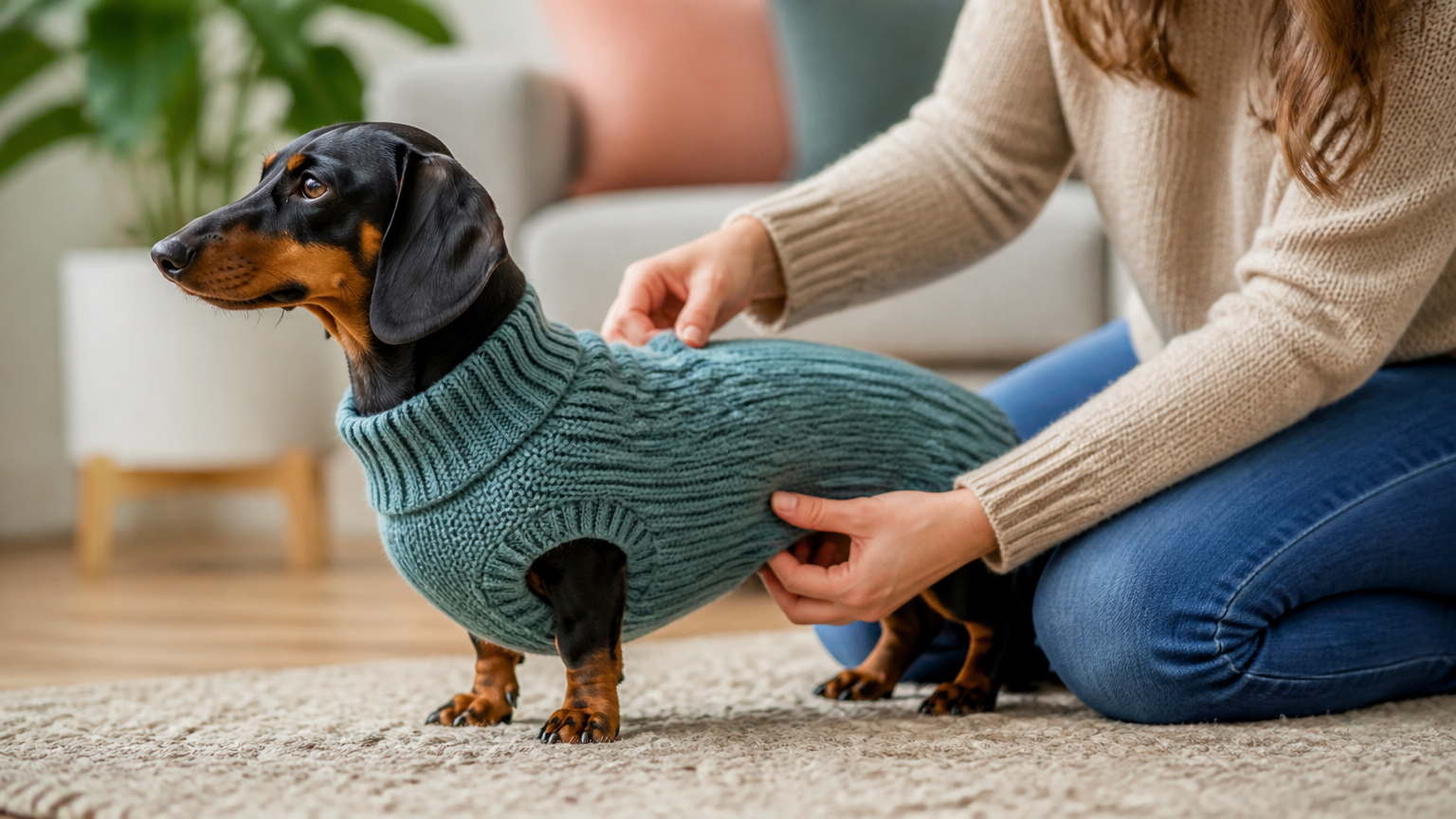
A sweater can fit your dachshund around the chest and still leave half their back uncovered. Another may reach the tail but bunch around those short legs. The challenge is finding clothes that fit a long body without restricting movement.
At BaxterBoo, we suggest starting with your dog’s measurements rather than a size label or weight alone. A dachshund-specific or long-body design can be a helpful option, but regular dog clothes may work if the proportions match. Below, we’ll walk through measuring, choosing a style and checking the fit on both miniature and standard dachshunds. The best outfit is one your dog can move in comfortably and wear for the situation at hand.
Why Dachshund Clothes Fit Differently
Dachshunds have long bodies, deep chests and short legs. Clothes cut for a shorter-bodied dog may fit around the ribs but stop well before the base of the tail. Choosing the next size up can add length, but it can also leave too much fabric around the neck, belly or legs.
Look for a garment with enough room through the chest and coverage along the back. Armholes should allow the front legs to move freely, and sleeves should stay clear of the paws. A belly panel can help keep splashes off a low-slung dog, but it shouldn’t drag or interfere with bathroom breaks.
Long-body and dachshund-specific labels are useful starting points, not guarantees. Compare the actual measurements on each item’s size chart, even if your dog has worn that brand before.
Dog Clothes






How to Measure Your Dachshund
Use a flexible measuring tape and have your dog stand naturally. Keep the tape close to the body without pulling it tight. If your dog wiggles, take a break and try again when they’re comfortable.
Step 1: Measure the back
Measure from the base of the neck, where the neck meets the shoulders, to the base of the tail. Keep the tape along the top of the back rather than stretching it out beyond the tail.
Step 2: Measure the chest
Wrap the tape around the widest part of the chest, usually just behind the front legs. Check that it lies flat all the way around and isn’t digging into the coat.
Step 3: Measure the neck
Measure around the base of the neck where a garment’s opening will sit. A high-neck sweater may need a different fit from a coat with an adjustable front.
Step 4: Check any extra measurements
Some charts include belly length, body length or leg measurements. Follow the garment maker’s directions for those measurements, especially for a four-leg outfit or a coat with a long underside.
Step 5: Compare the item’s chart
Match your notes to the chart for the specific garment. The Fitwarm sizing guide, for example, asks shoppers to compare back length and chest girth for its dachshund pajamas.
Check these points before choosing a size:
- The back length provides the coverage you want without extending over the tail.
- The chest measurement fits without squeezing the ribs or front legs.
- The neck opening can go on and off comfortably.
- The underside leaves room for bathroom breaks.
- Any leg openings are suitable for your dog’s short legs.
If the back fits one size but the chest fits another, don’t assume sizing up will solve the problem. Look for an adjustable garment or a different cut that accommodates both measurements.
Clothes for Miniature Dachshunds
A miniature dachshund still needs a garment with enough body length. An extra-small label may describe a narrow chest but say little about how far the fabric reaches along the back.
Use the same measurements you would for a standard dachshund: back, chest and neck. For a growing puppy, measure again before buying another garment rather than relying on an earlier size. Avoid buying a very loose outfit for a puppy to grow into, since extra fabric can slip or get caught underfoot.
A sleeveless sweater or adjustable coat can be easier to fit than a four-leg outfit. If you choose pajamas, check that the cuffs stay above the paws and that the body doesn’t pull between the shoulders and hips.
Miniature schnauzers and miniature pinschers are different breeds, so clothes labeled for either breed aren’t automatically the right shape for a mini dachshund. The measurements and cut matter more than the word “mini” on the package.
Choose Clothes for the Occasion
You don’t need a full wardrobe to keep your dachshund comfortable. Start with the activity or weather you’re planning for, then choose a garment with the right coverage.
| Clothing type | Useful for | What to check |
|---|---|---|
| Sweater or fleece | A cool day or a chilly room | Stretch around the chest and enough length along the back |
| Insulated coat | Cold outdoor walks | Adjustable closures, shoulder movement and coverage |
| Raincoat | Wet walks | Coverage over the back and a belly cut that stays clear of the ground |
| T-shirt | A lightweight outfit | Soft seams and fabric that doesn’t bunch under the legs |
| Pajamas or onesie | Extra coverage indoors | Short-leg fit, comfortable openings and bathroom access |
| Costume | A short, supervised occasion | Clear vision, easy movement and no loose pieces to chew |
Sweaters and fleece
A soft sweater can be a practical first choice for a dog who needs a light layer. Stretch can make it easier to put on, but the fabric should return to shape rather than squeezing the chest.
Check how the sweater sits when your dog walks and sits. A hem that creeps forward may leave the back uncovered, while excess fabric underneath can bunch near the legs.
Coats and rainwear
For outdoor walks, look at where the coat fastens and how much adjustment it offers. A strap that fits the chest without pulling the coat sideways can make a long-body design more useful.
A raincoat can cover the back, though the legs and underside may still get wet. Check the product description for the coverage and water protection it offers rather than assuming every raincoat has the same construction.
Pajamas and indoor clothes
Some dachshunds are comfortable indoors without clothes. If your home is cool and your dog welcomes an extra layer, a lightweight garment may be worth trying.
Four-leg styles need particular attention around the short legs. If cuffs twist, cover the paws or make walking awkward, choose a sleeveless style instead. Take the garment off if your dog chews it, seems distressed or cannot move normally.
Check the Fit While Your Dog Moves
A garment can look right when your dog is standing still and shift once they start walking. Try it on at home before removing tags, and watch your dachshund move around on a clear floor.
Start with the neck and chest. The opening should sit comfortably, and closures shouldn’t press into the skin. Check behind the front legs, where seams and straps can rub.
Look along the back. The garment should provide the intended coverage without bunching heavily at the shoulders or extending over the tail. A coat can be shorter than the full back and still be useful, but make sure its coverage matches your reason for buying it.
Watch the legs and belly. Your dog should be able to take normal steps, sit and lie down. The underside should remain clear of the floor and leave the area needed for bathroom breaks uncovered.
Check again after wear. Remove the outfit and look for tangled fur, rubbing or irritated skin. If you notice a problem, stop using it and consider a different size, fabric or cut.
Vet Tip: Contact your veterinarian if skin irritation persists or if your dog keeps shivering indoors despite being warm and dry.
Make Dressing Comfortable
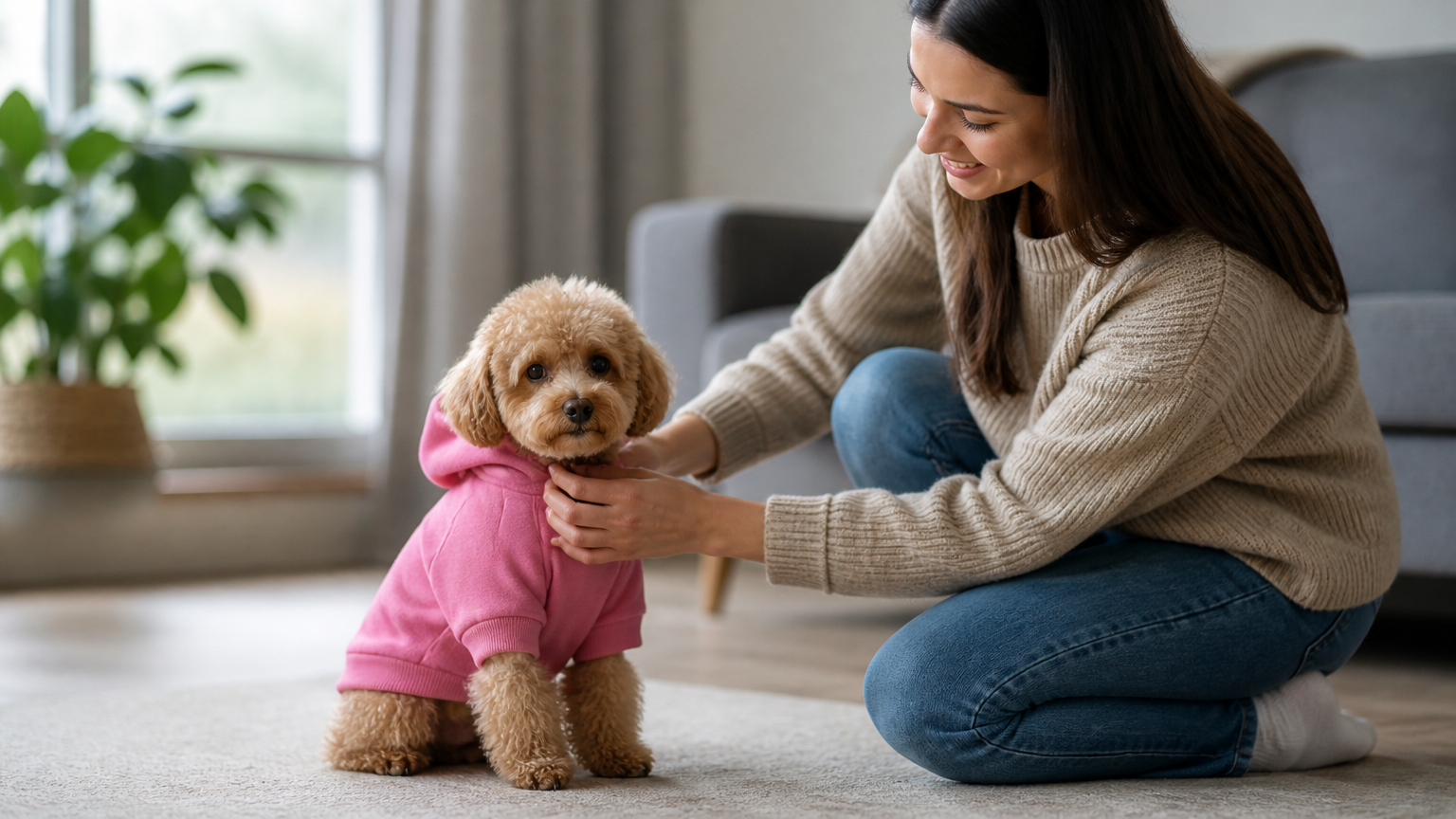
Introduce a new outfit gradually. Let your dog sniff it, then reward calm interest. You can place it gently against their body before trying to put it on.
Choose a quiet moment and avoid forcing a leg through an opening. If a pullover is difficult to put over the head, a coat that opens along the chest or belly may be easier. Give your dog a break if they freeze, struggle or try to get away.
Once the outfit is on, keep the first session brief and positive. Offer a favorite treat and watch your dog walk. If they remain uncomfortable, take it off and reconsider the style rather than expecting them to tolerate it.
Avoid leaving a dog unattended in clothing that could catch on something or be chewed. Remove wet or dirty garments, and follow the care label so the fabric and closures stay in good condition.
Solving Common Fit Problems
The chest fits, but the back is too short. Look for a longer-body cut in a similar chest range. Going up a size might help, but only if the larger garment also stays secure around the neck and belly.
The back fits, but the chest is tight. Don’t use a garment that restricts movement to gain length. Try a style with a roomier chest or adjustable closures, and compare its chart before ordering.
The sleeves cover the paws. A sleeveless sweater or coat may be a better choice. Rolling cuffs can create bulky fabric, so check that any adjustment stays in place and doesn’t restrict the legs.
The outfit shifts during walks. Check the closure and overall shape. If the garment twists, rides up or bunches even when adjusted, a different design may fit your dog better.
The belly gets wet or dirty. Look for a coat with suitable underside coverage, while keeping bathroom access and ground clearance in mind. No clothing style replaces a quick check and cleanup after a muddy walk.
Shopping for Wiener Dog Clothes
You may see dachshund apparel described as wiener dog, sausage dog or doxie clothes. Those names can help you find long-body styles, but the product chart still matters. A dachshund on the package doesn’t establish that the garment fits your individual dog.
For the best value, start with one item for the need you have now. Check the fabric care instructions, closure placement and measurements before choosing a color or pattern. If your dog dislikes clothes, an easy-to-remove layer may be more useful than a detailed outfit.
“Wiener dog clothes for humans” usually means clothing with dachshund designs for people. For your pet, check that the listing is dog apparel and provides a canine size chart.
Conclusion
The right dachshund clothes leave room for your dog’s chest, cover the desired length of back and stay clear of short legs. Measure first, then check the fit again while your dog moves.
- Compare back, chest and neck measurements with each garment’s chart.
- Choose the layer for the weather or activity.
- Pass on an outfit that rubs, slips or interferes with walking.
Explore the dog clothing category at BaxterBoo with your dachshund’s measurements in hand.
FAQ
What size clothes does a miniature dachshund wear?
There isn’t one size that fits every mini dachshund. Measure the back, chest and neck, then compare them with the chart for the specific item.
Can a dachshund wear regular small-dog clothes?
Yes, if the garment fits your dog’s measurements and allows comfortable movement. Check the back length and leg openings closely, since a small-dog size may be cut for different proportions.
Does my dachshund need clothes indoors?
Not every dachshund needs an indoor layer. If your home is cool and your dog is comfortable wearing clothes, you can try a lightweight sweater and watch how they respond.
Are four-leg pajamas suitable for dachshunds?
They can be, provided the body is long enough and the cuffs stay clear of the paws. If the fabric twists or makes walking difficult, try a sleeveless garment instead.



- Site & Contents BaxterBoo.com. BaxterBoo is located in the United States.
- Privacy & Security
- Terms of Use
- Accessibility Statement
