
 Save 15% on your 1st Autoship learn more

 Email us
 Live Chat
 FAQs
FAQs





Introduction
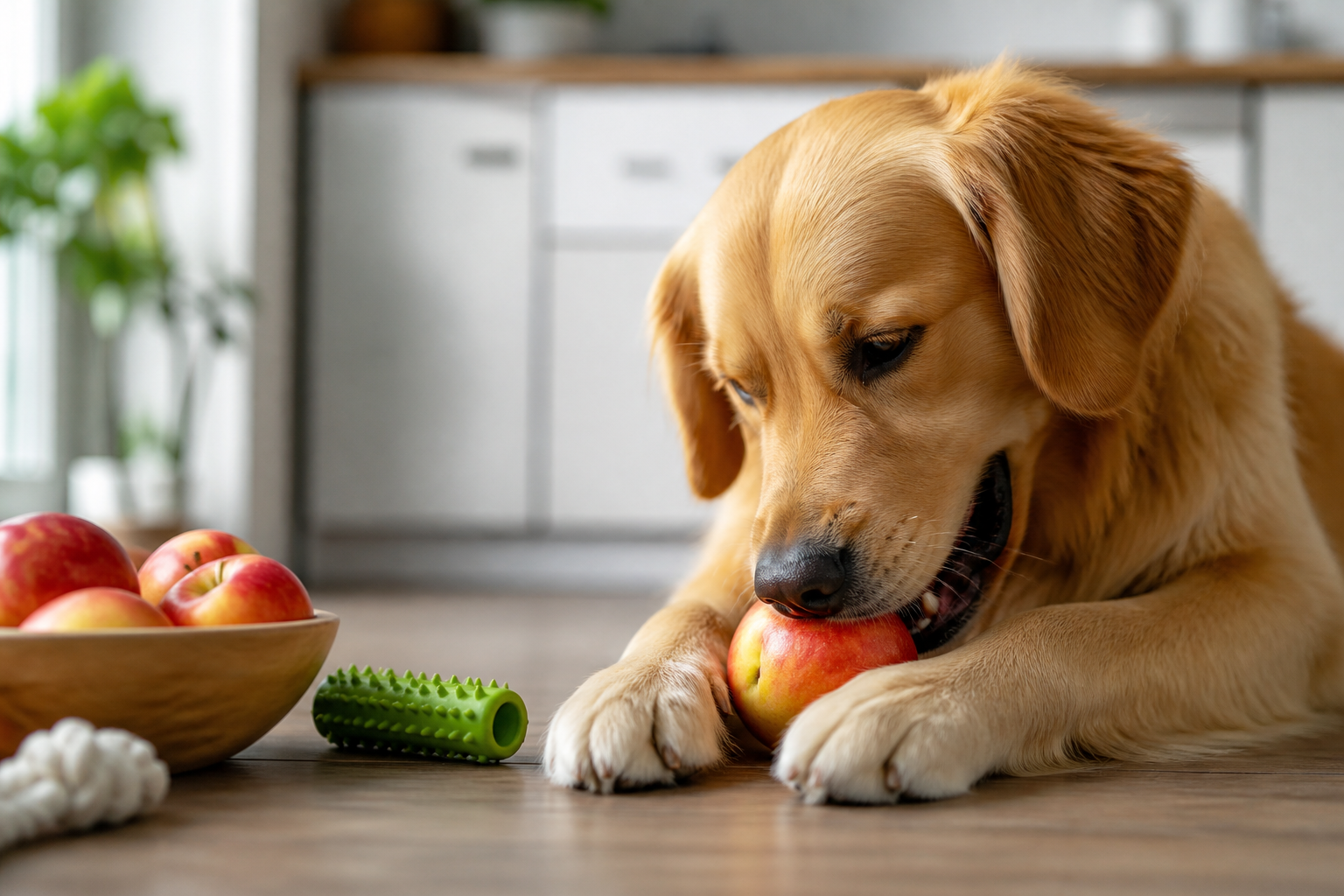
You are relaxing on the couch with a crisp Gala apple. Your dog sits at your feet and gives you that look. You know the one. You slice off a piece to share and wonder if that satisfying crunch is doing more than just tasting good. Many pet owners ask if apples can actually clean a dog's teeth. It is a common belief that the fibrous texture of the fruit acts like a natural toothbrush. At BaxterBoo, we love finding healthy ways to reward our pets while supporting their wellness. This post explores the reality of using apples for dental hygiene. We will cover the nutritional benefits, the potential risks of seeds and cores, and why apples are a supplement rather than a solution for oral health. You will also learn how to build a complete dental routine that keeps your dog's breath fresh and their gums healthy.
The Mechanics of Chewing Apples
When your dog bites into a fresh apple slice, the firm flesh provides a bit of resistance. This creates a mechanical scraping action against the surface of the teeth. This process can help rub away some of the soft, sticky plaque that accumulates after meals. It is similar to how we might use a crunchy snack to clean our own teeth in a pinch. The fiber in the apple acts as a mild abrasive.
However, this scraping only happens on the flat surfaces of the teeth. Most dental issues in dogs start at or below the gum line. Apples cannot reach these deep crevices. While the crunch is helpful, it is not a deep clean. Plaque that is not removed quickly eventually hardens into tartar. Once tartar forms, a slice of fruit will not be enough to budge it.
Apples also contain water. This helps stimulate saliva production. Saliva is a natural defense against mouth bacteria. It helps wash away food particles and neutralizes some of the acids produced by bacteria in the mouth. This is a small benefit but a positive one for overall mouth moisture.
Quick Answer: Apples can help scrape away soft plaque from the surface of a dog's teeth due to their crunchy texture. They are not a replacement for brushing. They do not reach the gum line where most dental disease begins.
Nutritional Benefits Beyond the Crunch
Apples are more than just a dental tool. They are a low-calorie treat packed with nutrients that support your dog's total health. We often recommend them for dogs that need to watch their weight. They provide a satisfying "crunch" without the high fat content found in many processed biscuits.
- Vitamin C: This supports the immune system. While dogs produce their own Vitamin C, an extra boost from whole foods can be beneficial.
- Vitamin A: This is essential for skin and coat health. It also supports eye health as your dog ages.
- Fiber: Apples are high in pectin. This is a type of soluble fiber that helps regulate digestion. It can be helpful for dogs with occasional loose stools.
- Antioxidants: These help fight oxidative stress. This is important for senior dogs or pets managing chronic inflammation.
Even though these nutrients are great, they are secondary to the main diet. Treats should never make up more than ten percent of your dog's daily calories. This helps maintain a balance of vitamins and minerals.
The Hidden Risks of Feeding Apples
While the fruit itself is safe, certain parts of the apple are dangerous. You must be careful with how you prepare this snack.
The Danger of Seeds
Apple seeds contain a compound called amygdalin. When chewed or digested, this compound releases cyanide. Cyanide is a potent toxin that interferes with the body's ability to use oxygen. A few seeds might not cause an immediate emergency for a large dog. However, the toxin can build up over time. It is much more dangerous for small breeds or puppies. Always remove every seed before offering a slice to your pet.
Choking Hazards and Blockages
The core of the apple is tough and fibrous. It does not break down easily in the digestive tract. If a dog swallows a large piece of the core, it can become lodged in the throat. This is a significant choking risk. If it passes the throat, it can still cause a blockage in the intestines. These blockages often require expensive emergency surgery to remove. The stem is also a choking hazard and should be discarded.
Sugar and Acidity
Apples contain natural sugars called fructose. While better than refined sugar, fructose can still contribute to tooth decay if left on the teeth. Bacteria in the mouth feed on sugar to create acid. This acid can slowly wear down tooth enamel. This is why giving an apple is not the same as cleaning. If your dog has a history of cavities or diabetes, talk to your vet before adding fruit to their routine. The acidity in apples can also cause an upset stomach in sensitive dogs.
Key Takeaway: Always core and seed an apple before giving it to your dog. The seeds contain toxins and the core is a major choking risk that can lead to intestinal blockages.
How to Prepare Apples Safely
If you want to use apples as a treat, follow these steps to keep things safe. Preparation only takes a minute but prevents many common problems.
Step 1: Wash the fruit thoroughly. / Many grocery store apples have wax or pesticide residue on the skin. Scrub the apple under cold water to remove these contaminants.
Step 2: Remove the core and seeds. / Use a coring tool or a knife to cut around the center. Double check that no seeds are stuck to the flesh.
Step 3: Slice into bite-sized pieces. / The size of the slice should match the size of your dog. Small cubes are best for tiny dogs. Larger wedges work for big breeds.
Step 4: Consider peeling for sensitive stomachs. / The skin contains the most fiber. If your dog has a sensitive digestive system, peeling the apple makes it easier to digest.
Step 5: Start small. / If your dog has never had an apple, give them just one small piece. Watch for any signs of an upset stomach or diarrhea over the next few hours.
Vet Tip: If your dog accidentally eats an apple core or a large number of seeds, watch for signs of distress. These include panting, bright red gums, or vomiting. Contact your veterinarian immediately if you notice these symptoms.
Better Ways to Support Dog Dental Health
If your goal is truly clean teeth, you need a multi-layered approach. Apples are a nice addition, but they should be the "cherry on top" of a real dental plan. At BaxterBoo, we carry a wide range of products specifically designed to fight tartar, including our dog dental care collection.
Tooth Brushing is the Gold Standard
There is no substitute for a toothbrush and pet-safe toothpaste. Brushing physically removes the biofilm of plaque before it hardens. You should aim to brush your dog's teeth at least three times a week. Daily is even better. Never use human toothpaste. It often contains xylitol, which is deadly to dogs, and foaming agents that upset their stomachs. For more guidance, read these pet dental care tips.
Dental Chews with the VOHC Seal
When you look for dental treats, look for the Veterinary Oral Health Council (VOHC) seal. This seal means the product has been tested and proven to reduce plaque or tartar. Brands like Greenies or specific dental diets are formulated with textures that scrub the teeth as the dog chews. These are much more effective than apples because they are designed to last longer and reach more surfaces.
Water Additives and Oral Sprays
For dogs that won't tolerate brushing, water additives are a great tool. You simply add a capful to their water bowl. These additives use enzymes or mild antiseptics to kill the bacteria that cause bad breath and plaque. They work every time your dog takes a drink. You can browse our dental and breath care products for oral gels, sprays, toothpaste, and water additives.
The Role of Our Pharmacy
Sometimes, dental health requires more than over-the-counter snacks. If your dog has advanced dental disease, your vet might prescribe a specific dental diet. Our pharmacy can help with prescription diets and medications when your veterinarian provides a valid prescription.
Bottom line: A combination of regular brushing, VOHC-approved chews, and professional veterinary care is the only way to prevent serious dental disease.
Identifying Dental Problems in Your Dog
How do you know if your dental routine is working? You need to check your dog's mouth regularly. Catching issues early can save your dog from pain and save you from a massive vet bill. Most dogs will not show they are in pain until the problem is severe. They will continue to eat even with an infected tooth.
Look for these warning signs:
- Persistent bad breath: "Dog breath" is not normal. It is usually a sign of bacterial overgrowth.
- Yellow or brown buildup: This is tartar. It cannot be brushed away and requires a professional cleaning.
- Red or bleeding gums: This is a sign of gingivitis. Gums should be a healthy pink.
- Drooling more than usual: This can indicate mouth pain or a broken tooth.
- Dropping food: If your dog seems hungry but drops kibble while eating, their mouth may hurt.
- Swelling: Any lumps on the gums or swelling under the eye can indicate a tooth root abscess.
If you see these signs, it is time for a vet visit. An apple will not help at this stage. Your vet may need to perform a cleaning under anesthesia to reach the bacteria hiding under the gum line. You can also review these warning signs of dental disease in dogs.
Senior Dogs and Apples
Senior dogs often have more fragile teeth. If your older dog has missing teeth or existing gum disease, a hard apple might be difficult to chew. In some cases, biting down on something very hard could even fracture a weakened tooth. For seniors, you can still provide the benefits of apples by steaming them or mashing them into a sauce. Just ensure the sauce is plain and has no added sugar or spices like nutmeg.
Nutmeg is particularly dangerous for dogs. It contains a toxin called myristicin. While a tiny amount might just cause a stomach ache, large amounts can lead to serious neurological issues. Stick to plain, fresh fruit.
The BaxterBoo Approach to Value
We know that caring for a pet can get expensive. That is why we focus on products that actually work. Buying a high-quality dental chew or a bottle of water additive often saves money in the long run by delaying the need for professional dental surgery. Our MVP Rewards programme helps you earn points on these essential supplies. You can also use our Autoship programme to make sure you never run out of your dog's favorite dental treats. This gives you a discount on your first order and helps you maintain a consistent routine.
Consistency is the most important part of dental care. An apple once a month does nothing. Brushing every other day and providing a daily dental chew makes a massive difference. We have been helping pet owners find this balance since 2006. Whether you visit our warehouse in Vernon Hills or shop with us online, our goal is to give you the tools for a healthier pet.
Safe Fruit Alternatives
If your dog doesn't like apples, there are other fruits that offer similar benefits. Each has a different texture and nutrient profile.
- Carrots: These are very hard and provide excellent mechanical cleaning. They are also very low in sugar.
- Blueberries: These are high in antioxidants. They don't do much for cleaning, but they are a great "superfood" treat.
- Strawberries: These contain an enzyme called malic acid. Some believe this can help whiten teeth, though the effect is small in dogs.
- Watermelon: This is mostly water. It is great for hydration but offers very little mechanical cleaning.
Always introduce new fruits slowly. Every dog's digestive system is unique. What works for one pup might cause gas or bloating in another.
Conclusion
Apples are a wonderful, healthy snack that can provide a tiny bit of help with surface plaque. They should not be your dog's only form of dental care. The most important thing is to remove the seeds and core every single time to avoid toxicity and choking. For real results, combine healthy snacks with regular brushing and professional veterinary checkups. If you notice bad breath or red gums, consult your veterinarian for a full dental exam. Our pharmacy can help with any prescription diets or medications your vet recommends to manage oral health.
- Always remove seeds and cores before feeding apples.
- Use apples as a supplement, not a replacement for brushing.
- Watch for signs of dental disease like bad breath and tartar.
- Check out our dog healthcare products for professional dental care tools.
Key Takeaway: Apples are a safe treat that offers minor dental benefits, but a complete oral hygiene routine requires brushing and VOHC-approved products to prevent disease.
FAQ
Can puppies eat apples for teething relief?
Yes, puppies can eat small, chilled apple slices. The cold can help soothe sore gums during teething, and the crunch provides a safe outlet for the urge to chew. Just ensure the pieces are small enough to prevent choking and always remove the seeds.
Do apples help with a dog's bad breath?
Apples can temporarily freshen breath by washing away some mouth bacteria and food particles. However, if your dog has chronic bad breath, it is likely a sign of dental disease or an underlying health issue. Apples will not cure the source of the odor, so a vet visit is recommended.
Are green apples better for teeth than red apples?
Green apples like Granny Smith tend to be slightly more acidic and have a lower sugar content than many red varieties. While this might be marginally better for dental health, the difference is very small. Any variety of apple is fine as long as it is prepared safely and fed in moderation.
How many apple slices can I give my dog daily?
For most medium-sized dogs, one or two slices a day is plenty. Smaller dogs should have less, perhaps just one or two bite-sized cubes. Treats should never exceed 10% of a dog's daily caloric intake to ensure they maintain a balanced diet and a healthy weight.






