
 Save 15% on your 1st Autoship learn more

 Email us
 Live Chat
 FAQs
FAQs





Introduction
You are standing in the dental aisle looking at a shelf full of options. Your dog has a bit of bad breath, and you noticed some yellowing on those back molars. You want to help your pup, but you also want to avoid the daily struggle of a toothbrush. This is exactly where many pet owners wonder if those classic rawhide chews are the solution. At BaxterBoo, we get this question all the time from neighbors visiting our warehouse. We want to help you understand the real relationship between chewing and oral hygiene. This guide covers how rawhide interacts with plaque, the safety concerns you need to know, and which alternatives actually work. Our goal is to help you build a dental routine that keeps your dog safe and their smile bright.
Quick Answer: Rawhide bones can help clean a dog's teeth through mechanical scraping that reduces plaque and tartar. However, they are not a complete substitute for brushing and come with specific safety risks like choking or blockages.
The Mechanical Action of Chewing
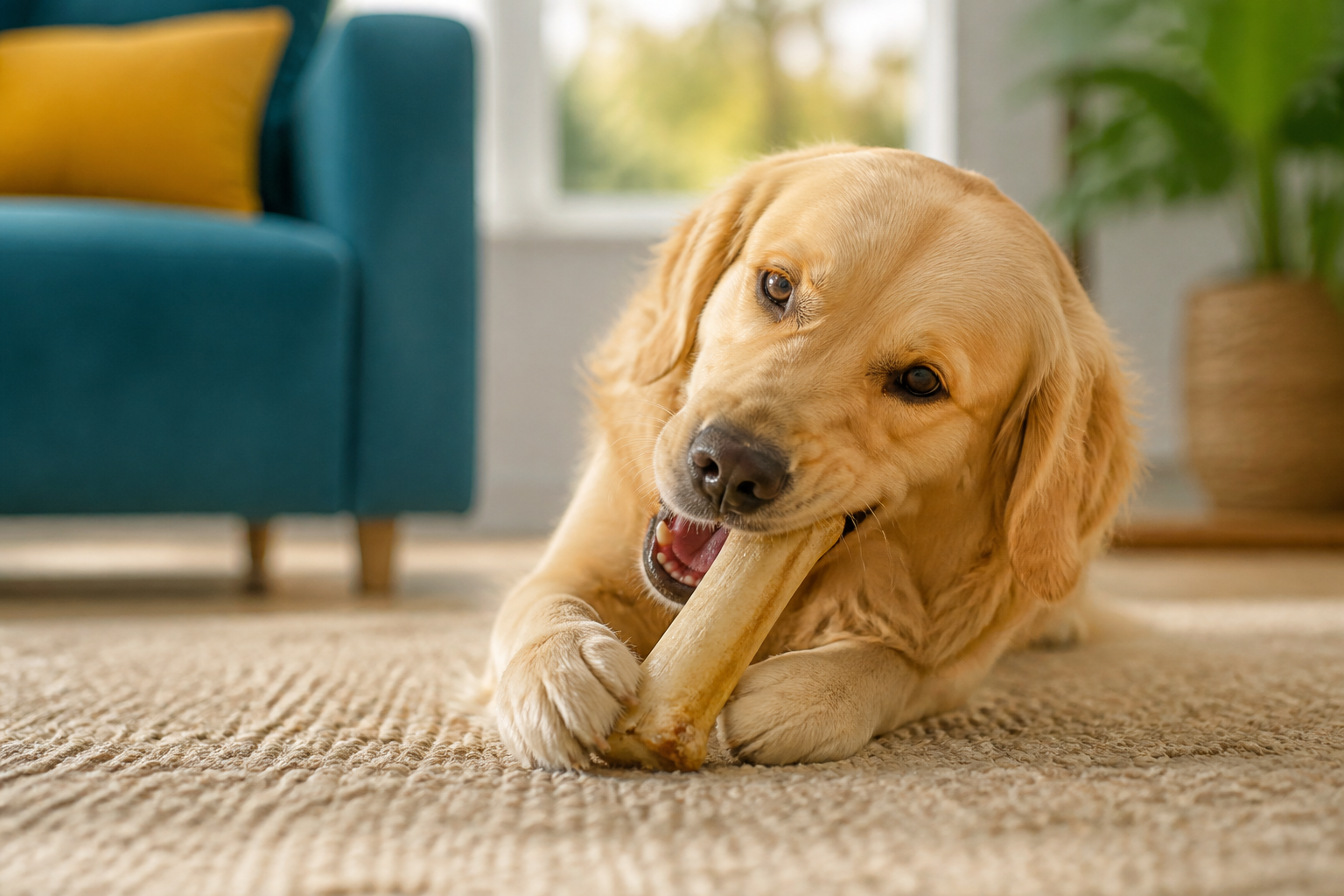
When a dog chews on a firm object, the physical friction acts like a scraper. As your dog gnaws on the rawhide, the surface of the chew rubs against the enamel of the teeth. This action is particularly effective on the premolars and molars where dogs do most of their heavy chewing.
Dental chews and toys can provide different textures and shapes for dogs that enjoy mechanical chewing.
Plaque is a soft, sticky film of bacteria that forms on the teeth every day. If it is not removed, it hardens into tartar within 48 to 72 hours. Tartar is much harder to remove and usually requires a professional cleaning. Rawhide helps by physically scrubbing away that soft plaque before it has a chance to calcify.
The shape of the rawhide also matters. Knotted bones or rolls provide different angles for the teeth to sink into. This can help reach parts of the tooth near the gum line. However, the effectiveness drops significantly once the rawhide becomes soft and mushy from saliva.
Key Takeaway: Chewing provides mechanical cleaning that disrupts plaque. This process is most effective while the chew is still firm and abrasive.
Understanding What Rawhide Actually Is
Rawhide is not a food product in the traditional sense. It is a byproduct of the leather industry. Specifically, it is made from the inner layer of cow or horse hides. During the manufacturing process, the hides are treated to prevent decay. This involves several steps that most pet owners find surprising.
First, the hides are placed in a brine to slow down decomposition. They are then treated with chemicals like lime to help strip away hair and fat. After the layers are split, the inner layer is washed and whitened. Manufacturers often use hydrogen peroxide or even bleach to get that clean, white appearance.
Once the material is cleaned, it is pressed into shapes like bones, chips, or rolls. Some are basted with flavors like beef or chicken to make them more enticing. Because rawhide is technically a hide and not a food, it is not regulated with the same strictness as dog kibble. This is why knowing the source of your pet's chews is so important.
Do Rawhide Bones Clean Dogs Teeth Better Than Brushing?
While rawhide offers some mechanical benefits, it is rarely as effective as manual brushing. A toothbrush can reach the tiny crevices and the delicate gum line where bacteria love to hide. Rawhide is a broad tool, whereas a toothbrush is a precision instrument.
For more guidance on creating a consistent routine, read these pet dental care tips.
Brushing also allows you to use pet-safe enzymatic toothpaste. These pastes contain enzymes that break down plaque chemically even after you stop brushing. Rawhide does not offer this chemical advantage unless it is specifically treated with dental enzymes.
Most veterinarians suggest a multi-pronged approach. You can use chews for daily maintenance and mechanical scraping. You should still aim to brush your dog's teeth at least a few times a week. This combination provides the best protection against periodontal disease.
Vet Tip: If your dog already shows signs of heavy tartar or red, inflamed gums, a chew will not solve the problem. Consult your veterinarian for a professional dental assessment and cleaning before starting a new chew routine.
Potential Risks of Traditional Rawhide
While many dogs enjoy rawhide without issues, there are real risks involved. The most significant danger is choking or intestinal blockage. As a dog chews, the rawhide becomes soft and gummy. A determined chewer might tear off a large, rubbery chunk and swallow it whole.
Rawhide is not highly digestible. Once a large piece enters the stomach, it can swell. If it gets stuck in the esophagus or the intestines, it can cause a life-threatening blockage. These situations often require emergency surgery to resolve.
There is also the concern of chemical residues. Low-quality rawhide processed outside of the US may contain traces of arsenic, formaldehyde, or lead. These chemicals are used during the tanning and whitening process. Choosing a reputable source is the best way to avoid these toxins.
For another perspective on choosing chews, see this guide to rawhide-free dog chews.
Signs of a Rawhide Blockage
- Repeated gagging or retching
- Vomiting after eating or drinking
- Extreme lethargy or signs of abdominal pain
- Refusal to eat
- Straining to have a bowel movement
Making Safer Choices with Dental Chews
If you want the dental benefits of rawhide without the traditional risks, look for specialized products. Some brands have developed soft rawhide or compressed rawhide that is much easier to digest. We carry Tartar Shield at BaxterBoo because they offer a unique approach to this classic chew.
Tartar Shield Soft Rawhide Chews are VOHC-approved. The VOHC is the Veterinary Oral Health Council. This organization only gives its seal of acceptance to products that are clinically proven to reduce plaque or tartar. These chews are treated with sodium tripolyphosphate. This ingredient helps prevent tartar from forming by bonding with the minerals in the saliva.
These specialized chews are designed to crumble or dissolve more easily than traditional hides. This significantly reduces the risk of a blockage. They still provide that satisfying chewing experience that dogs crave. This makes them a much more practical choice for daily dental care.
How to Evaluate a Dental Chew
- Look for the VOHC Seal of Acceptance.
- Check the country of origin (USA-sourced is usually safer).
- Read the ingredient list for chemical preservatives.
- Ensure the size is appropriate for your dog's weight.
Bottom line: Not all rawhide is created equal, so prioritize VOHC-approved options that balance mechanical cleaning with safety.
Healthier Alternatives for Cleaning Teeth
If you are uncomfortable with rawhide, there are plenty of other ways to keep those teeth clean. Many owners are moving toward more natural, highly digestible chews. These provide the same mechanical action with less risk of a long-term blockage.
Many of these options are available in our dog dental care collection.
Bully sticks are a popular choice. They are made from a single ingredient and are much more digestible than rawhide. While they are softer, they still provide enough resistance to help scrub the teeth. They also tend to keep dogs occupied for a significant amount of time.
Recreational raw bones are another option for advanced chewers. Unlike cooked bones, which can splinter and cause injury, raw bones are pliable. Gnawing on a raw marrow bone can act like nature's toothbrush. However, you must always choose a bone that is large enough that the dog cannot fit the whole thing in their mouth.
Top Rawhide Alternatives
- Bully Sticks: High protein, single ingredient, and very digestible.
- Dried Bovine Trachea: Naturally high in glucosamine and provides a crunchy texture.
- VOHC Dental Treats: Products like Greenies are designed specifically for oral health.
- Rubber Dental Toys: Toys with ridges or nubs can scrape teeth during play.
The Role of Diet in Dental Health
What your dog eats every day plays a massive role in their oral hygiene. Some kibbles are specially formulated to stay together longer during the bite. This forces the tooth to sink into the kibble, providing a cleaning effect. This is different from standard kibble, which often shatters instantly upon contact.
If your dog has chronic dental issues, your vet might recommend a prescription dental diet. Our pharmacy carries a variety of these specialized foods through our partnership with Pet's Choice. These diets often have a specific fiber matrix that scrubs the teeth as the dog eats.
Our pharmacy is also a great resource for FDA-approved dental rinses or additives. These are simple liquids you can add to your dog's water bowl. They work by changing the chemistry of the saliva to prevent plaque from sticking to the teeth. This is an excellent backup for dogs that refuse to have their teeth brushed.
Vet Tip: Prescription dental diets are often the most effective way to manage oral health in dogs prone to heavy tartar. Talk to your vet about whether a prescription is right for your pet, and remember we can fill those orders through our pharmacy.
How to Safely Supervise Chew Time
Regardless of the type of chew you choose, supervision is the most important safety rule. You should never give your dog a chew and then leave the house. Most accidents happen when a dog gets down to the last small nub of a treat and tries to gulp it.
Step 1: Choose the right size. / A chew should always be larger than your dog's mouth. If it can fit entirely inside their jaws, it is too small and is a choking hazard.
Step 2: Monitor the chewing style. / Watch how your dog interacts with the bone. Are they a "gnawer" who takes small scrapes, or a "gulper" who tries to break off big pieces? Gulpers should generally avoid traditional rawhide.
Step 3: Remove the "nub." / Once a rawhide bone or chew gets small enough to be swallowed, take it away. You can trade it for a high-value treat so your dog doesn't feel like they are being punished.
Step 4: Check for mouth injuries. / Occasionally check your dog's gums. If you see bleeding or if the dog seems to be chewing on one side only, they may have a broken tooth or a cut. Stop the chew and call your vet.
Key Takeaway: Active supervision is the only way to prevent choking incidents. Always remove small pieces immediately.
Common Myths About Rawhide and Teeth
There are many misconceptions about rawhide that can lead owners astray. One common myth is that rawhide is a "natural" product. As we discussed, the heavy chemical processing makes it far from natural. Another myth is that all rawhide is dangerous. While risks exist, high-quality, USA-made products are generally safer than cheap imports.
Some people believe that rawhide can "cure" bad breath. While it might help by removing some stinky plaque, bad breath often comes from deeper issues. It can be a sign of gum disease, tooth decay, or even internal health problems. A chew is a tool for hygiene, not a medical treatment for existing infections.
Finally, some think that the more a dog chews, the better. Over-chewing can actually lead to worn-down teeth or fractured carnassial teeth. This is especially true with very hard bones or antlers. Balance is key to a healthy mouth.
Building a Total Dental Care Routine
A single rawhide bone once a week is not a dental plan. A successful routine involves multiple layers of care. Think of it like your own dental hygiene. You brush, you floss, and you go to the dentist. Your dog needs a similar tiered approach.
Start with daily brushing if possible. Even thirty seconds of brushing makes a massive difference over time. Use a chew like Tartar Shield or a bully stick on the days when you are too busy to brush. Use a water additive from our pharmacy to provide 24/7 protection against bacteria.
For repeat-purchase dental supplies, our Autoship programme can help keep your routine consistent.
Regular checkups with a veterinarian are the final piece of the puzzle. They can see things you might miss, like a cracked tooth or a growth under the tongue. Early detection of dental disease can save your dog from pain and save you from expensive surgery costs later.
- Daily: Brushing or water additive.
- 3-4 Times Weekly: High-quality dental chew or rawhide alternative.
- Monthly: A thorough "mouth check" by the owner.
- Yearly: Professional veterinary dental exam.
Conclusion
Rawhide bones can be an effective tool for cleaning a dog's teeth, but they are not a magic fix. The mechanical scraping helps reduce plaque, which is the root cause of tartar and gum disease. However, the risks of choking and the chemical processing of low-quality hides mean you must choose your products wisely. At BaxterBoo, we recommend focusing on quality-sourced, VOHC-approved chews that prioritize safety alongside dental health. By combining smart chew choices with regular brushing and veterinary care, you can ensure your dog stays happy and healthy for years to come.
Key Takeaway: Effective dental care requires a balance of mechanical chewing, regular brushing, and safe, high-quality products.
Check out our full selection of dental care products in our Medical & Mobility category to find the right solution for your dog's smile.
FAQ
Does rawhide actually remove tartar that is already on the teeth?
Rawhide is mostly effective at removing soft plaque before it hardens. Once plaque has turned into hard, stony tartar, chewing is usually not enough to scrape it off. If your dog has significant tartar buildup, they will likely need a professional cleaning from a veterinarian.
How often should I give my dog a rawhide for dental health?
For dental benefits, many owners provide a chew two to three times a week. However, this depends on your dog's weight and digestive sensitivity. Always start slowly to ensure the rawhide does not cause an upset stomach or diarrhea.
Are there specific brands of rawhide that are safer than others?
Yes, you should look for brands that are made in the USA and have the VOHC Seal of Acceptance. Brands like Tartar Shield are specifically designed to be safer and more effective for dental health than generic rawhide rolls found in big-box stores.
What should I do if my dog swallows a large piece of rawhide?
If your dog swallows a large piece, monitor them closely for signs of distress, such as gagging, vomiting, or a lack of appetite. If you notice any of these symptoms, contact your veterinarian immediately. They may need to use an endoscopy or surgery to remove the blockage before it becomes life-threatening.






