Save 15% on your 1st Autoship learn more

 Email us
 Live Chat
 FAQs
FAQs





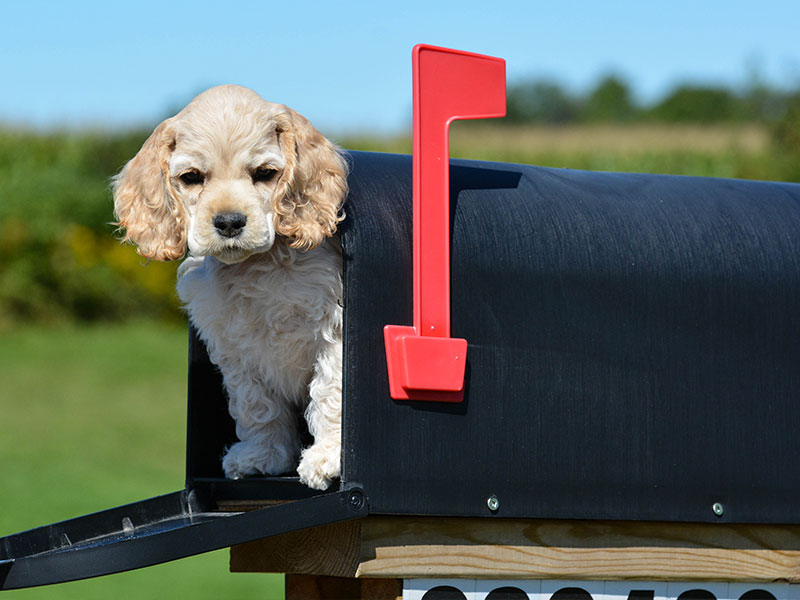
There is almost a comical trope between canines and the postman. People expect a negative relationship, and most do not flinch when their dog barks at the postal carrier's near-daily arrival. However, the animal's behavior is unacceptable primarily for its impact on the dog and its effect on the postman.
The post's intrusion disrupts the dog's sense of security, leading to potential anxiety, and the emotion is typically shared with the postal worker. How can you, as the pet owner, address the situation? You must understand where the behavior or urge to bark comes from and correct it with training and positive reinforcement.
Fear or Dominance
A dog typically barks as a sign of dominance or fear. For dominant animals, the bark is a way to alert their family or pack that someone or something has entered their territory – think of it as a doorbell. Dominant dogs are secure and will understand the postal visit as a routine part of the day. The animal will likely settle quickly. While the barking can be annoying, it is natural for some breeds.
If your dog is fearful, that is a problem. When a dog is afraid, the bark is a sign of distress and can result in attacks. If your dog runs from the door when mail arrives or lunges at it, you are likely dealing with a fearful dog. To limit the stress of both the postman and the animal, it is best to address the issue and correct the behavior.
Training
When pet owners hear the word training, they often feel like they are not qualified to do the job. For many people, the thought of having to train a dog sounds impossible, but it is not as complicated as they think. Dog training comes down to repetition and positive reinforcement. There are several tips and tricks to help you curb your dog's adverse reactions to the postal worker, helping to heal and build a rewarding or at least calming relationship between the two.
-
Start early:
It is easier to train a young dog because it develops habits over prolonged periods of exposure. The animal can begin training as early as six weeks. The goal is to associate all visitors with positive or pleasurable experiences. You can invite the mailman to come in and give the dog treats. As a pup, the animal is not as intimidating and has yet to learn to fear strangers.
-
Avoid rewarding misbehavior:
It is common to want to calm your pet, sympathize with its anxiety, and even coddle it. However, phrases like, "it's all right," said in a calming voice can reward the behavior. Instead of trying to calm the animal, try to distract it with another command, like "sit." When the animal listens to you and stops barking, reward it with treats or affection; this is positive reinforcement for appropriate behavior.
-
Maintain authority and control:
This suggestion is not so much geared toward your dog; it is more about people around the pet. It is not uncommon for friends or family to make jokes or encourage incorrect behavior because they find it amusing. Do not allow people to undermine the progress you are making with your dog. You must maintain authority and control in your house for your pet to see you as the pack leader.
-
Use treats and staged exercises:
Does your dog like treats or play as a reward? Whichever works best for your pet, use it as a tool for positive reinforcement during staged exercises. Have friends or family pretend to be strangers coming to the house, distract the dog with an alternate and preferable behavior, rewarding the animal when it obeys. If your pet does not bark at friends and family, consider asking the mailman to participate in some conditioning exercises.
-
Team up with the postman:
People are often surprised when a mail carrier agrees to practice interacting with their pet, but they shouldn’t be. Mail carriers do not want to have animals on routes they fear. Learning to coexist with people’s animals is beneficial to the letter carrier and the animal because it reduces the level of anxiety and animosity that can build over time.
-
Use training tools for older dogs:
While the use of treats is often enough for younger dogs, older animals might need additional aids. Older pets have years of bad habits and reinforcement built-in, so it can be challenging to correct the behavior. Tools, such as a head halter, can help owners correct unwanted behavior and more easily get the dog into a more receptive position. When using the tools correctly, you can maintain positive associations with the devices and training.
Medical Treatment
Some dogs need extra help to correct ingrained behaviors. For these animals, fear is the basis for the habit, and you might need to visit a veterinarian to discuss anxiety treatments or therapy. Sometimes medication can help correct negative behaviors because it allows the animal to focus on you and not the environmental situation. The goal of anxiety therapy is not prolonged drug treatment. The hope is that after a period, the dog learns positive behaviors and reduces its fear of surroundings and strangers.
Avoidance
Sometimes avoidance is the only option. Some dogs just fear or dislike the postman, and it is best to place the animal in another room or away from the situation. In the case of postal workers, avoidance is easy because they typically come at the same time every day, so provide your pet with something it enjoys away from the postbox.
Most dogs can learn to respect the postman. Training is possible at any age, so give it your best shot.