
 Save 15% on your 1st Autoship learn more

 Email us
 Live Chat
 FAQs



Introduction
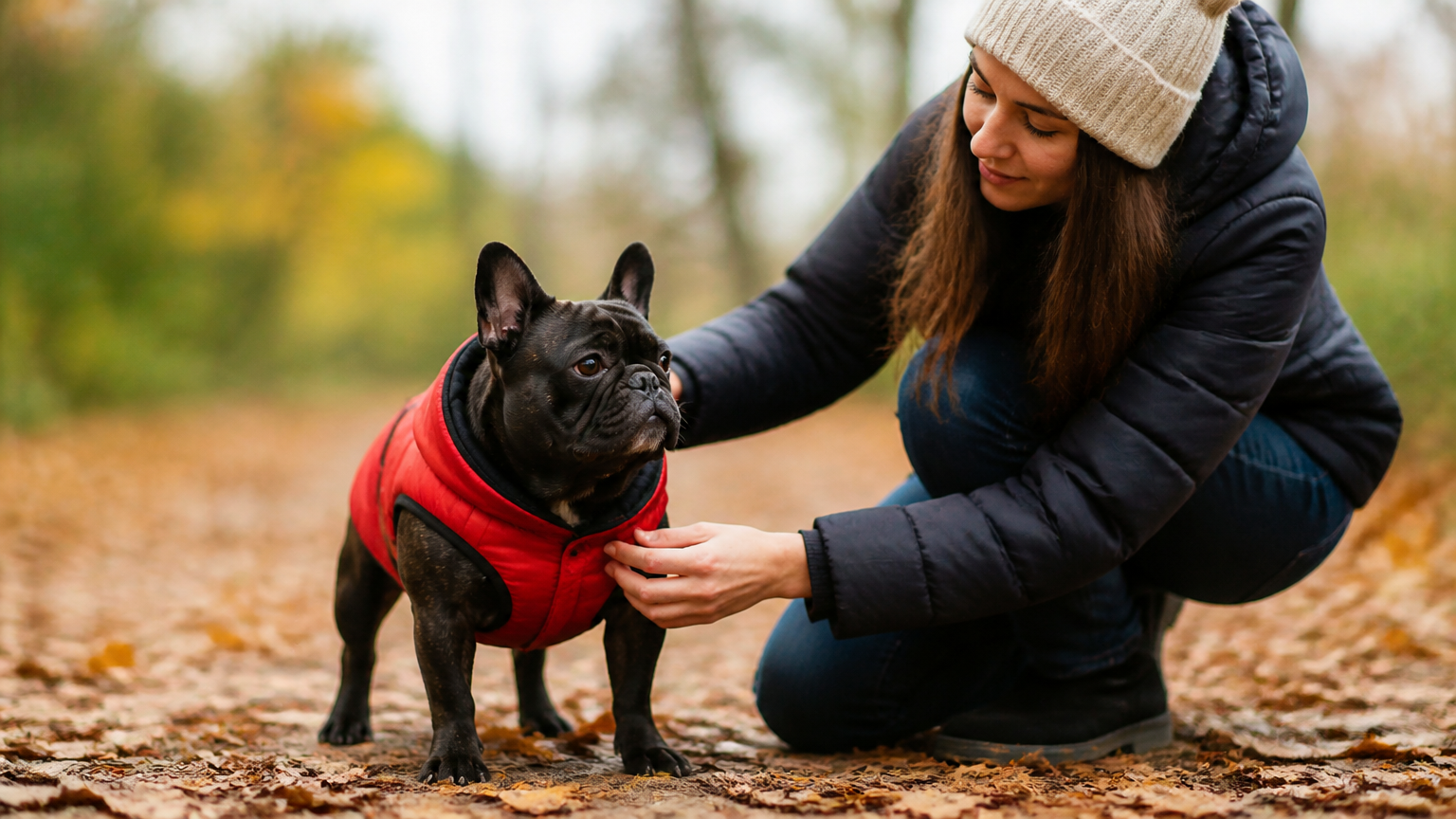
A coat that fits your French Bulldog's chest can end up hanging past the tail. One that fits the back may be too tight around the shoulders. It's a frustrating tradeoff when you want to get your dog ready for a cold or rainy walk.
At BaxterBoo, we recommend starting with your dog's measurements and the weather you'll face most often. A short-back cut with room through the chest is a useful place to start, but the fit of each coat matters more than its breed label. We'll cover how to measure your Frenchie, compare coat styles, and check for comfort. The same approach can help you shop for an English Bulldog, too.
Why Fit Matters for French Bulldogs
French Bulldogs often have broad chests, sturdy necks and relatively short backs. A coat designed for a longer, narrower dog may fit around the chest but extend too far over the rear. A shorter coat may leave the chest or neck feeling squeezed.
Sizing up isn't always the answer. It can add room around the body while also making the coat longer, looser at the belly or more likely to shift during a walk.
Look for a coat with a shape that accommodates your dog's proportions. A French Bulldog-specific cut may be helpful, but an adjustable coat made for several breeds can work too. Use the individual product's measurements to decide.
Dog Coats


How to Measure Your Frenchie for a Coat
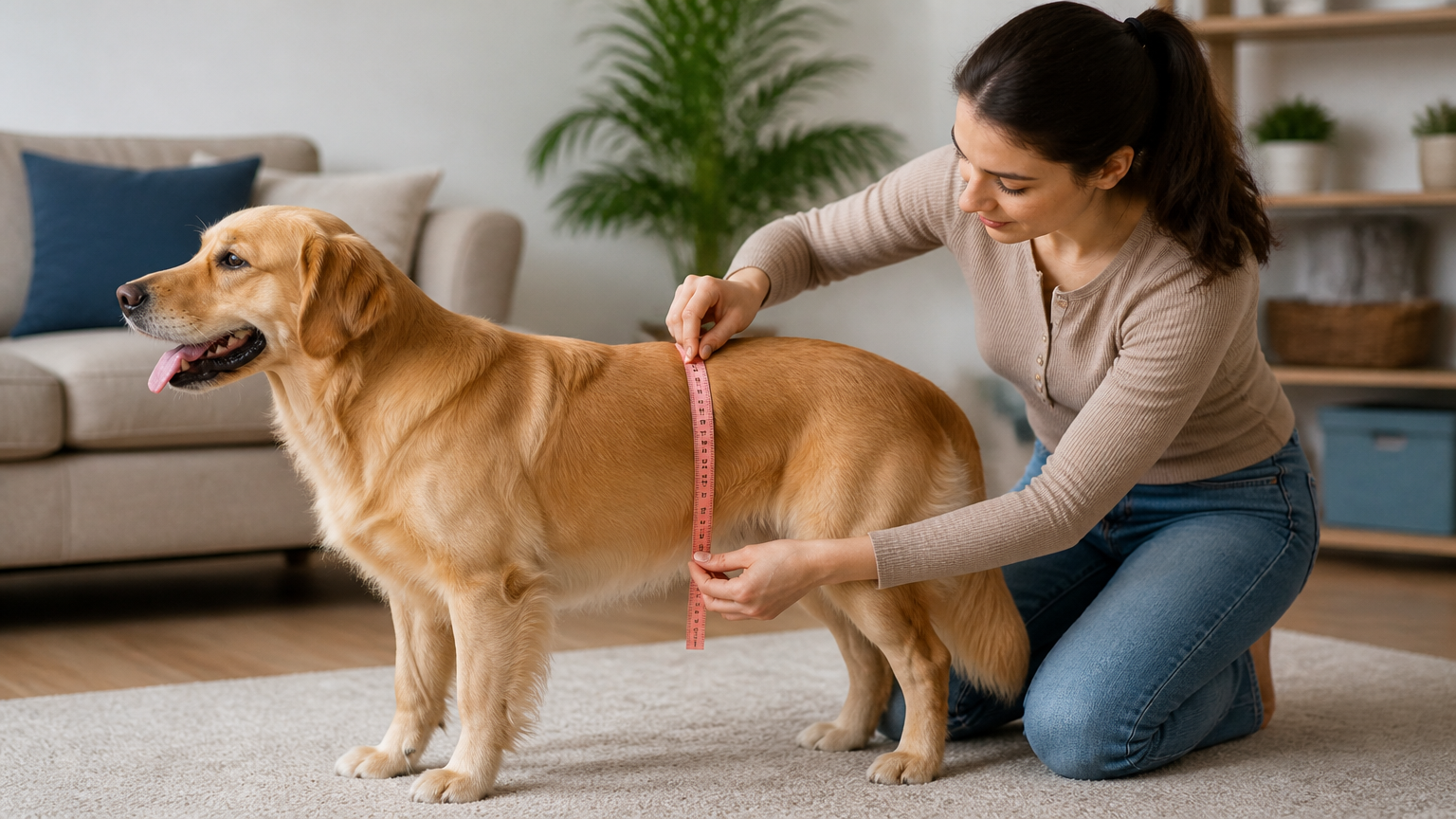
Use a flexible measuring tape and have your dog stand comfortably. Keep the tape flat against the body without pulling it tight. If your dog wiggles, take a break and measure again.
Step 1: Measure the chest
Wrap the tape around the widest part of the chest, usually just behind the front legs. Make sure it passes all the way under the body without twisting.
The chest measurement is especially useful for a Frenchie because this is where a narrow coat may feel tight. A coat needs enough room for normal movement and breathing.
Step 2: Measure the neck
Measure around the base of the neck where the coat's neckline will sit. Don't rely on your dog's collar size. A coat's opening may sit in a different place.
Step 3: Measure the back
Measure from the base of the neck, between the shoulders, to the base of the tail. This helps you avoid a coat that reaches too far over your dog's rear.
Step 4: Compare the size chart
Check your measurements against the chart for the exact coat you want. Size names such as small, medium and large aren't consistent across styles.
If your dog falls between sizes, review the brand's sizing guidance and look at the coat's adjustability. A larger size may provide chest room but could also be too long. If the chart doesn't accommodate both measurements, another cut may be a better choice.
Before you order, check that:
- The chest measurement fits within the coat's listed range.
- The neck opening has room without sitting loose enough to slip.
- The back length won't interfere with the tail.
- The belly closure can be adjusted for your dog's shape.
Check the Fit Once the Coat Is On
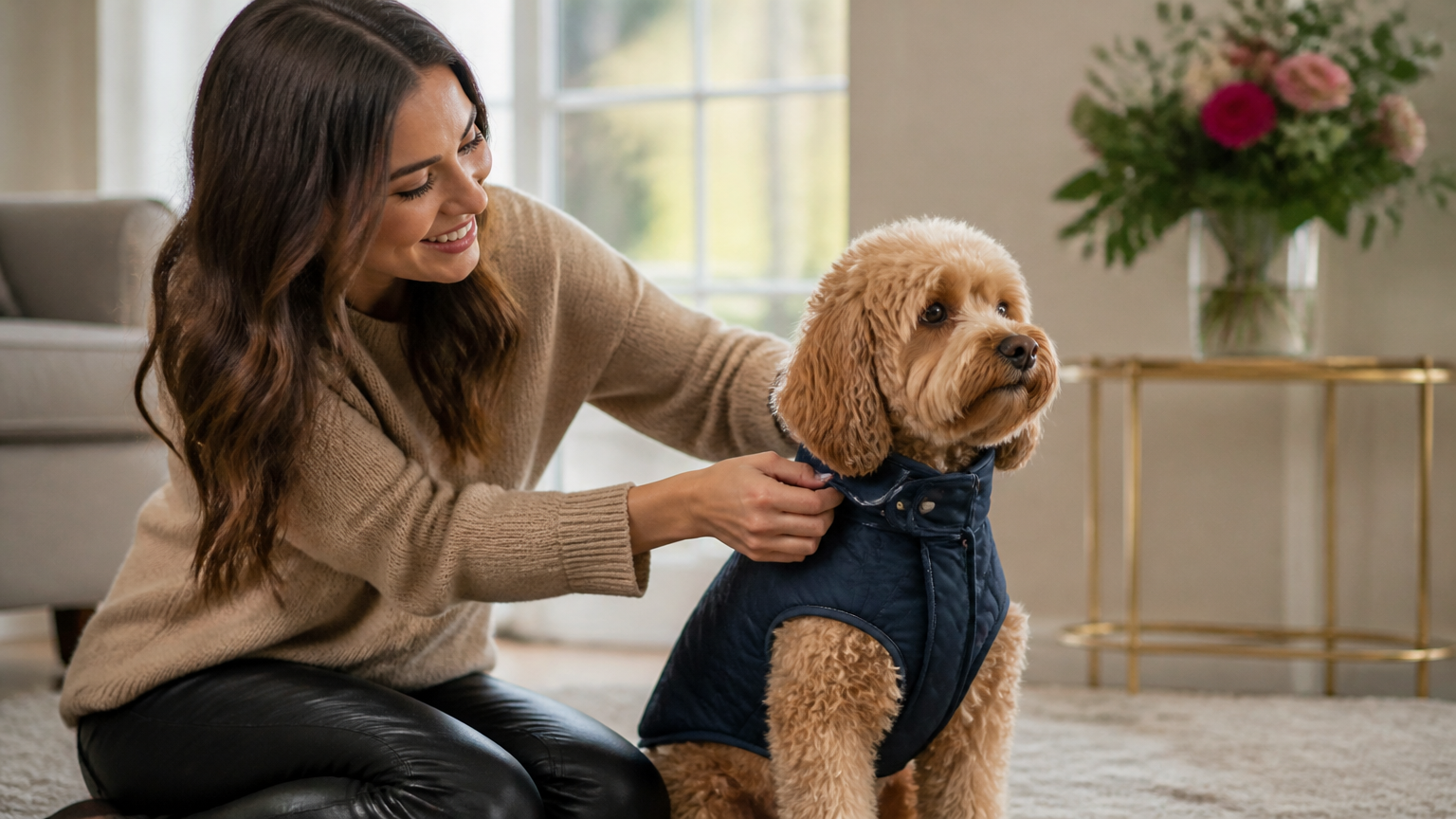
A size chart gets you started, but the real test is how the coat sits and moves on your dog. Fasten it according to the product instructions, then let your Frenchie stand, walk and sit.
The neckline should leave room for comfortable breathing and head movement. Check that you can slide two fingers under fastened areas without forcing them. The fabric should not pull tightly across the chest or press into the front legs.
Watch the coat while your dog takes a few steps. If it twists, slides backward or bunches behind the front legs, adjust the closures and try again. A coat that still shifts or restricts movement after adjustment may be the wrong cut.
Also check the underside. Your dog should be able to relieve themselves without the coat getting in the way. Look underneath for rubbing or red marks after a short wear.
Vet Tip: If your dog develops persistent skin irritation, or seems uncomfortable even after you remove the coat, ask your veterinarian for advice.
Choose a Coat for the Weather
The right coat depends on more than how warm it looks. Think about rain, wind and how long your dog will be outside, as well as your dog's comfort.
| Coat type | Useful for | What to check |
|---|---|---|
| Fleece or sweater | Cool, dry outings | Softness, chest stretch and whether the fabric stays in place |
| Lightweight raincoat | Wet weather without a need for heavy insulation | Coverage, closure and the label's water-resistance claims |
| Insulated coat | Colder walks | Room through the chest and shoulders, plus suitable lining |
| Insulated coat with a weather-resistant shell | Cold, wet or windy outings | Both the warmth of the lining and the shell's stated protection |
A fleece layer can be comfortable in dry weather, but don't assume it will keep your dog dry in rain. A thin rain shell can help with wet conditions without necessarily providing much warmth.
Read the label closely. "Water-resistant" and "waterproof" aren't interchangeable claims, and coverage can vary even among coats with similar descriptions. A coat may leave the legs and part of the belly exposed.
For a dog who needs warmth in wet weather, look for both insulation and an outer layer suited to those conditions. Avoid adding extra layers unless they fit comfortably together. More fabric can bunch around a Frenchie's chest or make the coat too tight.
Features That Make Walks Easier
The best details are the ones that fit how you and your dog get ready. Before choosing a color or pattern, look at the closure, harness access and ease of movement.
Adjustable closures
Straps or adjustable fasteners around the neck and belly can help you fine-tune the fit. They are useful when your dog's chest and back measurements fall into different size ranges.
Adjustability has limits, though. A strap can make a coat snugger, but it can't fix a back panel that's much too long or a chest opening that's too narrow.
Easy dressing
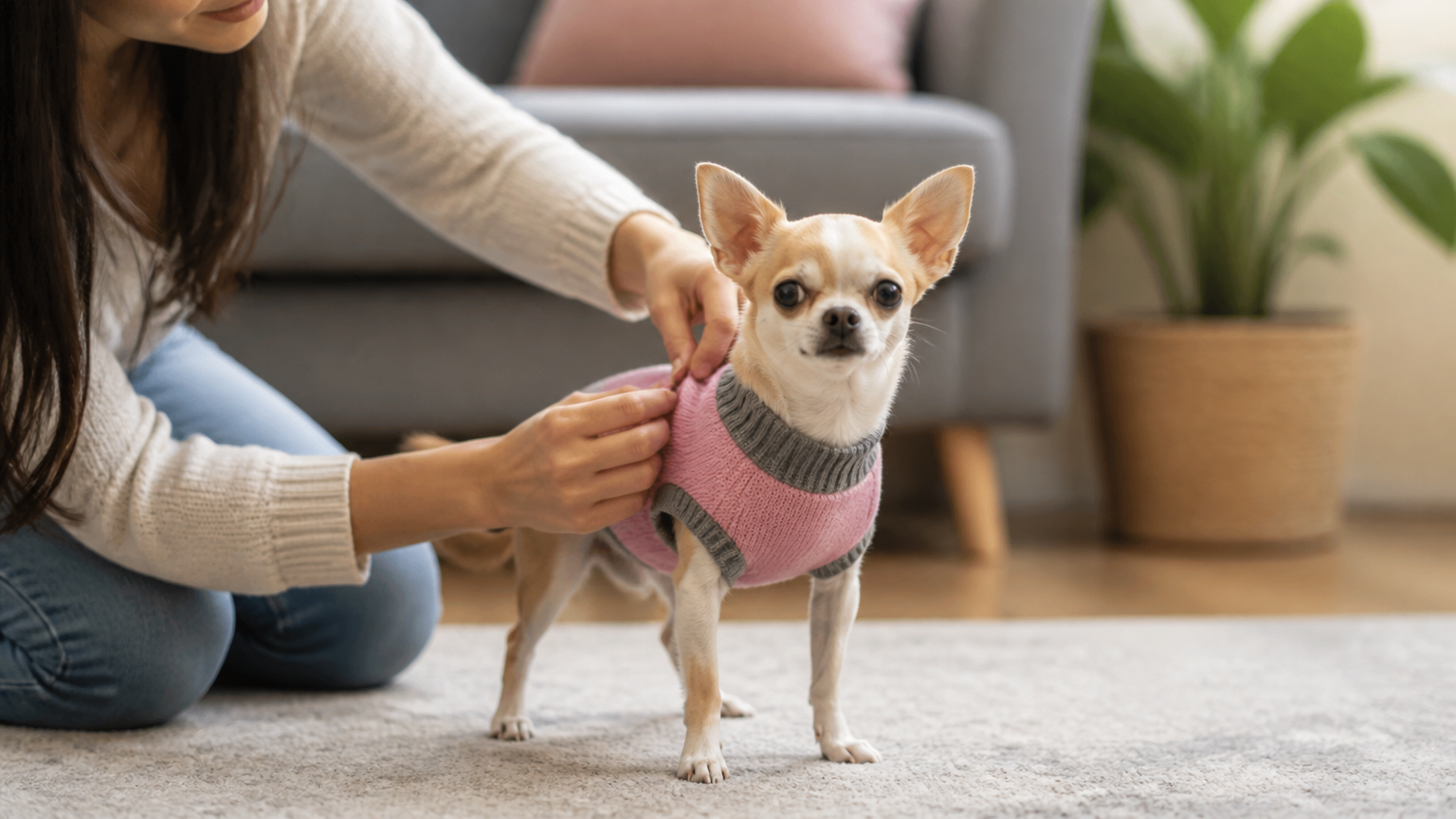
A coat that opens across the chest and belly may be easier to put on than one that must be pulled over the head. This can help dogs who dislike having their legs lifted or who are still getting used to clothing.
Check where zippers, buckles or hook-and-loop fasteners sit. They should close securely without catching your dog's fur or pressing into the skin.
Harness and leash access
If your Frenchie wears a harness, decide whether it will sit under or over the coat. An opening in the coat can make it easier to reach a harness worn underneath. Check that the opening lines up with your harness attachment point.
Try the full walking setup before heading outside. Neither the coat nor harness should twist or restrict movement. Don't attach the leash to the coat itself unless the product is specifically designed for that purpose.
Visibility and cleaning
Reflective details can make a coat easier to see in low light. They don't replace a leash or your attention during a walk.
Check the care label before buying. A coat you can clean and dry easily is a practical choice for muddy sidewalks and wet winter walks. At BaxterBoo, we suggest considering care instructions alongside fit, especially if your dog will wear the coat often.
Does Your Frenchie Need a Coat?
A coat can be useful for a short-haired French Bulldog on a chilly, windy or wet outing. It isn't necessary for every dog on every walk. Weather, activity level, age and your dog's individual comfort all matter.
Watch your dog rather than relying on a single temperature rule. Shivering, reluctance to keep walking or repeatedly lifting paws can mean it's time to head indoors. (vet.cornell.edu) A coat does not protect every part of the body, and it doesn't make an extended outing safe in severe weather.
Remove a wet coat when you come inside and dry your dog as needed. Take the coat off indoors when it is no longer needed, particularly if your dog seems too warm.
French Bulldogs can have breathing difficulties, so avoid bulky or tight clothing around the neck and chest. (vet.cornell.edu) If your dog has trouble breathing, contact a veterinarian promptly. If your dog has known breathing or mobility concerns, ask your vet what to consider before using a coat.
Dog Coats for English Bulldogs
English Bulldogs can also need coats with generous chest and neck room. Don't assume, however, that a coat sized for a French Bulldog will fit an English Bulldog. The dogs can differ considerably in overall size and proportions.
Measure the English Bulldog's chest, neck and back separately, then compare all three measurements with the specific coat's chart. Look for adjustable closures and enough room around the shoulders. As with a Frenchie, a longer coat isn't automatically better if it bunches or interferes with the tail.
A breed-specific label can narrow your search, but it isn't a substitute for a fit check. Let your dog walk and sit in the coat, and check the underside for coverage that stays clear during bathroom breaks.
Help Your Dog Get Used to a New Coat
Some dogs accept a coat quickly. Others need a few short practice sessions before they feel comfortable wearing one outside.
Step 1: Introduce the coat
Let your dog sniff the coat while it is on the floor. Keep the interaction relaxed and offer praise or a small treat for calm interest.
Step 2: Practice fastening it
Place the coat on your dog and fasten it without rushing. If your dog pulls away or seems worried, take it off and try again later.
Step 3: Try a short indoor walk
Let your dog move around for a brief period while you check the fit. Look for rubbing, twisting or an awkward stride. Remove the coat if your dog appears uncomfortable.
Step 4: Head outside
Start with a short outing, then check the coat again when you return. Adjust it if necessary, and look for damp spots or marks where the fabric may have rubbed.
Keep the Coat Ready for the Next Walk
Follow the care label for washing and drying. Secure fasteners before laundering if the instructions recommend it, and let the coat dry fully before putting it away.
Check straps, seams and closures regularly. A loose strap or worn fastener can change the fit, even if the coat was comfortable when new.
Measure your dog again if their body shape changes. Puppies grow, and an older dog's needs may change over time. A coat that fit last season may need a fresh check before you use it again.
Conclusion
A useful French Bulldog coat fits the chest without swallowing the back. Start with measurements, choose the coverage for your weather, and watch how your dog moves before committing to the fit.
- Compare chest, neck and back measurements with each coat's chart.
- Choose warmth and rain protection separately, based on your outings.
- Recheck the fit with your dog's harness and after the first short walk.
Next step: Explore the dog coats and seasonal apparel at BaxterBoo with your dog's measurements handy.
FAQ
What size coat does a French Bulldog wear?
There isn't one reliable size for every Frenchie. Measure your dog's chest, neck and back, then compare those numbers with the chart for the specific coat.
Should a French Bulldog wear a coat in winter?
A coat can help a Frenchie stay comfortable on a cold or wet outing, but the need depends on the weather and the individual dog. Watch for signs of discomfort and bring your dog inside if they seem cold.
Can an English Bulldog wear the same coat as a French Bulldog?
Possibly, if the coat fits both dogs' measurements, but don't choose based on breed name alone. Check the English Bulldog's chest, neck and back against the coat's size chart and test the fit while they move.
Can my Frenchie wear a harness with a coat?
Yes, if both fit comfortably and the leash can attach securely to the harness. Check that an opening lines up with the attachment point, or make sure a harness worn over the coat doesn't squeeze or shift the fabric.


- Site & Contents BaxterBoo.com. BaxterBoo is located in the United States.
- Privacy & Security
- Terms of Use
- Accessibility Statement
