
 Save 15% on your 1st Autoship learn more

 Email us
 Live Chat
 FAQs



Introduction
A dog sweater can look like the right size on the hanger and still bunch at the shoulders or squeeze around the chest. Before choosing a coat or sweater, measure your dog’s neck, chest and back while they stand naturally. Then compare those numbers with the size chart for the specific garment.
At BaxterBoo, we know that a size label alone doesn’t tell you how an outfit will fit. A dog with a long back may need a different cut from a dog with a broad chest, even if they weigh the same. A few careful measurements, followed by a fit check, will help you choose clothing your dog can move in comfortably.
What You Need Before Measuring
A soft sewing tape is the easiest tool to wrap around your dog. If you don’t have one, use a piece of string or ribbon and a ruler. Mark where the string meets, then lay it flat against the ruler.
Keep a pen or your phone nearby to record each number. Treats can help your dog stay relaxed, and a second person can hold their attention while you handle the tape.
Ask your dog to stand on all four paws in a natural position. If they sit, twist or lean away, pause and try again once they’re comfortable. The American Kennel Club’s measuring guide recommends standing measurements and checking the chart for each item because sizing varies by brand and style.
Dog Clothes




How to Take Your Dog’s Measurements
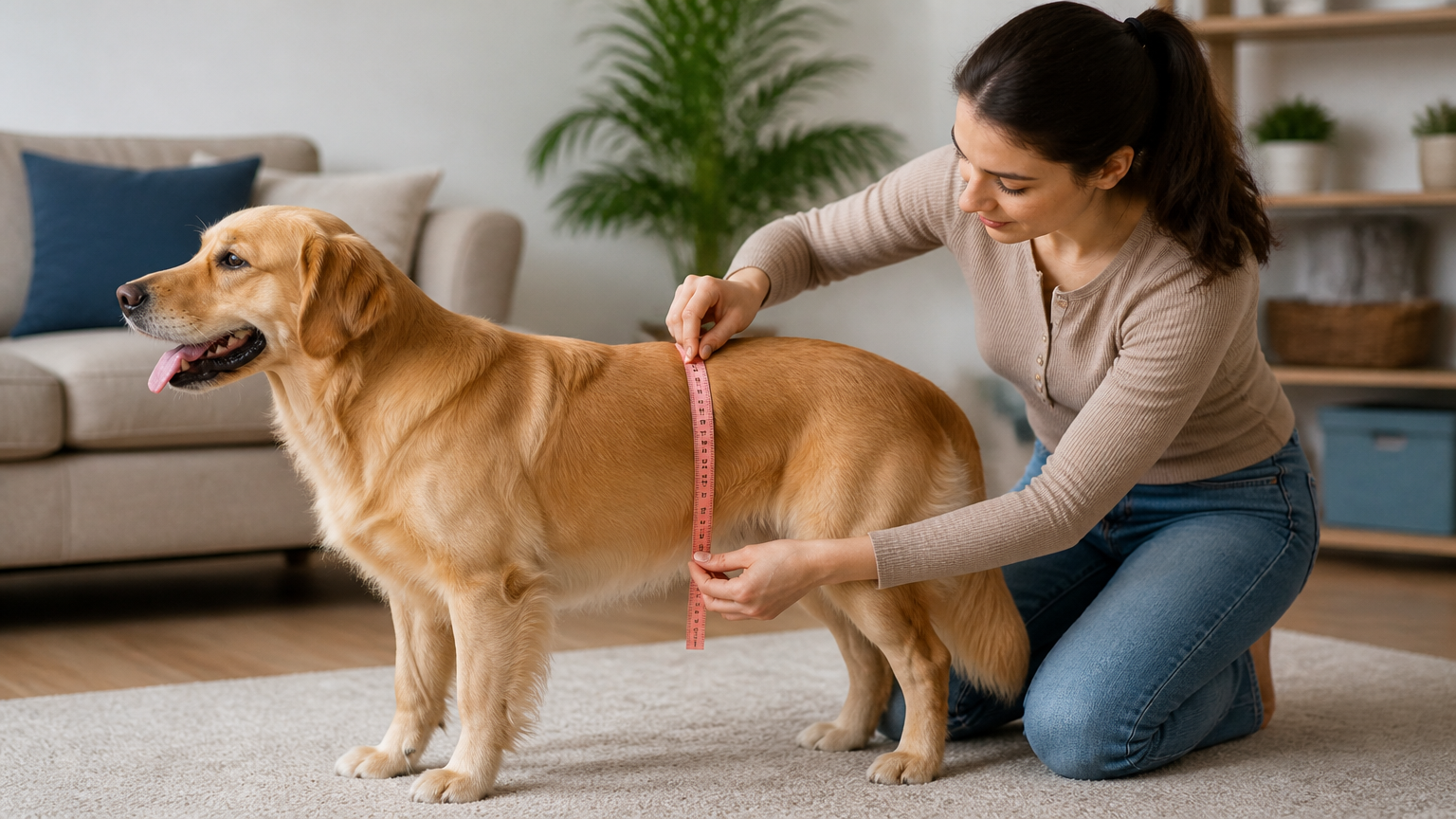
Most dog clothes use three measurements: neck circumference, chest circumference and back length. Circumference, sometimes called girth on a size chart, means the distance all the way around that part of the body.
Step 1: Measure the Neck
Wrap the tape around the base of your dog’s neck, near where the neck meets the shoulders. This is generally close to where a collar sits.
Keep the tape close to the fur without pulling it tight. You should be able to slip two fingers comfortably underneath it. Record the number and check the garment’s instructions in case the manufacturer specifies a different measuring point.
Step 2: Measure the Chest
Find the widest part of your dog’s rib cage, usually just behind the front legs. Wrap the tape around the body, passing it over the back and under the chest.
Keep the tape level and close without squeezing. Allow room for two fingers beneath it, then record the measurement. Chest girth is often the most useful starting point for clothes because a garment that is too tight there can restrict the shoulders and ribs.
Step 3: Measure the Back
Place the tape at the base of the neck, where it joins the body, and measure along the spine to the base of the tail. Don’t include the tail itself.
Some clothing charts specify a slightly different starting point, such as the withers, the area between the shoulder blades. Follow the item’s instructions when they differ from your first measurement.
Step 4: Check and Record Your Numbers
Measure each area again if your dog moved or the tape slipped. Write down the three results with their units, such as inches or centimeters, so you can compare them with a chart.
For a fluffy dog, measure over the coat without pulling the tape tight enough to flatten the fur completely. If the manufacturer gives specific instructions for measuring through thick fur, use those for that garment.
Before you put the tape away, check that you have:
- Neck circumference at the base of the neck.
- Chest circumference at the widest part of the rib cage.
- Back length from the garment maker’s specified starting point.
- Measurements recorded in the same units used on the size chart.
Bottom line: Measure your dog standing, keep the tape comfortable, and check the garment’s instructions before comparing numbers.
How to Use a Dog Clothes Size Chart
Dog clothes sizes such as small, medium and large are labels, not universal measurements. A medium sweater from one maker may fit differently from a medium winter coat, even if both are intended for dogs of a similar weight.
Start with the chart for the exact item you want. Check whether it lists dog body measurements or the dimensions of the garment. A body-measurement chart tells you which size is intended for a dog with those measurements. Garment dimensions tell you how large the clothing itself is, so it needs enough extra room for comfortable movement.
Compare the chest first if the chart uses it as the main sizing measurement. Then check the neck and back length. Chest fit matters, but it cannot make up for a neckline that is too tight or a coat that is too long.
What If Your Dog Falls Between Sizes?
Follow the manufacturer’s advice first. If the chart recommends sizing up, check the larger size’s neck and length as well as its chest range.
A little extra room is generally preferable to a garment that squeezes, but a much larger size can twist, drag or leave openings large enough for a leg to slip through. If neither size accommodates your dog’s proportions, choose a different cut rather than relying on the label.
For example, a long-backed dog might fit the smaller size around the chest but need more coverage along the back. A coat designed for a longer body may work better than a standard coat that is loose everywhere else.
Can You Choose a Size by Breed or Weight?
Breed and weight can help you find a starting point, but they don’t tell you your dog’s exact shape. Two dogs of the same weight can have very different chest and back measurements.
Use your dog’s numbers when a chart provides them. If a product lists only weight or breed, look for more detailed sizing information or ask for help before choosing.
Key Takeaways: Compare all three measurements with the specific item’s chart. If the numbers point to different sizes, look for a cut that accommodates your dog’s shape instead of forcing a compromise.
Measuring for Dog Coats and Winter Jackets
A winter coat uses the same three starting measurements as other dog clothes: neck, chest and back. The difference is that coats may have thicker fabric, belly panels, adjustable straps or a different shape from a stretchy sweater.
Look at where the coat is meant to close. A wraparound coat may let you adjust the chest, while a jacket with a fixed opening needs to fit comfortably over the neck and shoulders. Adjustable straps are useful only if they can be secured without squeezing or leaving long, loose ends.
Back length helps you judge coverage. The coat should not extend so far that it interferes with the tail or bunches around the hind legs. Check the underside too: your dog needs enough clearance to relieve themselves without soiling the garment.
If your dog will wear a sweater under the coat, check the coat maker’s layering instructions. Try the two pieces together and make sure your dog can move comfortably. Don’t assume a coat that fits over bare fur will also fit over a thick layer.
A raincoat can be checked in much the same way. Pay attention to the neck opening, chest closure and movement around the front legs, especially if the fabric has little stretch.
Winter Coat Fit Checklist
- The neckline sits comfortably without pressing on the throat.
- The chest closes without pulling, and straps stay secured.
- The shoulders and front legs can move freely.
- The back and belly panels don’t interfere with the tail, hind legs or bathroom breaks.
- Any sweater worn underneath fits comfortably with the coat.
How Should a Dog Sweater Fit?
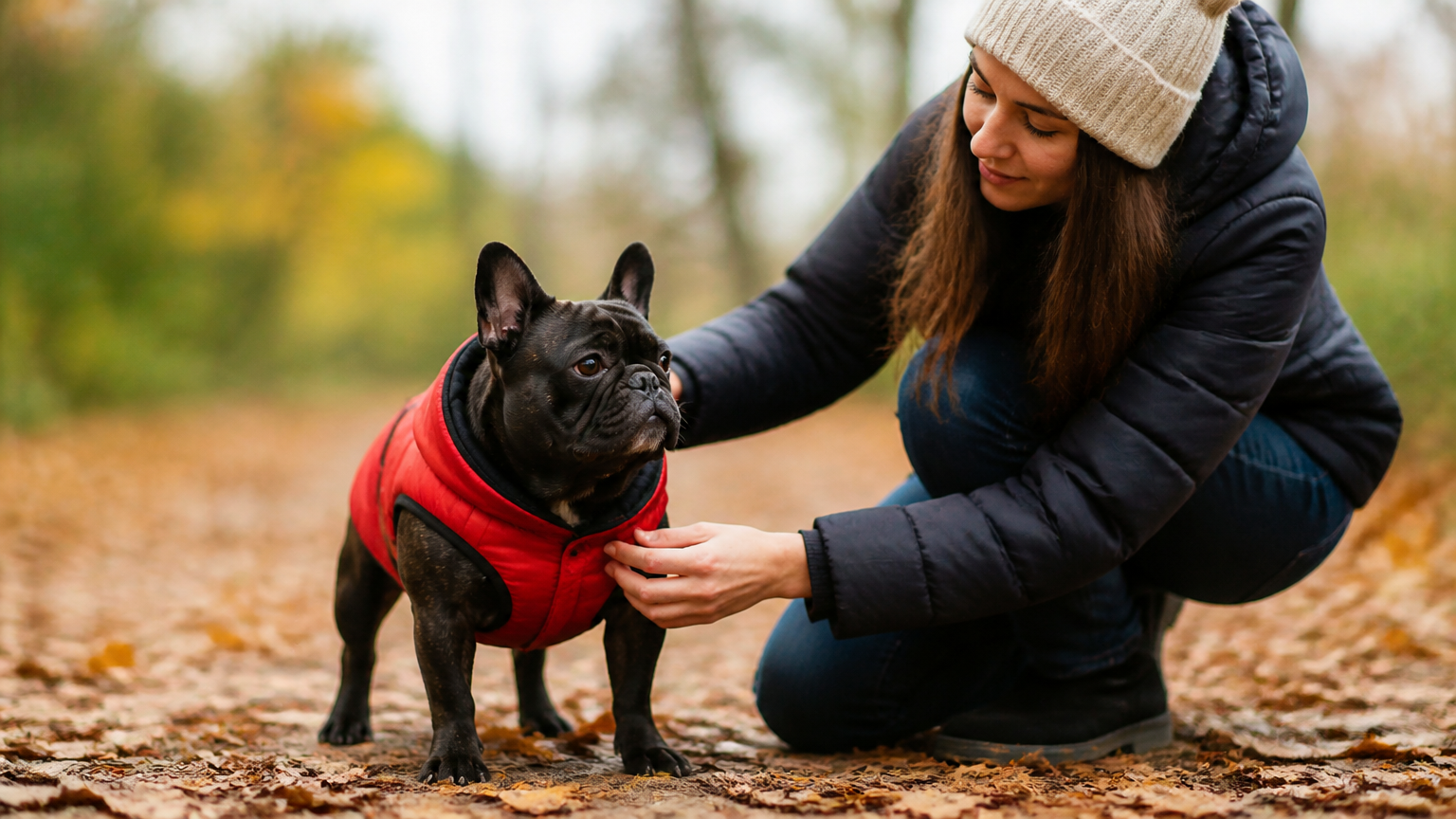
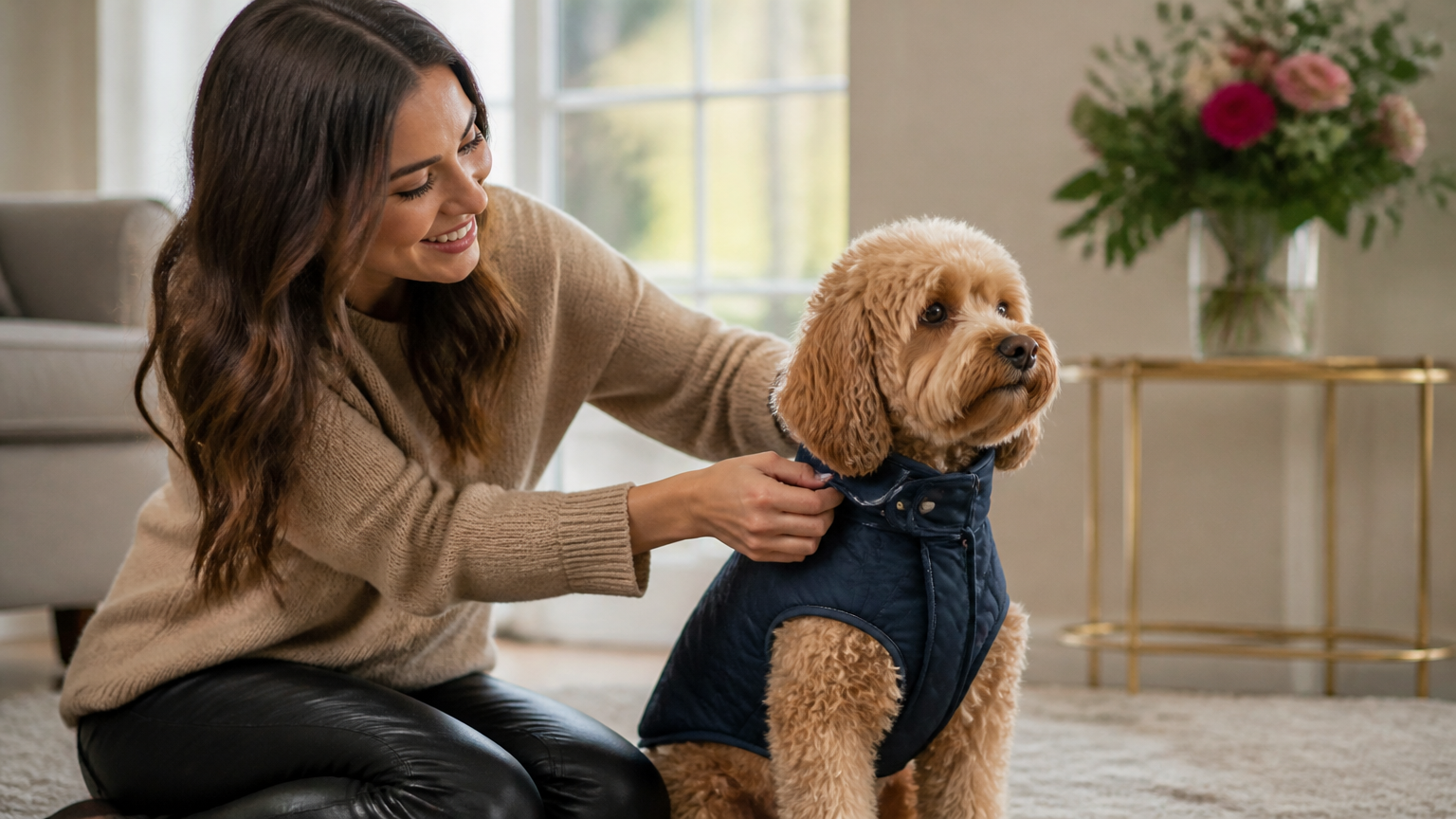
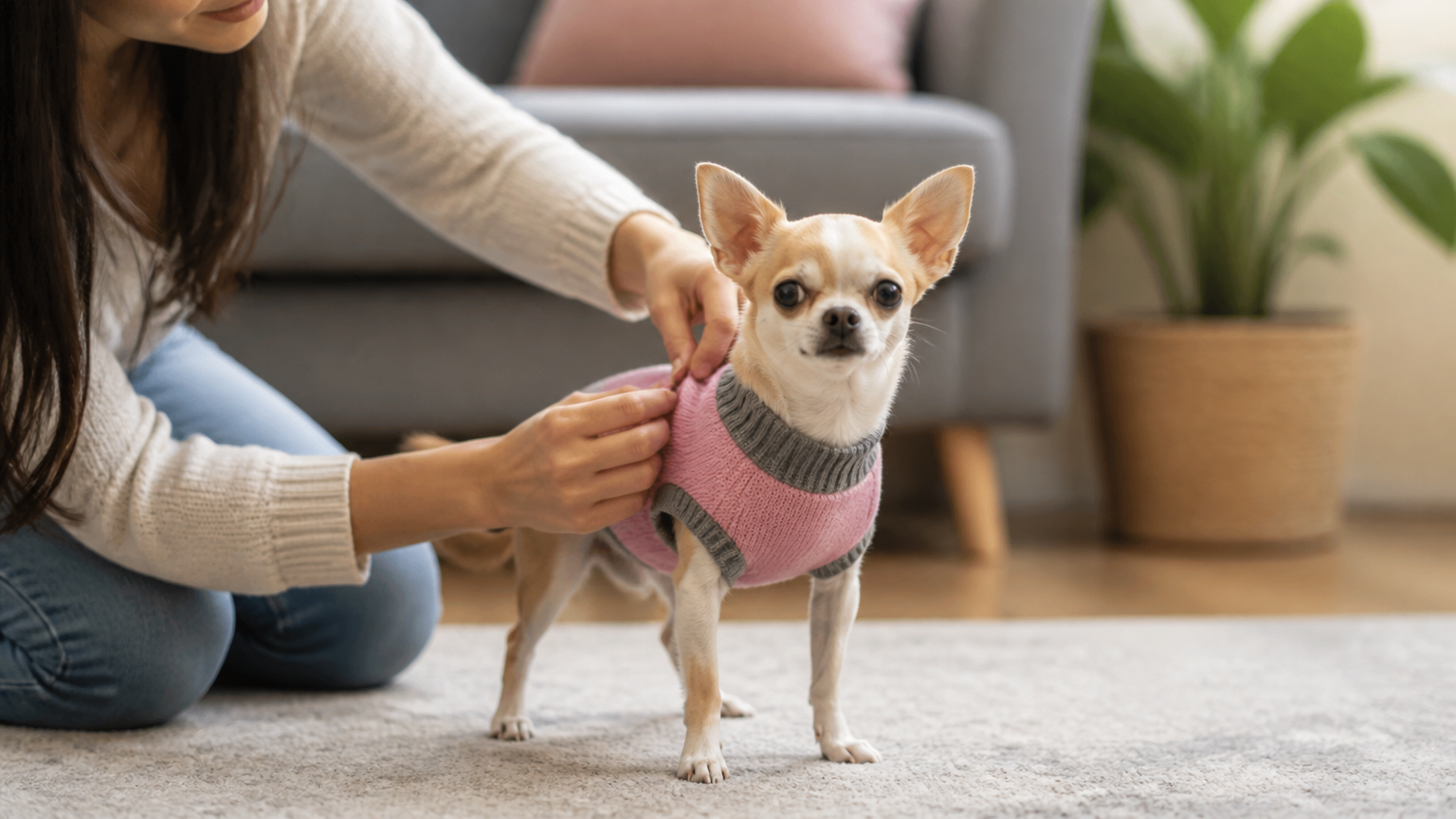
A sweater should sit close enough to stay in place but not so tightly that it pulls across the chest or digs into the armpits. You should be able to slip two fingers comfortably under the neckline. Check the leg openings for comfortable clearance too.
A stretchy knit may be easier to put on than a stiff jacket, but stretch doesn’t excuse a poor fit. If the fabric is stretched tightly across the ribs while your dog is standing, try a different size or style.
Once the sweater is on, let your dog walk, sit, lie down and get up. Watch for fabric bunching behind the front legs or the neckline riding up. The back can end before the tail; it doesn’t need to cover every inch of your dog to fit well.
A sweater that twists, hangs beneath the belly or lets a front leg slip out is too loose for that dog. Choose a closer-fitting cut rather than leaving excess fabric where it could catch or get underfoot.
How to Check Clothing After You Try It On
Measurements narrow the choices, but the try-on tells you how the garment works on your dog. Start with a short, supervised fitting and offer a treat if that helps your dog feel comfortable.
Look at the clothing from the front, side and underneath. Openings should stay in place as your dog moves, and closures should not press into the body. Check that your dog can take normal steps and turn without the fabric pulling.
Take the garment off and look for marks or areas where the fur has rubbed flat. If you see persistent redness or sore skin, stop using it and ask your veterinarian for advice.
Don’t leave your dog unattended in clothing. Remove a wet garment, and take off a coat or sweater if your dog becomes too warm or seems distressed. If your dog freezes, struggles or repeatedly tries to get the clothing off, take a break rather than forcing the fit.
At BaxterBoo, we suggest checking these points before deciding a garment is ready for a walk:
- Can your dog walk, sit and lie down without the fabric pulling?
- Can you slip two fingers comfortably under the neckline?
- Are the leg openings free from bunching and rubbing?
- Does the garment stay in place without dragging or twisting?
- Is the underside clear for bathroom breaks?
How to Measure Clothes You Already Own
A sweater or coat that fits well can be a useful comparison when shopping. Lay the clean garment flat, close its fasteners and smooth it without stretching the fabric.
Measure the back from the neckline to the rear hem. For the chest, follow the new product’s measuring instructions if they’re available. A flat width across the chest is not the same thing as the full circumference around your dog.
Check where the measurement is taken and whether the garment is meant to be measured closed. If you double a flat width to estimate circumference, remember that fabric thickness, seams and the shape of the garment can affect the result.
Use the old garment as a reference, not a replacement for your dog’s measurements. A stretchy sweater and a structured coat can have similar dimensions but fit quite differently.
Recheck the Fit as Your Dog Changes
Puppies grow, and adult dogs can change shape too. Measure again before buying a new garment instead of assuming the size you bought last season will still fit.
Choose something that fits your puppy now rather than a much larger coat they may grow into. Excess fabric can bunch or catch, and you’ll still need to check the fit as your puppy grows.
Recheck familiar clothes around the neck, chest and front legs. Changes in grooming or coat thickness can affect how a garment sits, so try it on rather than relying only on an old size label.
Choosing Your Next Size
A comfortable fit starts with your dog’s measurements and ends with a movement check. Keep the numbers handy, but use the chart for each new sweater or coat.
- Measure the neck, widest part of the chest and back.
- Compare all three numbers with the specific garment’s chart.
- Choose a different cut if one size cannot accommodate your dog’s shape.
- Watch your dog move, then check for rubbing after removal.
Next Step: Bring your measurements to BaxterBoo’s dog clothing selection and compare them with the sizing information for the coat or sweater you’re considering.
FAQ
What is the most important measurement for dog clothes?
Chest girth is often the best place to start because clothing needs to fit around the widest part of the rib cage. Neck and back measurements still matter, so check all three against the item’s chart.
Should I size up if my dog is between sizes?
Check the manufacturer’s advice first. A larger size may provide needed room, but it should not be so loose that it twists, drags or interferes with your dog’s movement.
Can I measure my dog without a soft measuring tape?
Yes. Wrap a piece of string or ribbon around the measurement area, mark where it meets, and measure that length with a ruler. Keep the string comfortable rather than pulling it tight.
How do I know if my dog’s sweater is too small?
Look for fabric pulling across the chest, tight leg openings or a neckline that presses into the neck. If your dog moves stiffly or you notice rubbing after removing the sweater, try a different size or cut.


- Site & Contents BaxterBoo.com. BaxterBoo is located in the United States.
- Privacy & Security
- Terms of Use
- Accessibility Statement
