
 Save 15% on your 1st Autoship learn more

 Email us
 Live Chat
 FAQs
FAQs





Introduction
You finally sit down after a long day and your dog hops up next to you for a snuggle. Then it hits you: that sharp, metallic, or just plain "off" scent of dog breath. You know you should probably brush those teeth, but every time you reach for the toothbrush, your dog disappears under the couch or treats the bristles like a chew toy. At BaxterBoo, we talk to pet owners every day who face this exact struggle. Brushing is the gold standard, but it is not the only way to keep your dog's mouth healthy and their breath fresh. This guide explores practical, effective alternatives that work with your dog's natural behaviors rather than fighting against them. You can maintain a healthy smile for your pet using supplements, smart treats, and specialized gear.
Quick Answer: You can clean your dog's teeth without brushing by using VOHC-accepted dental powders, water additives, and dental chews. These methods use systemic ingredients and mechanical abrasion to reduce plaque and tartar buildup with minimal handling.
The Reality of Plaque and Tartar
To understand why alternatives work, you first need to understand the timeline of oral health. Plaque is a soft, sticky film of bacteria that forms on the teeth within hours of eating. At this stage, it is easy to remove. However, if plaque stays on the tooth for 24 to 48 hours, it mixes with minerals in your dog's saliva and hardens into tartar, also known as calculus.
Tartar is the hard, yellow or brown crust you see near the gumline. Once it hardens, no amount of brushing or chewing can remove it at home. It requires a professional cleaning by a veterinarian. This is why consistency matters more than the specific method you choose. A daily routine that prevents plaque from hardening is much more effective than an occasional, stressful brushing session every few weeks.
Signs of Dental Trouble
It is important to check your dog's mouth regularly to see if your current routine is working. Keep an eye out for these red flags:
- Red or swollen gums that bleed easily
- Persistent bad breath that does not go away after a meal
- Discolored teeth, especially near the back of the mouth
- Dropping food or hesitating to eat hard kibble
- Pawing at the mouth or face
Vet Tip: If your dog has significant tartar buildup or red, receding gums, a "no-brush" routine may not be enough to fix the damage. Consult your veterinarian for a professional assessment. They may recommend a cleaning under anesthesia to provide a clean slate for your new home care routine.
For additional guidance, read our article on warning signs of dental disease in dogs.
Dental Powders: The Hands-Off Hero
For dogs that refuse to let you touch their mouths, dental powders are often the most effective solution. These are typically made from a specific type of seaweed called Ascophyllum nodosum. Unlike brushing, which works through physical scrubbing, these powders work systemically.
When your dog eats the powder, the active ingredients are absorbed into the bloodstream and eventually released back into the saliva. This change in saliva composition helps break down existing tartar and prevents new plaque from sticking to the teeth. We carry ProDen PlaqueOff, which is one of the most well-known brands in this category and holds the Veterinary Oral Health Council (VOHC) Seal of Acceptance.
You can compare available options in our dog dental care collection.
How to Use Dental Powders
Using a dental powder is as simple as it gets. You just sprinkle the measured dose onto your dog's food once a day. Most dogs find the mild seaweed taste palatable, especially when mixed with wet food or a little bit of water.
- Consistency is the key: It usually takes 3 to 8 weeks of daily use to see a noticeable difference in breath and tartar.
- Safe for daily use: Most powders are natural and free from artificial additives.
- Great for multi-pet households: It is easy to add to every bowl at mealtime.
Key Takeaway: Dental powders are the best option for highly resistant dogs because they require zero mouth handling and work through the dog's own saliva.
The Power of Mechanical Cleaning with Dental Chews
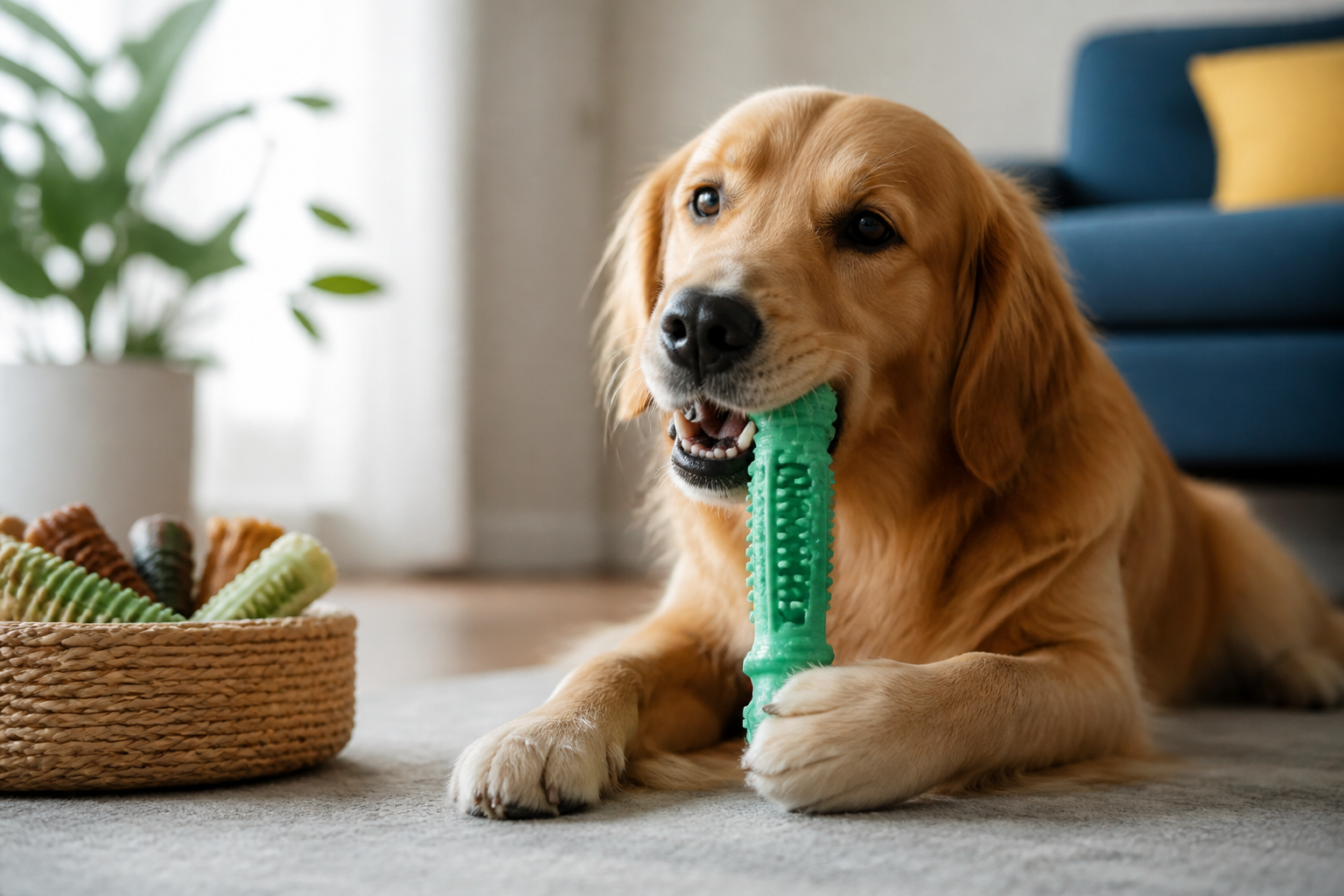
Dogs have a natural instinct to chew, and you can use this to your advantage. Dental chews are designed with specific textures, ridges, and grooves that act like a squeegee against the tooth surface. As your dog chews, the treat scrapes away plaque before it has a chance to harden.
Brands like Greenies and ProDen PlaqueOff Dental Care Bones are specifically engineered to be chewy and flexible. This allows the tooth to sink into the treat, cleaning all the way down to the gumline. Some chews also contain ingredients like chlorophyll or cinnamon to freshen breath instantly.
Browse our dental treats and chews to find options for your dog's size and chewing style.
Choosing the Right Chew
Not all "dental" treats are created equal. When shopping at BaxterBoo, look for these features:
- VOHC Seal: This indicates the product has been scientifically tested to reduce plaque or tartar.
- Appropriate size: If a chew is too small, your dog might swallow it whole, which provides no dental benefit and poses a choking risk.
- Calorie count: Dental chews are treats, so make sure to account for those extra calories in your dog's daily diet.
Step 1: Match the chew size to your dog's weight. / Using a chew that is too large can be hard on the jaw, while one that is too small won't provide enough scrubbing time. Step 2: Supervise the first few sessions. / Watch how your dog interacts with the chew to ensure they are actually chewing and not just gulping it down.
Bottom line: Dental chews provide mechanical cleaning that mimics the action of a toothbrush while satisfying a dog's natural urge to chew.
For more ideas, explore our guide to the best dental chews for dogs.
Water Additives: Mouthwash for Dogs
Water additives are a passive way to support oral health. Think of them like a mouthwash that your dog drinks throughout the day. These liquids are usually colorless and odorless, so most dogs do not even notice they are there.
They work by using enzymes or minerals to kill the bacteria that cause plaque and bad breath. While they are not as effective as mechanical scrubbing or systemic powders, they are an excellent supplementary tool. They are particularly helpful for senior dogs who may have sensitive teeth and cannot handle hard dental chews.
Best Practices for Water Additives
- Change the water daily: To keep the additive effective and the water fresh, you should clean the bowl and provide a fresh dose every morning.
- Follow the dosage: Use the amount recommended on the bottle for your dog's water bowl size.
- Combine with other methods: Water additives work best when paired with a dental powder or a weekly chew.
Specialized Dental Diets and the BaxterBoo Pharmacy
If your dog has a history of dental issues, your veterinarian might recommend a therapeutic dental diet. These are not your average kibbles. The pieces are usually much larger and have a specific fiber matrix that does not crumble immediately when bitten. Instead, the tooth must penetrate the kibble, which scrubs the surface of the tooth.
These diets are formulated to be nutritionally complete for long-term feeding. Because they are often used to manage specific health conditions, some of these formulas require a prescription. Through our partnership with Pet's Choice, the BaxterBoo pet pharmacy offers a range of FDA-approved medications and prescription pet foods, including brands like Farmina Vet Life and Royal Canin.
Why a Prescription Diet?
A prescription dental diet is often more calorie-controlled and nutrient-dense than over-the-counter options. They are specifically balanced for dogs that may also have other health concerns, such as weight management needs or kidney issues. If you are struggling with your dog's oral health, ask your vet if a prescription diet is the right step. You can then easily manage your refills through our pharmacy services.
Vet Tip: Always consult your veterinarian before switching to a prescription diet. They can help you determine the correct formulation and ensure it does not interfere with any other health conditions your dog may have.
Dental Toys and Mechanical Abrasion
Playtime can also be a time for cleaning. Certain toys are designed with dental health in mind. Rubber toys with nubs or "dental ropes" help scrub the teeth as the dog plays fetch or tug-of-war.
The Kong brand is a staple for a reason. Many of their rubber toys feature grooves that you can fill with pet-safe toothpaste or peanut butter. As your dog licks and chews to get the treat out, the rubber ridges rub against the teeth and gums.
Explore our dog toy selection for dental-friendly options that make playtime more engaging.
What to Avoid
While chewing is good, some materials are too hard and can actually fracture your dog's teeth. Avoid the following:
- Cooked bones: These can splinter and cause internal damage.
- Heavy-duty nylon bones: If you cannot indent the surface with your fingernail, it is likely too hard.
- Tennis balls: The felt on tennis balls is surprisingly abrasive and can wear down a dog's tooth enamel over time, a condition known as "blunting."
Key Takeaway: Choose "forgiving" materials like natural rubber or cotton rope that provide resistance without being hard enough to break a tooth.
Dental Wipes and Finger Brushes
If your dog is okay with you touching their face but hates the long handle and vibration of a toothbrush, dental wipes might be the solution. These are textured pads pre-soaked with a cleaning solution. You simply wrap the wipe around your index finger and rub the surfaces of the teeth.
This method gives you much more control and feel than a traditional brush. It is also less intimidating for many dogs. Finger brushes, which are small silicone caps that fit over your finger, provide a similar benefit with soft bristles.
You can also browse our dental and breath care supplies for wipes, gels, and other oral-care products.
How to Introduce Wipes
- Let them sniff: Let your dog investigate the wipe and get used to the scent.
- Start with the front: Gently lift the lip and wipe the front canines.
- Reward: Give a small treat after every few teeth to build a positive association.
- Work toward the back: Most plaque accumulates on the large molars in the back of the mouth, so try to reach those once your dog is comfortable.
Creating a Consistent Routine
The best dental care routine is the one you actually stick to. You do not need to use every single method mentioned above. Instead, pick two or three that fit your lifestyle and your dog's personality.
For example, a busy owner with a resistant dog might choose:
- Daily: Dental powder in the morning meal.
- Daily: Water additive in the water bowl.
- Twice weekly: A VOHC-accepted dental chew.
This routine takes less than a minute of your time but provides three different layers of protection. At BaxterBoo, we recommend setting a reminder on your phone or keeping your dental supplies right next to the dog food so you never forget.
Use Our Rewards and Programs
To make maintaining this routine easier on your wallet, take advantage of our MVP Rewards program. You can earn up to 5% back on every purchase of dental chews, powders, and toys. If you find a product that works perfectly, our Autoship program ensures you never run out, plus you get savings on your first order and a free MVP Gold membership.
Bottom line: Consistency beats intensity. A simple daily routine of powders and chews is far more effective than an occasional brushing session.
When to Seek Professional Help
While no-brush methods are fantastic for maintenance, they are not a cure for advanced periodontal disease. If you notice your dog has loose teeth, extremely foul breath, or is refusing to eat, it is time for a veterinary visit.
Sometimes, a dog needs a professional cleaning to get back to a healthy baseline. After that cleaning, your home care routine will be much more effective at keeping the teeth white and the gums pink. Our pharmacy can also help with any medications your vet might prescribe for gum infections or pain management following a dental procedure.
Summary of Benefits
Maintaining your dog's oral health without brushing is not only possible but can be very successful. By combining systemic treatments like powders with mechanical tools like chews and toys, you cover all the bases of dental hygiene.
- Dental powders: Change the saliva to break down plaque and tartar systemically.
- Dental chews: Provide mechanical scrubbing and satisfy the urge to chew.
- Water additives: Offer an easy, passive way to kill oral bacteria.
- Prescription diets: Use specialized fiber technology to clean teeth during meals.
- Dental toys: Turn playtime into a cleaning session with rubber ridges and ropes.
Taking care of your dog's teeth is an investment in their long-term health. It prevents pain, saves money on expensive veterinary surgeries, and most importantly, makes those doggy kisses much more pleasant. Start exploring our dental care collection today to find the perfect mix for your pup.
FAQ
Is a water additive enough to keep my dog's teeth clean?
While water additives are a great tool for reducing bacteria and freshening breath, they are usually not enough as a standalone solution. They work best when paired with a mechanical cleaning method, such as dental chews or toys, to help scrape away physical plaque. Using a combination of a liquid additive and a daily dental powder often provides much better results.
Are dental chews high in calories?
Some dental chews can be quite calorie-dense, which is a concern for dogs prone to weight gain. It is important to check the packaging for calorie counts and adjust your dog's daily meal portions accordingly. If weight is a major concern, you can look for low-calorie dental options or consult our pharmacy about prescription dental diets designed for weight management.
How long does it take for dental powders to start working?
Most pet owners begin to notice fresher breath within 2 to 3 weeks of daily use. For more significant changes, such as the softening and reduction of existing tartar, it typically takes 6 to 8 weeks of consistent use. If you stop using the powder, the benefits will eventually fade as the saliva returns to its original composition.
Can I use human mouthwash for my dog?
No, you should never use human mouthwash or toothpaste for your dog. Human products often contain xylitol, which is highly toxic to dogs, or fluoride, which can be harmful if swallowed. Always use products specifically formulated for pets, as these are designed to be safely ingested since dogs cannot rinse and spit like humans do.






