
 Save 15% on your 1st Autoship learn more

 Email us
 Live Chat
 FAQs
FAQs





Introduction
You lean in for a happy morning nuzzle only to be met with a cloud of "dog breath" that makes you recoil. When you lift your dog's lip, you might see a yellow or brown film creeping up toward the gum line. This is a common moment for many pet owners. We start looking for natural ways to scrub away that buildup before it leads to a costly vet bill. At BaxterBoo, we have spent years helping neighbors in Vernon Hills and across the country find the right tools for dental wellness. While many people think of bones as a simple treat, they actually function as a mechanical tool for oral hygiene. This post covers the science behind how bones scrape away plaque, which types are safest for your dog, and how to spot the signs that your pet needs professional help instead.
Quick Answer: Bones clean a dog's teeth through mechanical abrasion. As a dog chews, the hard or fibrous surface of the bone scrapes against the tooth to remove plaque and food debris.
The Mechanical Action of Chewing
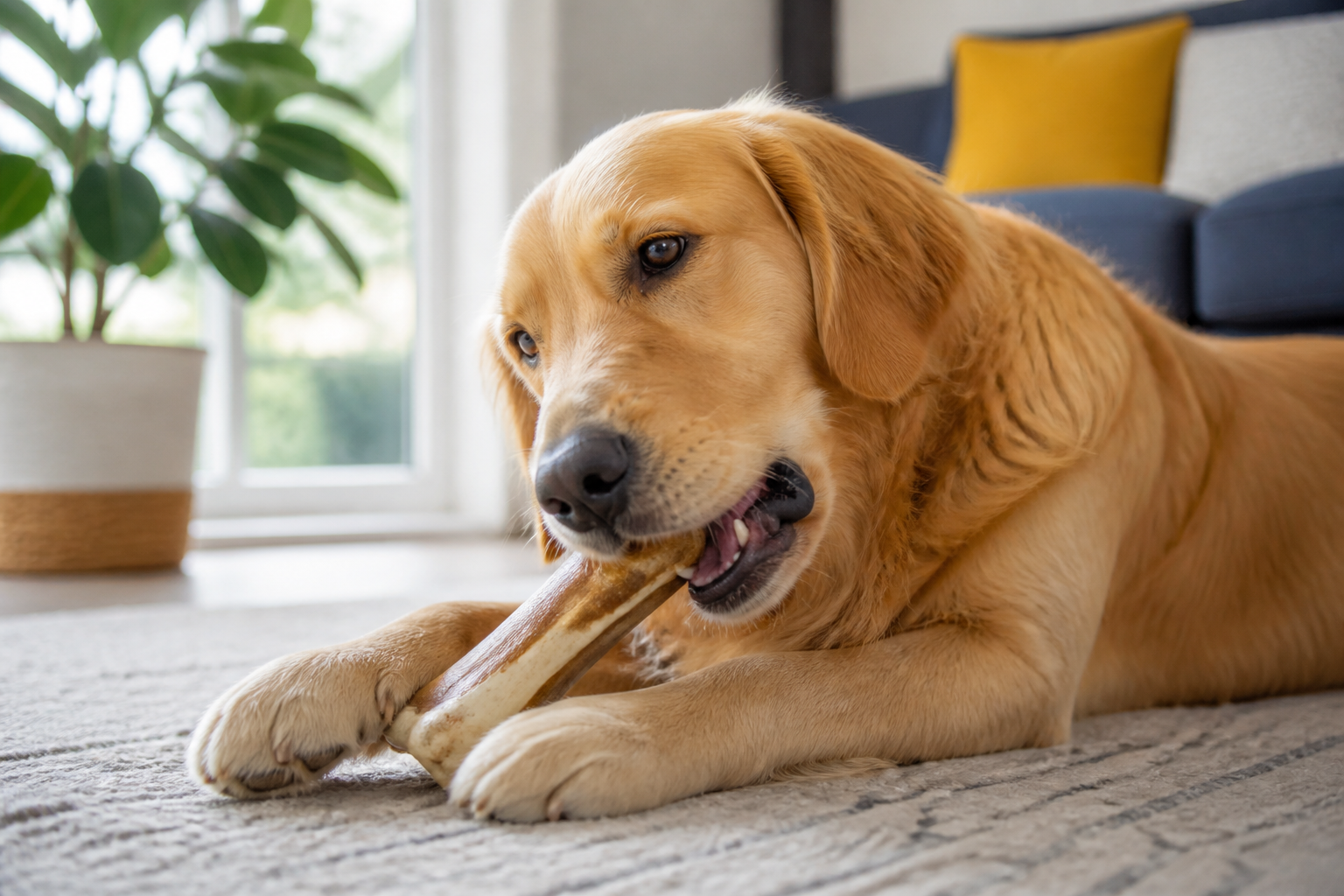
The primary way bones help clean teeth is through friction. Think of a bone as a very firm, edible toothbrush. When a dog gnaws on a bone, they do not just bite down once. They use their back carnassial teeth to shear and grind. This repetitive sliding action helps to physically rub off the soft, sticky plaque that accumulates after meals.
If that plaque stays on the tooth, it reacts with minerals in the dog's saliva. Within about 48 hours, it hardens into tartar, also known as calculus. Once tartar forms, it is like concrete. A bone can help prevent new plaque from hardening, but it often struggles to remove thick, existing tartar.
The shape of the bone also matters. A bone with some meat or gristle still attached provides a flossing effect. As the dog pulls and tears at the connective tissue, those fibers slide between the teeth and under the gum line. This action reaches areas that a smooth, round bone might miss.
The Role of Saliva
Chewing a bone also stimulates saliva production. Saliva is a natural defense mechanism for your dog’s mouth. It contains enzymes that help break down food particles and slightly buffer the acids produced by oral bacteria. By encouraging a long chewing session, you are essentially helping your dog wash their own mouth out with beneficial enzymes.
Key Takeaway: The best dental cleaning happens when a dog spends 20 to 30 minutes gnawing, which allows for enough mechanical scraping and saliva production to impact plaque levels.
Raw vs. Cooked Bones
One of the most important rules in pet safety is never to feed cooked bones. When a bone is cooked, whether it is boiled, baked, or smoked, its molecular structure changes. It becomes brittle and prone to splintering. These sharp shards can pierce the mouth, throat, or digestive tract, leading to emergency surgeries.
Raw bones, however, remain somewhat flexible. They are less likely to shatter into needles. At BaxterBoo, we always emphasize that raw is the only way to go if you are using bones for dental health. Raw bones also contain natural enzymes that are destroyed during the cooking process.
Why Smoked Bones Can Be Risky
You will often see smoked bones in big-box retail stores. While they look sturdy, the smoking process dries them out significantly. This makes them much harder than a fresh raw bone. Very hard bones increase the risk of a "slab fracture." This is where a piece of the dog's tooth breaks off because the bone was harder than the enamel.
- Raw Bones: Retain moisture and flexibility.
- Cooked Bones: Brittle, dangerous, and likely to splinter.
- Smoked/Dried Bones: Often too hard for aggressive chewers.
Choosing the Right Size and Animal Source
Not all bones are created equal. A bone that is too small can be swallowed whole, leading to a dangerous obstruction in the stomach or intestines. A bone that is too large and dense can crack teeth.
Large Animal Weight-Bearing Bones
You should generally avoid the leg bones of large animals like cows or bison. These are called weight-bearing bones. Because these animals are so heavy, their leg bones are incredibly dense. They are designed to support thousands of pounds. When a dog bites down with full force on a cow femur, the tooth is often the thing that gives way first.
Instead, look for bones from medium-sized animals. Lamb, goat, or even young calf bones are often abrasive enough to clean teeth without being so dense that they cause fractures.
Edible Bones vs. Recreational Bones
It is helpful to distinguish between bones that are meant to be eaten and bones meant for gnawing.
- Edible Bones: These include chicken necks, turkey necks, and chicken wings. They are soft enough for a dog to crunch and swallow completely. While they provide some dental benefit, they are often consumed too quickly to provide deep cleaning.
- Recreational Bones: These are larger bones, like beef knuckles, that are meant to be gnawed on for a long time but not consumed. These provide the best "toothbrush" action because of the extended chewing time.
Vet Tip: Always supervise your dog during bone time. If the bone gets small enough to fit entirely inside their mouth, it is time to take it away to prevent choking.
Understanding the Study on Spongy vs. Cortical Bones
Recent research has looked specifically at how different types of beef bones impact tartar. One study compared "cortical" bones (the hard outer shell of the bone) with "spongy" bones (the porous ends of the bone, like knuckle bones).
The results showed that spongy bones were remarkably effective. In a matter of weeks, dogs chewing spongy raw beef bones saw a reduction in tartar by over 80 percent. The porous texture of the spongy bone allows the teeth to sink in slightly. This provides more surface area contact, scraping the sides of the teeth more effectively than a flat, hard surface.
Key Takeaway: Spongy, porous bones like knuckles are generally more effective at removing tartar and safer for the teeth than dense, solid leg bones.
Managing the Risks of Bone Chewing
While bones are a great natural tool, they are not without risks. Being a responsible pet owner means weighing these risks against the benefits of dental health.
Potential for Obstructions
If your dog is a "gulping" chewer, they might try to swallow large chunks. These chunks can get stuck in the esophagus or the narrow opening of the small intestine. If you notice your dog gagging, vomiting, or acting lethargic after eating a bone, see a veterinarian immediately.
Bacteria and Handling
Raw bones carry the same bacterial risks as raw meat, such as Salmonella or E. coli. This is rarely a problem for the dog’s hardy digestive system, but it can be a risk for the humans in the house. Always wash your hands after handling raw bones and clean the floor where the dog was chewing. We recommend giving bones on a surface that is easy to disinfect, like a tile floor or a plastic crate mat.
Dental Fractures
As mentioned earlier, a tooth fracture is a painful and expensive injury. If your dog is a very powerful chewer, they might need softer alternatives. A good rule of thumb is the "kneecap test." If you hit your own knee with the object and it hurts you, it is probably too hard for your dog’s teeth.
- Watch for bleeding gums.
- Check for broken pieces of bone on the floor.
- Limit sessions to 30 minutes to prevent jaw soreness.
When Bones Are Not Enough: The BaxterBoo Pharmacy
Sometimes, no amount of chewing can fix a dental problem. If your dog already has red, inflamed gums or loose teeth, a bone might actually cause more pain. Chewing on a hard object with a dental infection is like us trying to eat corn on the cob with a cavity. It hurts.
If you notice a foul odor that doesn't go away or if your dog starts dropping food, it is time for a professional veterinary dental exam. For dogs with chronic dental issues or those who cannot have raw bones due to dietary restrictions, there are prescription options.
Through our partnership with Pet's Choice, the our pet pharmacy offers access to FDA-approved medications and specialized prescription diets. Some of these diets are formulated with a specific kibble structure that mimics the mechanical cleaning of a bone but in a controlled, balanced meal. If your vet prescribes a dental health diet or an oral antibiotic for an infection, you can easily fulfill those needs through our pharmacy services.
Alternatives to Real Bones
If raw bones make you nervous or if your dog has a sensitive stomach, there are other ways to achieve that mechanical cleaning.
Dental Chews and Treats
Many commercial dental chews are designed specifically to be abrasive. Brands like Greenies or Whimzees use a texture that allows the tooth to sink into the treat, scrubbing away plaque as the dog bites down. These are often easier to digest than bone fragments and don't carry the same bacterial risks. Explore our dog dental treats for alternatives to real bones.
Rubber Chew Toys
Toys from brands like Kong or RC Pets can also help. Some are designed with ridges or "dental nubs" that massage the gums and scrape the teeth. While they don't provide the enzymatic benefit of a raw bone, they are much safer for aggressive chewers who tend to break their teeth on hard objects.
For more ideas, read our guide to choosing tough dog toys.
Rawhide Strips
Plain, single-layer rawhide can be a helpful middle ground. The key is to avoid compressed rawhide or those with heavy coatings and dyes. A simple, flat rawhide strip becomes soft and leathery as the dog chews. This leathery texture is excellent at "wiping" the surface of the teeth.
For additional chew-safety considerations, see our guide to rawhide-free dog chews.
Bottom line: If your dog has a history of broken teeth or pancreatitis, opt for high-quality dental treats or rubber toys instead of real bones.
How to Introduce Bones to Your Dog
If you decide to try raw bones, do not just toss one to your dog and walk away. It takes a little bit of training and observation to ensure they stay safe.
Step 1: Choose a "safe" bone. Start with a lamb or goat neck, or a beef knuckle bone that is significantly larger than your dog's head.
Step 2: Monitor the first session. Watch how your dog interacts with the bone. Are they gnawing gently, or are they trying to crush it with all their might? If they are trying to crush it, you may need to take it away.
Step 3: Check the stool. Bones can cause constipation or "white, chalky" poop if the dog eats too much of the bone material. If you see this, reduce the amount of time they spend with the bone.
Step 4: Inspect the mouth. After the session, look at your dog's gums. A tiny bit of pinkness is normal from the stimulation, but there should be no bleeding or cuts.
Signs of Dental Disease to Watch For
Even if you give your dog bones every week, you must remain vigilant. Bones are a preventative tool, not a cure for advanced disease. If you see any of the following, put the bones away and call your vet:
- Bloody Saliva: If you see red smears on their toys or bones, their gums are likely inflamed (gingivitis).
- Difficulty Eating: If they tilt their head to one side or drop kibble, they may have a painful tooth.
- Facial Swelling: A lump under the eye is often a sign of a root abscess in the large upper premolar.
- Extreme Halitosis: While "dog breath" is common, a truly rotting smell indicates an infection.
For a closer look at warning signs, read how to recognize bad teeth in dogs.
Vet Tip: Annual dental cleanings with your veterinarian are the gold standard. Use bones and treats to maintain the teeth between those professional cleanings.
Conclusion
Bones can be a powerful, natural way to keep your dog's smile bright and their breath fresh. By using mechanical abrasion and encouraging healthy saliva, bones help prevent the plaque buildup that leads to serious health issues. However, the key is safety. Always choose raw, appropriately sized bones and avoid the dense leg bones of large cattle.
At BaxterBoo, we believe in a holistic approach to pet care. This means combining natural habits like chewing with modern veterinary support. Whether you are earning points through the MVP Rewards programme on dental treats or using our pharmacy for prescription needs, we are here to support your pet's health at every stage.
Bottom line: Raw spongy bones are an effective natural toothbrush, but they should be part of a larger dental plan that includes regular vet check-ups.
FAQ
Can I give my dog bones from my steak or Sunday roast?
No, you should never give your dog cooked bones from your own meals. Cooking makes the bones brittle and likely to splinter, which can lead to life-threatening internal injuries. Only feed 100 percent raw bones for dental health and safety.
How often should my dog chew on a bone to see results?
For a noticeable improvement in dental health, most dogs benefit from two to three chewing sessions per week. Each session should last about 20 to 30 minutes to allow the mechanical scraping and saliva production to effectively work on plaque.
What is the safest type of bone for a small dog?
For small breeds, look for raw lamb ribs or chicken necks. A good rule of thumb is that if you cannot cut the bone with a pair of strong kitchen shears, it may be too hard for a very small dog's teeth. Always ensure the bone is too large for them to swallow whole.
Can bones replace professional dental cleanings at the vet?
Bones are excellent for prevention, but they cannot replace a professional cleaning if your dog already has advanced dental disease. Tartar that has hardened under the gum line can only be safely removed by a veterinarian using specialized equipment while the dog is under anesthesia.






