
 Save 15% on your 1st Autoship learn more

 Email us
 Live Chat
 FAQs
FAQs





Introduction
You are sitting on the couch when your dog leans in for a friendly lick. Suddenly, you realize their breath is strong enough to clear the room. This is a common moment for many pet owners. It often leads to a search for a quick solution to those yellowing teeth and smelly kisses. When you book a spa day for your pup, you might see a "teeth cleaning" add-on and wonder if that will solve the problem. At BaxterBoo, we believe that understanding the difference between a cosmetic refresh and a medical cleaning is vital for your dog's long-term health.
This post explains exactly what groomers do when they clean teeth and why it is very different from what happens at a vet clinic. We will look at the tools they use, the risks of certain practices, and how you can maintain a healthy mouth at home. By the end of this guide, you will know exactly how to support your dog’s dental wellness without any guesswork.
The Two Levels of Professional Dental Care
There is often a lot of confusion about what "dental cleaning" actually means. In the world of pet care, this term is used to describe two very different services. It is important to know which one you are paying for so you can set the right expectations for your dog’s health.
Cosmetic Brushing at the Groomer
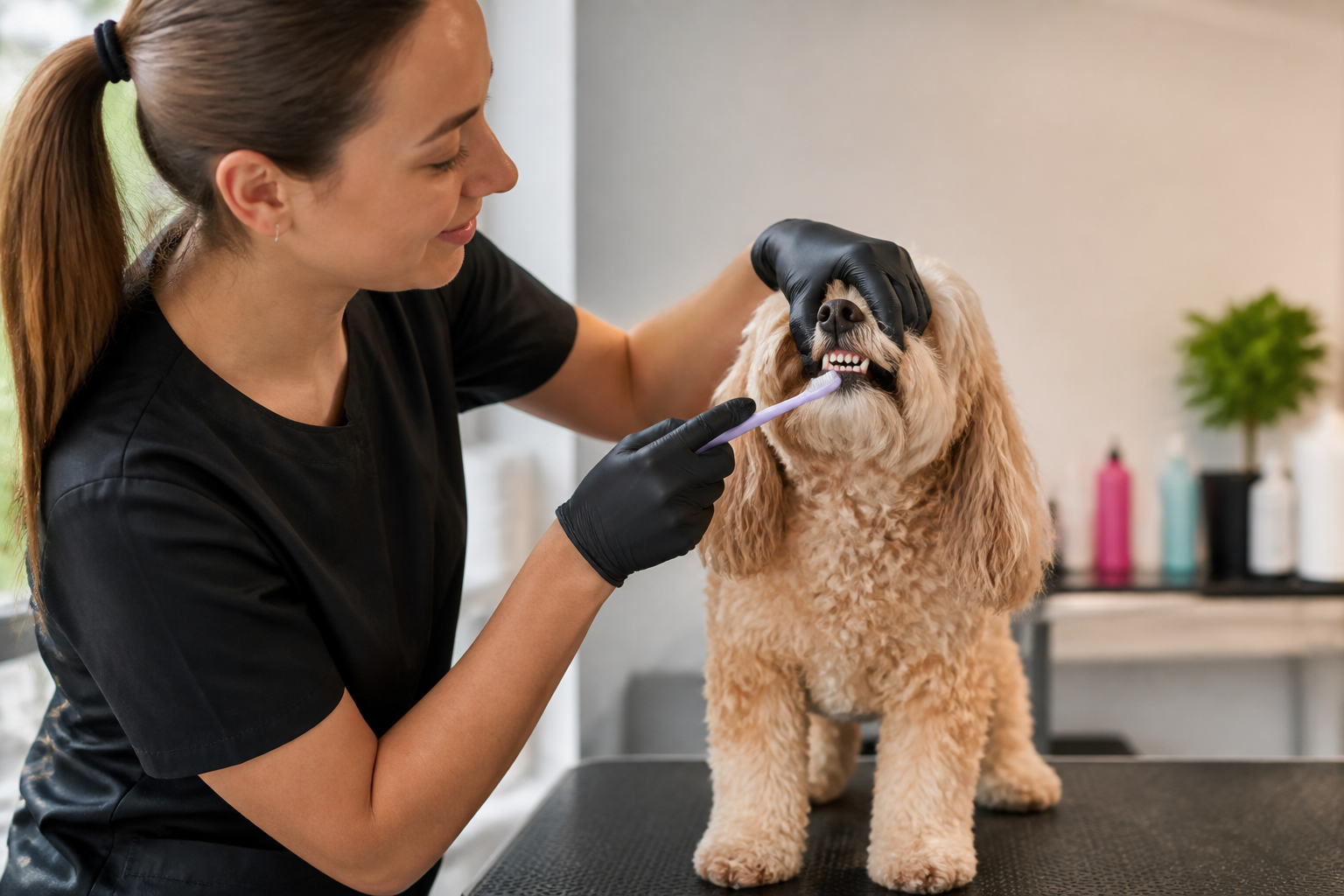
Most professional groomers offer a basic teeth brushing service. This is a surface-level cleaning that uses a toothbrush and pet-safe toothpaste. It is very similar to how you brush your own teeth at home. The goal is to freshen the breath and remove some of the sticky film called plaque before it turns into hard tartar. This is a great preventative step, but it is not a treatment for existing dental disease.
Medical Cleaning at the Veterinarian
A veterinary dental cleaning is a medical procedure. It is performed while the dog is under general anesthesia. This allows the vet to clean areas that a groomer cannot reach, specifically the space below the gum line. Vets use ultrasonic scalers to vibrate away hard tartar and then polish the teeth to make them smooth. They also take X-rays to see if there is any rot or infection hiding in the roots of the teeth.
Quick Answer: Groomers typically perform surface-level brushing with a toothbrush and flavored paste to freshen breath and remove plaque. They do not perform deep medical cleanings or scale under the gum line, as those tasks require anesthesia and a licensed veterinarian.
Exactly How Do Groomers Clean Dogs Teeth?
If you select a dental add-on at your next grooming appointment, here is the standard process you can expect. Most groomers are very careful to keep this a positive experience for the dog.
The Tools of the Trade
Groomers usually use one of two types of brushes. A finger brush is a small rubber sleeve that fits over the groomer's finger. It has soft bristles and is often less intimidating for dogs who are nervous about having their mouths touched. For larger dogs or those who are used to the process, a long-handled toothbrush with angled heads might be used to reach the back molars.
The toothpaste is the most important part of the kit. It is formulated specifically for dogs. These pastes are often flavored like poultry, beef, or peanut butter to make the dog more cooperative. More importantly, they contain enzymes that help break down organic matter on the teeth. You should never use human toothpaste on a dog because it contains ingredients like xylitol and fluoride which are toxic to pets.
The Brushing Process
The groomer will gently lift the dog's lips to expose the teeth. They usually start at the front and move toward the back in small circular motions. They focus on the outside of the teeth, which is where most plaque builds up. A typical session lasts about five to ten minutes.
Finishing Touches
After brushing, some groomers use a dental spray or a breath freshening gel. These products often contain ingredients that help kill bacteria or provide a minty scent. This leaves your dog with a much more pleasant smell when you pick them up.
Key Takeaway: Grooming-based teeth cleaning is a preventative tool meant to maintain a healthy mouth, not a way to fix a mouth that already has heavy tartar or gum disease.
The Controversy of Anesthesia-Free Scaling
You may see some facilities offering "anesthesia-free dental cleaning" or "hand scaling." This is a controversial topic in the pet industry. It involves using metal tools to scrape tartar off the teeth while the dog is fully awake. While it might sound like a good way to save money or avoid anesthesia, many experts warn against it.
The Hidden Dangers of Hand Scaling
When a groomer or technician scrapes tartar off an awake dog, they can only see what is on the surface. They cannot get under the gum line where the most dangerous bacteria live. This can create a "false sense of security." The teeth look white and clean, but the roots could still be rotting away.
Furthermore, scaling creates tiny, microscopic grooves in the tooth enamel. In a vet's office, these grooves are polished away with a high-speed polisher. If they are not polished, those rough spots actually make it easier for new tartar to stick to the teeth. This means the teeth might get dirty even faster than before.
Stress and Safety
Scraping teeth with metal tools is not a pleasant sensation. An awake dog may jump or move suddenly, which can lead to cuts on the gums or tongue. It also puts a lot of stress on the pet. At our BaxterBoo warehouse and in our community, we always advocate for the least stressful and safest path for every animal.
Vet Tip: If your dog has visible brown tartar or red, bleeding gums, skip the groomer's dental service and book an exam with your veterinarian. These are signs of periodontal disease that require medical intervention and potentially prescription care.
Why the Gum Line Matters
To understand why a groomer’s brushing isn't enough for every dog, you have to understand where dental disease lives. Plaque is a soft, sticky film of bacteria. If it isn't brushed away within about 48 hours, it mixes with minerals in the dog's saliva and hardens into tartar, also known as calculus.
Tartar is like concrete. Once it forms, a toothbrush cannot remove it. This tartar then begins to grow downward, tucking itself under the edge of the gum. This is the "subgingival" area. When bacteria get under the gums, they begin to destroy the bone and tissues that hold the tooth in place. This leads to pain, tooth loss, and even systemic infections.
For more information about warning signs, read our guide to bad teeth in dogs and what to do.
Signs Your Dog Needs More Than a Groomer
How do you know if your dog just needs a quick brush or a full veterinary cleaning? Watch for these red flags during your regular grooming or at-home care routine.
- Foul Breath: While "dog breath" is normal, a truly putrid or rotting smell is a sign of infection.
- Bleeding Gums: If you see a pink tinge on their chew toys or if their gums bleed when brushed, they have gingivitis.
- Difficulty Eating: If your dog drops food or only chews on one side of their mouth, they may be in pain.
- Visible Tartar: Brown or tan crusty buildup on the teeth cannot be removed with a brush.
- Loose Teeth: A healthy adult dog should never have loose teeth.
If you notice these symptoms, we recommend talking to your vet immediately. They can help diagnose the stage of dental disease. In many cases, they may prescribe a specific dental diet, such as those from Royal Canin or Farmina Vet Life. You can discuss prescription options with your veterinarian.
Building a Success Routine at Home
The best way to make the most of your groomer’s efforts is to have a solid routine at home. Consistency is the secret to avoiding expensive dental surgeries.
Step 1: Start Slowly
Do not expect to brush every tooth on the first day. Start by letting your dog lick some dog-safe toothpaste off your finger. This gets them used to the taste. Once they enjoy the paste, try rubbing your finger along their gums.
Step 2: Introduce the Brush
Once they are comfortable with your finger, move to a finger brush or a soft-bristled dog toothbrush. Lift the lip and do just the front teeth for a few seconds. Always follow up with praise or a small, healthy treat.
Step 3: Work Toward the Back
Over several weeks, work your way toward the back molars. These are the teeth that do the most work and usually have the most buildup. Aim to brush daily, though three times a week is a good starting goal.
Use the Right Products
We carry a wide variety of tools to help you succeed at home. Look for enzyme-based toothpastes that work even if your dog doesn't let you brush for very long. You can find brushes, toothpaste, wipes, and other supplies in our dog dental care collection.
- Finger brushes for beginners
- Long-handled brushes for large breeds
- Enzyme-based toothpaste (Poultry or Beef flavored)
- Dental wipes for dogs who hate brushes
Bottom line: Daily home care combined with regular professional checkups is the gold standard for pet oral health.
Beyond the Brush: Other Ways to Clean Teeth
We know that some dogs simply will not tolerate a toothbrush. If your dog acts like you are trying to perform a magic trick every time you pull out the brush, do not worry. There are other ways to help keep their mouth clean.
Dental Chews and Treats
Products like Greenies or dental sticks are designed with a specific texture that helps scrub the teeth as the dog chews. These are a great supplement to brushing. Look for products that have the VOHC (Veterinary Oral Health Council) seal of approval. This means they have been tested and proven to reduce plaque and tartar.
You can also explore our dental food and treats for additional options.
Dental Water Additives
These are tasteless liquids that you add to your dog's water bowl. They contain ingredients that help break down the biofilm in the mouth. This is an excellent "passive" way to fight bacteria, especially for senior dogs or picky pets.
Specialized Diets
Some kibbles are formulated to be larger and more fibrous. Instead of crumbling immediately, the kibble stays together longer, forcing the dog to chew. This provides a mechanical scrubbing action. If your vet recommends a specific dental diet, follow their guidance when choosing food.
For more ideas, see our overview of the best dental chews for dogs.
The Role of the Pharmacy in Dental Health
Sometimes, a clean mouth requires more than just a brush and a chew. If your dog is prone to heavy plaque or has had a recent dental extraction, your vet might prescribe specific medications. This can include specialized mouth rinses or even antibiotics to clear up an infection in the gums.
Prescription pet foods and medications should be selected and managed with your veterinarian. Managing chronic health issues is a team effort between you, your vet, and a trusted supplier.
Why Breed Matters for Dental Health
Not all dogs are created equal when it comes to their teeth. Some breeds are much more likely to need professional dental care from both a groomer and a vet.
Small and Toy Breeds
Dogs like Yorkies, Chihuahuas, and Poodles are notorious for dental issues. They have the same number of teeth as a large dog, but their mouths are much smaller. This leads to crowding. When teeth are crowded together, food and bacteria get trapped easily. Small dogs often need professional cleanings much earlier in life than large dogs.
Brachycephalic (Flat-Faced) Breeds
Bulldogs, Pugs, and Boxers often have misaligned jaws. This means their teeth do not meet correctly, which prevents the natural "self-cleaning" action that happens when a dog chews. These breeds require very close attention and frequent brushing.
Making Dental Care Affordable
We know that veterinary dental cleanings can be expensive. This is why we encourage owners to utilize every tool available to prevent the need for major procedures.
- MVP Rewards: Join the MVP Rewards program to earn rewards on eligible purchases.
- Autoship: Set your dental chews and toothpastes on our Autoship programme. This ensures you never run out and may provide savings on repeat orders.
- Frequent Buyer Program: Many of the high-quality food brands we carry participate in our Frequent Buyer Program, helping you save money while feeding a diet that supports oral health.
Preparing for Your Next Grooming Appointment
Before you drop your dog off for their next spa day, have a quick conversation with your groomer. Ask them what kind of dental service they offer.
- Ask about the tools: Do they use a fresh brush for each dog?
- Discuss the paste: Do they use an enzyme-based toothpaste?
- Request a report: Ask them to let you know if they see any red spots or heavy tartar during the brushing.
Your groomer can be a great early warning system. Because they are looking at your dog's mouth closely, they might see a problem before you do.
Summary of Best Practices
Keeping your dog's mouth healthy is a lifelong commitment. It is not something that can be fixed with a single grooming session per month.
- Brush at home at least three times per week.
- Use a groomer's teeth brushing service as a "deep clean" addition to your home routine.
- Provide daily dental chews or use water additives.
- Schedule a yearly dental exam with your veterinarian.
- Watch for signs of pain or infection.
Key Takeaway: A groomer's cleaning is a cosmetic and preventative service. It is a fantastic part of a total hygiene plan, but it cannot replace the medical necessity of a veterinary dental cleaning.
Next Steps for Your Dog’s Smile
The best time to start a dental routine is today. Whether your dog is a puppy just getting their adult teeth or a senior who needs a little extra help, we are here to support you. You can browse our dog dental care products to find the perfect brush, paste, or chew for your pup.
If your vet has already identified a need for specialized care, remember to follow their recommendations for prescription diets and medications. By combining the artistic skills of your groomer with the medical expertise of your vet and the quality products from us, you are giving your dog the best chance at a happy, healthy life.
FAQ
Can a groomer remove heavy tartar from my dog's teeth?
No, a groomer cannot safely remove heavy tartar. Removing hardened tartar requires professional scaling tools and is usually done under anesthesia by a veterinarian. Attempting to scrape off tartar while a dog is awake can damage the tooth enamel and cause significant pain or stress for the pet.
How often should I have the groomer brush my dog's teeth?
If you are not brushing at home, having the groomer do it once every 4 to 6 weeks is better than nothing, but it is not enough to prevent dental disease. Ideally, you should brush your dog's teeth daily at home and use the groomer's service as a supplemental refresh during their regular grooming appointments.
Is anesthesia-free teeth cleaning safe for my dog?
Anesthesia-free cleaning is a subject of much debate. While it makes the teeth look cleaner, it often misses the dangerous bacteria under the gum line and can leave the enamel rough and prone to more buildup. Most veterinary organizations recommend cleanings under anesthesia because it allows for a full medical exam, X-rays, and proper polishing.
What is the difference between plaque and tartar?
Plaque is a soft, sticky film of bacteria that forms on the teeth every day and can be removed with a toothbrush. If plaque is not removed, it hardens into tartar within about 48 hours. Tartar is a hard, mineralized deposit that cannot be brushed away and must be removed by a professional using specialized tools.






