
 Save 15% on your 1st Autoship learn more

 Email us
 Live Chat
 FAQs
FAQs





Introduction
You lean in for a happy morning nuzzle only to be met with a puff of breath that smells like a dumpster in July. We have all been there. While "dog breath" is a common joke among pet owners, it often signals a buildup of plaque and bacteria that can lead to serious health issues. At BaxterBoo, we see many owners who want to help their dogs but feel overwhelmed by the dozens of brushes, sprays, and chews on the market. Keeping your dog's mouth healthy is about more than just a fresh scent. It is about preventing pain, tooth loss, and even systemic infections that can impact the heart and kidneys. This guide covers the most effective ways to maintain your dog's oral hygiene at home while working alongside your veterinarian.
Quick Answer: The most effective way to clean a dog's teeth is through daily brushing with canine-specific toothpaste. You can supplement this with VOHC-approved dental chews, water additives, and professional veterinary cleanings to ensure total oral health.
The Importance of Dental Hygiene in Dogs
Dental health is one of the most neglected areas of pet care. By age three, most dogs show signs of periodontal disease. This condition starts when food particles and bacteria form plaque on the teeth. If you do not remove plaque, it hardens into tartar or calculus within days. Tartar is much harder to remove and provides a rough surface for even more plaque to grow.
This cycle eventually leads to inflammation of the gums, known as gingivitis. You might notice a thin red line along the gumline. If the disease progresses, it can destroy the bone and tissue holding the teeth in place. This causes chronic pain that dogs are experts at hiding. In severe cases, bacteria from the mouth enter the bloodstream. This can lead to damage in the liver, kidneys, and heart valves.
Daily Brushing Is the Gold Standard
Brushing is the single most effective way to keep your dog's mouth clean. It mechanically removes plaque before it has a chance to harden into tartar. While daily brushing is the goal, doing it three times a week still provides significant benefits.
You must never use human toothpaste for your dog. Our toothpaste often contains fluoride or xylitol. Xylitol is an artificial sweetener that is highly toxic to dogs. Canine toothpaste comes in flavors like chicken, beef, or peanut butter to make the experience more enjoyable. You can find suitable options in our dog dental and breath care category.
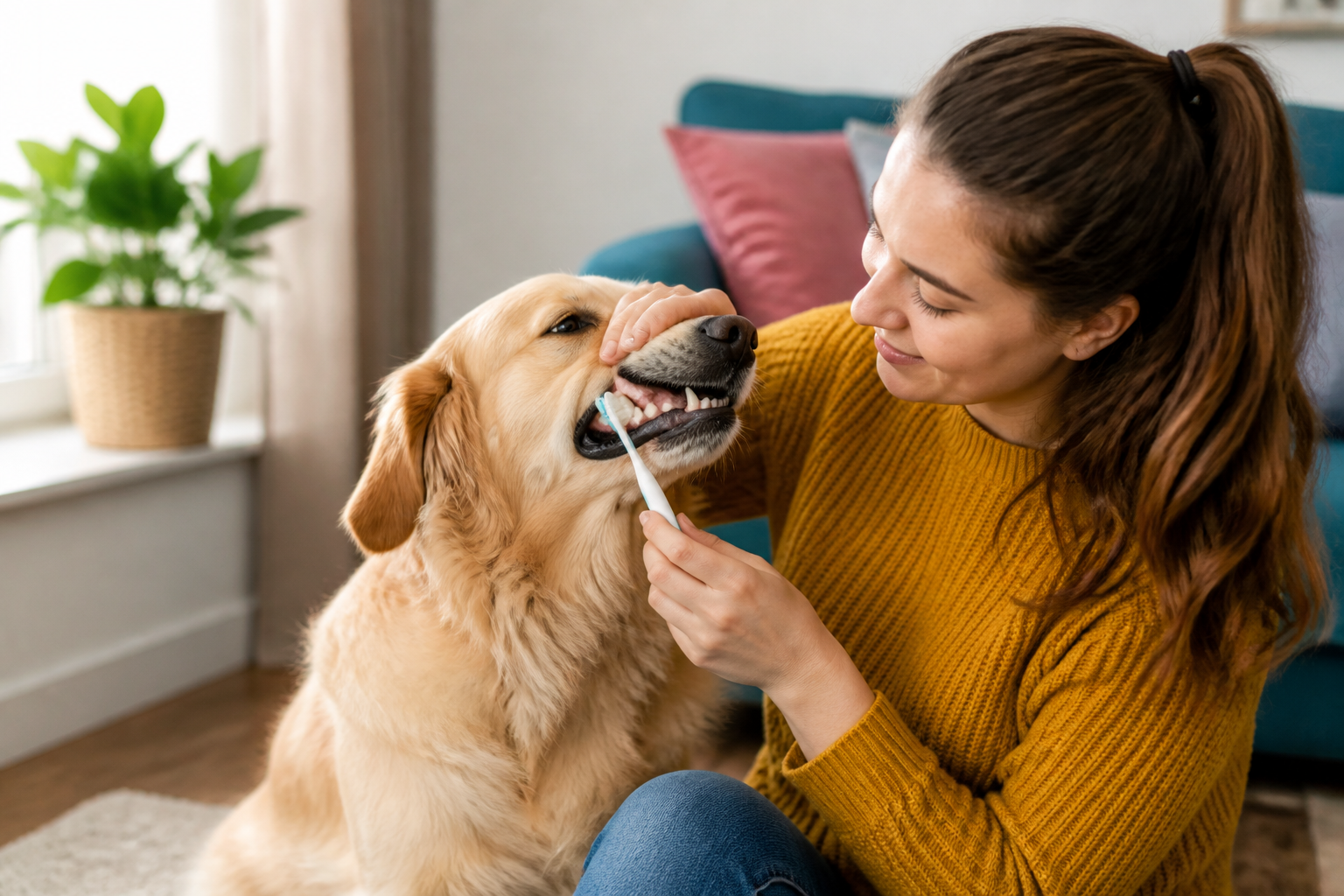
How to Start a Brushing Routine
If your dog is not used to having their mouth touched, start slowly. You want them to associate the brush with a positive experience.
Step 1: Let them lick a small amount of dog toothpaste off your finger.
Step 2: Gently rub your finger along their gums and teeth.
Step 3: Introduce a finger brush or a soft-bristled pet toothbrush.
Step 4: Use circular motions to brush the outside of the teeth.
Do not worry about brushing the inside of the teeth. A dog's tongue usually does a good job of keeping the inner surfaces clean. Focus on the upper back molars, as these tend to collect the most tartar.
Vet Tip: If your dog is resistant to a standard brush, try a silicone finger brush. These often feel more natural to the dog and give you better control during the cleaning process.
For additional guidance on introducing oral care, read these pet dental care tips.
Using Dental Chews and Treats
Not every dog will sit still for a toothbrush. This is where dental chews become a valuable tool. These treats are designed to be hard or chewy so that they scrape against the teeth as the dog gnaws on them. This mechanical action helps rub away plaque.
When shopping at BaxterBoo, look for the Veterinary Oral Health Council seal on packaging. The VOHC seal means the product has been tested and proven to reduce plaque or tartar by at least 20 percent. Brands like Greenies or certain RedBarn products are popular choices for this purpose. Explore our selection of Greenies products for dental chew options.
Keep in mind that dental treats add calories to your dog's diet. You should adjust their daily food intake to account for these extra calories. This prevents unwanted weight gain while you work on their dental health.
The Role of Specialized Diets
What your dog eats every day impacts their oral health. While most dry kibble provides some scraping action, it is often not enough to prevent disease. Some dogs benefit from specific dental diets.
These therapeutic diets use a larger kibble size with a specific fiber matrix. The kibble does not shatter when the dog bites it. Instead, the tooth sinks into the piece, allowing the fibers to scrub the tooth surface. We carry several high-quality brands that focus on nutrition and oral health, such as Royal Canin and Farmina.
For dogs with existing dental disease, your vet might recommend a prescription diet. Our pharmacy carries FDA-approved prescription pet foods through our partnership with Pet's Choice. These diets are specifically formulated to manage health conditions under veterinary supervision.
Key Takeaway: Combining a dental-specific kibble with regular brushing provides the best defense against tartar buildup.
Water Additives and Oral Sprays
Water additives are a great option for busy owners or dogs that are difficult to handle. These are liquid solutions you add to your dog's water bowl every day. Most are tasteless and odorless, so your dog will not even notice they are there.
These additives work like a mouthwash for pets. They contain enzymes or ingredients that break down the biofilm where bacteria live. This helps freshen breath and prevents new plaque from sticking to the teeth. Browse our dog dental care products for water additives, toothpaste, and oral care kits.
Oral sprays work similarly but are applied directly to the gums. These are useful for dogs that have specific "hot spots" of tartar. While these products are helpful, they are best used as a supplement to brushing rather than a replacement.
Safe Toys for Dental Health
Chewing is a natural behavior for dogs that also supports their teeth. Certain toys are designed to massage the gums and scrape the teeth during play. Rubber toys with ridges or nubs, like those from Kong, are excellent for this. Find more options in our dog toys category.
Rope toys can also act like dental floss. As the dog bites down, the cotton fibers slide between the teeth. However, you must always supervise your dog with rope toys. If they swallow the fibers, it can cause a dangerous intestinal blockage.
Avoid toys that are too hard. A good rule of thumb is that you should be able to indent the toy with your thumbnail. Items like cow hooves, deer antlers, and natural bones are often too hard. These can lead to fractured teeth, which require expensive veterinary surgery to fix.
Recognizing Signs of Dental Disease
It is important to check your dog's mouth regularly. Most owners wait until they see a problem, but dental disease is often hidden below the gumline. You should perform a "flip the lip" check once a week.
Look for these warning signs:
- Red, swollen, or bleeding gums.
- Yellow or brown crust on the teeth.
- Loose or missing teeth.
- Excessive drooling.
- Difficulty eating or dropping food.
- Pawing at the mouth or face.
- A persistent foul odor.
If you notice any of these signs, it is time to schedule a visit with your veterinarian. They can perform a thorough exam and determine if your dog needs professional help.
Vet Tip: Bad breath is not just a cosmetic issue. If your dog's breath is strong enough to fill a room, it usually indicates an active infection that needs medical attention.
For more warning signs to discuss with your veterinarian, read how to recognize hidden dental problems in dogs.
Professional Veterinary Cleanings
Home care is essential, but it cannot remove tartar once it has hardened. Just like humans need to see a dentist, dogs need professional cleanings. These procedures are performed under general anesthesia.
Anesthesia is necessary so the veterinarian can clean under the gumline safely. They also take dental X-rays to check for abscesses or bone loss that are not visible to the naked eye. The vet will use an ultrasonic scaler to remove tartar and then polish the teeth to smooth the surface.
The frequency of these cleanings depends on your dog's breed and age. Small breeds, like Chihuahuas or Yorkies, often need cleanings every year because their teeth are crowded. Larger breeds might only need a professional cleaning every two to three years if their home care is excellent.
Prescription Medications and Our Pharmacy
Sometimes, dental disease requires more than just a cleaning. If your dog has a mouth infection or needs a tooth extraction, they may require antibiotics or pain medication. Our pharmacy at BaxterBoo provides a convenient way to get these medications delivered to your door. Visit our pet pharmacy to explore prescription options for dogs.
Through our partnership with Pet's Choice, we offer FDA-approved medications for chronic health needs. If your vet prescribes a specific dental rinse or a course of antibiotics, you can manage those needs through our platform. This helps ensure your dog gets the professional care they need to stay comfortable.
Creating a Sustainable Routine
The key to success is consistency. It is better to brush your dog's teeth for one minute three times a week than to try a twenty-minute deep clean once a month. Find a time that works for you, such as right before bed or after a walk.
Pairing the dental routine with something the dog loves will help. If they get a favorite toy or a walk after their brushing, they will start to look forward to it. We recommend keeping all your dental supplies in one spot so you do not have to hunt for them when it is time to clean.
For repeat purchases such as toothpaste and dental chews, our Autoship programme can help make refills easier to manage.
Bottom line: A multi-faceted approach involving brushing, treats, and vet visits is the best way to ensure your dog keeps their teeth for a lifetime.
Steps for a Healthier Smile
If you are just starting out, do not feel like you have to do everything at once. Start with the easiest step for your lifestyle and build from there.
Step 1: Check your dog's mouth for red gums or brown tartar.
Step 2: Consult your vet to see if a professional cleaning is needed first.
Step 3: Buy a dog-safe toothpaste and start desensitizing your dog to mouth handling.
Step 4: Introduce a VOHC-approved dental chew as a daily reward.
Step 5: Set a recurring reminder for annual dental checkups.
Conclusion
Keeping your dog's teeth clean is a lifelong commitment that pays off in a happier, healthier pet. By combining daily brushing with the right treats and toys, you can prevent the pain and complications of periodontal disease. Remember that home care is a partner to professional veterinary visits, not a replacement. Our team at BaxterBoo is here to support you with everything from specialized toothbrushes to prescription diets through our pharmacy partnership with Pet's Choice. Start small today by checking your dog's gums and picking out a pet-safe toothpaste.
Next step: Visit our dental care section to find VOHC-approved treats and brushing kits for your dog.
FAQ
Can I use a human toothbrush on my dog?
Yes, you can use a soft-bristled human toothbrush on a medium or large dog. For small dogs, a child-sized toothbrush or a specialized pet finger brush is usually a better fit for their mouth. The most important part is ensuring the bristles are soft to avoid irritating their gums.
Why is human toothpaste dangerous for dogs?
Human toothpaste often contains ingredients like xylitol and fluoride that are toxic to dogs. Dogs do not know how to spit, so they swallow everything you put on the brush. Canine toothpaste is formulated to be swallowed safely and comes in flavors that dogs enjoy.
How often should I brush my dog's teeth?
Daily brushing is the gold standard for preventing plaque from hardening into tartar. If daily is not possible, aim for at least three times a week to see a significant benefit. Consistency is more important than the length of each brushing session.
Do dental chews really work?
High-quality dental chews with the VOHC seal are proven to help reduce plaque and tartar buildup. They work through mechanical scraping as the dog chews. However, they are most effective when used as a supplement to regular brushing rather than the only method of cleaning.






