
 Save 15% on your 1st Autoship learn more

 Email us
 Live Chat
 FAQs
FAQs





Introduction
You lean in for a wet pup kiss and get a whiff of something that is definitely not roses. Foul breath is often the first sign that your dog needs a better dental routine. At BaxterBoo, we talk to pet owners every day who are surprised to learn that dental health is just as important for dogs as it is for humans. Most dogs show signs of periodontal disease by the time they are three years old. This post covers the most effective ways to maintain your dog's oral hygiene at home while explaining when it is time for professional help. We will explore brushing techniques, dental treats, and specialized diets to help your dog stay healthy. Establishing a solid routine now can prevent pain and expensive vet bills in the future.
Quick Answer: The most effective way to keep your dog's teeth clean is a combination of daily brushing with canine-specific toothpaste and the use of VOHC-approved dental treats. Adding water additives or specialized dental diets can provide extra support for dogs that resist brushing.
Why Dog Dental Hygiene Is Crucial for Longevity
Maintaining your dog's teeth is about much more than just freshening their breath. When food particles and bacteria sit on the teeth, they form a sticky film called plaque. If you do not remove this plaque within a few days, it hardens into tartar. Tartar is much more difficult to remove and provides a perfect surface for even more bacteria to grow. This cycle eventually leads to gingivitis and more severe periodontal disease.
When the gums are inflamed, bacteria can enter the bloodstream. This is a serious concern because those bacteria can travel to vital organs like the heart, liver, and kidneys. Long term dental neglect is linked to heart valve infections and kidney dysfunction in senior dogs. Keeping the mouth clean is a fundamental part of protecting your dog's entire body.
Key Takeaway: Oral bacteria do not stay in the mouth. They can enter the bloodstream and cause systemic health issues in the heart and kidneys over time.
The Gold Standard: Brushing Your Dog’s Teeth
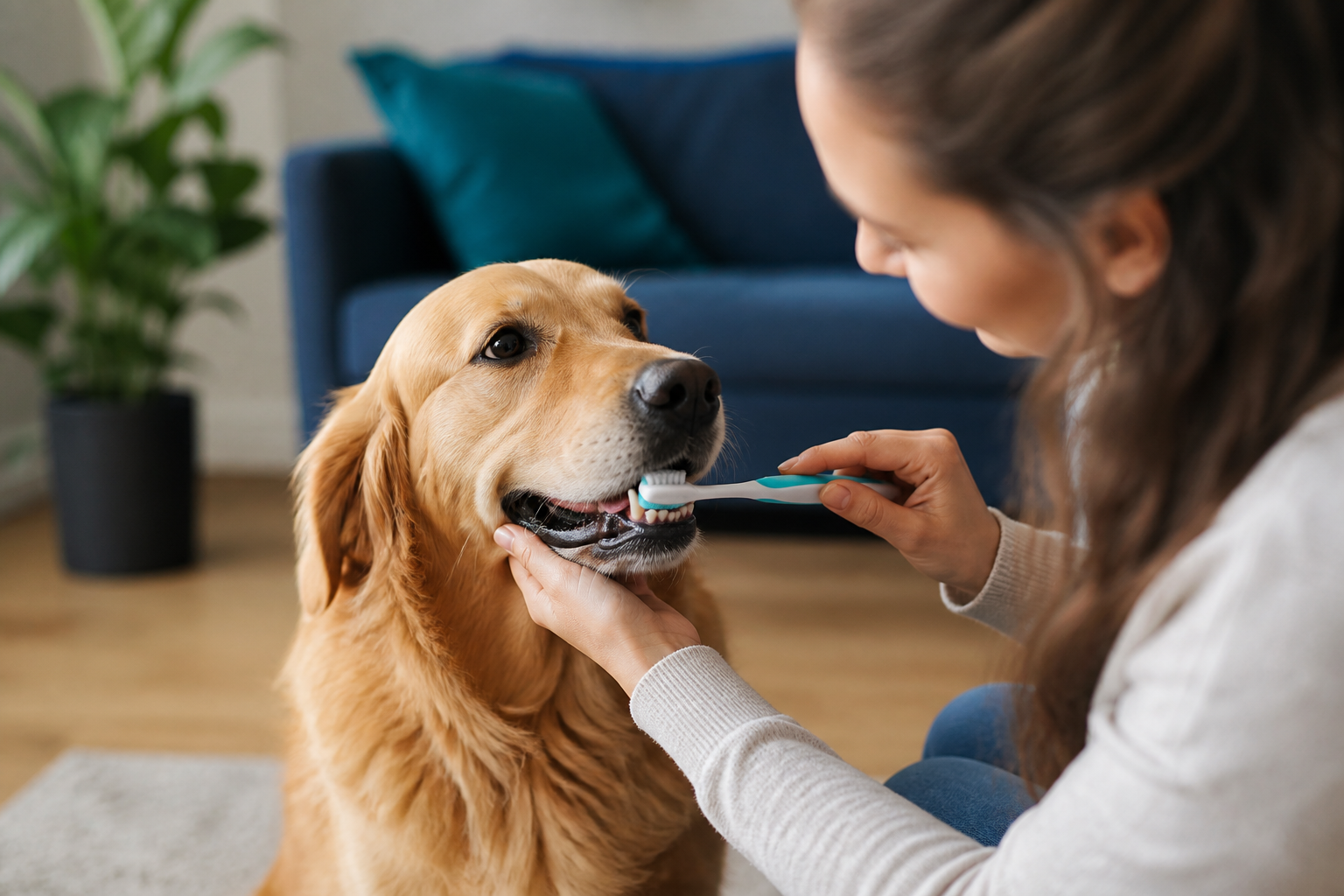
Brushing is the single most effective way to remove plaque before it becomes tartar. While it might feel silly at first, most dogs can learn to accept it with a bit of patience and positive reinforcement. You should aim to brush your dog's teeth every day. If that is not possible, three times a week is a great goal to maintain oral health.
Choosing the Right Supplies
Never use human toothpaste for your dog. Human formulas often contain xylitol, which is a sweetener that is highly toxic to dogs. They also contain foaming agents that are meant to be spit out, but dogs will swallow the paste. Instead, use a toothpaste formulated specifically for pets. These come in flavors like poultry, beef, or peanut butter to make the experience more enjoyable. Virbac C.E.T. Enzymatic Pet Toothpaste is one canine-specific option.
For the brush itself, you have a few options. A standard dog toothbrush has a long handle and an angled head to reach the back molars. If your dog is small or nervous about the brush, a silicone finger brush can give you more control. Some owners find that a soft baby toothbrush works just as well for smaller breeds.
Steps for Stress Free Brushing
Step 1: Let your dog lick a small amount of pet toothpaste off your finger. This helps them associate the flavor with a positive reward.
Step 2: Gently rub your finger along their gums and teeth. This gets them used to the sensation of someone touching their mouth.
Step 3: Introduce the brush by adding a small amount of paste and focusing on the large canine teeth first. Use gentle circular motions.
Step 4: Gradually work your way back to the molars. This is where most plaque and tartar tend to accumulate.
Step 5: Keep the session short and end with a treat or a favorite game. This ensures your dog looks forward to the next cleaning.
Vet Tip: If your dog becomes aggressive or extremely stressed during brushing, do not force it. You can cause an accidental bite or create a negative association that makes future care impossible. Consult your veterinarian about professional cleaning or alternative products.
Dental Wipes: A Faster Alternative to Brushing
If your dog absolutely refuses a toothbrush, dental wipes are an excellent secondary option. These are pre-moistened pads designed to be rubbed directly against the surface of the teeth and gums. They help remove food debris and plaque through mechanical friction.
Wipes are especially useful for puppies that are still learning to sit still. They are also helpful for senior dogs with sensitive gums. While wipes cannot get into the deep crevices between teeth as well as bristles can, they are much better than doing nothing at all. Use them daily to keep the tooth surfaces smooth and clean.
How Dental Chews and Treats Support Oral Health
Dogs have a natural urge to chew. You can use this behavior to your advantage by providing our dental chews and treats. These treats are designed with specific textures and shapes that scrape the teeth as the dog gnaws on them. Some high quality options also include ingredients that help break down plaque chemically.
When shopping for dental treats, look for the Veterinary Oral Health Council (VOHC) seal. This seal indicates that the product has been tested and proven to reduce plaque or tartar by at least twenty percent. Brands like Greenies or dental chews from Royal Canin are popular choices that many veterinarians recommend. Greenies Dental Dog Chew - Fresh is one available option.
Key Takeaway: The mechanical action of chewing is vital. It stimulates saliva production, which helps rinse away bacteria and neutralize acids in the mouth.
Considerations for Dental Treats
- Watch the calorie count. Dental treats can be high in calories, so you may need to adjust your dog's daily meal portions.
- Match the size to your dog. A treat that is too small can be a choking hazard, while one that is too large may be too hard for a small dog to chew safely.
- Supervise your pet. Ensure your dog is actually chewing the treat rather than gulping it down in large chunks.
- Avoid extremely hard items. Real bones, antlers, and heavy nylon toys can actually cause tooth fractures.
Water Additives and Oral Powders
For the busiest pet owners, water additives and dental powders offer a passive way to support oral health. Water additives are essentially a drinkable mouthwash for dogs. You add a specific amount to their water bowl every day. These solutions contain enzymes or minerals that help kill bacteria and prevent plaque from sticking to the teeth.
Dental powders work similarly but are sprinkled directly onto your dog's food. Products like VetriScience Perio Support Powder use probiotics and enzymes to manage the bacterial balance in the mouth. These are great for dogs that are picky about the taste of their water. While these do not replace the need for brushing, they provide a constant layer of protection throughout the day.
The Role of Specialized Dental Diets
What your dog eats every day has a significant impact on their teeth. While many people believe that all dry kibble cleans teeth, most standard kibble actually shatters too easily to provide much benefit. Specialized dental diets are different. These kibbles are larger and have a fibrous structure that does not crumble immediately. Instead, the tooth sinks into the kibble, allowing the fibers to scrub the surface of the tooth.
We carry several brands that offer these specialized formulas. Some dental diets are available over the counter, while others require a prescription. Our pet pharmacy offers FDA-approved prescription diets through our partnership with Pet's Choice. If your dog is prone to rapid tartar buildup, a prescription diet like Hill's t/d or Royal Canin Dental might be a necessary step.
Vet Tip: Small breed dogs like Pugs, Yorkies, and Chihuahuas have crowded teeth, which makes them much more likely to develop dental disease. These breeds often require a more aggressive dental plan, including specialized diets and more frequent professional cleanings.
Using Toys to Keep Teeth Clean
Playtime can also be a time for cleaning. Certain rubber toys are designed with ridges and nubs that massage the gums and scrape the teeth. Kong toys and other textured rubber options are excellent for this. As your dog works to get a treat out of a toy, they are inadvertently cleaning their teeth. Explore our dog toys for textured options.
Rope toys can also act like floss by sliding between the teeth. However, you must monitor rope toys closely. If the threads begin to fray, your dog might swallow them, which can lead to dangerous intestinal blockages. Always replace toys once they show signs of significant wear or damage.
When to See Your Veterinarian for Professional Care
At-home care is about prevention, but it cannot remove established tartar. Once plaque has hardened into tartar, only a professional cleaning can get the teeth clean again. This procedure is called a dental prophylaxis. It involves scaling the teeth to remove tartar and polishing them to smooth out any microscopic scratches.
Your veterinarian will perform this procedure while your dog is under general anesthesia. This is necessary because it allows the vet to clean below the gumline, which is where the most dangerous bacteria hide. Anesthesia also allows for a full set of dental X-rays to check for abscesses or bone loss that are not visible to the naked eye. For additional guidance, read these dog dental warning signs.
Signs Your Dog Needs an Urgent Vet Visit
- Very bad breath that does not go away after brushing.
- Red, swollen, or bleeding gums.
- Yellow or brown crust near the gumline.
- Loose or missing teeth.
- Dropping food or refusing to eat hard kibble.
- Pawing at the mouth or face.
- Swelling under the eye or along the jaw.
Bottom line: Annual vet exams are the best way to catch dental issues before they become painful or lead to tooth loss.
Managing Chronic Dental Conditions Through Our Pharmacy
Sometimes, a simple cleaning is not enough. If your dog has an active infection or advanced periodontal disease, your vet may prescribe medications. This often includes antibiotics to clear up infections or anti-inflammatory drugs to manage pain and swelling.
At BaxterBoo, we aim to make managing these conditions easier for you. Our dog pharmacy provides access to a wide range of medications and prescription diets through our partnership with Pet's Choice. If your veterinarian provides a prescription for dental health, you can fulfill it through us for home delivery. This ensures your dog gets the professional grade care they need to recover from dental surgery or manage chronic issues.
Conclusion
Keeping your dog's teeth clean is a lifelong commitment that pays off in comfort and health. By combining daily brushing with the right treats and toys, you can significantly reduce the risk of serious disease. Remember that every dog is different. What works for a large Labrador might not be enough for a tiny Maltese. Stay consistent with your home routine and never skip those annual checkups with your veterinarian.
Take these steps to start your dog's dental journey:
- Pick up a canine-safe toothbrush and flavored toothpaste.
- Look for the VOHC seal on all dental treats.
- Monitor your dog's breath and gum color weekly.
- Talk to your vet about whether a prescription dental diet is right for your pet.
For all your dental care needs, from enzymatic toothpastes to prescription diets, visit the dog dental care collection and our Autoship programme for convenient repeat orders. We are here to help you keep your dog's smile bright and their body healthy.
FAQ
Can I use human toothpaste on my dog if I only use a little bit?
No, you should never use human toothpaste on a dog. Many human toothpastes contain xylitol, which can cause life-threatening low blood sugar and liver failure in dogs. They also contain detergents that cause stomach upset when swallowed. Always use a paste specifically made for pets that is safe to ingest.
How often does my dog actually need a professional dental cleaning?
Most dogs benefit from a professional cleaning once a year. However, this varies based on the breed and how well you can brush their teeth at home. Smaller breeds often need cleanings every six months due to tooth crowding. Your veterinarian will check your dog's teeth during their annual wellness exam to give you a specific recommendation.
My dog’s gums bleed a little when I brush. Should I stop?
Minor bleeding can be a sign of early gingivitis, similar to when humans start a new flossing routine. If the bleeding is very light, continue brushing gently to help the gums heal over time. However, if the bleeding is heavy or if your dog seems to be in significant pain, stop immediately and schedule a veterinary exam to check for deeper infection.
Do dental chews really work as well as brushing?
Dental chews are a great supplement, but they are not a total replacement for brushing. Chews mostly clean the chewing surfaces of the teeth and do not always reach the gumline where periodontal disease starts. Brushing is much more effective at removing plaque from the entire tooth surface and should be the foundation of your routine.






