
 Save 15% on your 1st Autoship learn more

 Email us
 Live Chat
 FAQs
FAQs





Introduction
You might find yourself standing in the pantry, staring at a half empty bag of kibble that has been tucked away for a few weeks. Perhaps you bought a massive bag on sale and wonder if your small dog can finish it before it goes stale. It is a common situation for many pet owners. At BaxterBoo, we know that you want to provide the best nutrition possible for your furry family members, and our dry dog food category is a great place to start when you are comparing options. Fresh food is not just about taste. It is about ensuring the vitamins and minerals inside the bag actually do their job. This post covers everything you need to know about dry food shelf life, storage hacks, and how to tell if a meal has gone bad. Understanding these timelines helps keep your dog healthy and your budget on track.
Quick Answer: Most dry dog food lasts about six weeks after the bag is opened. Unopened bags generally stay fresh for 12 to 18 months from the date of manufacture. Always check the Best By date on the packaging for the most accurate estimate.
The Difference Between Unopened and Opened Bags
The longevity of your dog's food depends largely on whether the seal is broken. Manufacturers use specific packaging techniques to keep oxygen out. Oxygen is the primary enemy of freshness. Once you break that seal, the countdown for peak nutrition begins.
Unopened Shelf Life
Unopened dry dog food is designed to be shelf stable. Most brands use a combination of natural or synthetic preservatives to keep the fats from turning rancid. If the bag remains sealed and is stored in a cool, dry place, it typically stays good until the date printed on the bag. This date is usually 12 to 18 months after it was made.
Opened Shelf Life
Once the bag is open, the environment starts to affect the kibble. Most experts and manufacturers recommend using the food within four to six weeks. Even if the food does not look moldy after two months, the fats inside can begin to oxidize. This process lowers the nutritional value and can affect the flavor.
Why Dry Dog Food Eventually Spoils
It is easy to assume that dry kibble is indestructible because it feels hard and crunchy. However, it is a biological product. It contains fats, proteins, and carbohydrates that react to the world around them. Three main factors contribute to spoilage.
Air and Oxygen
Oxidation happens when air hits the fats in the food. When fats oxidize, they become rancid. Rancid fats lose their nutritional potency. They can also cause digestive upset or long term health issues if consumed regularly.
Moisture and Humidity
Dry food is processed to have very low moisture content. This prevents mold growth. If you store food in a damp basement or leave the bag open in a humid kitchen, the kibble absorbs moisture from the air. This creates a breeding ground for mold and bacteria like Salmonella.
Heat Exposure
Heat speeds up the chemical breakdown of the food. If a bag sits in a hot garage or near a sunny window, the nutrients degrade much faster. High temperatures also encourage any microscopic insect eggs to hatch. This leads to infestations of grain mites or weevils.
Key Takeaway: Oxygen, moisture, and heat are the three biggest threats to your dog's food. Keeping kibble away from these elements is the best way to ensure it stays safe and nutritious.
How to Tell if Dry Dog Food Has Gone Bad
Your dog's nose is much more sensitive than yours. Often, a dog will refuse to eat before you even notice a problem. If your typically hungry pup turns their nose up at dinner, the food might be the culprit.
The Smell Test
Fresh kibble usually has a mild, grainy, or meaty scent. When food goes bad, it develops a sharp or sour odor. Some people describe the smell of rancid dog food as similar to old paint or chemicals. If the smell makes you wrinkle your nose, do not feed it to your dog.
Visual Changes
Look closely at the kibble. Do you see any fuzzy white or green spots? That is mold. Does the food look darker or feel oily to the touch? This can indicate the fats are breaking out of the kibble. Also, look for any movement in the bag. Small moths or tiny crawling insects are a clear sign the food should be tossed.
Texture and Consistency
Fresh kibble should be crunchy. If the pieces feel soft, spongy, or crumbly, they have likely absorbed too much moisture. Moist kibble is a major red flag for bacterial growth.
Your Dog's Reaction
If your dog eats the food and then experiences vomiting or diarrhea, stop feeding that batch immediately. While many things can cause a stomach ache, spoiled food is a leading cause of sudden digestive distress.
Vet Tip: If your dog accidentally eats spoiled or moldy food and begins trembling or vomiting, contact your veterinarian right away. Some molds produce tremors that require immediate medical attention. Always keep a photo of the bag's lot number and expiration date for your vet.
Best Practices for Storing Kibble
Proper storage can make the difference between food that lasts six weeks and food that spoils in two. Follow these steps to maximize every bag you buy.
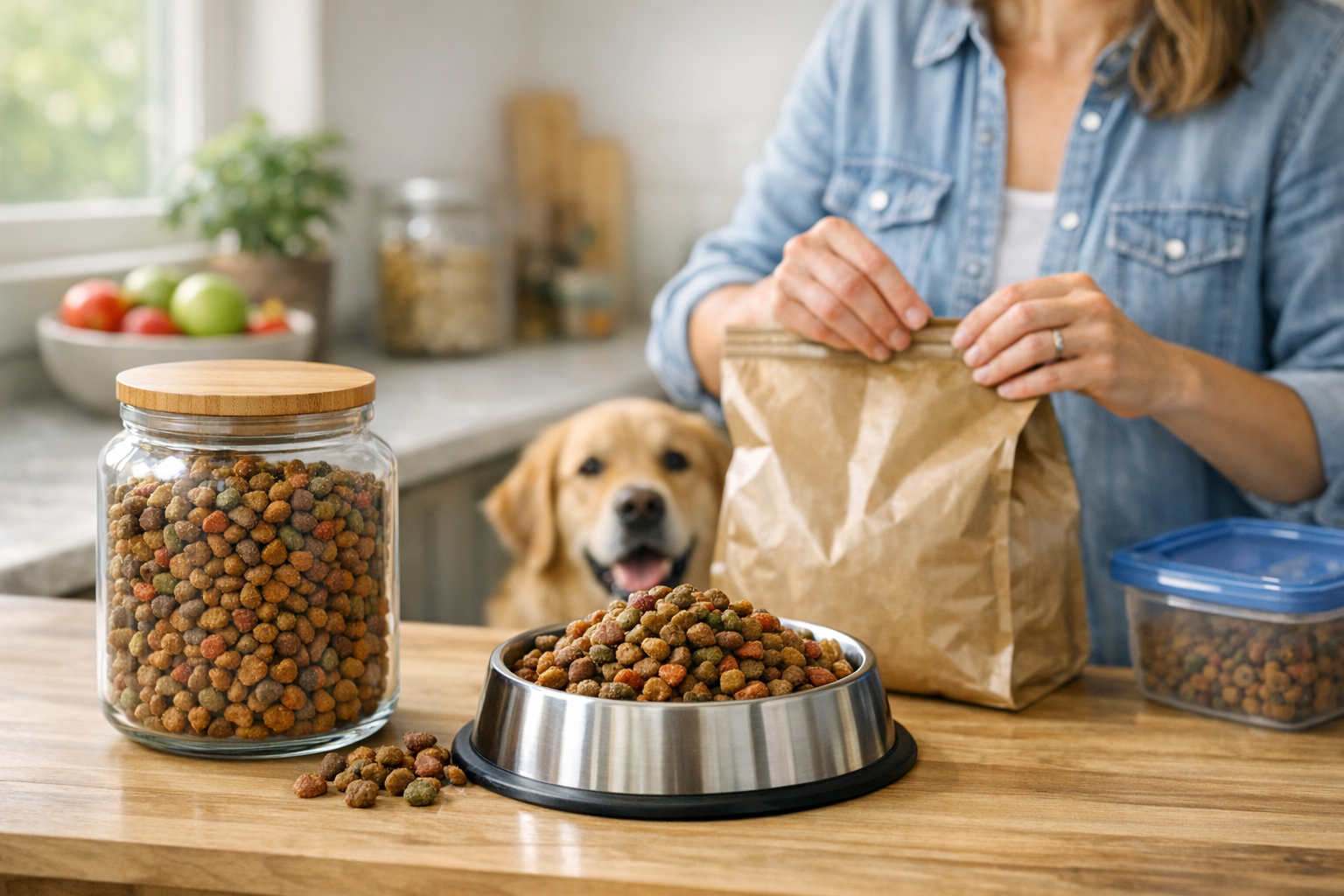
- Keep it in the original bag. Manufacturers spend millions of dollars on bag technology. These bags are designed to keep out moisture and light.
- Use a secondary container. Instead of pouring the food into a plastic bin, put the entire bag inside the bin. This provides an extra layer of protection.
- Squeeze out the air. Before sealing the bag or bin, press as much air out as possible.
- Keep it off the floor. Concrete floors can transfer moisture or cold to the bag. Store the food on a shelf or a pallet.
- Maintain a stable temperature. Find a spot in your home that stays below 80 degrees Fahrenheit. Pantries or climate controlled closets are ideal.
Why You Should Not Pour Food Directly Into Bins
Many people buy a plastic rolling bin and pour the kibble directly inside. This is actually not the best method. Over time, the oils from the dog food soak into the plastic walls of the container. These oils can turn rancid. If you do not scrub the bin with hot, soapy water between every single bag, the old rancid oils will contaminate the new fresh food. Keeping the food in the bag prevents this oil transfer.
The Importance of the Lot Number
If there is ever a product recall, you will need the lot number and the Best By date. These are printed on the original bag. If you pour the food into a bin and throw away the bag, you lose this vital information. This makes it impossible to know if your specific bag is part of a safety alert.
Health Risks of Feeding Expired or Spoiled Food
Feeding your dog old food is not just about a bad taste. It can have real consequences for their well-being.
Nutritional Deficiencies
Vitamins are fragile. Vitamin E and Vitamin A are especially prone to breaking down over time. If a dog eats expired food for months, they may not get the essential nutrients they need. This can lead to a dull coat, low energy, or a weakened immune system.
Bacterial Contamination
Salmonella and E. coli are not just human problems. These bacteria can flourish in bags of food that have been exposed to moisture. Senior dogs and puppies are particularly at risk for severe illness from contaminated food.
Mycotoxins
Moldy food can contain mycotoxins. These are toxic substances produced by certain types of fungi. Mycotoxins are very dangerous. They can cause liver failure or neurological issues. Even if you only see a tiny bit of mold, throw the entire bag away. The mold roots often spread further than you can see with your eyes.
Tips for Buying the Right Amount of Food
Waste is frustrating and expensive. Choosing the right bag size is the first step in ensuring freshness. We see many owners struggle with this at BaxterBoo when they are trying to balance value and quality. For more ways to stretch your budget, take a look at our blog post on discounted dog food.
Calculate Your Dog's Monthly Needs
Look at the feeding guidelines on your dog's food bag. Determine how many cups your dog eats per day. Multiply that by 30 days. Match that volume to the bag size. If a 30 pound bag takes your dog three months to finish, it is better to buy two 15 pound bags instead.
The Dangers of Bulk Buying
Buying the largest bag available often offers the lowest price per pound. However, if the last five pounds of the bag are stale or rancid, you are not actually saving money. You are risking your dog's health. Small breed owners should be especially careful with large bags.
Rotation Strategy
If you like to keep a backup bag, use the "first in, first out" method. Always use the oldest bag first. Check the dates when you get home from the store. Occasionally, a store might have a bag on the shelf that is nearing its expiration date.
Handling Different Types of "Dry" Food
Not all dry food follows the same rules. Some specialized diets require extra care. If you are comparing alternatives, our freeze-dried pet food hub is a helpful place to explore.
Air-Dried and Freeze-Dried Foods
Brands like Stella and Chewy's or Ziwi Peak offer air-dried or freeze-dried options. These are technically dry, but they often have different storage needs. Because they are less processed than standard kibble, they may be more sensitive to heat. Always read the specific storage instructions on these premium bags.
Prescription Diets
If your dog is on a prescription diet for kidney or liver issues, freshness is even more critical. These dogs often have sensitive systems. Any spoilage or nutritional degradation can impact their medical management. We recommend being very strict with the six week rule for these pets.
High Fat Diets
Foods designed for high performance dogs or puppies usually have higher fat content. More fat means a higher risk of oxidation. These bags should be monitored closely for any change in smell.
Cleaning Your Feeding Station
The bowl is just as important as the bag. If you keep your food fresh but feed it in a dirty bowl, you are undoing your hard work.
Step 1: Wash the bowl daily. / Use hot water and mild dish soap to remove saliva and food oils. Step 2: Dry the bowl completely. / Bacteria love moisture. Ensure the bowl is bone dry before adding the next meal. Step 3: Wash the scoop. / People often forget the measuring scoop. Wash it weekly to prevent old oils from building up on the handle and cup.
Key Takeaway: A clean feeding environment prevents bacteria from moving from the bowl back into your fresh food supply.
Summary of Storage Dos and Don'ts
To keep things simple, follow this quick checklist for your dog's daily routine. For storage gear that can help, browse our dog food storage collection.
- Do check the Best By date before purchasing.
- Do store food in a climate controlled area of your home.
- Do use a clip to keep the original bag tightly closed.
- Don't store food in the garage or a shed.
- Don't top off an old container with new food.
- Don't ignore a change in your dog's appetite.
Bottom line: Freshness is the foundation of good nutrition, so aim to use every bag of kibble within six weeks of opening.
Conclusion
Managing the freshness of dry dog food is a simple way to protect your pet's health. By keeping food in its original bag, sealing it tightly, and storing it in a cool place, you ensure every meal is as nutritious as the first. At BaxterBoo, we want to help you make informed choices that fit your dog's lifestyle and your budget. If you enjoy premium options, you can also explore our Open Farm selection and our Stella & Chewy's selection for more ways to shop by brand. Remember that your dog relies on you to be their quality control expert. If a bag smells off or looks strange, trust your gut and replace it.
To make sure you never run out of fresh food, consider signing up for our Autoship programme. It allows you to time your deliveries so you always have a fresh bag ready right when you need it. Plus, you will earn rewards on every purchase through the MVP Rewards programme.
FAQ
Can I feed my dog food that is one month past the expiration date?
It is generally not recommended to feed your dog food that has passed its Best By date. While the food may not be immediately toxic, the vitamins have likely degraded and the fats may be starting to turn rancid. For the safety of your pet, it is better to start a fresh bag.
Is it okay to store dog food in the garage?
Storing dog food in a garage is usually a bad idea because of temperature fluctuations. Garages can become extremely hot in the summer and damp in the winter. These conditions accelerate spoilage and attract pests like mice and insects that can chew through bags.
Why does my dog's food smell like old metal or paint?
This scent is a classic sign of rancid fats. When the fats in the kibble are exposed to too much oxygen or heat, they chemically break down. This creates a sharp, unpleasant odor. You should stop feeding this food immediately as it can cause stomach upset.
Should I wash my plastic food bin between every bag?
Yes, you should wash the bin with hot soap and water every time it is empty. Residual oils from the previous bag can stick to the plastic and go rancid. If you do not wash the bin, these old oils can contaminate the new food and make it go stale much faster.






