
 Save 15% on your 1st Autoship learn more

 Email us
 Live Chat
 FAQs
FAQs





Introduction
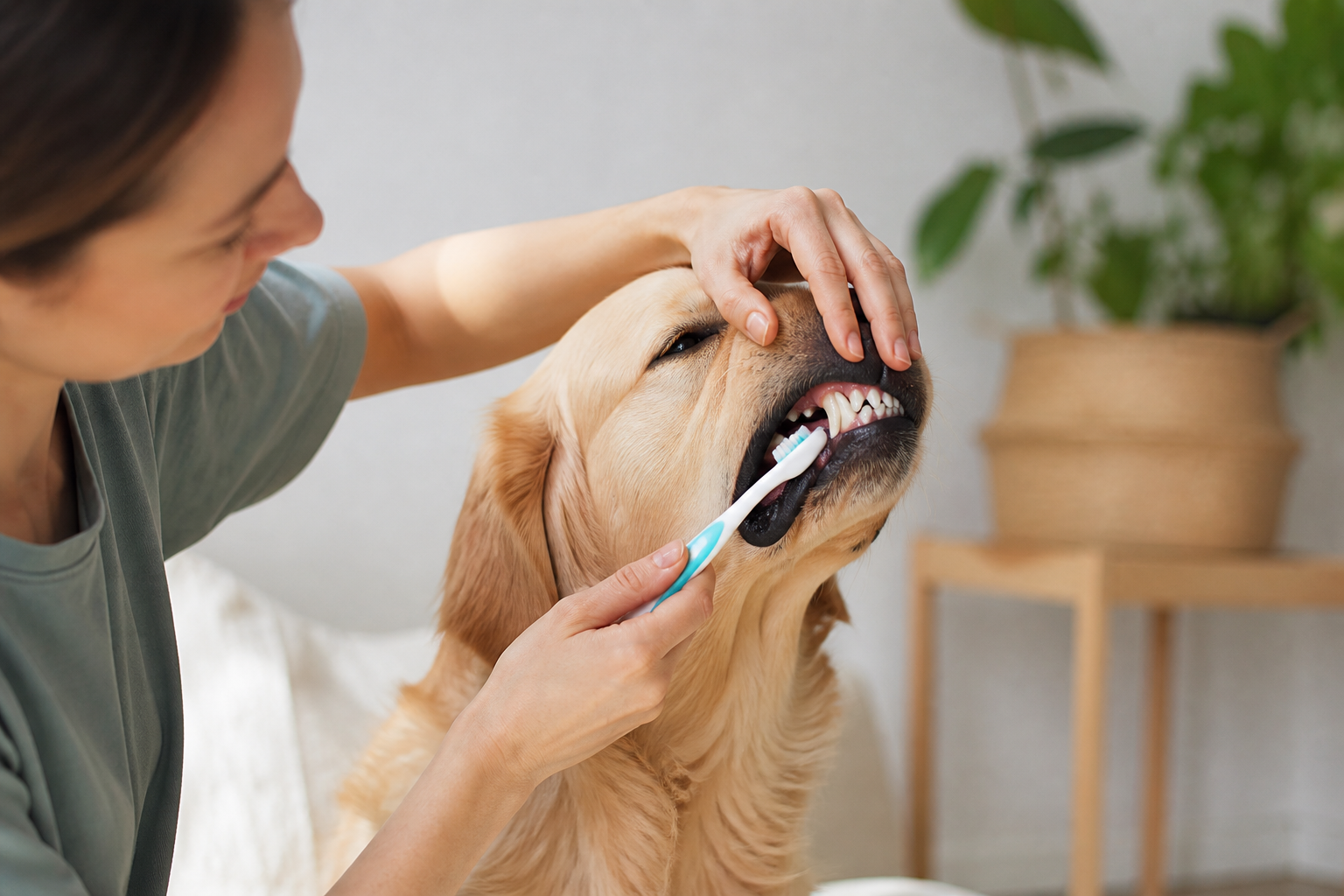
You are relaxing on the sofa when your dog hops up for a snuggle. They give you a happy lick or a big yawn, and suddenly, you are hit with a wave of "dog breath" that is hard to ignore. We have all been there. While many owners think bad breath is just a part of owning a dog, it is actually often a sign that plaque is starting to take over. At BaxterBoo, we know that keeping those pearly whites clean is about more than just fresh kisses. It is a vital part of their overall health that impacts their heart, kidneys, and comfort. This guide covers how often you should clean dogs' teeth at home and when it is time to call in the professionals. We will look at breed specific needs and the best tools to keep your pup's mouth healthy for life.
Quick Answer: You should aim to brush your dog's teeth every single day at home. For professional cleanings, most dogs need a veterinary visit once a year, though small breeds and those prone to dental issues may require a professional cleaning every six months.
The Daily Standard for Home Dental Care
Ideally, you should be brushing your dog's teeth every day. This sounds like a tall order for a busy pet parent, but the biology of a dog's mouth makes frequency the most important factor. Plaque is a sticky film of bacteria that begins to form on the teeth within hours of eating. If it is not brushed away, it mixes with minerals in the saliva and hardens into tartar, also known as calculus.
This transition from soft plaque to hard tartar happens quickly. In many dogs, plaque can harden into tartar in as little as 48 to 72 hours. Once tartar has formed, a toothbrush can no longer remove it. Only a professional veterinary cleaning with specialized scaling tools can get that hard buildup off the teeth. By brushing daily, you are constantly resetting the clock and preventing that hardening process from taking place.
If daily brushing is simply not possible for your schedule, aim for at least three times per week. This is often considered the minimum threshold to maintain any level of oral health. Anything less than that allows tartar to accumulate too quickly to manage. We recommend making it a part of your evening routine, perhaps right after the final walk of the day.
Key Takeaway: Frequency is more important than duration. Brushing for 30 seconds every day is far more effective than brushing for five minutes once a week.
Professional Cleaning Frequency by Breed and Size
While home care is essential, it does not replace the need for professional cleanings. Just like humans visit a dentist for deep cleanings, dogs need a veterinarian to scale away buildup that hides under the gumline. However, not every dog follows the same schedule.
Small and Toy Breeds
Small dogs like Chihuahuas, Pomeranians, and Yorkies often need professional cleanings every six to nine months. These dogs have 42 teeth, just like large dogs, but their mouths are much smaller. This leads to extreme crowding. Food particles and bacteria get trapped in tiny gaps that are nearly impossible to reach with a brush. Small dogs also have shallower tooth roots, meaning that a little bit of gum disease can lead to tooth loss much faster than in a large dog.
Brachycephalic (Flat-Faced) Breeds
Dogs like Pugs, French Bulldogs, and Shih Tzus have shortened jaws that often result in misaligned teeth. When teeth do not line up correctly, they do not benefit from the natural cleaning action of chewing. These breeds are high risk for early onset dental disease and should be evaluated by a vet at least twice a year.
Large and Giant Breeds
Large breeds like Labradors or Great Danes generally have better spacing between their teeth. For these dogs, a professional cleaning once a year is usually sufficient, provided the owner is doing some level of home care. If you are very diligent with daily brushing and dental chews, some large dogs may be able to stretch the interval to every 18 months, but they still need a visual exam at every wellness checkup.
| Dog Size/Type | Professional Cleaning Frequency | Primary Risk Factors |
|---|---|---|
| Small/Toy Breeds | Every 6 to 12 months | Crowded teeth, shallow roots |
| Flat-Faced Breeds | Every 6 to 12 months | Misaligned jaws, crowding |
| Medium Breeds | Every 12 months | Standard plaque accumulation |
| Large/Giant Breeds | Every 12 to 18 months | Cracked teeth from heavy chewing |
Why Professional Cleanings Require Anesthesia
One of the most common questions we hear is why a dog needs to be put under anesthesia for a cleaning. You might see "anesthesia-free" cleaning services offered by some groomers, but these are largely cosmetic and can even be harmful. A real dental cleaning involves scaling the plaque and tartar from under the gumline. This is where the bacteria that cause heart and kidney disease actually live.
No dog will sit perfectly still while a veterinarian uses sharp metal tools to scrape under their sensitive gums. Anesthesia allows the vet to do a thorough job without causing the dog stress or pain. It also allows for the use of a breathing tube, which prevents the dog from inhaling the bacteria and water spray during the cleaning.
Vet Tip: Always ask your veterinarian if they take dental X-rays during a cleaning. Since 60% of a dog's tooth is hidden under the gumline, X-rays are the only way to find painful abscesses or rotting roots that look fine on the surface.
Warning Signs Your Dog Needs an Immediate Cleaning
You should not always wait for your annual appointment if you notice changes in your dog's mouth. Dental pain is something dogs are experts at hiding. In the wild, showing pain is a sign of weakness, so our pets often suffer in silence. For more warning signs to watch for, read our guide to recognizing bad teeth in dogs.
Watch for these specific indicators that a professional cleaning is needed now:
- Persistent Bad Breath: A "doggy" smell is normal, but a foul, rotting, or metallic odor is a sign of infection.
- Bleeding Gums: You might see blood on a chew toy or in their water bowl.
- Changes in Eating Habits: If your dog starts dropping food, chewing only on one side, or suddenly refuses dry kibble, they may have a painful tooth.
- Discolored Teeth: Yellow or brown buildup near the gumline is a clear sign of tartar.
- Head Shyness: If your dog suddenly pulls away when you try to pet their face or muzzle, they may be experiencing oral discomfort.
- Loose or Missing Teeth: This is a sign of advanced periodontal disease that requires immediate veterinary intervention.
The Role of the BaxterBoo Pharmacy in Dental Health
Sometimes, a simple cleaning is not enough. If your veterinarian diagnoses your dog with advanced periodontal disease or a persistent infection, they may prescribe specific medications. This is where our pet pharmacy can help. Through our partnership with Pet's Choice, we offer a wide range of FDA-approved medications that your vet might recommend after a dental procedure.
For example, if your dog has a deep gum infection, they may need a course of antibiotics like Clindamycin or Clavamox. If they have had extractions, they will certainly need pain relief medications such as Carprofen or Meloxicam. Our pharmacy also provides access to prescription dental diets. Brands like Farmina Vet Life, Royal Canin, and Hill's Prescription Diet produce specialized kibble designed to scrub the teeth as the dog eats. These diets are often part of a long-term plan to reduce how often your dog needs to go under anesthesia for a cleaning.
Essential Tools for At-Home Brushing
If you are ready to start a routine, you do not need much, but you must have the right items. Never use human toothpaste. It contains xylitol, which is toxic to dogs, and foaming agents that can upset their stomachs since they cannot spit.
The Toothbrush
You have two main options here. A standard pet toothbrush looks like a human one but usually has a curved handle to reach the back molars. A finger brush is a small rubber cap that fits over your index finger. Finger brushes are often easier for beginners because they give you more control and feel less "scary" to the dog.
The Toothpaste
Pet toothpaste comes in flavors like poultry, beef, and peanut butter. This makes the process a treat rather than a chore. Most pet toothpastes are enzymatic. This means the enzymes continue to work on breaking down plaque even after you stop brushing. A poultry-flavored option is Virbac C.E.T. Enzymatic Pet Toothpaste.
Step-by-Step: Introducing the Brush
Step 1: Let them taste it. / Put a dab of pet toothpaste on your finger and let your dog lick it off. Do this for a few days so they associate the flavor with a positive experience.
Step 2: Rub the gums. / Use your bare finger to gently rub their teeth and gums. This gets them used to having their mouth handled.
Step 3: Introduce the tool. / Put a small amount of paste on the brush. Lift the lip and gently brush the large canine teeth in a circular motion.
Step 4: Gradually expand. / Each day, try to reach one or two more teeth. Focus on the outside surfaces, as that is where the most tartar builds up.
Supporting Dental Health Between Brushings
While brushing is the gold standard, other products can help slow down the accumulation of plaque. We carry a variety of dog dental care products that support oral hygiene.
- Dental Chews: High-quality chews like Greenies are designed to be abrasive. As the dog chews, the treat scrapes against the teeth. Look for products with the VOHC (Veterinary Oral Health Council) seal of approval.
- Water Additives: These are liquid solutions you add to your dog's water bowl. They contain enzymes or freshening agents that help kill bacteria in the mouth. These are great for dogs who absolutely will not tolerate a toothbrush.
- Dental Wipes: If your dog hates the bristles of a brush, dental wipes allow you to swipe away plaque with a pre-moistened cloth. They are less effective at reaching the gumline but better than doing nothing.
- Rawhide Alternatives: Chewing is a natural way for dogs to clean their teeth. However, we recommend avoiding very hard items like antlers or cow hooves. These are often harder than the tooth enamel itself and can cause painful slab fractures.
Bottom line: A multi-pronged approach using brushing, chews, and the occasional water additive is the most effective way to keep the vet's dental drill away.
How Dental Health Affects Longevity
It is a mistake to think of dental care as purely a "mouth" issue. The mouth is the gateway to the rest of the body. When a dog has periodontal disease, their gums are constantly inflamed and bleeding. This creates a direct highway for bacteria to enter the bloodstream.
Once in the blood, these bacteria can travel to the heart valves, causing endocarditis. They can also lodge in the kidneys and liver, leading to chronic organ failure over time. Studies have shown that dogs with healthy mouths can live up to two years longer than those with untreated dental disease. By staying on top of how often you clean your dog's teeth, you are literally adding years to their life.
Saving on the Cost of Dental Care
Professional cleanings can be expensive, often ranging from several hundred to over a thousand dollars depending on your location and the number of extractions needed. However, being proactive is the best way to save money.
Preventive cleanings are always cheaper than emergency dental surgery. If you wait until a tooth is rotten and needs to be pulled, you are paying for the cleaning, plus the surgery time, plus the extractions, plus the follow-up medications. We recommend checking if your vet offers discounts during National Pet Dental Health Month in February.
Additionally, being an MVP Rewards member at BaxterBoo helps you earn points on every toothbrush, paste, and dental chew you buy. These points turn into savings on your future orders. Our Autoship program also ensures you never run out of dental supplies, keeping your home routine consistent.
Key Takeaway: Investing in a ten-dollar tube of toothpaste today can save you a thousand-dollar vet bill three years from now.
Conclusion
Determining how often to clean dogs' teeth depends on your specific pet, but the goal is always consistency. Aim for daily brushing at home and a professional veterinary exam every year. Small breeds and seniors may need a more frequent schedule to prevent tooth loss and systemic health issues. Remember to watch for warning signs like bad breath or bleeding gums, and never use human dental products on your pup.
- Brush daily with enzymatic pet toothpaste.
- Schedule a professional cleaning at least once a year.
- Use VOHC-approved chews to supplement your routine.
- Consult your vet for prescription needs through our pharmacy.
Bottom line: Your dog's dental health is a lifelong commitment that pays off in fresh breath, less pain, and more years of companionship.
FAQ
Is it too late to start cleaning my senior dog's teeth?
It is never too late to start, but you should have a vet perform a full exam first. If your senior dog already has loose teeth or painful infections, brushing them at home could be very painful. Once the vet treats any existing issues, you can start a gentle home routine to prevent further decline.
Can I just use dental chews instead of brushing?
While dental chews are helpful, they are not a replacement for brushing. Chews mostly clean the tips of the teeth and the chewing surfaces. Brushing is the only way to effectively clean the gumline, which is where the most dangerous bacteria reside. For more ideas, explore these dental chews for dogs.
Why does my dog's breath still smell after brushing?
If you are brushing regularly and the smell persists, there may be an underlying issue. Your dog could have a deep infection, a broken tooth, or even an internal health problem like kidney disease. Persistent bad breath despite home care warrants a trip to the veterinarian.
How do I know if a dental product actually works?
The best way to verify a product is to look for the VOHC Seal of Acceptance. This seal is awarded by the Veterinary Oral Health Council to products that have been scientifically proven to reduce plaque and tartar in pets. We carry many VOHC-approved brands to help ensure you are getting results for your money.






