
 Save 15% on your 1st Autoship learn more

 Email us
 Live Chat
 FAQs
FAQs





Introduction
You are relaxing on the couch when your dog leans in to give you a friendly lick. That is usually the exact moment you notice it: the smell. While we often joke about "dog breath," a foul odor from a dog's mouth is actually a primary indicator of dental disease. At BaxterBoo, we hear from pet owners every day who are surprised to learn that dental health is just as important for dogs as it is for humans.
Caring for those canine chompers involves a two part approach: daily habits at home and regular visits to the veterinarian. This post covers exactly how often you should be brushing, when to schedule professional cleanings, and the signs that your dog needs dental attention right away. By the end of this guide, you will have a clear schedule for maintaining your pet's oral hygiene at every life stage.
Quick Answer: You should aim to brush your dog's teeth every single day at home to prevent plaque from hardening into tartar. In addition to home care, most dogs require a professional veterinary dental cleaning once every year.
The Importance of Routine Dental Care
Dental health is about much more than just keeping teeth white or breath fresh. For dogs, the mouth is the gateway to the rest of the body. When plaque and tartar build up on the teeth, bacteria begin to thrive. These bacteria do not just stay in the mouth. They can enter the bloodstream through inflamed gums and travel to major organs.
Veterinary research suggests a strong link between dental disease and systemic health issues. Chronic oral infections can put a significant strain on the heart, kidneys, and liver. By the time a dog is three years old, nearly 80 percent of them show some signs of periodontal disease. This is why staying on top of a cleaning schedule is one of the most effective ways to extend your dog's lifespan and improve their quality of life. For additional guidance, read our article on warning signs of bad teeth in dogs.
The Timeline of Plaque and Tartar
To understand how often to clean, you have to understand the enemy. Plaque is a sticky film of bacteria that forms on the teeth within hours of eating. If it is not brushed away, it reacts with minerals in your dog's saliva. Within 48 hours, that soft plaque begins to harden into tartar, also known as calculus.
Once tartar has formed, a toothbrush can no longer remove it. Tartar provides a rough surface that allows even more plaque to accumulate, eventually pushing under the gumline. This leads to gingivitis, bone loss, and tooth decay. Because this process happens so quickly, frequency is the most important factor in your home routine.
Key Takeaway: Plaque hardens into permanent tartar in just two days. This makes daily brushing the gold standard for preventing expensive and painful dental procedures later in life.
How Often to Brush Your Dog's Teeth at Home
If you ask a veterinary dentist for the ideal schedule, the answer will always be once a day. Just like humans brush every morning and night, dogs benefit from consistent mechanical cleaning. Daily brushing removes the soft plaque before it has a chance to mineralize.
We recognize that a daily routine can be challenging for busy pet owners. If once a day is not possible, you should aim for a minimum of three times per week. Brushing less than that is significantly less effective because the tartar will have already set in. Think of home brushing as maintenance. It keeps the "bill" at the vet lower by preventing the need for extractions or deep gum surgery. You can also explore our dental and breath care collection for at-home options.
Introducing a Brushing Routine
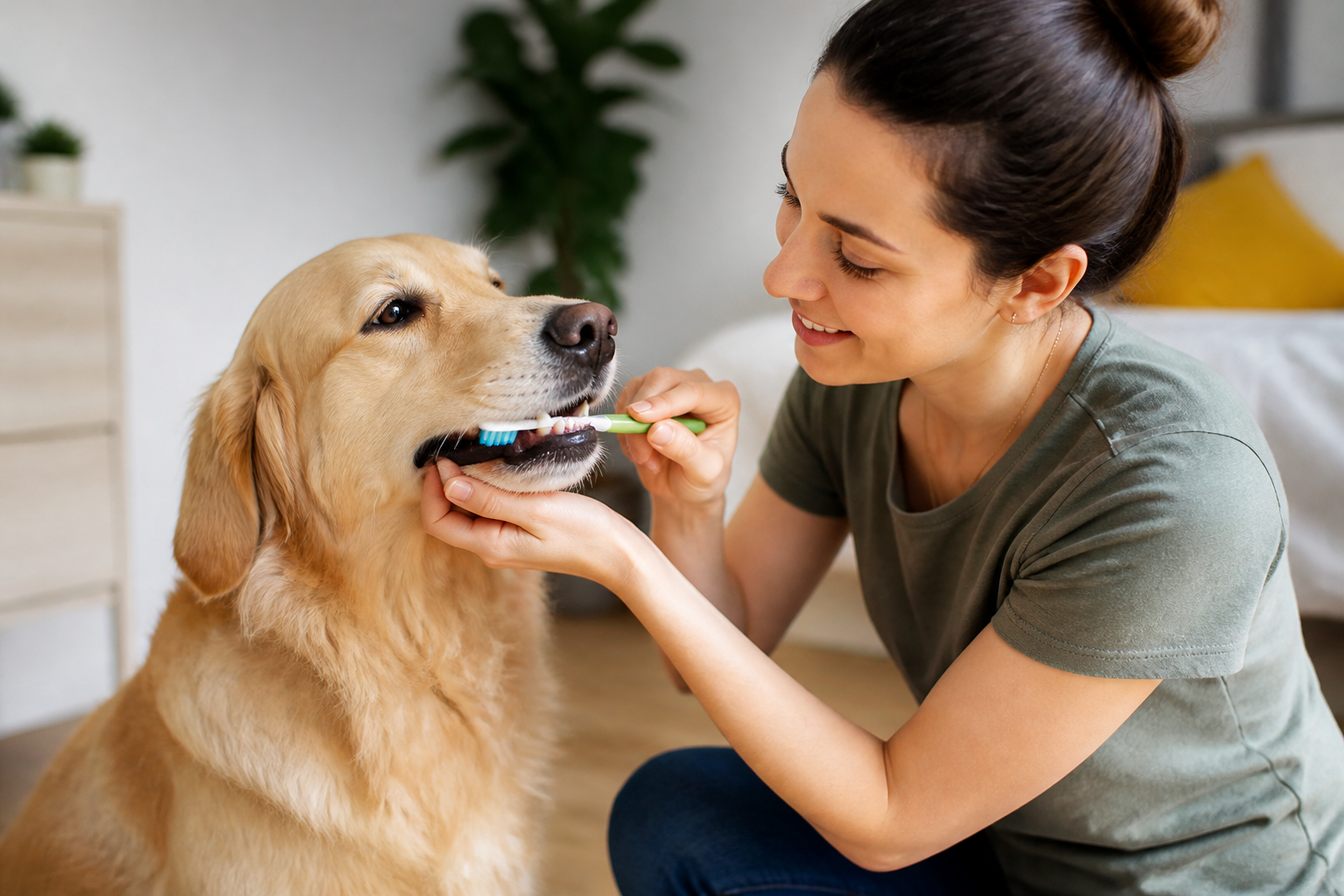
If your dog is not used to having their mouth handled, do not try to do a full cleaning on the first day. You want this to be a positive experience. Follow these steps to build the habit:
Step 1: Let them taste the paste. / Put a small amount of dog safe toothpaste on your finger and let them lick it off. Most pet pastes come in flavors like poultry or beef to make them taste like a treat.
Step 2: Get them used to the sensation. / Rub your finger along their gums and teeth for a few seconds. Do this for several days until they are comfortable with you touching their mouth.
Step 3: Introduce the brush. / Use a finger brush or a soft bristled dog toothbrush with a small amount of paste. Focus on the outside surfaces of the teeth, as this is where the most plaque accumulates. A Virbac C.E.T. Pet Oral Hygiene Kit includes a toothbrush, finger brush, and poultry-flavored toothpaste.
Step 4: Reward and repeat. / Always follow a brushing session with a high value treat or a favorite game. This creates a positive association with dental care.
Vet Tip: Never use human toothpaste for your dog. Human pastes often contain Xylitol, which is highly toxic to dogs, or foaming agents that can upset their stomach when swallowed. Always use a formula specifically labeled for canine use.
How Often Dogs Need Professional Dental Cleanings
Even with the best home care, most dogs will still need a professional cleaning at some point. A professional cleaning is much more thorough than what you can do at home. It involves scaling the teeth to remove tartar above and below the gumline and polishing the enamel to prevent future buildup.
For the average healthy adult dog, an annual professional cleaning is the standard recommendation. However, this is not a one size fits all rule. Several factors can change how often your dog needs to see the vet for a "deep clean."
Breed Considerations
Small and toy breeds are notorious for dental issues. Breeds like Yorkies, Chihuahuas, and Pugs have the same 42 teeth as a Large breed dog but much smaller mouths. This leads to overcrowding, which creates tiny crevices where food and bacteria get trapped.
Small dogs often require professional cleanings every six to nine months. Brachycephalic breeds (dogs with flat faces) also tend to have misaligned bites, which prevents the natural "self cleaning" that happens when teeth rub together during chewing. These dogs should have their mouths checked at every wellness exam to catch issues early.
Age and Lifestyle
Senior dogs often need more frequent dental attention. As dogs age, their immune systems may not fight off oral bacteria as effectively, and years of wear and tear can lead to cracked or damaged teeth. On the other hand, if you are diligent about daily brushing and use dental chews regularly, you might be able to stretch the time between professional visits to 18 months or two years.
Bottom line: While once a year is the baseline, small breeds and seniors should be evaluated every six months to determine their specific cleaning needs.
Signs Your Dog Needs a Cleaning Right Away
Sometimes the "once a year" schedule is not enough. You should be performing a quick "flip the lip" check at home once a week to look for changes. If you notice any of the following symptoms, schedule a veterinary exam regardless of when their last cleaning was:
- Persistent bad breath that smells like rotting food or ammonia.
- A dark red or purple line along the gums.
- Bleeding gums when they eat or when you brush.
- Yellow or brown crusty buildup on the teeth (tartar).
- Loose, broken, or missing teeth.
- Excessive drooling, especially if it is tinged with blood.
- Crying out or shying away when you touch their muzzle.
- Dropping food while eating or only chewing on one side of the mouth.
Vet Tip: If your dog suddenly stops eating or shows a decrease in appetite, it may be due to oral pain. Dental disease can make chewing dry kibble very uncomfortable. Always consult your veterinarian if you notice changes in eating habits.
The Role of Anesthesia in Professional Cleanings
One of the most common questions we get at BaxterBoo is whether anesthesia is truly necessary for a dental cleaning. You may see "anesthesia free" dental services offered at grooming salons or pet boutiques. While these may make the teeth look white on the surface, they are primarily cosmetic.
A thorough dental cleaning requires scaling under the gumline. This is where the most dangerous bacteria live. It is impossible to safely and effectively scale under the gums or take necessary dental X-rays while a dog is awake. Anesthesia allows the veterinarian to perform a full oral exam, including probing for "pockets" in the gums that indicate bone loss.
Our pet pharmacy at BaxterBoo works closely with Pet's Choice to provide FDA approved medications that may be required before or after a dental procedure. This includes antibiotics for infections or pain management for extractions. If your vet recommends a professional cleaning, they will likely perform blood work first to ensure your pet is a good candidate for anesthesia.
What Happens During the Procedure
During a professional cleaning, your vet will:
- Perform a tooth by tooth exam to check for mobility and decay.
- Take dental X-rays to see what is happening below the gumline and inside the tooth roots.
- Remove all tartar using ultrasonic and hand scalers.
- Polish the teeth to smooth out micro scratches where bacteria like to hide.
- Apply a fluoride treatment or dental sealant if necessary.
Supporting Dental Health Between Cleanings
Brushing is the best thing you can do, but it is not the only tool in your kit. You can support your dog's oral hygiene through various supplemental products.
Dental Chews and Treats
Certain treats are specifically designed to help scrub teeth as a dog chews. Look for products that carry the Veterinary Oral Health Council (VOHC) seal. This seal means the product has been tested and proven to reduce plaque or tartar. Brands like Greenies are popular choices that many dogs enjoy. These should be given daily for the best results, but remember to account for the extra calories in your dog's daily diet. Our guide to dental chews for dogs offers more ideas for between-cleaning care.
Dental Diets
If your dog is prone to rapid tartar buildup, your vet might suggest a prescription dental diet. These kibbles are usually larger and have a specific texture that does not crumble immediately. Instead, the tooth sinks into the kibble, allowing the fibers to scrub the surface of the tooth. You can find these types of specialized foods through our dog pharmacy if your vet provides a prescription.
Water Additives and Wipes
For dogs that absolutely will not tolerate a toothbrush, dental wipes or water additives are better than doing nothing. Wipes allow you to physically rub the surface of the teeth, while additives contain enzymes that help break down bacteria in the mouth. However, these are much less effective than the mechanical action of brushing and should be used as additions to a routine, not replacements.
Building a Dental Care Plan
Consistency is the secret to a healthy mouth. At BaxterBoo, we recommend setting a reminder on your phone for daily brushing, just like you would for their heartworm prevention or grooming appointments. For repeat-purchase dental supplies, our Autoship programme can help you manage regular deliveries.
Suggested Cleaning Schedule
- Daily: Brush teeth with dog safe toothpaste for at least 30 to 60 seconds.
- Daily: Provide one VOHC approved dental chew or toy.
- Weekly: Perform a home "oral exam" by checking for redness, swelling, or new tartar.
- Annually: Visit the veterinarian for a professional dental evaluation and cleaning.
Key Takeaway: A proactive dental plan combines home maintenance with professional oversight to prevent pain and systemic illness.
Conclusion
Understanding how often to clean dog teeth is a fundamental part of being a responsible pet owner. While the goal is daily brushing at home and a professional cleaning every year, your dog's specific needs may vary based on their breed and age. Staying ahead of tartar buildup not only saves you money on expensive veterinary surgeries but also protects your dog from the silent discomfort of oral disease.
We are here to help you find the right tools for the job, from specialized brushes to dental treats. If you have questions about specific dental products or need to fill a prescription for a dental diet, our pharmacy team is ready to assist.
Bottom line: Start a brushing habit today to ensure your dog enjoys a healthy, pain free smile for years to come.
FAQ
Is it ever too late to start brushing my dog's teeth?
It is never too late to start, but you should have a vet check their mouth first if they are an adult. If your dog already has significant tartar or painful gingivitis, brushing could cause them discomfort or even cause the gums to bleed. Once a veterinarian has performed a professional cleaning to get them back to a "clean slate," you can begin a daily brushing routine to maintain those results.
Can I just give my dog bones to clean their teeth instead of brushing?
While some people believe bones help clean teeth, they come with significant risks. Hard bones can cause painful tooth fractures or even break a dog's carnassial tooth, which is a major chewing tooth. Additionally, bones can splinter and cause internal injuries. Stick to VOHC approved dental chews and toys that are designed to be safe for your dog's enamel and digestive system. For more ideas, browse our dog dental chews.
Why does my dog's breath smell so bad even though I brush occasionally?
If you are only brushing once a week or once a month, tartar has likely already formed on the teeth. Brushing cannot remove hardened tartar. The bad smell usually comes from bacteria living under the tartar or deep within the gumline. Persistent bad breath is a sign that your dog needs a professional cleaning by a veterinarian to remove the source of the odor.
Do certain dog foods cause more dental problems than others?
There is a common myth that dry kibble cleans teeth better than wet food. While wet food can stick to teeth more easily, most standard dry kibbles crumble too quickly to provide any real cleaning benefit. For food to actually clean teeth, it needs to be a specific "dental diet" formula with a texture designed to scrub the tooth surface. Regardless of what you feed, daily brushing remains the most important factor in oral health.






