
 Save 15% on your 1st Autoship learn more

 Email us
 Live Chat
 FAQs
FAQs





Introduction
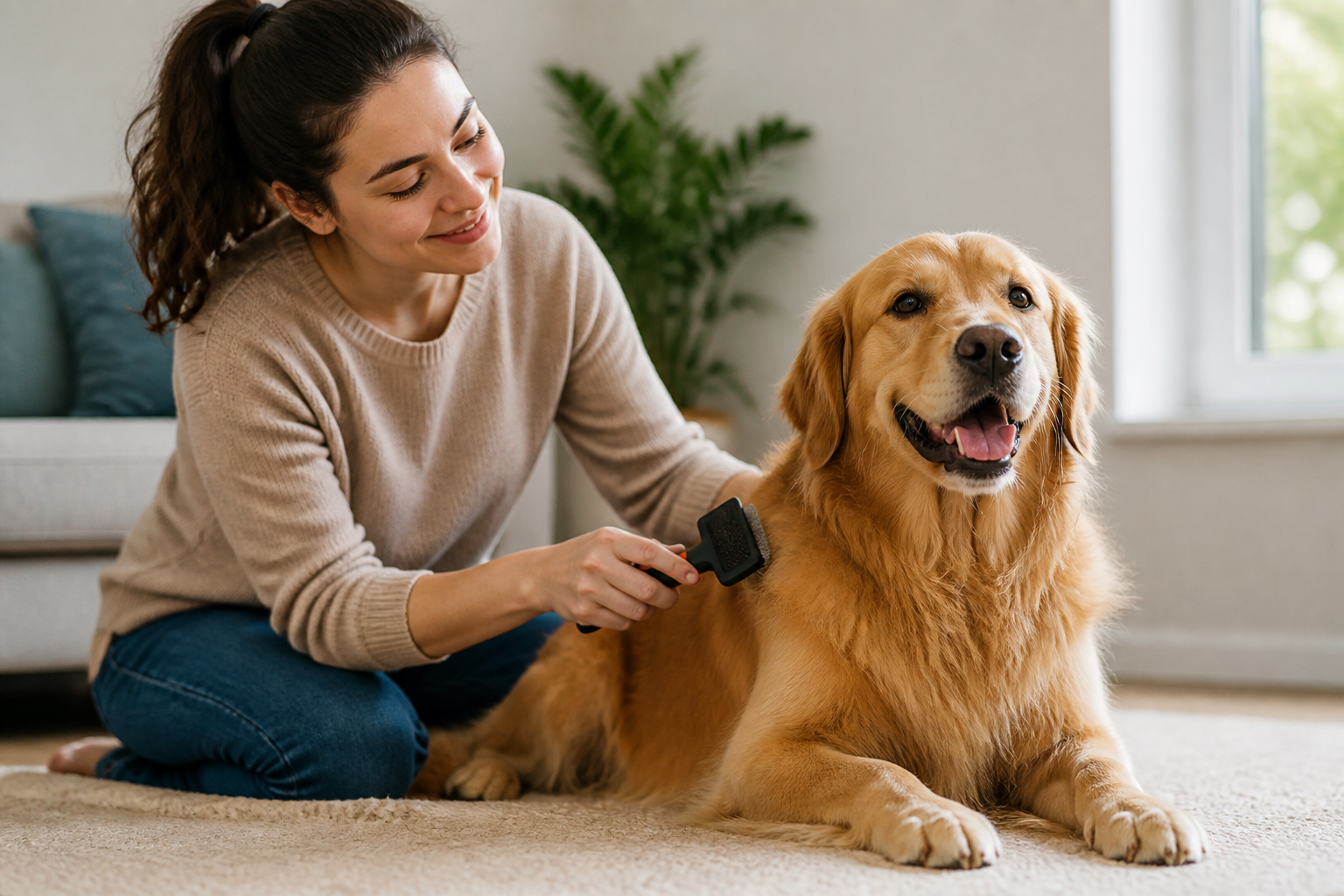
You might notice a sudden flurry of fur on your rug or feel a stubborn knot behind your dog's ears during a belly rub. Brushing is more than just a chore to keep your house tidy. It is a vital part of your dog's health and a chance for the two of you to bond. At BaxterBoo, we know that every coat is different. A sleek Boxer requires different tools than a fluffy Pomeranian. Using the wrong brush or technique can lead to skin irritation or missed tangles. This guide covers the specific tools you need for every coat type and the best techniques to keep your dog comfortable. You will learn how to handle mats, reduce shedding, and turn grooming time into a positive experience for your pet.
Quick Answer: Brushing your dog involves using a tool suited for their coat type to remove loose hair and prevent mats. Always brush in the direction of hair growth, starting from the head and working back to the tail. Use a comb afterward to ensure you have reached all the way to the skin.
Why Regular Brushing Matters
Brushing does more than just make your dog look good. It serves several health purposes that can save you money and stress. First, it helps distribute natural oils across the skin. This keeps the coat shiny and helps prevent dry, itchy patches. Second, it allows you to get a close look at your dog's body. When you brush regularly, you are more likely to notice lumps, bumps, or parasites early.
Regular sessions also reduce the amount of fur that ends up on your furniture. For dogs with undercoats, brushing is the only way to remove dead hair before it mats. Mats are not just unsightly. They pull on the skin and can cause significant pain or hide infections.
Key Takeaway: Consistent brushing prevents painful mats, reduces household shedding, and allows you to monitor your dog for skin issues or lumps.
Choosing the Right Tools for Your Dog
You cannot use the same brush for every dog. The market has many options, and choosing the right one is the first step toward success. We carry over 500 trusted brands to help you find the exact match for your pet's needs. Explore our dog grooming supplies to compare brushes, combs, shampoos, and other coat-care tools.
Slicker Brushes
A slicker brush has fine, short wires close together on a flat or curved surface. These are the most common brushes for dogs with medium to long hair. They are excellent for removing mats and tangles. Brands like Evolution offer self-cleaning versions that make it easy to remove the collected fur.
Bristle Brushes
These are best for short-haired dogs or as a finishing tool for longer coats. The bristles are usually natural or synthetic and vary in stiffness. They help smooth the hair and spread natural skin oils. A soft bristle brush is also a good choice for puppies who are just getting used to the sensation of being groomed.
Pin Brushes
Pin brushes look similar to human hairbrushes. They have metal pins with rounded tips to prevent scratching the skin. These are ideal for dogs with long, silky hair like Yorkshire Terriers or Maltese. They provide a gentle touch and prevent breakage on fine hair. Browse our dog brushes and combs to find options for different coat lengths and textures.
Rubber Brushes and Grooming Mitts
For very short-haired breeds like Boxers or Great Danes, a rubber brush is perfect. Tools like the Kong ZoomGroom act as a magnet for loose hair. They also massage the skin, which many dogs find very relaxing.
Undercoat Rakes and Deshedding Tools
If you have a dog that sheds heavily, like a Husky or a Golden Retriever, you need an undercoat rake. These tools reach through the topcoat to pull out dead hair from the thick undercoat. Deshedding tools like the FURminator are also highly effective but must be used with a light touch to avoid "brush burn" on the skin.
Brushing by Coat Type
Every coat type requires a different approach. Understanding what your dog has will help you choose the right frequency and method.
Short and Smooth Coats
Dogs like Labradors, Pugs, and Beagles have short hair that lies close to the body. These dogs still shed, often more than people expect.
- Frequency: Once or twice a week.
- Tools: Rubber curry brush or a soft bristle brush.
- Technique: Use circular motions with a rubber brush to loosen hair. Follow up with long strokes using a bristle brush in the direction of hair growth.
Double Coats
Breeds like German Shepherds, Corgis, and Newfoundlands have a soft undercoat and a tougher outer coat. They "blow" their coats twice a year, resulting in heavy shedding.
- Frequency: Two to three times a week. Daily during shedding season.
- Tools: Undercoat rake and a slicker brush.
- Technique: Focus on the thickest areas like the haunches and neck. Use the rake to pull out the loose undercoat. Use the slicker brush to smooth the topcoat.
Long and Silky Coats
Yorkies, Spaniels, and Setters have hair that can easily tangle or break.
- Frequency: Daily.
- Tools: Pin brush and a metal comb.
- Technique: Brush in sections. Hold the hair near the skin as you brush the ends to prevent pulling. Always finish with a comb to check for hidden tangles near the skin.
Curly and Wavy Coats
Poodles, Goldendoodles, and Bichons have hair that continues to grow. Instead of falling out, loose hair gets trapped in the curls, leading to fast matting.
- Frequency: Daily.
- Tools: Slicker brush and a metal Greyhound comb.
- Technique: Use "line brushing." Lift a section of hair and brush the hair underneath. Move up the body in rows. If you can't get a comb through to the skin, the dog is likely matted. For more coat-care guidance, read how to groom a curly-haired dog.
Step-by-Step Brushing Technique
Follow these steps to ensure you are thorough and keep your dog comfortable throughout the process.
Step 1: Inspect the coat. / Run your hands over your dog's body to feel for any large mats or sensitive spots. This is also a good time to check for ticks or fleas.
Step 2: Start with a detangler. / If your dog has long hair, use a conditioning spray to help the brush glide through. This reduces hair breakage and makes the process more pleasant for the pet.
Step 3: Work in sections. / Do not just brush the back and call it finished. Start at the head and move toward the tail. Don't forget the "friction points" like the armpits, behind the ears, and the base of the tail.
Step 4: Use the line brushing method. / For thick or long hair, lift the coat with one hand. Brush the hair downward from the skin out. This ensures you are not just "skimming" the top of the coat.
Step 5: The comb test. / Once you think you are done, run a metal comb through the fur. If it snags, you have a tangle that needs more attention.
Vet Tip: While brushing, check for redness, sores, or parasites like fleas and ticks. If you find persistent skin issues or suspicious lumps, consult your veterinarian for a diagnosis. Our dog pharmacy carries prescription options and flea and tick products for eligible needs.
Managing Mats and Tangles
Mats are dense clumps of fur that can become quite tight. They often form in areas where there is a lot of movement or moisture. If you find a mat, do not reach for the scissors. It is very easy to accidentally cut a dog's thin skin.
Instead, apply a detangling product or a small amount of cornstarch to the mat. Use your fingers to pull the clump apart as much as possible. Then, use the end of a metal comb to pick at the mat starting from the tips of the hair and working toward the skin. If a mat is too tight or large, it is safer to have a professional groomer shave it out.
Handling a Reluctant Dog
Not every dog loves being brushed. If your dog runs away when they see the brush, you need to change their association with the activity.
Start with very short sessions. Brush for thirty seconds and then give a high value treat like those from Stella and Chewy's or Zesty Paws. Gradually increase the time as your dog becomes more comfortable. It can help to brush your dog when they are tired, such as after a long walk.
Keep the environment calm. If you are stressed, your dog will be too. Use a soothing voice and plenty of praise. For small dogs, brushing them on a stable table or counter can sometimes make them feel more secure than being in your lap. For large dogs, having them stand while you work is usually most effective.
Seasonal Brushing and Bathing
Your brushing routine should change with the seasons. In the spring and fall, many dogs shed their undercoats to prepare for temperature changes. You will likely need to brush daily during these weeks to keep up with the volume of hair.
Always brush your dog thoroughly before a bath. Water can act like glue for existing mats, making them much harder to remove once the hair is wet. After the bath, wait until the coat is completely dry before doing a final brush through. Brushing wet hair can cause it to stretch and break. For additional bathing guidance, see these dos and don'ts for bathing your dog.
Key Takeaway: Always brush your dog before bathing them. Water tightens existing knots and makes them nearly impossible to remove without shaving.
When to See a Professional
While home brushing is essential, some tasks are best left to the pros. If your dog is severely matted to the skin, do not try to fix it at home. The risk of cutting the skin is too high.
Professional groomers also have specialized high velocity dryers. These dryers are excellent for blowing out dead undercoat that a brush might miss. If you are struggling to keep up with your dog's coat, a professional can give them a "sanitary trim" or a shorter "puppy cut" to make home maintenance easier.
Health Signs to Watch For
Because you are touching your dog's skin frequently during brushing, you are the first line of defense for their health. Watch for the following:
- Excessive shedding: This can sometimes indicate a nutritional deficiency or an underlying health issue like a thyroid problem.
- Redness or rashes: This might suggest an allergy to food or environmental factors.
- Parasites: Look for "flea dirt," which looks like small black pepper flakes.
- Lumps: Any new or changing lump should be checked by a vet.
Our pharmacy at BaxterBoo offers prescription diets and medications for dogs with chronic skin conditions or allergies. Through our pharmacy services, we provide a reliable way to manage these ongoing health needs alongside your grooming routine.
Bottom line: Brushing is a primary health check that helps you spot skin issues, lumps, and parasites before they become serious problems.
Summary of Brushing Best Practices
Maintaining your dog's coat is a commitment that pays off in a healthier, happier pet. Use the right tools for your dog's specific coat type and stay consistent with your schedule.
- Short coats: Weekly rubber brushing.
- Double coats: Rake out the undercoat two to three times a week.
- Curly coats: Daily line brushing and combing.
- Mats: Never use scissors. Use a detangler and pick from the ends.
- Handling: Use treats and keep sessions short at first.
We are here to support your grooming journey with expert-picked tools and health supplies. Whether you need a new slicker brush or are looking to start our Autoship programme for your favorite treats, we have the selection and expertise to help. You can also earn rewards on your grooming supplies through the MVP Rewards programme.
FAQ
How often should I really brush my dog?
It depends on the coat type, but most dogs benefit from a session at least twice a week. Short-haired breeds can often go a week between brushings, while long-haired or curly-coated dogs usually need daily attention to prevent mats. If your dog is currently in a shedding season, you should aim for daily brushing regardless of their hair length.
Can I use a human hairbrush on my dog?
It is not recommended because human brushes are designed for human hair and scalps, which are very different from a dog's. Dog brushes have specific pin lengths and wire densities meant to penetrate fur and reach the skin without causing scratches. Using a human brush may only smooth the very top of the coat, leaving tangles and dead undercoat trapped underneath.
What should I do if my dog has a very tight mat?
If a mat is tight against the skin, your best option is to see a professional groomer. If the mat is further out on the hair shaft, apply a detangling spray and use the end of a metal comb to gently pick it apart starting from the outer edge. Never use regular scissors to cut a mat, as it is very easy to accidentally snip your dog's skin, which is often pulled up into the knot.
Does brushing help with my dog's skin allergies?
Brushing can help by removing allergens like pollen or dust that get trapped in the fur, but it won't cure the allergy itself. It does allow you to monitor the skin for redness or sores caused by scratching. If your dog has persistent skin issues, consult your vet about prescription options available through our dog pharmacy.






