
 Save 15% on your 1st Autoship learn more

 Email us
 Live Chat
 FAQs
FAQs





Introduction
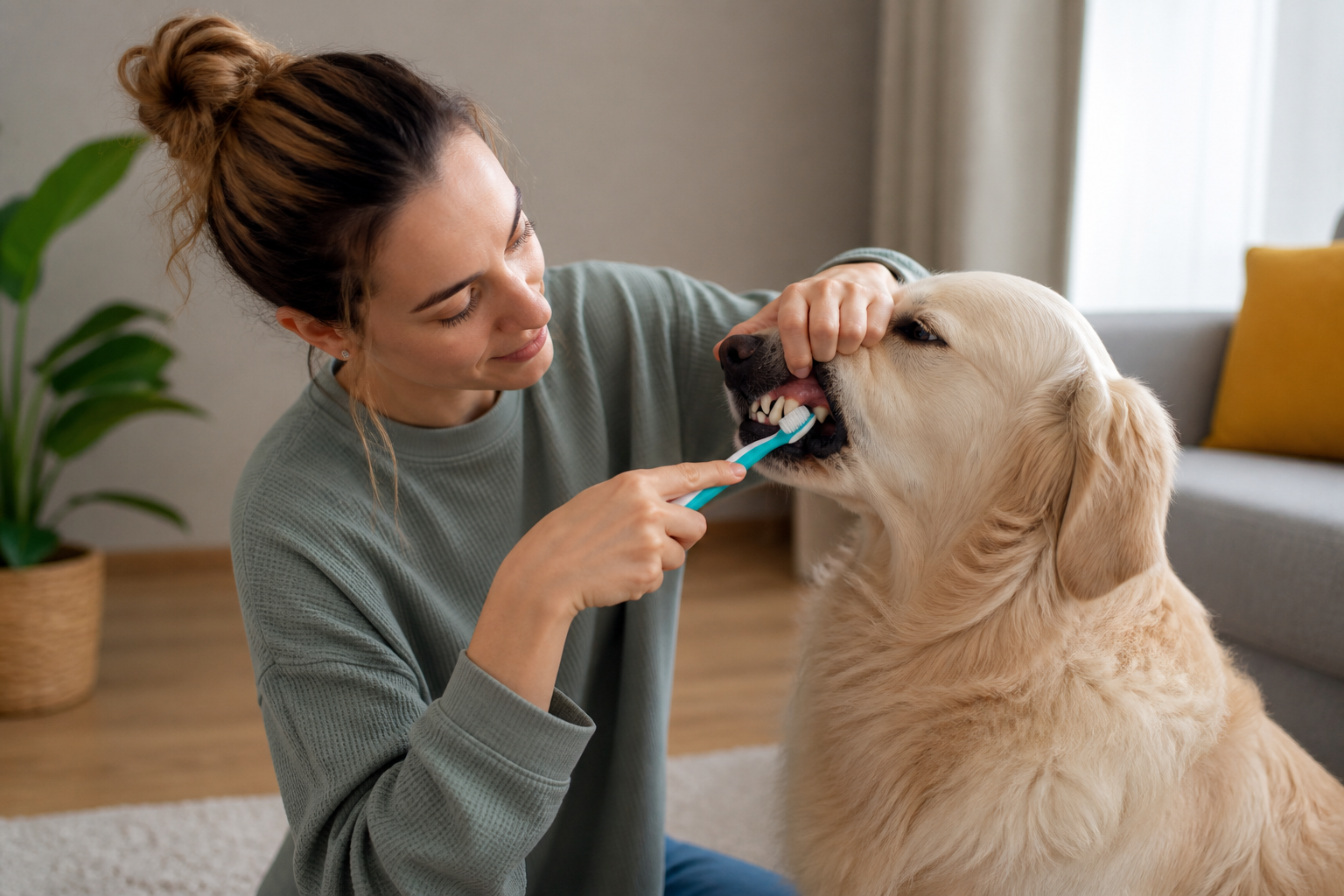
You lean in for a celebratory pup kiss and get a face full of "dog breath." It is a common moment for many of us. That smell is often the first sign of plaque buildup. At BaxterBoo, we know that keeping those pearly whites clean is about more than just fresh breath. It is a vital part of your dog's overall health and longevity. This guide covers how to clean a dog's teeth at home using various tools and techniques. We will walk you through the brushing process and show you alternatives for dogs who refuse the toothbrush. Taking small daily steps now can prevent serious dental issues and expensive veterinary visits later.
Quick Answer: The most effective way to clean a dog's teeth at home is daily brushing with pet-safe toothpaste and a soft-bristled brush. For dogs that resist brushing, you can use VOHC-approved dental chews, water additives, or seaweed-based powders. These methods help disrupt plaque before it hardens into tartar.
Why Dental Care Is Vital for Your Dog
Dental hygiene is one of the most overlooked aspects of pet care. By the age of three, most dogs show some signs of periodontal disease. This happens because bacteria and food particles form a sticky film called plaque. If you do not remove this film, it mineralizes into tartar within 48 hours. Tartar is a hard, brown substance that you cannot brush away at home.
When tartar builds up under the gumline, it leads to inflammation and infection. This can cause pain, tooth loss, and bone destruction in the jaw. Even more concerning is that bacteria from the mouth can enter the bloodstream. This may lead to issues with the heart, liver, and kidneys. Maintaining a clean mouth is a full-body health priority.
Key Takeaway: Plaque is a soft film that you can brush away, but tartar is a hard mineral deposit that requires professional veterinary equipment to remove.
Gathering Your Dental Cleaning Supplies
Before you start, you need the right tools. Never use human toothpaste for your dog. Human versions often contain xylitol, which is highly toxic to dogs. They also contain foaming agents like sodium lauryl sulfate that can upset a dog's stomach.
Choosing the Right Toothbrush
There are several options for dog toothbrushes. A standard dog toothbrush has a long handle and angled bristles to reach the back molars. If your dog has a small mouth, a finger brush might be easier to maneuver. These are small rubber caps that fit over your fingertip. For very small breeds, a soft-bristled toddler toothbrush also works well.
Selecting a Toothpaste
Dog toothpastes come in flavors that pets actually enjoy. You can find options like poultry, beef, peanut butter, or seafood. This makes the experience feel more like a treat than a chore. Many of these formulas contain enzymes that help break down plaque even after you finish brushing. You can explore our dog dental and breath care selection for pet-safe toothpaste and brushing supplies.
Dental Wipes and Gels
If your dog is very resistant to a brush, dental wipes are a good starting point. You wrap the pre-moistened cloth around your finger and rub it over the teeth. Dental gels can also be applied to the gums. These use enzymes to kill bacteria and freshen breath without the need for mechanical scrubbing.
For additional guidance, review these pet dental care tips before building your routine.
A Step-by-Step Guide to Brushing Your Dog's Teeth
Do not expect to do a full cleaning on the first day. It takes time for a dog to feel comfortable with someone touching their mouth. Be patient and keep sessions short.
Step 1: Introduce the toothpaste / Let your dog lick a small amount of toothpaste off your finger. This helps them associate the flavor with a positive reward. Do this for a few days until they are excited to see the tube.
Step 2: Touch the teeth and gums / Lift your dog's lip and gently rub your finger along their gums. Do not use the brush yet. This gets them used to the sensation of having their mouth handled.
Step 3: Introduce the toothbrush / Put a small amount of toothpaste on the brush. Let your dog lick it off. Gently touch the brush to the front teeth without scrubbing. Praise them heavily for staying calm.
Step 4: Start the brushing motion / Aim for a 45-degree angle toward the gumline. Use small, circular motions. Focus on the outside of the teeth, as this is where most plaque accumulates. You do not usually need to brush the inside surfaces because a dog's tongue helps keep those clean.
Step 5: Reach the back molars / Slowly work your way toward the back of the mouth. The large molars in the back are common spots for heavy tartar. If your dog gets restless, stop and try again tomorrow.
Vet Tip: If you notice bleeding gums, loose teeth, or significant discomfort during brushing, stop immediately. These are signs of active dental disease. You should consult your veterinarian for a professional exam to ensure your dog does not have an underlying infection.
How to Clean Teeth Without Brushing
We know that not every dog will tolerate a toothbrush. Some dogs have anxiety about mouth handling, or they may have sensitive gums. Fortunately, we carry several effective alternatives at BaxterBoo that can still make a big difference in their oral health.
Dental Chews and Treats
Dental chews are designed to scrape away plaque as your dog gnaws on them. Brands like Greenies or ProDen PlaqueOff System treats use specific textures and ingredients to reduce buildup. The mechanical action of chewing is very effective for the premolars and molars. For the best results, look for products with the Veterinary Oral Health Council (VOHC) seal. Browse our dog dental chews and treats for additional options.
Water Additives
Water additives are a passive way to improve oral health. You simply add a capful to your dog's fresh water bowl each day. These solutions usually contain ingredients that alter the pH of the mouth or use enzymes to kill bacteria. This is a great "hands-off" option for busy owners or difficult dogs.
Seaweed-Based Powders
Seaweed powders, such as ProDen PlaqueOff, work systemically through the saliva. You sprinkle the powder onto your dog's food once a day. Over time, the ingredients soften existing tartar and prevent new plaque from sticking. It is one of the easiest ways to manage dental health without any mouth contact. See our selection of ProDen PlaqueOff products for seaweed-based dental care options.
Dental Toys
Specific rubber toys are textured to clean teeth during playtime. Some Kong toys or specialized dental bones have ridges that massage the gums and scrape the teeth. You can even smear a bit of dog-safe toothpaste or peanut butter into the ridges to encourage your dog to chew more.
Bottom line: While brushing is the most effective method, combining dental chews, water additives, and specialized toys can still significantly reduce plaque.
For more ideas about recognizing oral health concerns, read the warning signs of bad teeth in dogs.
Managing Senior Dog Dental Needs
Senior dogs often require more frequent dental attention. As dogs age, their immune systems change, and years of plaque buildup may have already caused some gum recession. For an older dog, you must be very gentle. They may have sensitive spots or even cracked teeth that you cannot see.
If you have a senior dog with existing dental issues, your vet might recommend a prescription dental diet. These kibbles are larger and have a fibrous structure that does not shatter when bitten. Instead, the tooth sinks into the kibble, allowing it to scrub the surface. Through our partnership with Pet's Choice, our pharmacy offers these specialized prescription diets to help manage advanced dental needs.
Key Takeaway: Senior dogs benefit from softer dental wipes and prescription diets if their teeth are too sensitive for traditional brushing or hard chews.
Identifying Signs of Dental Disease
Even with the best at-home care, you should keep an eye out for signs that something is wrong. Dogs are experts at hiding pain. They will often continue to eat even if they have a mouth infection or a broken tooth.
Watch for these red flags:
- Persistent bad breath that smells like rotting food or metal.
- Yellow, brown, or gray buildup on the teeth.
- Red, swollen, or bleeding gums.
- Excessive drooling or dropping food while eating.
- Pawing at the mouth or face.
- A sudden preference for wet food over dry kibble.
If you notice these symptoms, it is time for a professional cleaning. A veterinarian can perform a deep cleaning under anesthesia, which allows them to clean under the gumline and take X-rays to check for bone loss.
The Role of the BaxterBoo Pharmacy
Maintaining oral health sometimes requires more than just a toothbrush. If your vet diagnoses an oral infection or advanced gum disease, they may prescribe antibiotics or medicated oral rinses. We make it easy to manage these health needs through our pet pharmacy partnership. You can get FDA-approved medications and prescription dental foods delivered right to your door. This ensures your dog gets the professional-grade support they need alongside your at-home routine.
Creating a Consistent Routine
Consistency is the secret to success. Brushing once a month does very little to stop tartar. Aim for at least three times a week, though daily is the goal. If you cannot brush daily, try to use a dental chew or a water additive on the "off" days.
To help you stay on track, consider our Autoship program. You can set up recurring deliveries for your favorite dental chews, toothpaste, and water additives. This ensures you never run out of supplies. Plus, you will save on your orders and earn MVP Rewards to use on future gear or treats.
Step 1: Set a schedule / Choose a time when your dog is relaxed, such as after a walk or in the evening. Step 2: Keep supplies handy / Store the toothbrush and paste where you can see them to remind you. Step 3: Pair with a reward / Follow every cleaning session with a favorite game or a dental-friendly treat. Step 4: Check progress / Once a month, lift the lips to look for any new redness or buildup.
Professional Cleaning vs. At-Home Care
It is important to understand that home care is a preventative measure. It cannot fix a mouth that is already diseased. Think of it like your own dental habits. You brush and floss at home, but you still go to the dentist for a professional cleaning.
A professional veterinary cleaning is much more thorough. The vet uses ultrasonic scalers to remove tartar that is bonded to the enamel. They also polish the teeth to smooth out microscopic scratches where bacteria like to hide. At-home care is what maintains those results and extends the time between professional visits.
Vet Tip: Never attempt to "flick" or scrape tartar off your dog's teeth with a metal tool at home. This can easily damage the enamel and lead to painful injuries if your dog moves suddenly.
Conclusion
Cleaning your dog's teeth at home is one of the best things you can do for their long-term wellness. Whether you use a toothbrush, dental wipes, or seaweed-based powders, the goal is to disrupt plaque every single day. By starting slowly and making the process rewarding, you can turn dental care into a bonding moment rather than a struggle.
Remember these key points for success:
- Always use pet-safe toothpaste, never human varieties.
- Consistency is more important than perfection.
- Watch for signs of pain or infection and consult your vet regularly.
- Use a mix of methods like chews and water additives to supplement brushing.
Ready to start your dog's dental routine? You can find our full selection of toothbrushes, enzymatic pastes, and VOHC-approved chews in our Dental Care section. For those needing prescription diets or medications, visit our dog pharmacy to get everything you need delivered with the help of Pet's Choice.
FAQ
How often should I brush my dog's teeth?
Ideally, you should brush your dog's teeth every day to prevent plaque from hardening into tartar. If daily brushing is not possible, aim for at least three times per week. Combining brushing with daily dental chews or water additives can help fill the gaps on days you miss.
Can I use baking soda to clean my dog's teeth?
It is not recommended to use baking soda for cleaning a dog's teeth. Baking soda has a high alkaline content and a salty taste that can upset a dog's stomach if swallowed. It is much safer and more effective to use a specially formulated dog toothpaste that contains beneficial enzymes.
What should I do if my dog's gums bleed during brushing?
Minor bleeding can occasionally happen if your dog has mild gingivitis, but consistent bleeding is a sign of dental disease. If the gums bleed every time you brush or appear very red and swollen, stop the home cleaning and schedule a veterinary exam. Your dog may need a professional cleaning to resolve the underlying inflammation.
Are dental chews as effective as brushing?
Brushing is the gold standard because it physically scrubs all surfaces of the teeth, including the gumline. Dental chews are a fantastic supplement and provide mechanical cleaning for the chewing surfaces, but they may miss certain areas. Using both together provides the most comprehensive protection for your dog's mouth.






