
 Save 15% on your 1st Autoship learn more

 Email us
 Live Chat
 FAQs
FAQs





Introduction
You reach for the toothbrush and your dog suddenly remembers a very important appointment in the other room. Many of us have been there. We want our dogs to have healthy teeth and fresh breath, but the nightly wrestling match is exhausting. Brushing is often called the gold standard, but it is only effective if you can actually do it. At BaxterBoo, we believe the best dental routine is the one your dog will tolerate every single day. This guide covers practical ways to manage plaque and tartar without a toothbrush. We will look at powders, chews, and specialty diets that do the work for you. Consistency is the secret to avoiding expensive dental surgeries later in life.
Quick Answer: You can clean dog teeth without brushing by using VOHC-accepted dental powders, chews, and water additives. These products work through mechanical abrasion or active ingredients to break down plaque. Consistency with these alternatives can significantly improve oral health for dogs who resist brushing.
Understanding Plaque and Tartar in Dogs
To clean teeth effectively, you must understand what you are fighting. Every time your dog eats, a sticky film called plaque forms on their teeth. This film is full of bacteria. If it stays on the tooth for more than 48 hours, it starts to harden. This hardened material is called tartar or calculus.
Tartar is much harder to remove than plaque. It acts like a rough surface that attracts even more bacteria. This cycle leads to gum inflammation and eventually periodontal disease. You can usually see tartar as a yellow or brown buildup near the gumline.
While you can remove plaque at home, tartar usually requires professional tools. This is why daily maintenance is so important. You want to disrupt the plaque before it has a chance to turn into stone. A no-brush routine focuses on this daily disruption.
Key Takeaway: Plaque turns into tartar in as little as two days. Daily intervention is the only way to prevent permanent buildup.
The Role of the VOHC Seal
When you browse the dental aisle, you will see many claims. Some products say they are "vet recommended" or "clinically proven." These terms can be confusing. The most reliable indicator of quality is the Veterinary Oral Health Council (VOHC) Seal of Acceptance.
The VOHC is an independent group of veterinary dental specialists. They do not perform their own tests. Instead, they review data from clinical trials provided by manufacturers. For a product to earn the seal, it must meet strict standards for reducing plaque or tartar.
We always recommend looking for this seal when choosing dental products. It ensures that the product actually does what it says on the label. Many popular treats and additives do not have this seal. Using VOHC-accepted products gives you confidence that your home care routine is effective.
Using Dental Powders for Passive Care
Dental powders are the easiest option for dogs who hate having their mouths touched. You simply sprinkle a small scoop onto your dog's food once a day. The most famous version of this is ProDen PlaqueOff Powder. This powder uses a specific type of seaweed harvested from the North Atlantic.
The seaweed works systemically. This means the ingredients are absorbed into the bloodstream. They then come out in the saliva. The compounds in the saliva work to break down the bacterial film on the teeth. It also helps to soften existing tartar over time.
Most owners notice a difference in breath quality within a few weeks. Because it involves no handling of the mouth, it is perfect for rescue dogs or shy pets. It is a true "set it and forget it" method for oral health.
Benefits of Dental Powders
- No mouth handling required.
- Works on all teeth at once.
- Easy to administer with daily meals.
- Usually tasteless and well-accepted by picky eaters.
Bottom line: Dental powders are the best starting point for dogs who will not allow any oral handling.
Dental Chews and Mechanical Abrasion
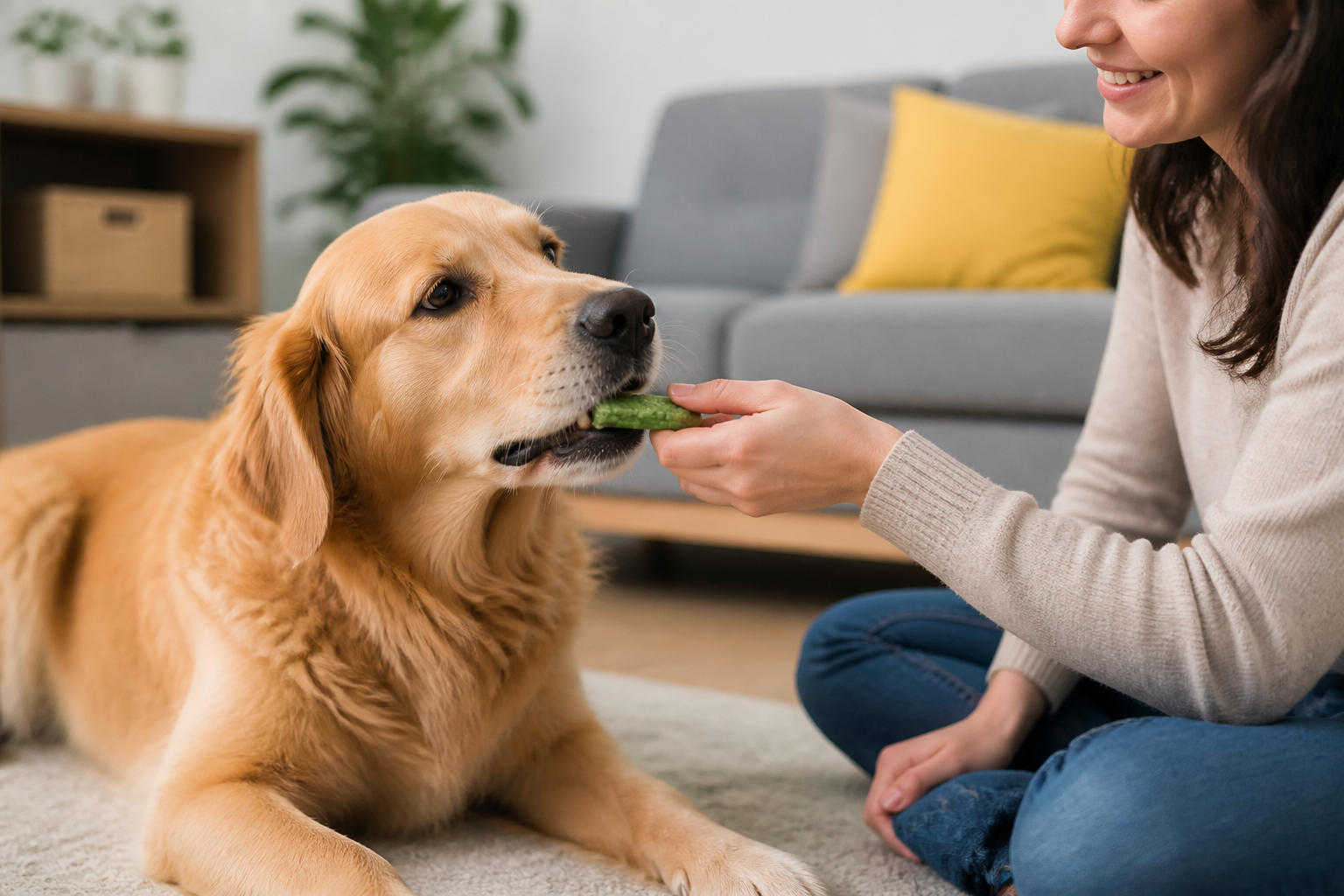
Dental chews are the most popular alternative to brushing. They work through mechanical abrasion. As your dog bites down, the texture of the chew scrapes against the surface of the tooth. This action mimics the scrubbing of a toothbrush.
The shape of the chew is very important. Many are designed with ridges or nubs that reach into the gaps between teeth. Some chews also contain ingredients like sodium hexametaphosphate. This helps to prevent minerals in the saliva from forming tartar.
You must choose the right size for your dog. If a chew is too small, your dog might swallow it in one or two gulps. This provides no cleaning benefit and can be a choking hazard. A good dental chew should take several minutes for your dog to finish.
How to Safely Use Dental Chews
Step 1: Select a VOHC-accepted brand like Greenies or ProDen dental care bones.
Step 2: Choose the size based on your dog's current weight.
Step 3: Supervise your dog while they enjoy the chew to prevent gulping.
Step 4: Offer the chew daily or at least three times per week for best results.
Vet Tip: If your dog is an aggressive chewer, avoid very hard items like antlers or dried hooves. These can cause painful tooth fractures. Stick to flexible dental chews that have some give when you press them with your thumbnail.
Water Additives and Dental Rinses
Water additives are often called "mouthwash for dogs." You add a small amount of the liquid to your dog's fresh water bowl each day. These additives typically contain enzymes or antibacterial agents. They work to lower the total bacteria count in the mouth.
This method is very convenient. However, its effectiveness depends on how much your dog drinks. It is best used as a supplement to other methods rather than a standalone solution. It helps to freshen breath and keep the gums healthy.
Some dental rinses are applied directly to the gums. These are useful if your dog has a specific area of redness. You can squirt a small amount inside the cheek. The saliva will carry the rinse across the rest of the teeth.
Interactive Toys for Dental Health
Toys can be powerful tools for cleaning teeth. Rubber toys with deep grooves or "dental nubs" are designed to massage the gums. When a dog chews on a textured toy, it helps to scrape away soft plaque. This is especially true for toys like those made by Kong.
You can make these toys even more effective. Try smearing a small amount of dog-safe toothpaste or coconut oil into the grooves. As the dog licks and chews to get the treat, they are unintentionally cleaning their teeth. This turns a chore into a fun game.
Cotton rope toys can also provide a flossing effect. The fibers of the rope slide between the teeth as the dog plays. However, you must inspect these toys regularly. If your dog starts to pull off and swallow the threads, the toy should be replaced.
Key Takeaway: Use textured toys to turn playtime into a cleaning session by adding pet-safe dental gels to the grooves.
Prescription Dental Diets
What your dog eats every day has a huge impact on their oral health. Most standard kibble is small and brittle. It shatters the moment a dog bites it. This provides very little cleaning benefit.
Prescription dental diets are different. The kibble pieces are much larger. They also have a specific fiber matrix that does not shatter. Instead, the tooth sinks into the kibble. This allows the fibers to scrub the tooth all the way to the gumline.
We carry premium brands like Farmina Vet Life that offer specialized nutrition. These diets are often available through our dog pharmacy partnership with Pet's Choice. Because these foods are formulated for specific health needs, you will need a prescription from your veterinarian.
When to Consider a Dental Diet
- Your dog has a high tendency to form tartar.
- You cannot brush their teeth due to behavior or physical limits.
- Your dog is a "gulper" who does not chew standard food.
- You want a nutritionally complete way to manage oral health.
Using Dental Wipes for Gentle Cleaning
If your dog allows you to touch their face but hates the bulky toothbrush, try dental wipes. These are pre-moistened pads that you wrap around your finger. They allow you to feel exactly where you are cleaning. This is often less scary for a dog than a plastic brush with bristles.
Wipes are great for removing the daily film of plaque. They are also useful for cleaning the front teeth and the outside of the molars. These are the areas where tartar usually starts. You do not need to use toothpaste with wipes, as most come pre-treated with enzymes.
This is a good middle ground between doing nothing and full brushing. It still involves some interaction, but it is much faster. Most dogs find the sensation of a finger more natural than a brush.
Natural Cleaning with Raw Vegetables
Some whole foods can act as natural toothbrushes. Raw carrots are a favorite for many owners. They are firm, crunchy, and low in calories. As your dog chews a large piece of carrot, the texture helps to scrape the teeth.
Apple slices can also be helpful. The slightly acidic nature of the fruit combined with the crunch can help clean the mouth. Always remove the seeds and the core before giving apples to your dog.
While vegetables are healthy, they are not a complete dental solution. They do not contain the active ingredients found in VOHC products. Use them as a healthy snack that provides a small dental bonus.
Bottom line: Crunchy vegetables like carrots are great snacks, but they should only supplement a primary dental care method.
Spotting the Signs of Dental Disease
Even with the best home care, problems can still arise. You should check your dog's mouth once a month. Healthy gums should be a pale pink color. If you see a bright red line where the tooth meets the gum, this is a sign of gingivitis.
Bad breath is another major indicator. While "dog breath" is normal, it should not be foul or rotten. A strong smell usually means there is a high level of bacteria or an active infection. If the breath suddenly changes, it is time for a checkup.
Watch your dog while they eat. If they start dropping food or only chewing on one side, they may have a painful tooth. Pawing at the face or a reluctance to play with tug toys are also warning signs.
Symptoms to Watch For:
- Persistent bad breath.
- Red, swollen, or bleeding gums.
- Yellow or brown tartar buildup.
- Loose or missing teeth.
- Excessive drooling or dropping food.
Vet Tip: If you see any signs of oral pain or bleeding, book a veterinary exam immediately. Home cleaning methods are for prevention and cannot fix an infected tooth or deep gum abscess.
For additional guidance, read these warning signs of dental disease in dogs.
Creating a Consistent Routine
The best way to see results is to layer different methods. You do not have to pick just one. A multi-layered approach covers all the bases. This ensures that even if one method misses a spot, another one catches it.
A simple routine might involve a daily dental powder in their breakfast. You could then provide a dental chew in the evening. On the weekends, you might use a dental wipe for a more thorough cleaning. This variety keeps the routine interesting for your dog.
Consistency is more important than intensity. Doing something small every single day is better than a deep clean once a month. Plaque never stops forming, so your routine should never stop either.
Sample Weekly Dental Schedule
- Monday to Sunday: One scoop of dental powder in morning food.
- Tuesday, Thursday, Saturday: One VOHC-accepted dental chew.
- Wednesday: Playtime with a textured rubber toy and dental gel.
- Sunday: Quick wipe-down of the outer teeth with a dental wipe.
How Our Pharmacy Can Help
Sometimes, basic over-the-counter options are not enough. If your dog has existing health issues or severe dental needs, your vet might recommend prescription products. Our pharmacy at BaxterBoo provides a convenient way to get these items.
Through our partnership with Pet's Choice, we offer FDA-approved medications and prescription diets. This includes specialized foods designed to break down tartar and support gum health. If your vet writes a prescription for a dental diet or an oral rinse, we can deliver it right to your door.
This is especially helpful for owners of senior dogs. Older pets often need more intensive dental support but may not be good candidates for frequent anesthesia. A prescription-strength home care routine can help manage their comfort and health.
The Financial Benefits of Home Care
Dental health is not just about fresh breath. It is also about your wallet. A professional dental cleaning under anesthesia can cost hundreds or even thousands of dollars. This is especially true if extractions are needed.
By investing in dental powders, chews, and toys now, you can significantly reduce the frequency of these expensive procedures. Most dental products cost only a few cents per day. Compared to the cost of oral surgery, home care is an incredible value.
We also offer several ways to save on your dental supplies. Our MVP Rewards program lets you earn points on every purchase. You can also use our Autoship programme to ensure you never run out of your dog's favorite dental chews. This saves you money and ensures your dog never misses a day of care.
Transitioning to a No-Brush Routine
If you are switching from brushing to an alternative method, start slowly. Introduce one new item at a time. This helps you make sure your dog's stomach handles the new treat or powder well.
Monitor your dog's digestion. Some dental chews can be rich. If you notice any changes in stool consistency, try a different brand or a smaller size. Once you find a product your dog loves and digests well, make it a permanent part of their day.
Remember that patience is key. It took time for the tartar to build up, and it will take time to see improvement. Stick with your chosen methods for at least a month before judging the results.
Bottom line: A successful dental routine is built on patience and finding the products your dog genuinely enjoys.
Conclusion
Keeping your dog's teeth clean does not have to be a daily struggle. While brushing is great, many effective alternatives like powders, chews, and water additives can keep plaque under control. By choosing VOHC-accepted products and staying consistent, you can protect your dog's health and avoid costly vet bills. Remember to check your dog's mouth regularly and consult your vet for any signs of pain or infection.
- Use dental powders for easy, passive plaque control.
- Offer VOHC-accepted chews for mechanical cleaning.
- Incorporate textured toys to make oral hygiene fun.
- Monitor your dog's mouth for redness or bad breath.
Our pharmacy is here to support your dog's journey to better oral health. Whether you need prescription dental diets through our Pet's Choice partnership or high-quality dental treats, we have the tools you need to succeed.
FAQ
Can dental chews really replace brushing?
While brushing is the most thorough method, high-quality dental chews are an effective alternative for dogs who resist the brush. They provide mechanical scraping and often contain active ingredients to reduce tartar. For the best results, use them daily and choose products with the VOHC Seal of Acceptance.
How long does it take for a no-brush routine to show results?
Most owners notice a significant improvement in breath quality within two to four weeks of starting a daily routine. Changes in visible tartar buildup may take longer, often six to eight weeks. Consistency is the most important factor in seeing a meaningful difference in oral health.
Is it safe to give my dog dental chews every day?
Yes, most dental chews are designed for daily use. However, you should account for the calories in the chew to prevent weight gain. If your dog has a sensitive stomach, introduce new chews slowly to ensure they digest them easily.
What should I do if my dog already has heavy tartar buildup?
If your dog has thick brown or yellow deposits, home care may not be enough to remove them. You should consult your veterinarian for a professional cleaning to get back to a "clean slate." Once the professional cleaning is done, a no-brush home routine will help maintain those results and prevent the tartar from returning.






