
 Save 15% on your 1st Autoship learn more

 Email us
 Live Chat
 FAQs
FAQs





Introduction
You lean in for a happy morning nuzzle only to be met with a cloud of "dog breath" that makes you recoil. You might notice a yellowish film on your dog's canines or a red line along the gums. These are the moments when many owners start looking for ways to handle dental hygiene without the stress or cost of a surgical procedure. At BaxterBoo, we understand that anesthesia can feel like a big step for a routine cleaning. While professional veterinary cleanings often require sedation for safety and depth, you can do a lot at home to keep those pearly whites shining. This post covers the safest methods for cleaning teeth at home and explains the difference between cosmetic and clinical care. A consistent home routine is your best tool for avoiding the dentist's chair.
Quick Answer: You can clean a dog's teeth without anesthesia by using daily brushing with enzymatic toothpaste, dental wipes, and water additives. These methods manage plaque above the gumline and help prevent the buildup that leads to professional intervention.
The Reality of Anesthesia-Free Professional Cleanings
Many groomers or specialized clinics offer what they call non-anesthetic dental scaling. This involves a technician scraping tartar off the teeth while the dog is awake. It makes the teeth look much whiter and cleaner. However, it is important to understand what this process actually accomplishes. It is largely a cosmetic fix rather than a medical one.
When a dog is awake, a technician cannot safely reach under the gumline. This is where the most harmful bacteria live. These bacteria cause periodontal disease, bone loss, and tooth decay. Scaling a dog's teeth while they are awake also carries risks of injury. If the dog moves suddenly, a sharp metal tool can easily cut the gums or tongue.
Key Takeaway: Visual whiteness does not always equal oral health. Cleaning only the surface of the tooth leaves the most dangerous bacteria untouched beneath the gums.
Why Vets Use Anesthesia for Deep Cleanings
It is natural to feel nervous about sedation. However, modern veterinary anesthesia is very safe. Before any procedure, a vet will usually run blood work to ensure your dog's organs can handle the medication. This is a standard safety step we always recommend following.
Anesthesia allows the vet to do several things that are impossible on a conscious dog:
- Perform a full set of dental X-rays to see the roots.
- Clean deep into the "pockets" under the gumline.
- Polish the teeth to prevent new plaque from sticking.
- Ensure the dog's airway is protected from inhaling bacteria or water.
Vet Tip: Always consult your veterinarian if you notice bleeding gums, loose teeth, or if your dog stops eating hard kibble. These are signs of pain that require a professional exam rather than just home brushing.
Building an At-Home Dental Routine
The best way to clean your dog's teeth without anesthesia is to never let the tartar build up in the first place. This requires a multi-pronged approach. Think of it as the difference between daily brushing and a deep cleaning at your own dentist. We carry a wide range of supplies to make this process easier for both you and your pet. Explore our dog dental care collection to find options for building a routine.
Choosing the Right Toothbrush and Paste
Never use human toothpaste for your dog. It contains fluoride and often xylitol, both of which are toxic to pets. Instead, use an enzymatic toothpaste specifically for dogs. These pastes contain enzymes that break down plaque even if you do not get a perfect scrub on every tooth.
For the brush, you have several options:
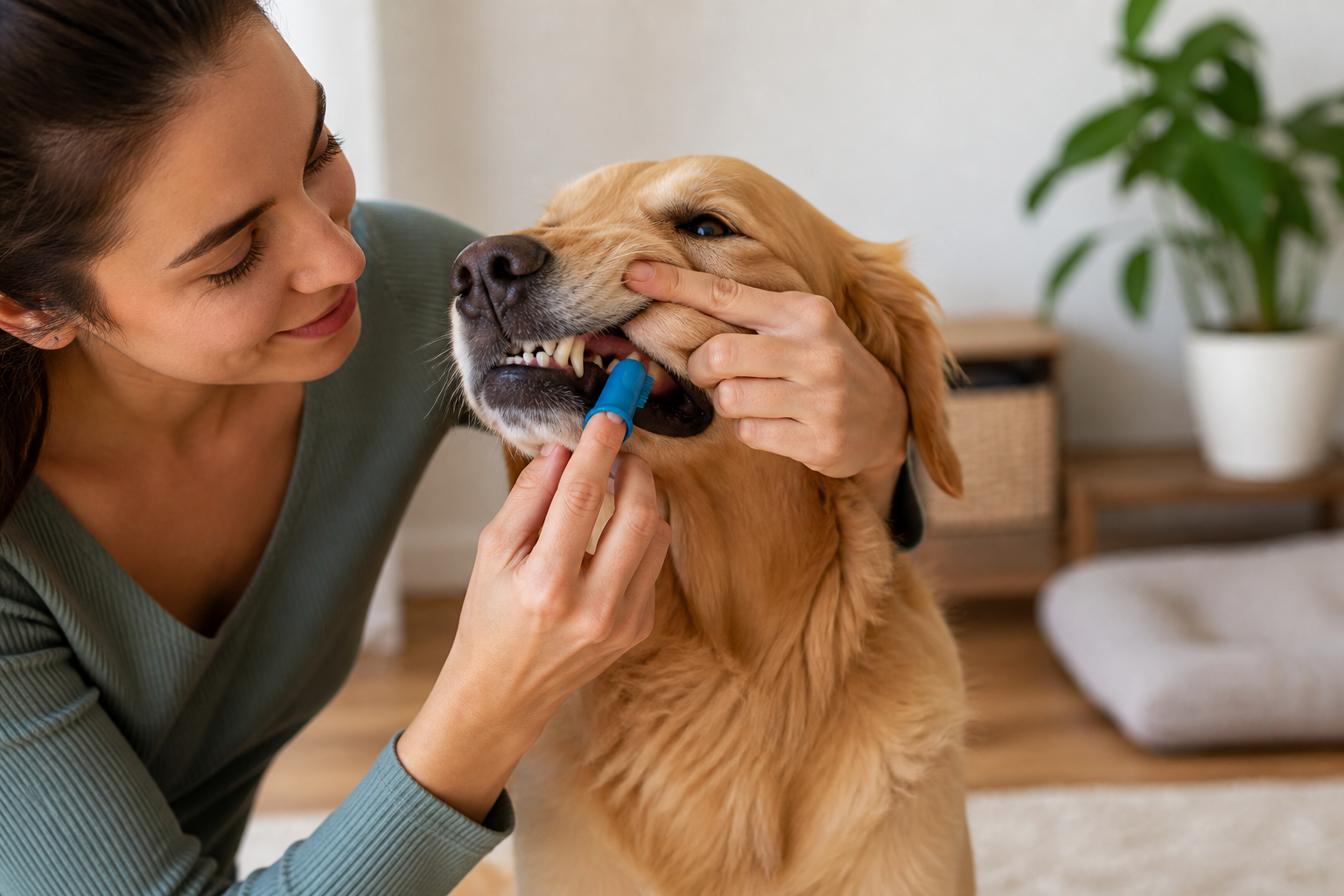
- Finger brushes: These are small rubber caps that fit over your finger. They are great for puppies or dogs who are nervous about long objects in their mouth.
- Double-headed brushes: These clean the top and sides of the teeth at the same time.
- Soft-bristled pet brushes: These look like human brushes but have much softer bristles and angled handles.
Step-by-Step Brushing Guide
If your dog is not used to brushing, do not try to do the whole mouth at once. This will only cause stress and make them hide the next time they see the toothbrush.
Step 1: Let them taste it. / Put a small dab of flavored toothpaste on your finger. Let your dog lick it off so they associate the brush with a treat.
Step 2: Touch the teeth. / Gently lift your dog's lip and rub your finger along their gums and teeth. Do this for just a few seconds and follow up with praise.
Step 3: Introduce the brush. / Put some paste on the brush and let them lick it. Gently brush the front "fang" teeth using a circular motion.
Step 4: Expand the area. / Gradually move toward the back molars over the course of several days. Focus on the outside of the teeth, as this is where most tartar accumulates.
Key Takeaway: Consistency is more important than perfection. Brushing for 30 seconds every day is better than a five-minute scrub once a month.
Alternative Cleaning Methods
Some dogs simply will not tolerate a toothbrush. If you find yourself in this situation, do not give up. There are other ways to reduce plaque and freshen breath that do not involve manual scrubbing.
Dental Chews and Treats
Not all treats are created equal. High-quality dental chews are designed to be flexible. This allows the dog's tooth to sink into the treat, creating a mechanical scrubbing action. Browse our dental chews for dogs for options that can complement brushing.
When choosing a chew, look for the following:
- Appropriate size for your dog's weight to prevent choking.
- A texture that is firm but not bone-hard.
- Ingredients that support digestive health.
Water Additives and Oral Rinses
If your dog is a picky eater or hates having their mouth touched, water additives are a great solution. These are tasteless or lightly flavored liquids you add to the water bowl. They contain ingredients that change the pH of the mouth and make it harder for plaque to stick to the teeth. An option such as Zymox Oratene Brushless Enzyme Dog and Cat Oral Care Water Additive can be part of a daily dental routine.
Mechanical Cleaning Toys
Toys like those made by Kong or other textured rubber brands can help. When a dog chews on these surfaces, the nubs rub against the teeth. You can even smear a bit of dog-safe toothpaste inside a hollow toy to encourage longer chewing sessions.
Bottom line: A combination of chews, water additives, and toys can significantly slow down tartar growth even without regular brushing.
Identifying When Home Care Isn't Enough
Even with the best routine, some dogs are genetically prone to dental issues. Small breeds and brachycephalic dogs (like Pugs or Bulldogs) often have crowded teeth that trap food and bacteria. You need to know the signs that your dog has moved past home care and needs a vet's help. For more guidance, read these warning signs of dental problems in dogs.
Check for these red flags:
- Persistent bad breath that does not improve after brushing.
- Gums that bleed when touched or during play.
- Yellow or brown "crust" on the teeth that cannot be brushed away.
- Excessive drooling or dropping food while eating.
- Swelling on the face, especially under the eye.
If you see these symptoms, it is time for a professional evaluation. Our pharmacy, through our partnership with Pet's Choice, can help manage these conditions. We provide access to FDA-approved medications and prescription dental diets that vets often recommend for pets with chronic oral health needs.
Tools for Senior Dogs
Senior pets often have the highest risk for dental disease but also the highest concern regarding anesthesia. If your older dog has a heart or kidney condition, your vet might suggest avoiding sedation. In these cases, home care becomes even more critical.
Use extra-soft finger brushes to avoid irritating sensitive gums. You might also switch to a prescription dental diet. These kibbles are larger and have a specific fiber matrix that does not crumble immediately. This forces the dog to chew, providing a scrubbing effect. You can find these specialized diets through our pharmacy section with a valid prescription.
Key Takeaway: For senior dogs, oral health is a major part of overall longevity. Bacteria from the mouth can travel through the bloodstream and impact the heart and kidneys.
Managing the Cost of Dental Care
One reason owners look for "how to clean dog's teeth without anesthesia" is the cost of the procedure. Veterinary dental work can be expensive because it involves a team of professionals, monitoring equipment, and specialized tools.
You can manage these costs in a few ways:
- Preventative Care: Every dollar spent on a toothbrush and paste saves much more on future extractions.
- MVP Rewards: Join the MVP Rewards programme to earn points on every dental care purchase. You can earn up to 5% back, which helps offset the cost of high-quality treats and supplements.
- Autoship: Set up your toothpaste and dental chews on our Autoship programme. This ensures you never run out and gives you a discount on recurring orders.
- Pet Insurance: Consider a plan through our partner FIGO. Many plans help cover the costs of dental illnesses or injuries.
Summary of At-Home Dental Success
Cleaning your dog's teeth at home is a marathon, not a sprint. You will not see results overnight, but your dog will feel the benefits within a few weeks. A clean mouth means a more comfortable dog and a happier home environment.
Keep these daily habits in mind:
- Brush at the same time every day to create a routine.
- Reward your dog immediately after any mouth handling.
- Check the gums once a week for redness or swelling.
- Refresh water bowls daily if using additives.
Bottom line: While you cannot perform a deep medical cleaning without anesthesia, you can prevent the need for one by using the right tools and staying consistent with your daily care.
Conclusion
Caring for your dog's teeth is an essential part of being a pet parent. While professional cleanings under anesthesia are sometimes necessary for deep health issues, your daily actions at home make the biggest difference. By using enzymatic pastes, dental chews, and water additives, you can keep plaque at bay and protect your dog's overall health. We are here to help you every step of the way with a curated selection of dental supplies. For pets with more advanced needs, our pharmacy offers prescription solutions to keep them comfortable and healthy. Start your routine today and enjoy those fresh, healthy snuggles once again.
Key Takeaway: A proactive dental routine at home reduces the frequency of professional cleanings and protects your dog's vital organs from bacteria.
FAQ
Is it really possible to clean a dog's teeth without anesthesia?
You can remove soft plaque and prevent new tartar from forming using at-home methods like brushing and dental wipes. However, once tartar has hardened into "calculus," it usually requires professional scaling. While home care keeps the mouth fresh, it cannot replace the deep sub-gingival cleaning that only a veterinarian can provide.
Can I use a human toothbrush on my dog?
It is usually better to use a brush designed for pets because the bristles are softer and the heads are smaller. Human brushes can be too abrasive for a dog's sensitive gums and may cause bleeding. If you must use a human brush, choose one labeled "extra soft" and be very gentle with your pressure.
How often should I brush my dog's teeth at home?
Ideally, you should brush your dog's teeth every day, just like you brush your own. Plaque begins to harden into tartar within 24 to 48 hours. If daily brushing is not possible, aiming for at least three times a week can still provide significant health benefits and slow down the progression of dental disease.
Are dental wipes as effective as brushing?
Dental wipes are a good alternative for dogs who will not tolerate a brush, but they are generally less effective. Brushing allows the bristles to reach into the crevices between teeth and slightly under the gumline. Wipes are great for removing surface film and bacteria but do not provide the same mechanical scrubbing power as a brush.






