
 Save 15% on your 1st Autoship learn more

 Email us
 Live Chat
 FAQs
FAQs





Introduction
You might notice it when your senior dog leans in for a greeting. That "old dog breath" is often more than just a sign of aging. It is frequently a signal that plaque and tartar have taken hold. Keeping an older dog’s mouth clean is one of the most impactful things you can do for their comfort and longevity. At BaxterBoo, we see many pet owners who worry that they started dental care too late. The truth is that even a senior dog can benefit from a new oral hygiene routine. This guide will explain how to gently clean your dog's teeth, what tools work best for sensitive older gums, and when it is time to seek professional help. Improving your pet's dental health can help them stay active and happy throughout their golden years.
Quick Answer: Clean an old dog's teeth by using a soft-bristled brush and dog-specific toothpaste daily. If they resist brushing, use dental wipes, water additives, or specialized dental chews to reduce plaque buildup safely.
Why Dental Care Is Vital for Senior Dogs
As dogs age, their immune systems do not always fight off oral bacteria as efficiently as they once did. Plaque is a sticky film that forms on the teeth within hours of eating. If it is not brushed away, it hardens into tartar. Tartar provides a rough surface where even more bacteria can grow. This cycle leads to periodontal disease, which is an infection of the tissues surrounding the teeth.
For a senior dog, this is not just about a bright smile. The mouth is a gateway to the rest of the body. Bacteria from infected gums can enter the bloodstream. From there, it can travel to vital organs like the heart, liver, and kidneys. Maintaining a clean mouth helps reduce the overall inflammatory load on your dog's body. This is especially important for dogs already managing other age-related health conditions. Explore our dog dental care collection for products that can support an at-home routine.
Key Takeaway: Dental health is a full-body concern because oral bacteria can enter the bloodstream and damage the heart and kidneys.
Recognizing Dental Pain in Your Older Dog
Dogs are masters at hiding discomfort. A senior dog might not whimper or cry out even if they have a loose tooth or a painful abscess. You have to look for subtle changes in their behavior. Some dogs may start eating more slowly or drop pieces of kibble while they chew. Others might suddenly prefer wet food over dry food.
Common signs of dental issues in seniors include:
- Breath that smells unusually foul or metallic
- Red, swollen, or bleeding gums
- Excessive drooling
- Pawing at the mouth or rubbing the face on the carpet
- Visible brown or yellow crust on the teeth
- Reluctance to play with favorite chew toys
Vet Tip: If your senior dog stops eating or only chews on one side of their mouth, schedule a veterinary exam immediately. These can be signs of a serious infection or a fractured tooth that requires medical intervention.
Choosing the Right Tools for an Older Mouth
You cannot use human toothpaste for your dog. Human products often contain xylitol, which is toxic to dogs, or foaming agents that can upset their stomachs. Instead, look for an enzymatic toothpaste designed for pets. These formulas use enzymes to break down organic matter and plaque even if you cannot reach every corner of the mouth. Flavorings like poultry or beef make the experience more like a treat.
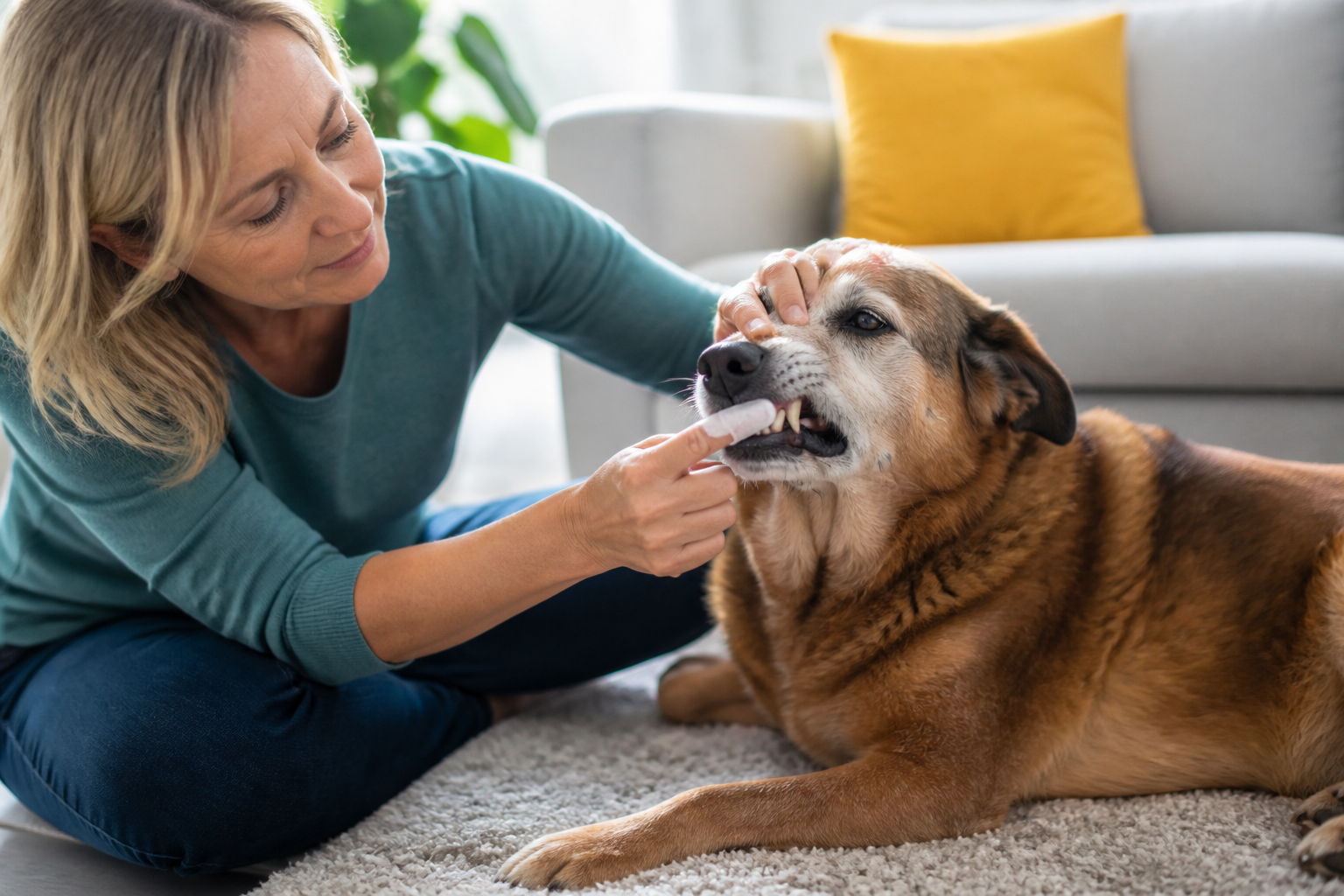
For the brush itself, look for something very soft. Senior dogs often have receding gum lines or sensitive spots. A finger brush is a great starting point for older dogs because it gives you more control and feels less invasive than a long-handled brush. If your dog has a very small mouth, a soft infant toothbrush from a drug store can also work well. We carry a variety of dental kits at BaxterBoo that include both brushes and pastes to get you started, including Nutri-Vet Dog Toothpaste.
How to Brush a Senior Dog's Teeth Step-by-Step
If your dog is not used to brushing, you must move slowly. Do not try to clean the entire mouth on the first day. The goal is to make the process a calm part of your daily routine. For more general guidance, review these pet dental care tips.
Step 1: Introduce the taste. Let your dog lick a small amount of pet toothpaste off your finger. Do this for a few days until they get excited when they see the tube.
Step 2: Get them used to contact. Gently rub your finger along their gums and teeth. Focus on the outside surfaces where the lips touch the teeth.
Step 3: Introduce the brush. Put a little paste on a soft brush or finger brush. Lift the upper lip and use short, circular motions on the large canine teeth.
Step 4: Gradually expand the area. Each day, try to reach one or two teeth further back. Most plaque builds up on the outside surfaces of the upper teeth.
Step 5: End with a reward. Give your dog a favorite low-calorie treat or extra praise immediately after brushing. This builds a positive association with the process.
Bottom line: Patience is the most important tool when starting a dental routine with an older dog who may be sensitive to touch.
Alternatives for Dogs Who Hate Brushing
Some senior dogs simply will not tolerate a toothbrush. This might be due to past experiences or current sensitivity. You can still improve their oral health using alternative methods. Dental wipes are a middle-ground option. They are textured pads pre-soaked in cleaning solutions. You simply wrap one around your finger and wipe the surface of the teeth. This is often faster and less stressful than brushing.
Water additives are another effortless tool. These are liquids you pour into your dog’s water bowl. They contain ingredients that help break down plaque and freshen breath as the dog drinks. While they are not as effective as physical scrubbing, they are a helpful supplement to other methods. You can compare these options in our dental and breath care category.
The Role of Dental Chews and Toys
Chewing is a natural way for dogs to clean their teeth. The mechanical action of teeth scraping against a firm surface helps rub away plaque. However, you must be careful with the hardness of chews for senior dogs. Older teeth can be more brittle. Avoid very hard items like elk antlers, dried hooves, or real bones, as these can cause tooth fractures.
Look for dental chews that have the VOHC (Veterinary Oral Health Council) seal. This seal means the product has been tested and proven to reduce plaque or tartar. Brands like Greenies offer specific senior formulas that are slightly softer and easier for older dogs to chew. At BaxterBoo, we suggest monitoring your dog whenever they have a chew to ensure they do not try to swallow large chunks. For more ideas, browse our selection of Greenies products or read about dental chews for dogs.
Professional Dental Cleanings and Anesthesia
At-home cleaning is great for maintenance, but it cannot remove tartar once it has hardened. Only a professional cleaning by a veterinarian can do that. Many owners of older dogs worry about anesthesia. It is a valid concern, but modern veterinary medicine has made the process much safer.
Before a cleaning, your vet will perform blood work to check your dog's organ function. This helps them tailor the anesthesia to your dog's specific needs. During the procedure, the vet can take X-rays to see what is happening below the gum line. They can find hidden infections or bone loss that you would never see at home.
Key Takeaway: Professional cleanings are the only way to remove hardened tartar and address health issues beneath the gum line that cause chronic pain.
Prescription Diets and Pharmacy Support
Sometimes, a standard kibble is not enough for a dog with significant dental issues. Some prescription dental diets are formulated with a specific fiber matrix. The kibble does not shatter when the dog bites it. Instead, the tooth sinks into the piece, allowing the fibers to scrub the tooth surface.
If your veterinarian discovers an infection or advanced gum disease, they may prescribe antibiotics or specialized oral rinses. Our pet pharmacy carries prescription medications and prescription diets. If your vet provides a script for dental-related health needs, we can help you get those items delivered to your door. This is often a necessary step for dogs recovering from dental surgery or managing chronic oral infections.
Diet and Nutrition Tips for Oral Health
What your dog eats affects the environment in their mouth. High-carb diets can sometimes contribute to more plaque formation because bacteria thrive on sugars. Some pet owners find that switching to a high-quality, meat-based diet helps. Brands like Farmina and Royal Canin offer specialized formulas that support overall wellness, which in turn helps the body manage inflammation in the mouth.
You might also consider adding dental supplements to their meals. Some powders contain sea kelp or probiotics that change the chemistry of the saliva to prevent plaque from sticking. Always talk to your vet before adding new supplements, especially if your senior dog is on medication for other conditions.
Creating a Sustainable Routine
Consistency matters more than perfection. Brushing for thirty seconds every day is better than a five-minute deep clean once a month. Pick a time when your dog is relaxed, such as after a walk or before bed. If you have multiple pets, make sure each has its own toothbrush to prevent the spread of bacteria.
Keep your supplies in a visible spot so you do not forget. Using our Autoship program for your toothpaste and dental wipes ensures you never run out. Plus, it helps you save money while keeping your dog's mouth healthy. Members of our MVP Rewards program also earn points on these recurring dental supplies, making it easier to stay committed to the routine.
Conclusion
Cleaning an old dog's teeth is an essential part of senior pet care. While it may take some time for your dog to adjust to a toothbrush, the health benefits are worth the effort. Start slow, use the right tools, and keep things positive. Combining at-home care with regular veterinary checkups is the best way to prevent pain and serious systemic diseases. Whether you use brushes, wipes, or dental chews, every bit of effort helps.
- Use pet-safe enzymatic toothpaste and a soft brush.
- Monitor for signs of pain like trouble eating or bad breath.
- Consult your vet about professional cleanings and blood work.
- Supplement with water additives and VOHC-approved chews.
Final Thoughts: For all your dental care needs, from soft brushes to prescription diets through our pharmacy, we are here to support you and your senior dog.
FAQ
Is my dog too old to have their teeth professionally cleaned?
No dog is automatically too old for a professional dental cleaning based on age alone. Veterinarians perform thorough pre-anesthetic testing, including blood work and sometimes chest X-rays, to ensure the pet is a good candidate for the procedure. Treating dental infections often improves a senior dog's quality of life and energy levels significantly.
Can I use human toothpaste if I only use a tiny amount?
You should never use human toothpaste on a dog. Many human pastes contain xylitol, which is a sweetener that is highly toxic to dogs and can cause life-threatening liver failure or low blood sugar. Additionally, human toothpaste is meant to be spit out, but dogs swallow it, which can lead to stomach upset from the foaming agents.
How often do I really need to brush my senior dog's teeth?
Ideally, you should brush your dog's teeth every day to prevent plaque from hardening into tartar. If daily brushing is not possible, aiming for three times a week is the minimum needed to see a real health benefit. For the days you skip brushing, using dental wipes or water additives can help bridge the gap.
My senior dog's gums bleed a little when I brush. Should I stop?
Minor bleeding can be a sign of early gingivitis, similar to what humans experience when they start flossing after a break. You should continue to be very gentle, but do not stop brushing entirely. However, if the bleeding is heavy or if your dog seems to be in significant pain, stop and consult your veterinarian to check for more advanced gum disease.






