
 Save 15% on your 1st Autoship learn more

 Email us
 Live Chat
 FAQs
FAQs





Introduction
You are relaxing on the couch when your dog leans in for an affectionate lick. Instead of a sweet moment, you are met with a wave of foul breath that makes you recoil. When you lift their lip, you see a thick, yellow-brown crust cemented along the gumline of their back molars. This is tartar, and it is a sign that your dog's oral health needs immediate attention. At BaxterBoo, we understand that dental care can feel like a daunting chore. This guide covers how to identify tartar, why home removal is risky, and the best ways to keep those pearly whites clean. We will help you navigate the world of dental chews, professional cleanings, and at-home prevention to ensure your dog stays healthy and comfortable.
Quick Answer: Hardened tartar cannot be safely removed at home and requires a professional cleaning by a veterinarian under anesthesia. You can prevent tartar buildup by brushing your dog’s teeth daily with enzymatic toothpaste and using VOHC-approved dental treats.
The Difference Between Plaque and Tartar
Many owners use the terms plaque and tartar interchangeably. However, they are two very different stages of dental decay. Understanding the transition from one to the other is the key to preventing long-term damage.
Plaque is a soft, sticky film of bacteria that begins to form on the teeth within hours after a meal. It is almost invisible at first. If you have ever felt a "fuzzy" feeling on your own teeth, you have experienced plaque. Because it is soft, it is very easy to remove with a simple toothbrush or even a piece of gauze.
Tartar is what happens when plaque is left alone. When plaque stays on the tooth for more than 48 to 72 hours, it reacts with the minerals in your dog's saliva. This chemical reaction causes the plaque to calcify and harden. Once it turns into tartar, also known as dental calculus, it becomes as hard as concrete. It bonds to the tooth enamel and cannot be brushed away.
Key Takeaway: Plaque is a soft bacterial film that can be brushed away, while tartar is a hardened mineral deposit that requires professional removal.
Why You Should Not Scrape Tartar at Home
It is tempting to buy a metal dental scaler online and try to chip the tartar off your dog's molars yourself. We strongly advise against this. While it might look like you are helping, home scaling often causes more harm than good.
First, your dog will not sit perfectly still while you use a sharp metal tool in their mouth. One sudden movement can lead to a deep puncture in the gums or a slip that scratches the delicate cornea of their eye. Second, scraping at home only removes the tartar you can see. It does not address the bacteria hiding under the gumline, which is where the real damage happens.
Most importantly, scaling creates microscopic scratches in the tooth enamel. These tiny grooves provide the perfect hiding spot for more bacteria to grow. Professional veterinarians always polish the teeth after scaling to smooth out the enamel. Without that polishing step, tartar will return faster and more aggressively than before.
For additional guidance on recognizing oral-health problems, read about warning signs of bad teeth in dogs.
The Risks of Untreated Tartar
Tartar is not just a cosmetic issue. It is a breeding ground for bacteria that can cause systemic health problems. When tartar builds up, it pushes the gums away from the teeth. This creates "pockets" where infection can take root.
This condition is known as periodontal disease. It is painful and can lead to tooth loss and bone decay in the jaw. Small breeds are especially prone to this because their teeth are often crowded together. If the bacteria enter the bloodstream through the inflamed gums, they can travel to the heart, liver, and kidneys. This can lead to chronic organ failure over time.
Common Signs of Dental Distress
- Chronic bad breath that does not improve with treats.
- Visible yellow or brown crust on the teeth.
- Red, swollen, or bleeding gums.
- Dropping food or refusing to eat hard kibble.
- Pawing at the mouth or face.
- Excessive drooling.
Vet Tip: If your dog has bleeding gums or loose teeth, stop at-home brushing and see a vet immediately. Brushing over an active infection can be extremely painful and may spread bacteria further into the bloodstream.
The Professional Cleaning Process
Since tartar cannot be brushed away, the only way to truly clean it off is through a professional veterinary dental cleaning. Many owners worry about anesthesia, but it is the safest and most effective way to handle the procedure.
A professional cleaning allows the vet to perform a "deep clean" that includes scaling above and below the gumline. They use ultrasonic scalers that vibrate at high speeds to break up the tartar without damaging the tooth. Once the teeth are clean, the vet polishes them to create a smooth surface that resists new plaque.
Our pet pharmacy at BaxterBoo offers a variety of post-care supports. Through our partnership with Pet's Choice, we provide access to prescription medications that your vet might recommend after a dental procedure. This includes antibiotics for infections or specialized prescription dental diets designed to keep the teeth clean after a professional scaling.
What Happens During a Vet Dental Visit
Step 1: Pre-anesthetic blood work. / This ensures your dog's organs are healthy enough to process the anesthesia safely.
Step 2: Full oral exam and X-rays. / Veterinarians use X-rays to see what is happening beneath the gumline, checking for abscesses or bone loss.
Step 3: Scaling and polishing. / The vet removes all tartar and then smooths the enamel to prevent future buildup.
Step 4: Extraction if necessary. / If a tooth is dead or severely infected, the vet will remove it to stop the pain and prevent the spread of infection.
Daily Brushing: The Gold Standard
The most effective way to prevent tartar from ever forming is to brush your dog's teeth every single day. While it sounds like a lot of work, it only takes about 60 seconds once your dog is used to it.
Never use human toothpaste. It contains ingredients like xylitol and fluoride that are toxic to dogs. Instead, use an enzymatic toothpaste made for pets. These pastes contain enzymes that break down food particles and bacteria even if you do not get a perfect scrub on every surface. They also come in flavors dogs love, like poultry or beef.
A pet-safe option is Virbac C.E.T. enzymatic pet toothpaste, which is available in a poultry flavor.
How to Start a Brushing Routine
- Let them lick the paste. Start by letting your dog lick the toothpaste off your finger so they associate it with a treat.
- Rub the gums. Use your finger to gently rub their teeth and gums to get them used to the sensation.
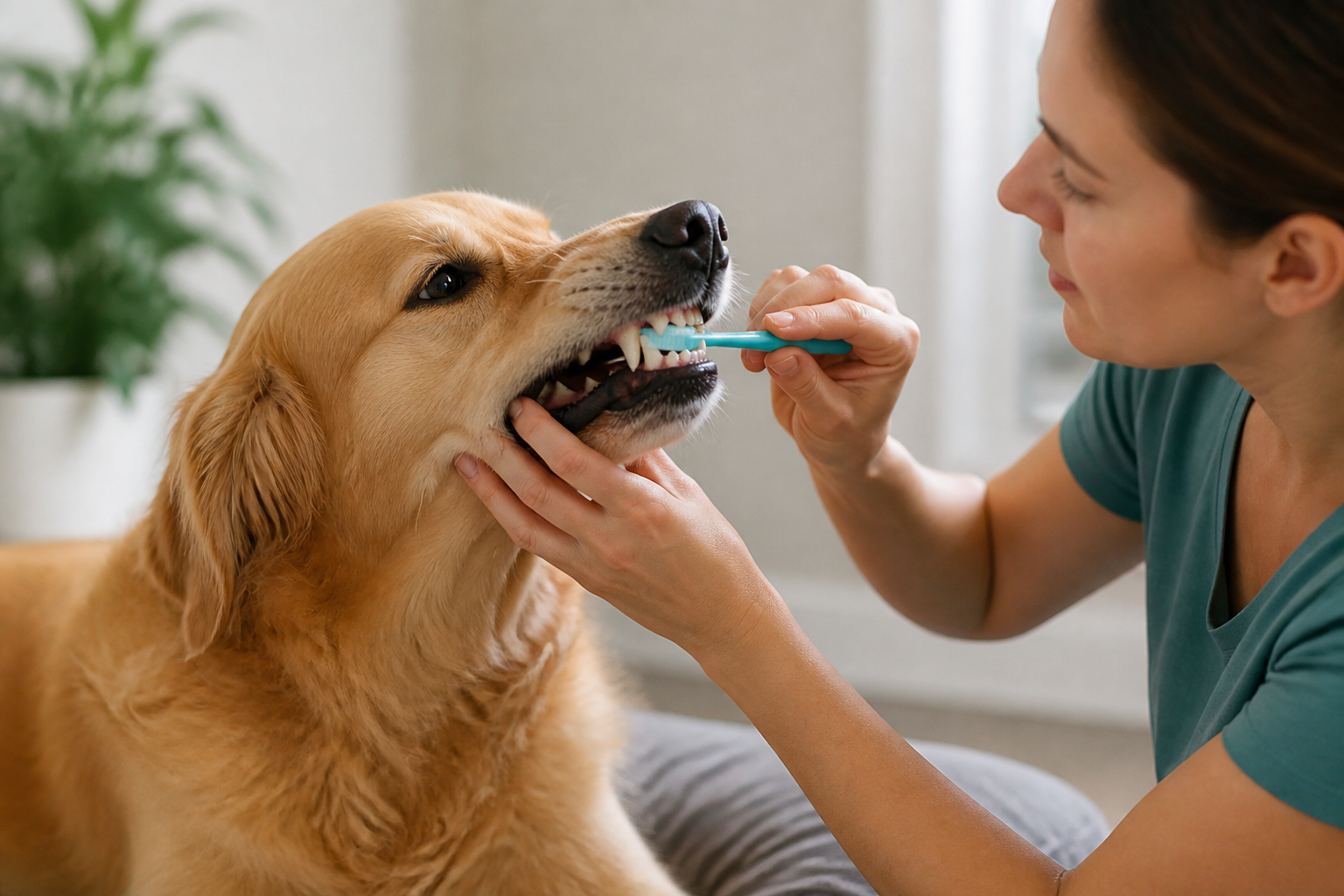
- Introduce the brush. Use a soft-bristled pet toothbrush or a finger brush. Focus on the outside of the back molars, where tartar builds up the fastest.
- Reward the behavior. Always follow a brushing session with praise or a small dental treat.
Bottom line: Daily brushing is the only way to stop plaque from turning into tartar.
For more brushing ideas, explore pet dental care tips for building a routine.
Dental Chews and Treats
For dogs that absolutely refuse a toothbrush, dental chews are a helpful secondary tool. These treats are designed to be abrasive. As your dog chews, the treat scrapes against the surface of the tooth to rub away soft plaque.
When choosing a chew, look for the VOHC (Veterinary Oral Health Council) seal of approval. This seal means the product has been tested and proven to reduce plaque or tartar by a certain percentage. We carry several trusted brands at BaxterBoo, including our selection of Greenies products and Kong dental toys.
While chews are helpful, they are not a replacement for brushing. Most dogs chew primarily with their back teeth, meaning the front teeth and the canines do not get much cleaning from a treat. Use chews as a supplement to your overall dental plan.
Recommended Dental Products
- Enzymatic treats: These contain active ingredients that break down plaque chemically.
- Rubber chew toys: Toys with ridges or nubs, like certain Kong models, help massage gums and scrape teeth during play.
- Rawhide alternatives: These provide longer chewing sessions, which increases saliva production. Saliva is a natural tooth cleanser.
Water Additives and Dental Gels
If your dog is particularly difficult to handle, you might consider water additives or dental gels. These are "hands-off" options that can help slow down bacterial growth.
Water additives are tasteless liquids you add to your dog's bowl. They contain ingredients that neutralize the bacteria in the mouth. Dental gels are applied directly to the gums. You do not necessarily have to brush them in; the dog's tongue will spread the gel around as they lick.
Our dog dental and breath care collection includes gels, toothpaste, chews, and water additives for different care routines.
These products are great for senior dogs or dogs with high anxiety who cannot handle a toothbrush. However, they work best when started after a professional cleaning has already cleared away the existing tartar.
The Role of Diet in Dental Health
What your dog eats can have a direct impact on how fast tartar forms. Some owners believe that dry kibble cleans teeth better than wet food. While kibble does provide some friction, most dogs swallow their pieces whole or break them into only a few chunks. This does not provide enough scraping action to remove plaque.
Specialized dental diets are different. The kibble in these foods is much larger and has a fibrous texture. Instead of crumbling immediately, the tooth sinks into the kibble, allowing the fibers to scrub the surface of the tooth.
If your vet prescribes a specific dental diet like Farmina Vet Life or Royal Canin, you can often find these through a pharmacy. We make it easy to manage these prescriptions through our partnership with Pet's Choice, ensuring your dog gets exactly what the doctor ordered delivered to your door.
Foods That Help Clean Teeth
- Crunchy vegetables: Raw carrots or apple slices (without seeds) can provide a natural scraping action.
- Prescription dental kibble: Formulated to scrub teeth and reduce plaque.
- Limited-carbohydrate diets: Bacteria thrive on sugars and starches, so high-quality, protein-forward diets may help reduce bacterial growth.
Managing Dental Care for Seniors
Senior dogs are at the highest risk for tartar and periodontal disease. Over years of eating and playing, plaque has had many opportunities to calcify. Many owners are afraid to have their senior dog's teeth cleaned because of anesthesia concerns.
However, modern veterinary medicine has made anesthesia much safer for older pets. A painful mouth can significantly decrease a senior dog's quality of life. Constant infection in the mouth puts a heavy strain on an aging immune system.
If your senior dog is not a candidate for surgery, aggressive at-home care is vital. Using a combination of enzymatic gels, water additives, and soft-bristled brushes can help manage the infection and keep them comfortable. We offer a wide range of senior-specific health aids in our medical and mobility section to help you care for your aging companion.
Vet Tip: Always have your vet perform a full physical exam before starting any new dental regimen with a senior dog. They can check for underlying issues that might make their mouth sensitive.
Common Myths About Dog Tartar
There are several misconceptions that can lead owners down the wrong path. One common myth is that giving a dog bones will clean their teeth perfectly. While some bones can help scrape teeth, they can also cause fractures. We see many dogs with broken "slab fractures" on their molars from chewing on bones that were too hard.
Another myth is that bad breath is just a "dog thing." Healthy dogs should not have a foul odor coming from their mouths. If the smell is strong enough to notice from a distance, there is an underlying issue with bacteria or decay that needs to be addressed.
Finally, many people think that if a dog is still eating, they aren't in pain. Dogs have a very strong survival instinct. They will continue to eat even with severe dental pain or abscesses. Do not wait for your dog to stop eating before you take their dental health seriously.
Building a Success Routine
Maintaining a clean mouth is a lifelong commitment. The best approach is a "multi-modal" strategy. This means using several different methods at once to tackle plaque from every angle.
- Daily: Brush the teeth using an enzymatic paste.
- Daily: Give one VOHC-approved dental chew.
- Weekly: Inspect the mouth for any new redness or swelling.
- Yearly: Visit the veterinarian for a professional exam and possible cleaning.
By staying consistent, you can avoid the high costs and health risks associated with advanced periodontal disease. Our MVP Rewards program can help you save on the supplies you need to keep this routine going, from toothbrushes to specialized treats.
Bottom line: A combination of daily brushing, dental treats, and professional veterinary care is the only way to effectively manage tartar.
Summary of At-Home Care
Maintaining your dog's teeth does not have to be an overwhelming task. If you start slow and use the right tools, it becomes just another part of your daily bonding time. Remember that your goal is to stop plaque before it has the chance to harden into tartar.
- Use pet-safe enzymatic toothpaste.
- Never scrape tartar with metal tools at home.
- Look for the VOHC seal on all dental treats.
- Schedule regular professional cleanings with your vet.
- Consider water additives for difficult dogs.
If you are ready to start a dental routine, we are here to help. Our warehouse in Vernon Hills is stocked with the brands vets trust most, like Cosequin for overall health and Greenies for dental maintenance. You can also utilize our Autoship program to make sure you never run out of your dog's favorite dental chews, saving you time and money.
FAQ
Can I remove tartar from my dog's teeth without a vet?
No, you cannot safely remove hardened tartar at home. Once plaque has mineralized into tartar, it is bonded to the enamel and requires professional ultrasonic scaling. Attempting to scrape it off at home can damage the tooth enamel and cause painful injuries to the gums.
How can I soften my dog's tartar?
There is no scientifically proven way to "soften" tartar so that it wipes away. However, enzymatic toothpastes and dental gels can help break down the protein bonds in plaque and weaken the surface bacteria. This makes it easier for a veterinarian to remove the tartar during a professional cleaning.
How much does a professional dog teeth cleaning cost?
The cost varies widely depending on your location, the size of your dog, and whether any extractions are needed. A standard cleaning usually includes anesthesia, X-rays, scaling, and polishing. It is best to get a written estimate from your veterinarian after they have performed an initial oral exam.
Do dental water additives actually work?
Water additives can be effective at reducing the overall bacterial load in the mouth and freshening breath. They work best as a preventive measure or as a supplement to brushing. They will not remove existing tartar, but they can help slow down the formation of new plaque.






